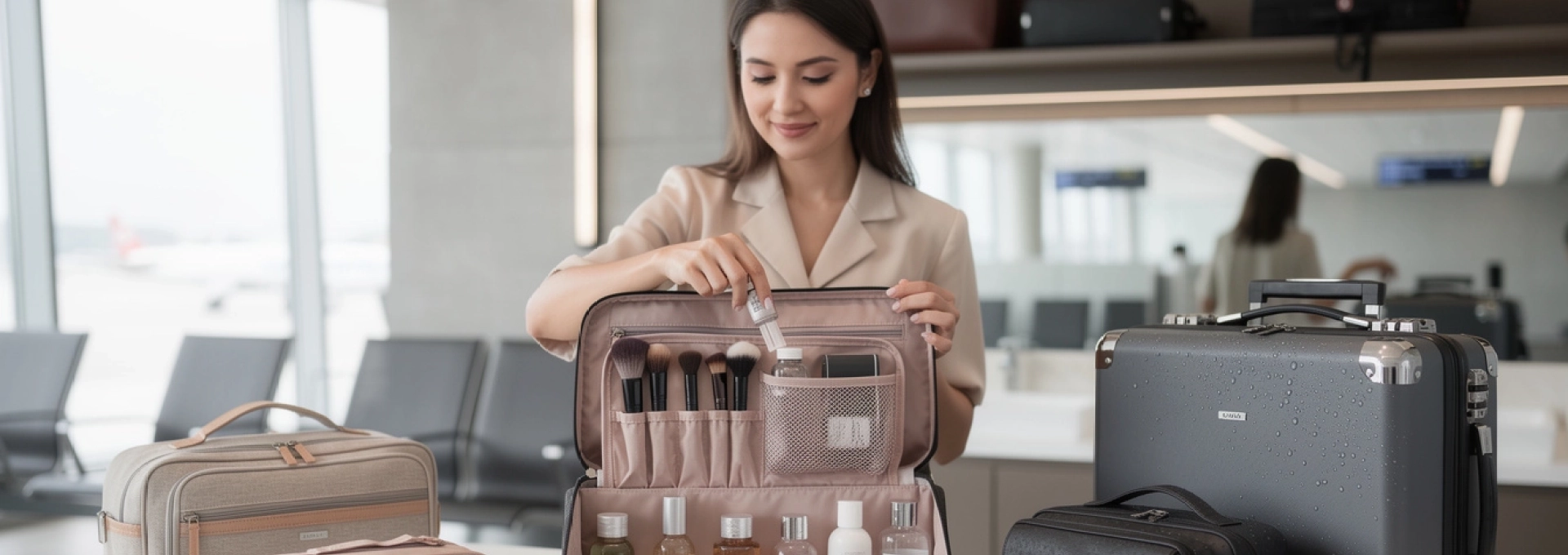
Standing before an open suitcase with cosmetics scattered across the bed is a familiar scenario for beauty enthusiasts preparing for travel. The search for the perfect cosmetic travel bag transcends simple aesthetics—it represents the intersection of functionality, durability, and intelligent design. Whether you’re a professional makeup artist traversing continents or a weekend traveller maintaining your beauty routine, selecting the right travel case fundamentally transforms how you experience both packing and your destination. Modern cosmetic bags have evolved beyond simple storage pouches into sophisticated organisational systems engineered to protect valuable products, comply with international regulations, and streamline daily routines whilst away from home.
The cosmetic travel bag market has expanded exponentially, presenting consumers with hundreds of options across varying price points, materials, and design philosophies. This abundance creates both opportunity and confusion. Understanding the technical specifications, material science, and design principles behind quality cosmetic cases empowers you to make informed decisions that serve your specific needs rather than following fleeting trends. From waterproof linings to antimicrobial treatments, from airline compliance to ergonomic carrying systems, today’s premium travel bags incorporate technologies borrowed from outdoor gear, luggage engineering, and even medical equipment design.
Material construction and durability standards for travel cosmetic cases
The foundation of any exceptional cosmetic travel bag lies in its material composition. Fabric selection directly impacts longevity, protective capabilities, weight considerations, and maintenance requirements. Professional-grade travel cases prioritise materials that withstand repeated compression in luggage, resist environmental stressors like humidity and temperature fluctuations, and protect contents from the inevitable bumps and drops that accompany travel.
Nylon vs polyester vs PVC: comparing fabric performance in High-Humidity environments
The fabric debate in cosmetic bag construction centres around three primary materials: nylon, polyester, and polyvinyl chloride (PVC). Nylon, particularly higher denier counts (400D-1000D), offers exceptional abrasion resistance and inherent water resistance even before additional coatings. This synthetic fabric maintains flexibility in varying temperatures, preventing the brittleness that plagues cheaper alternatives. Polyester provides comparable durability at marginally lower weight and cost, though it typically requires more aggressive waterproofing treatments to match nylon’s natural moisture resistance.
PVC occupies a distinct category as a fully waterproof option, often appearing as transparent panels or interior linings. Whilst completely impervious to moisture, PVC can become stiff in cold environments and may develop surface cracks with extended UV exposure. Many premium manufacturers employ hybrid construction, utilising nylon or polyester exteriors for structural integrity whilst incorporating PVC compartments for liquid storage. This approach balances flexibility, durability, and waterproofing without the weight penalties of all-PVC construction.
Water-resistant coating technologies: DWR treatment and laminated linings
Durable Water Repellent (DWR) treatments represent the standard waterproofing approach for fabric cosmetic bags. This chemical coating causes water to bead and roll off fabric surfaces rather than saturating fibres. Quality DWR treatments maintain effectiveness through 30-50 wash cycles, though performance gradually diminishes. More advanced options include laminated or bonded linings—thin waterproof membranes fused to fabric backing that create permanent moisture barriers unaffected by washing or abrasion.
Heat-sealed interiors take waterproofing further by eliminating stitching holes where moisture might penetrate. These welded seam constructions, borrowed from outdoor gear manufacturing, create genuinely watertight compartments ideal for storing liquids and preventing leaks from spreading throughout the bag. When evaluating water resistance, examine whether the bag claims « water-resistant » (repels light moisture) versus « waterproof » (maintains integrity when submerged)—the distinction matters significantly for protecting expensive cosmetics.
Zipper quality assessment: YKK hardware and Self-Healing coil mechanisms
Zipper failure represents the primary cause of cosmetic bag retirement. Premium manufacturers exclusively specify YKK zippers, the Japanese brand dominating the quality fastener market through superior materials and precision manufacturing. YKK’s coil zippers, where teeth consist of
continuous nylon coils rather than individual moulded teeth, are particularly well suited to cosmetic travel bags. They are flexible, snag-resistant, and less likely to deform when compressed in a suitcase. Self-healing coil mechanisms add another layer of reliability: if the zipper track separates, you can often restore function simply by running the slider back over the gap. When assessing zipper quality, look for double-pull sliders for easier access, fabric zipper garages that shield the ends from moisture, and oversized pull tabs that remain easy to grip with damp or product-covered hands.
Metal zippers can feel luxurious but may corrode in high-humidity bathrooms or coastal environments, especially if not stainless steel. In contrast, high-grade plastic coil or Vislon zippers offer smoother operation and are less vulnerable to rust while still providing excellent strength. Ultimately, the zipper on a cosmetic travel bag is like the lock on a suitcase: if it fails, the whole system becomes unusable. Prioritising proven brands such as YKK and examining user reviews that mention zip performance can save you the frustration of premature hardware failure.
Reinforced stitching techniques and stress-point reinforcement methods
Even when fabric and hardware are high quality, poor stitching can undermine a cosmetic travel bag’s durability. Stress points typically occur where handles meet the body, around zipper corners, and at the base where the bag repeatedly impacts surfaces. Reinforced bar-tack stitching, visible as dense clusters of short stitches, distributes force across a wider area, reducing the chance of tearing when the bag is fully loaded. Double or triple stitching along seams further enhances structural integrity, particularly in larger organisers designed to hold multiple palettes or glass bottles.
Some premium cosmetic travel cases incorporate binding tape over internal seams, protecting threads from abrasion and preventing fraying over time. Box-and-cross (or box-X) stitching on handle attachments offers additional security, similar to that used in mountaineering gear and camera bags. When you inspect a potential purchase, gently pull at the handles and corners; if you can see light through the stitching or the seam visibly stretches, that bag may not survive repeated trips. Investing in robust stitching now helps ensure your cosmetic travel organiser withstands years of packing, unpacking, and airport transfers.
Compartmentalisation systems and interior organisation architecture
Organisation architecture is where a cosmetic travel bag transitions from simple pouch to true on-the-go beauty workstation. Internal layouts influence how quickly you can locate a specific product, how well items are protected, and how easily you can adapt the bag to different journeys. Rather than viewing compartments as mere storage, it helps to think of them as zones in a compact beauty studio, each assigned to a category such as complexion, eyes, skincare, or tools. The more thoughtfully these zones are designed, the more efficient and enjoyable your travel routine becomes.
Adjustable divider configurations for varied product dimensions
Adjustable dividers are one of the most valuable features in a versatile cosmetic travel bag. These often take the form of padded panels secured with hook-and-loop strips that you can reposition to fit anything from slim mascara tubes to bulky setting spray bottles. This modular layout lets you reconfigure the bag depending on whether you are packing for a minimalist weekend city break or a full-glam destination wedding. It also reduces wasted space, as you can tailor compartment sizes to match your exact product dimensions.
From a protection standpoint, padded and adjustable dividers act much like camera bag inserts, cradling fragile compacts and glass vials to prevent knocking and breakage. When evaluating a bag, check that dividers are rigid enough to stand upright under load but still cushioned to absorb impact. You should also look at attachment strength: dividers that detach too easily will collapse, creating the very chaos they were meant to prevent. If you frequently rotate products or share a cosmetic organiser with family members, a system with clearly labelled or colour-coded sections can further streamline use.
Elastic loop placement and brush holder grid designs
Elastic loops and brush grids are critical for travellers who rely on multiple brushes, eyeliners, or slender tubes. Instead of allowing these items to roll freely and gather product dust, elastic retention systems hold each piece securely in place. Well-designed brush holders typically include protective flaps that cover brush heads, preventing bristle deformation and keeping pigment from transferring onto the interior lining. Placement matters: loops positioned along a fold-out flap or removable panel enable you to view your tools at a glance, much like a roll-up artist’s brush belt.
Loop sizing is equally important. If loops are too tight, inserting and removing brushes becomes frustrating and may damage ferrules; if they are too loose, items slip out during transit. Look for graduated loop sizes or a grid that accommodates both thick powder brushes and slim detail brushes. Some cosmetic travel bags integrate elastic along the sidewalls of main compartments, ideal for standing bottles upright and reducing leakage. When combined with a structured base, this vertical storage transforms your bag into a mini vanity, making it far easier to maintain an organised beauty routine on the go.
Transparent PVC pocket integration for TSA liquid compliance
Transparent PVC or TPU pockets serve two essential functions in a travel cosmetic bag: quick visual inventory and compliance with airline liquid regulations. Many travellers struggle at security checkpoints, hurriedly transferring items into temporary plastic bags. An integrated clear pocket sized to approximate the standard one-litre TSA or IATA limit can eliminate this stress. You place approved travel-size liquids and gels into the transparent compartment, zip it closed, and simply remove that module when requested at security.
From a usability perspective, clear pockets also make daily routines easier. You can spot your serum, travel-size moisturiser, or favourite lip gloss in seconds without rummaging. When comparing bags, check that PVC pockets are heat-bonded or neatly stitched without sharp edges that could catch on smaller tubes. Flexible, slightly softer plastics tend to resist cracking and clouding better than rigid ones, particularly in colder climates. If you prefer a more eco-conscious option, consider bags that use recyclable TPU instead of traditional PVC while still providing the necessary visibility and moisture barrier.
Detachable pouches and modular insert systems
Detachable pouches and modular inserts are the hallmark of advanced cosmetic travel bag design. Rather than committing all your products to a single shell, modular systems allow you to split items by routine—morning skincare, evening glam, everyday essentials—and carry only what you need for a given day. For example, you might keep a slim detachable pouch in your handbag while leaving the main organiser in your hotel room. This flexibility can dramatically reduce the number of separate beauty bags you require when travelling.
High-performing modular systems often include a combination of zippered mesh pouches, flat pockets for sheet masks, and cushioned inserts for fragile items. Magnetic or snap-in attachments keep components secure yet easy to remove. When evaluating such a cosmetic travel organiser, consider how seamlessly modules reintegrate and whether the base structure remains stable when some inserts are removed. A well-executed modular design turns your bag into a customisable kit that grows or shrinks with your itinerary, rather than a fixed container that dictates what you can bring.
Size specifications and airline carry-on regulation compliance
Beyond materials and organisation, physical size plays a decisive role in choosing the right cosmetic travel bag. Oversized cases can quickly monopolise space in a carry-on, while bags that are too small force you to compromise on essentials or overstuff compartments. Understanding airline regulations and typical cabin baggage dimensions helps you select a cosmetic organiser that integrates smoothly into your existing luggage strategy. Essentially, you want a bag that feels substantial enough to hold your routine yet compact enough to disappear neatly into your suitcase or under-seat personal item.
IATA cabin baggage dimensions and under-seat storage parameters
Most major airlines worldwide follow guidance from the International Air Transport Association (IATA) regarding cabin baggage, which typically recommends around 55 x 35 x 20 cm for carry-on suitcases. While your cosmetic bag will be significantly smaller, it must coexist with laptops, clothing, and other travel essentials within that finite volume. For travellers who rely on an under-seat personal item such as a tote or backpack, a cosmetic organiser usually needs to stay within roughly 25–30 cm in length to fit comfortably alongside other belongings.
When evaluating size, it can be helpful to measure a bag not just in terms of its external dimensions but also its “packed footprint.” Soft-sided cosmetic travel bags with some give can compress slightly in crowded luggage, whereas rigid cases occupy a fixed block of space. Ask yourself where you intend to store the bag—in a suitcase, weekender, or carry-on backpack—and compare dimensions accordingly. A well-proportioned bag should slot into your existing packing system like a puzzle piece, not require you to rebuild how you pack from scratch.
100ml bottle capacity planning for international travel regulations
Liquid restrictions for air travel add another layer of complexity. In most regions, passengers may carry liquids, gels, and aerosols in containers of up to 100 ml (3.4 oz), all fitting comfortably within a one-litre clear bag. A well-designed cosmetic travel organiser anticipates this by providing spaces that accommodate multiple 100 ml bottles upright, alongside smaller vials and droppers. If you often travel internationally with skincare-intensive routines, mapping out how many liquid containers you realistically need is a smart first step.
Think in terms of categories: cleanser, moisturiser, SPF, foundation, serum, and haircare minis, for example. Choose a bag whose primary liquid compartment can hold this core set without forcing products to lie sideways or overlap dangerously. Taller, box-shaped organisers tend to manage 100 ml bottles more securely than flat pouches that encourage layering. Ultimately, the goal is to design a leak-resistant “liquid zone” within your cosmetic bag that aligns with security rules while still supporting your preferred routine.
Compact weekend cases vs extended trip organisers: volume analysis
Your ideal cosmetic travel bag will vary dramatically depending on whether you are packing for a two-night city break or a three-week multi-country itinerary. Compact weekend cases generally offer between 2 and 4 litres of internal volume—enough for essentials and a pared-back makeup edit. These smaller bags are easier to slot into a tote or backpack and encourage a more minimalist approach, which can be liberating for short stays. They work particularly well if your destination provides hotel toiletries and you only need to supplement with specialised skincare or makeup.
Extended trip organisers, by contrast, may provide 6–10 litres or more of usable capacity, often spread over multiple levels or detachable modules. This extra space allows you to bring full-face makeup options, multiple brushes, and even small tools such as eyelash curlers or mini devices. However, additional volume also means extra weight and bulk. Before defaulting to the largest possible organiser, consider your travel style. Do you realistically use every palette you bring, or would a medium-sized, cleverly compartmentalised cosmetic bag serve you better? Treat volume like wardrobe space: it should support your habits, not enable unnecessary excess.
Specialised features for product protection and leak prevention
Protection is one of the primary reasons travellers invest in dedicated cosmetic cases rather than using generic pouches. Between pressure changes in airplanes, accidental drops in hotel bathrooms, and rough handling during transfers, your products face a surprising amount of risk. Modern cosmetic travel bags borrow protection principles from camera gear and technical luggage, employing padding, seals, and ventilation to keep contents safe. Understanding these specialised features helps you identify which models offer more than just aesthetic appeal.
Foam padding thickness and shock-absorption specifications
Foam padding acts as the first line of defence against impact, particularly for fragile powders, glass bottles, and mirrored palettes. Many quality cosmetic travel bags use closed-cell foam in the 3–8 mm range along walls and base panels, striking a balance between protection and packability. Thicker padding improves shock absorption but can reduce internal capacity, so the ideal configuration depends on how delicate your collection is. If you routinely travel with luxury glass fragrance bottles or high-end palettes, prioritising robust padding is similar to choosing a padded laptop sleeve over a thin fabric case.
Beyond raw thickness, foam density and placement also matter. Denser foams compress less under pressure, offering more reliable cushioning inside tightly packed luggage. Some organisers reinforce only the bottom and sides—the areas most likely to receive impact—while leaving lids more flexible. When examining a bag, press gently on the walls; if you can immediately feel hard items through the fabric, padding may be insufficient. For frequent flyers or professional artists, a case that behaves more like a small protective trunk, with structured foam throughout, will better safeguard an extensive kit.
Heat-sealed seams and welded construction for liquid containment
Leaks are perhaps the most dreaded cosmetic travel mishap, capable of ruining not only makeup but clothing and electronics packed nearby. Heat-sealed seams and welded construction techniques address this problem by creating compartments that behave almost like dry bags. Instead of relying solely on stitching, manufacturers use heat and pressure to bond layers of waterproof material together, eliminating needle holes where liquids could escape. When combined with waterproof zippers or internal splash guards, these welded sections can successfully contain spills within a compact area.
This level of containment is particularly valuable for storing foundation bottles, oils, liquid highlighters, and travel-size shampoos or conditioners. Think of a welded compartment as a “quarantine zone” within your cosmetic organiser—if something fails, the damage remains isolated. When shopping, look for descriptions such as “welded seams,” “heat-bonded construction,” or “fully lined waterproof compartment,” and inspect for smooth, tape-like seam finishes rather than raw stitching. While welded pockets may add a small premium to the price, they can easily save you from replacing stained clothing or damaged tech.
Ventilation mesh panels for damp applicator storage
While liquid containment aims to keep moisture in, ventilation features ensure it can escape when necessary. Makeup sponges, washcloths, and certain brushes may still be slightly damp when you pack up after an early check-out or late-night event. Sealing these items in an airtight compartment can encourage odour and bacterial growth. Mesh panels and breathable pockets provide a controlled airflow path, allowing residual moisture to dissipate more safely during travel.
Some cosmetic travel bags integrate mesh zones into exterior side pockets or flap sections, ideal for housing sponges in protective cases or quick-drying brushes. Others use mesh windows on detachable pouches, giving you the option to keep damp items separate from the main compartment while they air out. When comparing bags, consider your own habits: do you routinely wash applicators on the road, or prefer to carry enough tools to avoid mid-trip cleaning? If the former, ventilation becomes a non-negotiable feature, supporting both product longevity and hygiene.
Hygiene maintenance and antimicrobial material technology
In the confined environment of a cosmetic travel bag, hygiene plays a bigger role than many travellers realise. Residual product, humidity, and fluctuating temperatures can create conditions that favour bacterial growth and unpleasant odours. As a result, manufacturers increasingly incorporate easy-clean linings and antimicrobial treatments borrowed from medical and athletic gear. Choosing a bag that actively supports cleanliness not only protects your skin but can prolong the life of your beauty products.
Machine-washable lining fabrics and removable interior panels
Spills and smudges are inevitable, but they do not have to be permanent. Some of the most practical cosmetic travel organisers feature machine-washable linings or removable panels that you can detach and clean thoroughly. These linings are typically made from coated nylon or polyester that withstands gentle cycles without peeling or warping. Removable brush panels, for example, can be snapped out, rinsed under warm water, and left to dry separately, ensuring that built-up pigment and skincare residue do not accumulate over time.
If machine washing is not an option, look for linings explicitly described as wipe-clean or stain resistant. Smooth, slightly glossy surfaces are generally easier to clean than textured fabrics that trap powder in their weave. You might think of these linings like a non-stick pan: the easier product wipes away, the less time you spend scrubbing and the more hygienic your cosmetic bag remains. When browsing product descriptions or reviews, pay attention to how users describe cleaning; frequent mentions of “wiped out quickly” or “looked new again” are strong positive indicators.
Silver ion and microban antimicrobial treatments
To further combat microbial growth, some advanced cosmetic travel bags utilise antimicrobial technologies such as silver ion or branded treatments like Microban. These finishes are integrated into the fabric or lining at the manufacturing stage and are designed to inhibit the growth of bacteria, mould, and mildew. While they do not replace proper cleaning, they provide an additional layer of defence—especially useful when you cannot fully air out your bag between legs of a long journey or when you store it in a humid bathroom.
Think of antimicrobial treatments as a passive hygiene assistant working in the background. They help reduce odour, slow staining from microbial activity, and keep fabrics fresher between washes. If you have sensitive or acne-prone skin and worry about bacteria from brushes or sponges cycling back into your routine, these technologies can be particularly appealing. As with any treated textiles, it is wise to follow care instructions carefully to preserve efficacy, avoiding harsh detergents or extremely high wash temperatures that may degrade the treatment over time.
Stain-resistant coatings and easy-clean surface finishes
In addition to antimicrobial properties, many quality cosmetic travel bags incorporate stain-resistant coatings on both exterior and interior surfaces. These finishes cause liquids and pigment to bead on the surface rather than sinking into fibres, meaning a lipstick smear or foundation drip is far less likely to become a permanent mark. On the outside, this helps preserve a polished appearance even after years of use; on the inside, it prevents discolouration that can make it difficult to see smaller items against a darkened background.
Practical stain resistance also improves day-to-day usability. You can quickly spot-clean a mark with a damp cloth or mild soap instead of resorting to full laundering. Some premium exteriors mimic the performance of technical outdoor fabrics, resisting not just cosmetic stains but also light rain and general city grime. When you are investing in a cosmetic organiser that you hope to use for many trips, these easy-clean finishes function like a protective case for your bag itself, helping it age gracefully and remain something you are proud to pull out of your luggage.
Brand comparisons: analysing leading cosmetic travel bag manufacturers
With so many cosmetic travel bag options available, examining specific brand philosophies and flagship designs can clarify what type of organiser best suits your needs. Some manufacturers prioritise lay-flat access for small bathrooms, others emphasise hard-shell protection, while luxury brands focus on elevated materials and aesthetics. By understanding these different approaches, you can align your purchase with both your functional requirements and your personal style.
Lay-flat hanging designs: samsonite silhouette and bagsmart roll-up models
Lay-flat and hanging cosmetic travel bags are popular among travellers who value vertical storage and maximised counter space. Brands like Samsonite, particularly within the Silhouette line, offer structured hanging organisers that unfold into multiple tiers while still zipping into a compact rectangular package. When hung from a towel rail or hook, transparent and mesh compartments align vertically, turning limited bathroom space into an efficient beauty station. This format is especially well suited to frequent hotel stays or cruise cabins where surfaces are at a premium.
Bagsmart roll-up models take a slightly softer, more flexible approach. They typically feature several zippered sections that can be rolled or folded, then secured with a strap or buckle. When unrolled, they lie fully flat, providing panoramic access to all products at once—much like opening a tool roll or artist’s portfolio. These designs excel for travellers who prefer clear visibility over deep, boxy compartments. If you are someone who likes to “see everything at a glance” when getting ready, a lay-flat or roll-up cosmetic organiser from these brands may align perfectly with your routine.
Hard-shell protection cases: caboodles train cases and relavel structured organisers
Hard-shell cosmetic travel cases appeal to users who prioritise maximum protection and a more traditional vanity aesthetic. Caboodles, long associated with classic train cases, continues to produce structured organisers with rigid exteriors and compartmentalised interiors. These cases often feature tiered trays that lift and fan out as you open the lid, revealing multiple levels of storage for small items like lipsticks, blushes, and liners. The rigid shell shields contents from crushing forces, making these cases particularly suitable for checked luggage or road trips where bags may be stacked.
Relavel structured organisers tend to blend professional-grade function with modern styling, offering semi-rigid shells, adjustable padded dividers, and dedicated brush panels. Many models include shoulder straps, transforming the case into a portable makeup workstation for artists or beauty enthusiasts travelling with extensive kits. The trade-off with hard-shell and semi-rigid designs is reduced flexibility when packing; they require a defined space within your suitcase or carry-on. However, if you frequently travel with breakable products or simply prefer the feeling of opening a miniature suitcase devoted entirely to beauty, Caboodles and Relavel provide compelling options.
Luxury designer options: cuyana leather cases and béis travel cosmetic collections
For travellers who view their cosmetic bag as both a functional tool and a style statement, luxury designer options offer elevated materials and refined details. Cuyana’s leather cosmetic cases, for example, feature premium full-grain leather exteriors, minimalist silhouettes, and carefully considered internal layouts. The focus here is on timeless design and longevity; a well-cared-for leather organiser can accompany you for years and even serve as a clutch in a pinch. Soft yet structured, these bags balance tactile appeal with enough organisation to support a curated selection of daily essentials.
Béis, founded by actress Shay Mitchell, brings a more travel-luggage-centric approach to cosmetic bags. The brand’s cosmetic collections typically coordinate with its suitcases and carry-ons, using water-resistant linings, thoughtful compartments, and mirrors integrated into lids or removable panels. Béis organisers often feature neutral, photo-ready colour palettes and practical extras such as dedicated brush covers and clear sections for liquids. If you are drawn to cohesive, Instagram-ready travel setups where your cosmetic travel bag mirrors your suitcase aesthetic, Béis provides that cohesive, stylish ecosystem while still delivering the functional features required for organised beauty on the go.