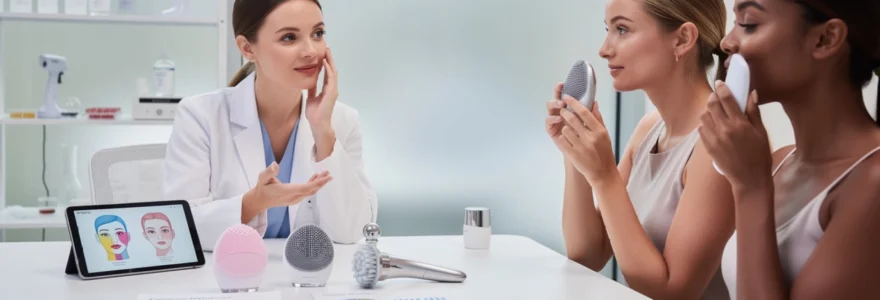
The evolution of facial cleansing technology has transformed daily skincare routines, offering sophisticated alternatives to traditional hand-washing methods. Modern cleansing devices combine advanced engineering with dermatological science to deliver deeper, more effective cleansing whilst addressing specific skin concerns. However, selecting the appropriate device requires understanding both the underlying technologies and your individual skin characteristics. The wrong choice can exacerbate existing conditions or create new problems, whilst the right device can revolutionise your complexion’s health and appearance.
Professional dermatologists increasingly recommend cleansing devices as essential components of comprehensive skincare regimens. These tools can remove up to six times more makeup and impurities compared to manual cleansing alone, whilst providing gentle exfoliation and improved product absorption. Understanding how different technologies interact with various skin types ensures you make an informed investment in your skin’s long-term health.
Understanding facial cleansing device technologies and mechanisms
The landscape of facial cleansing devices encompasses several distinct technologies, each engineered to address specific cleansing challenges and skin types. Understanding these mechanisms forms the foundation for making an informed selection that complements your skin’s unique requirements and sensitivities.
Sonic vibration technology in foreo luna and clarisonic devices
Sonic vibration technology represents one of the most refined approaches to mechanical cleansing, utilising high-frequency oscillations typically ranging from 8,000 to 15,000 pulsations per minute. This technology creates microscopic movements that penetrate deep into pores without requiring excessive pressure or friction against the skin’s surface. The gentle yet effective action makes sonic devices particularly suitable for individuals with sensitive skin who require thorough cleansing without irritation.
The science behind sonic cleansing involves creating fluid dynamics that help dislodge impurities through vibrational energy rather than abrasive scrubbing. This mechanism proves especially beneficial for removing stubborn makeup, sunscreen residues, and environmental pollutants that accumulate throughout the day. Clinical studies demonstrate that sonic technology can improve skin texture and radiance within just two weeks of consistent use, making it a valuable investment for those seeking visible improvements.
Rotating brush head systems and bristle density variations
Rotating brush systems employ circular motions combined with varying bristle densities to provide customisable cleansing experiences. These devices typically feature interchangeable heads designed for different skin types and concerns, from ultra-soft synthetic bristles for sensitive skin to firmer natural bristles for oily or acne-prone complexions. The rotation speed usually ranges from 300 to 600 RPM, creating sufficient mechanical action to remove dead skin cells and unclog pores.
The effectiveness of rotating brush systems lies in their ability to provide controlled exfoliation whilst maintaining consistent pressure distribution. Unlike manual scrubbing, these devices ensure even coverage and prevent over-exfoliation in specific areas. However, users must exercise caution with frequency of use, as excessive mechanical cleansing can disrupt the skin barrier and lead to increased sensitivity or irritation.
Silicone Touch-Point design and T-Sonic pulsation methods
Silicone-based cleansing devices feature strategic touch-point configurations that deliver targeted pulsations across the facial surface. These non-porous, antimicrobial surfaces resist bacteria accumulation whilst providing gentle yet effective cleansing action. T-Sonic technology, pioneered by advanced skincare device manufacturers, combines vertical pulsations with varying intensities to create customised cleansing experiences for different facial zones.
The antimicrobial properties of medical-grade silicone make these devices particularly hygienic and suitable for long-term use. The touch-points vary in size and spacing to accommodate different facial contours and skin sensitivities, ensuring comprehensive cleansing without missing delicate areas around the eyes or nose. This technology proves especially beneficial for individuals prone to bacterial sensitivities or those seeking low-maintenance cleansing solutions.
Microcurrent stimulation and galvanic ion technology
Advanced cleansing devices increasingly incorporate microcurrent stimulation and galvanic ion technology to enhance both cleansing effic
acy. Microcurrent technology uses low-level electrical currents that mimic the skin’s own bioelectricity, supporting lymphatic drainage and encouraging a more toned appearance over time. Galvanic ion technology, by contrast, alternates between positive and negative currents to attract and repel charged particles, helping to draw out impurities during the cleansing phase and then push beneficial ingredients deeper into the epidermis during treatment phases.
Because microcurrent and galvanic devices exert a more intensive effect on the skin barrier and underlying tissues, they are best reserved for experienced users or those following a professional dermatological protocol. You will typically pair these advanced facial cleansing devices with conductive gels or ionisable cleansers to optimise current flow and reduce the risk of irritation. When used correctly, they can enhance the performance of your entire skincare routine, but overuse—particularly on thin, sensitive, or rosacea-prone skin—can lead to redness, dryness, or transient breakouts.
Dermatological skin type classification for device selection
Choosing the right facial cleansing device involves more than simply deciding between a sonic brush or silicone pad. From a dermatological standpoint, your skin type is defined by a combination of melanin content, sebaceous activity, hydration status, and inflammatory tendencies. Understanding these clinical parameters allows you to select a cleansing technology that supports your skin’s natural functions rather than working against them.
Dermatologists commonly assess skin using structured frameworks, blending visual examination with patient history and, in some clinics, instrumental measurements. This systematic approach is particularly valuable when deciding how much mechanical action your skin can tolerate and how often you should incorporate a facial cleansing device into your routine. By aligning device intensity and frequency with your underlying skin biology, you reduce the risk of barrier damage while maximising cleansing efficacy.
Fitzpatrick scale assessment and melanin content considerations
The Fitzpatrick scale is a widely used classification system that categorises skin into six types based on melanin content and response to ultraviolet exposure. Type I skin is very fair, always burns, and never tans, whereas Type VI skin is deeply pigmented and rarely burns. Although originally developed for assessing sun sensitivity and skin cancer risk, the Fitzpatrick scale also provides useful insight when considering facial cleansing devices.
Higher Fitzpatrick types (IV–VI) have greater melanin density, which offers some natural protection against photoageing, but can be more prone to post-inflammatory hyperpigmentation if the skin is over-stimulated or injured. Aggressive mechanical brushing, frequent use of stiff bristles, or overly strong microcurrent settings may trigger dark marks that linger far longer than the initial irritation. By contrast, lower Fitzpatrick types (I–III) often exhibit more visible redness and sensitivity to friction, meaning even moderate overuse of a rotating brush or harsh exfoliating cleanser can lead to persistent erythema.
For this reason, users with melanin-rich skin often do best with silicone facial cleansing devices or softer sonic brushes that minimise abrasion while still providing effective pore cleansing. Those with very fair, reactive skin may require slower introduction schedules—perhaps every other day at first—and should avoid combining strong chemical exfoliants with aggressive device settings. In practical terms, matching your device choice to your Fitzpatrick type is similar to choosing the right SPF strength: you are calibrating protection and performance to your baseline skin biology.
Sebaceous gland activity analysis for oily and combination skin
Sebaceous gland activity determines how much sebum your skin produces, and this factor is crucial when selecting a facial cleansing device for oily or combination skin. In individuals with hyperseborrhoea (excess sebum production), pores can become clogged more easily, leading to blackheads, whiteheads, and inflammatory acne lesions. At first glance, it might seem that a very powerful rotating brush used twice daily is the ideal solution—but is more friction always better?
Clinical observations increasingly suggest that over-stripping oily skin with harsh devices or cleansers can paradoxically trigger compensatory sebum production. The skin recognises a sudden loss of surface lipids and responds by increasing oil output, sometimes worsening shine and congestion. For this reason, many dermatologists now recommend sonic cleansing devices with moderate intensity, combined with oil-balancing gel cleansers or formulas containing salicylic acid, rather than aggressive scrubbing.
For combination skin, where the T-zone is oily but the cheeks and eye area are normal or even dry, a more nuanced strategy is needed. You might use higher-intensity settings or denser bristles only across the forehead, nose, and chin, then switch to softer silicone touch-points or lower speeds on the drier zones. This targeted approach is comparable to multi-masking: instead of treating the face as one uniform surface, you adapt your facial cleansing device technique to the micro-environments of your skin.
Transepidermal water loss measurements in dry skin conditions
Transepidermal water loss (TEWL) is a scientific measurement that quantifies how much water evaporates from the skin’s surface over time. Elevated TEWL is a hallmark of compromised barrier function and chronic dryness, which often manifests as tightness, flaking, and a dull complexion. In such conditions, the skin is less able to tolerate mechanical stress and may respond poorly to frequent or vigorous use of facial cleansing devices.
In dermatology clinics, TEWL meters are sometimes used to monitor the impact of treatments on barrier integrity. While you may not have access to this equipment at home, you can use practical indicators—such as persistent tightness after cleansing or stinging when applying simple moisturisers—to estimate whether your skin barrier is fragile. If so, your device selection should prioritise ultra-gentle options: silicone-based tools with low-intensity pulsations, soft-bristle rotating heads labelled for sensitive or dry skin, and shorter cleansing durations.
Pairing your facial cleansing device with lipid-rich, non-foaming cream cleansers can further reduce the risk of dehydration. Think of your skin barrier as a brick wall: the corneocytes are the bricks and the intercellular lipids are the mortar. A harsh brush head used with a stripping cleanser is like sandblasting that wall; a gentle device combined with a replenishing formula is more like carefully dusting and then reinforcing the mortar. Over several weeks, this kinder approach helps restore barrier function and reduce TEWL, improving both comfort and radiance.
Inflammatory response patterns in sensitive and rosacea-prone skin
Sensitive and rosacea-prone skin is characterised by exaggerated inflammatory responses to stimuli that most people would tolerate without issue. Triggers can include temperature changes, spicy foods, alcohol, and, importantly, mechanical friction or vibration from facial cleansing devices. In rosacea, the superficial blood vessels of the face are already dilated and reactive, so aggressive brushing can worsen flushing, visible capillaries, and stinging sensations.
For these skin types, the first question is not which facial cleansing device is most powerful, but whether a device is appropriate at all. Many dermatologists advise starting with the mildest possible technology—usually a soft silicone device on the lowest pulsation setting—and limiting use to a few times per week. If your skin shows no increase in redness, burning, or dryness after two to three weeks, frequency can be gradually increased, always in conjunction with soothing, fragrance-free cleansers.
It is also essential to avoid layering multiple irritants. Using a high-speed rotating brush directly after an exfoliating acid peel or retinoid application is akin to running a marathon immediately after leg day at the gym: the cumulative stress is often too much. If you live with rosacea or extreme sensitivity, work with a dermatologist to develop a personalised protocol that may involve skipping devices altogether during flare-ups and reintroducing them cautiously once the skin has stabilised.
Clinical performance evaluation of leading facial cleansing brands
Beyond understanding your skin biology, evaluating the clinical performance of specific brands helps you make a more evidence-based decision. Not all facial cleansing devices are equal; some have undergone rigorous laboratory testing and dermatologist-led trials, while others rely primarily on marketing claims. By examining independent studies, user trials, and hygiene data, you can identify which tools genuinely support clearer, healthier skin over the long term.
In this section, we will look at some of the most prominent facial cleansing device brands on the market and the research that underpins their claims. While individual results always vary, patterns across clinical data sets offer valuable guidance. As you read, consider how each device’s strengths align with your own priorities: are you seeking deep pore cleansing, improved texture, better product absorption, or simply a more enjoyable and consistent cleansing routine?
Foreo luna mini efficacy studies and dermatologist recommendations
The Foreo Luna Mini range has become a benchmark for silicone-based facial cleansing devices, thanks in part to its T-Sonic pulsation technology and hygienic, non-porous surface. Several brand-sponsored and independent user trials report that regular use—typically one to two minutes, twice daily—can enhance skin smoothness and reduce the appearance of enlarged pores within four weeks. In one often-cited internal study, over 90% of participants noted softer, more refined skin texture after consistent Foreo use.
Dermatologists who recommend the Luna Mini usually highlight its gentle action, reduced risk of bacterial build-up, and suitability for a broad range of skin types, including many sensitive or blemish-prone complexions. Because the silicone touch-points are flexible and come in varying thicknesses, you can adapt pressure and intensity to different facial areas without needing multiple brush heads. Another advantage is the device’s long battery life and waterproof design, which encourages adherence—after all, even the most advanced tool cannot work if it gathers dust on a shelf.
However, the Luna Mini is not a magic wand. If you pair it with an overly harsh foaming cleanser, use the highest pulsation setting on compromised skin, or cleanse for longer than recommended, you may still experience dryness or irritation. As with any facial cleansing device, the key is to introduce it gradually, monitor your skin’s response, and adjust both cleanser choice and frequency accordingly. Many users find that treating the Luna Mini as a daily “polisher” rather than an aggressive exfoliant yields the best long-term results.
PMD clean pro antimicrobial properties and hygiene protocols
The PMD Clean Pro is another popular silicone facial cleansing device, distinguished by its integration of SonicGlow vibration technology and ActiveWarmth therapy in some models. One of its primary selling points is the antimicrobial nature of its ultra-hygienic silicone, which is designed to resist bacterial overgrowth and reduce the need for frequent head replacement. For individuals concerned about acne-causing bacteria or device cleanliness, this can be an important factor in choosing the right facial cleansing gadget.
From a hygiene standpoint, the PMD Clean Pro is relatively low maintenance: you simply rinse the head with warm water and a mild cleanser after each use, then allow it to air dry. This simplicity lowers the barrier to daily use, which is critical for maintaining consistent cleansing habits. The device’s four customised modes—two for cleansing and two for massage—also allow users to fine-tune vibration intensity based on skin type and tolerance.
Dermatologists generally regard the PMD Clean Pro as a safe option for most skin types when used with non-abrasive cleansers and within recommended timeframes. However, while the silicone itself is antimicrobial, improper storage—such as leaving the device in a closed, damp environment—can still encourage surface contamination. Incorporating basic hygiene protocols, such as periodic deep cleaning and avoiding device sharing, remains essential even with antimicrobial materials.
Neutrogena wave technology and salicylic acid integration
The Neutrogena Wave and similar pad-based cleansing systems occupy a unique niche in the facial cleansing device market, combining mild mechanical vibration with pre-dosed cleanser pads. Many versions incorporate salicylic acid, a beta hydroxy acid famed for its ability to penetrate pores and dissolve excess sebum. For oily and acne-prone skin, this dual-action approach—mechanical plus chemical exfoliation—can provide visible improvements in congestion and breakout frequency.
Short-term clinical evaluations of Neutrogena’s wave technology often show a reduction in surface oiliness and a smoother feel to the skin after two to four weeks of use, especially when the device is used once daily in the evening. The pre-loaded pads ensure consistent dosing of salicylic acid, which can be an advantage if you struggle with applying the right amount of active cleanser manually. In essence, the device acts as both a timer and a measuring spoon, helping you avoid under- or overuse of exfoliating ingredients.
That said, this category of facial cleansing device requires cautious use on sensitive, dry, or combination skin. Because salicylic acid can be drying, combining it with daily mechanical vibration may be too intense for some users, leading to peeling, redness, or a compromised barrier. If you already use leave-on exfoliating toners, retinoids, or prescription acne treatments, it is wise to seek professional guidance before adding a Neutrogena Wave-style system into your routine, or to limit its use to a few times per week.
Olay regenerist micro-sculpting device clinical trial results
The Olay Regenerist line has long emphasised anti-ageing benefits, and its micro-sculpting facial cleansing devices aim to complement topical products by enhancing their penetration and performance. Some Olay brush systems use gentle rotation or oscillation combined with soft, rounded bristles to deliver a mild exfoliating effect, which can improve the appearance of fine lines and uneven texture over time. In brand-conducted studies, participants often report brighter, more even-toned skin after four to eight weeks of regular use alongside Regenerist serums or creams.
Importantly, the clinical trials surrounding these devices tend to focus not only on cleansing efficacy but also on how they influence product absorption. By removing dead surface cells and impurities more effectively than manual cleansing alone, the devices can help active ingredients like niacinamide and peptides penetrate more efficiently. Some small-scale studies suggest an increase in measured skin hydration and elasticity when the brush is used as part of a complete Regenerist routine.
Nevertheless, the anti-ageing benefits of any facial cleansing device must be viewed as incremental rather than transformational. A micro-sculpting brush will not replace sunscreen, retinoids, or professional treatments; instead, it acts as a supportive tool that prepares the skin to receive and utilise these interventions more effectively. For mature or photo-damaged skin, the ideal strategy is to integrate the device a few times per week initially, monitor for any dryness or irritation, and adjust frequency based on comfort and results.
Professional dermatological protocols for device integration
In clinical practice, dermatologists rarely view facial cleansing devices as standalone solutions. Instead, they are woven into broader treatment plans that may include topical medications, in-office procedures, and lifestyle adjustments. Proper integration is essential: an otherwise beneficial device used at the wrong time, with the wrong product, or on the wrong skin condition can undermine therapeutic goals.
A common professional protocol begins with a baseline skin assessment: identifying your primary concerns (acne, pigmentation, ageing, sensitivity), evaluating your current routine, and noting any ongoing treatments such as retinoids, antibiotics, or chemical peels. Based on this information, your dermatologist will recommend an appropriate device category—such as a gentle silicone pulsation tool for sensitive skin or a more robust sonic brush for congested, resilient skin—along with specific usage instructions.
Typically, dermatologists advise starting with once-daily or even every-other-day device use, especially if you have not previously used mechanical cleansing tools. Evening cleansing is often preferred because it allows you to remove makeup, sunscreen, and environmental pollutants accumulated throughout the day. Over time, if your skin tolerates the routine well, frequency and intensity can be adjusted upward, much like titrating the dose of an active ingredient.
Professional guidance also extends to “red flag” scenarios in which device use should be paused or modified. These include acute inflammatory flares (such as active rosacea or eczema), recent in-office procedures (like laser resurfacing or deep chemical peels), and episodes of severe dryness or barrier disruption. In such cases, dermatologists often recommend switching temporarily to minimal, manual cleansing with soothing, barrier-repairing products until the skin has fully recovered.
Advanced feature analysis and customisation parameters
Modern facial cleansing devices are increasingly sophisticated, offering customisable settings and smart features that go far beyond a simple on/off switch. Understanding these advanced parameters empowers you to tailor your cleansing routine to your exact skin type and concerns. Rather than allowing the device to dictate your routine, you can adapt its behaviour to support your skin’s needs on any given day.
Key features to consider include adjustable vibration or rotation speeds, zone-specific modes, integrated timers, and, in some premium models, app connectivity that tracks your usage patterns. Think of these options as the equivalent of having multiple brushes and techniques wrapped into a single device. For example, a lower speed setting may be ideal for mornings or sensitive areas, while a higher intensity may be reserved for the T-zone in the evening when skin is oilier and more congested.
Some devices also incorporate additional technologies such as thermal therapy, LED light, or microcurrent functions. A warm cleansing mode can help soften sebum and make blackhead-prone areas easier to clean, while cooling functions may soothe redness and reduce transient swelling. App-linked devices may provide personalised recommendations, nudging you to shorten sessions if your skin shows signs of over-cleansing or suggesting specific attachment heads based on your self-reported sensitivity.
When assessing these advanced features, it is helpful to ask yourself which aspects you will genuinely use. Do you truly need ten speed settings, or would three well-calibrated modes suffice? Will you engage with an app daily, or is a simple built-in timer more realistic for your lifestyle? By choosing a device whose functionality aligns with your habits, you increase the likelihood of consistent, long-term use, which is ultimately what leads to healthier, clearer skin.
Maintenance protocols and hygiene standards for optimal device performance
Even the most advanced facial cleansing device will underperform—or potentially harm your skin—if it is not maintained properly. Residual cleanser, sebum, and environmental debris can accumulate on bristles or silicone surfaces, creating a breeding ground for bacteria and mould. Regular, methodical maintenance therefore protects both your investment and your skin health.
The cornerstone of proper care is daily cleaning. After each use, rinse your device thoroughly with lukewarm water, using a gentle, fragrance-free cleanser if needed to remove any residue from the bristles or silicone touch-points. Avoid harsh detergents or alcohol-based solutions, which may degrade materials over time. Allow the device to air dry completely in a well-ventilated area rather than storing it immediately in a closed cabinet or travel case where moisture can linger.
In addition to daily rinsing, schedule periodic deep cleans and component replacements. For bristle-based devices, manufacturers typically recommend changing brush heads every three months, though users with acne-prone skin may benefit from more frequent replacement. Silicone devices may not require new heads, but they still benefit from a weekly deep clean with a mild antibacterial soap, especially if used in a humid bathroom environment.
Finally, observe basic hygiene standards such as not sharing your facial cleansing device with others and ensuring your hands are clean before use. If you experience an active infection, cold sore, or severe breakout, consider pausing device use on the affected area until the condition resolves to avoid spreading pathogens. By treating your facial cleansing device with the same care you would give to a professional tool, you help ensure that every cleansing session is as safe and effective as possible, supporting clearer, more resilient skin over the long term.