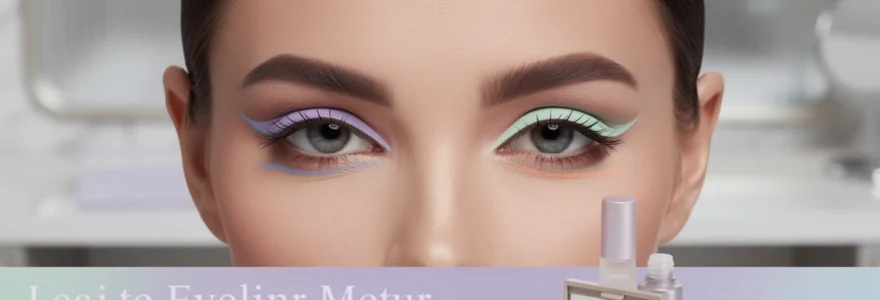
The resurgence of pastel eyeliner in contemporary makeup artistry represents far more than a fleeting seasonal trend. This sophisticated approach to eye definition combines technical precision with artistic sensibility, offering makeup enthusiasts and professionals alike a refined alternative to traditional bold liner applications. Pastel shades—ranging from delicate lilacs to soft mint greens—deliver impact through subtlety, creating dimension and interest without overwhelming the eye’s natural beauty. As formulation technologies advance and colour theory becomes more accessible to everyday users, pastel eyeliners have evolved from niche editorial products into essential components of the modern makeup collection. The appeal lies in their versatility: these gentle hues enhance features whilst maintaining a fresh, approachable aesthetic that translates seamlessly from daytime elegance to evening sophistication.
Understanding pastel eyeliner formulations and pigment technology
The chemistry behind effective pastel eyeliner represents a fascinating intersection of cosmetic science and aesthetic innovation. Unlike their intensely pigmented counterparts, pastel formulations require a delicate balance between colour payoff and translucency. Manufacturers must consider how micro-pigments interact with the skin’s undertones, as pastel shades reveal rather than conceal the complexion beneath. This transparency demands superior formulation expertise to ensure the liner remains visible without appearing chalky or patchy—a challenge that has driven significant advancement in cosmetic chemistry over recent years.
Kaolin clay and talc base compositions in pastel liners
The foundation of most pencil-format pastel eyeliners relies on kaolin clay and talc matrices, which provide the smooth, gliding texture essential for precise application. Kaolin clay, a naturally occurring mineral, offers excellent absorbent properties whilst creating a soft, powdery finish that buffs beautifully for diffused effects. Talc contributes slip and adherence, allowing the product to move effortlessly across the delicate eyelid skin without tugging. Premium formulations typically include a 30-40% mineral base, combined with binding waxes such as carnauba or candelilla. This ratio determines whether your pastel liner deposits colour intensely or builds gradually—a crucial consideration when you’re aiming for subtle definition rather than dramatic impact.
Micro-pigment dispersion for buildable colour intensity
The particle size and dispersion method of pigments fundamentally affects how pastel eyeliner performs on your skin. Modern formulations utilise micro-pigments measuring between 0.1 and 10 microns, suspended uniformly throughout the base composition. This microscopic scale ensures even colour distribution and prevents the streaking or patchiness that plagued earlier pastel formulations. Buildable intensity—the ability to layer product for increased opacity—depends on achieving optimal pigment loading, typically between 8-15% for true pastel shades. Too little pigment results in barely-there colour that disappears within hours; excessive pigment concentration creates a chalky, difficult-to-blend texture that contradicts the soft aesthetic you’re seeking.
Cream-to-powder versus gel formulation performance
The debate between cream-to-powder and gel pastel eyeliner formulations centres on longevity, blendability, and finish characteristics. Cream-to-powder formulas begin with a creamy, emollient texture during application, then set to a powder finish within 30-60 seconds. This transformation occurs through volatile silicone evaporation, leaving behind a budge-proof colour deposit that resists smudging throughout the day. Gel formulations, conversely, maintain a slightly tacky consistency that never fully sets, offering extended working time for blending and adjustment. For those new to pastel eyeliner application, cream-to-powder variants provide a more forgiving experience, whilst experienced users often prefer gel formulas for their superior colour saturation and ability to create gradient effects through layering techniques.
Silicone-based waterproof pastel eyeliner innovations
Waterproof pastel eyeliner technology has advanced considerably with the integration of volatile silicones such as cyclopentasiloxane and
dimethicone. These ingredients create a flexible, water-repellent film that locks pastel pigments onto the skin while maintaining a lightweight feel. In practical terms, this means your pastel eyeliner is less likely to crack, fade, or migrate, even in humid conditions or on oil-prone lids. Many high-performance waterproof formulas now incorporate film-formers such as trimethylsiloxysilicate, which anchor colour without the stiff, uncomfortable sensation older waterproof liners were known for. When you’re selecting a pastel eyeliner for all-day wear, look for descriptors like long-wear, smudge-resistant, and ophthalmologist-tested—these usually indicate advanced silicone technology designed for durability around the delicate eye area.
On-trend pastel eyeliner shades for contemporary makeup aesthetics
Choosing an on-trend pastel eyeliner shade is as much about personal style as it is about colour theory. While social media has accelerated the popularity of pastel looks, professional makeup artists still anchor their choices in undertones, contrast, and context. Do you want your pastel eyeliner to whisper or to quietly command attention? The answer will guide you toward either skin-flattering neutrals or more editorial hues. Below, we break down the most in-demand pastel eyeliner colours and how to integrate them into wearable, contemporary makeup aesthetics.
Lilac and lavender tones for cool-toned complexions
Lilac and lavender pastel eyeliner shades are particularly flattering on cool-toned complexions because they echo the natural blue and pink undertones in the skin. These soft purples create a subtle brightening effect along the lash line, similar to a colour-correcting concealer, but with a distinctly fashion-forward twist. For everyday wear, a thin strip of lavender tight to the upper lashes paired with neutral taupe shadow gives a refined, professional finish. If you’re aiming for a more editorial pastel eyeliner look, extend the lilac into a soft, elongated wing and keep the rest of the face minimal with sheer foundation and a muted rose lip.
Interestingly, lilac pastel eyeliner also enhances hazel and green eyes by amplifying their golden and green flecks through complementary contrast. Think of it like placing a cool-toned filter over your eye area—the whites of the eyes appear crisper, and any redness is subtly neutralised. To avoid veering into overly sugary territory, balance lilac eyeliner with well-groomed, slightly structured brows and a touch of grey or charcoal at the outer corner for subtle depth. This combination keeps the overall look chic rather than childlike.
Mint green and sage eyeliner in monochromatic looks
Mint and sage pastel eyeliner shades sit at the intersection of fresh and editorial, making them ideal for modern monochromatic makeup looks. On fair to medium skin tones, a mint pastel eyeliner across the upper lash line instantly injects a sense of coolness and clarity, especially when paired with a matching soft mint wash on the lids. On deeper complexions, sage and soft pistachio tones tend to appear more sophisticated, offering a muted yet distinctive contrast that photographs beautifully. For a truly cohesive monochromatic effect, echo the mint in a sheer cream blush or a glazed lip balm with a hint of green-tinged nude.
From a colour-psychology perspective, green-based pastels convey calm and freshness—perfect for daytime or office-appropriate pastel eyeliner looks. You can also use mint liner as a strategic accent rather than the main event: try placing a slim line just along the inner third of the lower lash line, paired with classic black on top. This creates a gentle “flash” of colour when you blink without overwhelming your overall makeup. Struggling with redness around the eyes? Mint pastel eyeliner can visually counterbalance it, much like green colour-corrector does for blemishes.
Peach and coral pigments for warm undertone enhancement
Peach and soft coral pastel eyeliner tones are unmatched when it comes to enhancing warm undertones and giving the complexion a healthy, lit-from-within appearance. These shades mimic the natural flush of the skin, which is why they feel intuitive and wearable even for those who are cautious about colour. A thin sweep of peach pastel eyeliner along the upper lashes pairs beautifully with bronzed skin, golden highlighter, and apricot blush for a cohesive sunlit look. On deeper skin tones, opt for slightly more saturated pastel corals that maintain visibility without turning ashy.
One of the biggest advantages of peach and coral pastels is their ability to soften tired or dull-looking eyes. Because these hues sit close to the natural colour of many people’s inner rims, they create an almost “reverse concealer” effect when used judiciously on the lower lash line. For a modern twist, try a double-liner approach: a classic brown wing hugging the lashes, topped with a thinner stroke of coral pastel eyeliner directly above. This layered technique adds subtle dimension and reads as polished rather than overtly colourful, making it suitable for both daytime events and relaxed evening settings.
Baby blue and sky blue application in editorial makeup
Baby blue and sky blue pastel eyeliners are the darlings of editorial makeup, frequently seen on runways and in campaign imagery. These airy blues evoke a distinctly retro, Y2K-inspired mood while feeling fresh and contemporary when combined with clean skin and minimalist lips. Because blue sits opposite many warm undertones on the colour wheel, it creates striking contrast that draws attention straight to the eyes. For a high-impact yet simple application, trace a thick baby blue line across the lid and soften the edges with a synthetic brush for a hazy, cloud-like effect.
Wondering how to translate sky blue pastel eyeliner from runway to real life? Focus on placement and proportion. A slim, precise line along the upper lashes, paired with soft brown mascara instead of black, keeps the look approachable. Alternatively, apply baby blue just to the inner corners and extend it slightly along the lower lash line—this creates a cool-toned highlight that feels unexpected but still wearable. To maintain balance, keep cheeks understated with a neutral beige or soft pink blush, and opt for a sheer gloss rather than a bold lip, allowing the pastel eyeliner to remain the hero of the look.
Professional application techniques for pastel eyeliner precision
Even the most advanced pastel eyeliner formulation will underperform without the right application techniques. Because pastels are inherently lighter and more translucent than traditional liners, any unevenness in pressure or placement becomes more noticeable. Professional makeup artists approach pastel eyeliner almost like watercolour painting: layering, blending, and refining edges rather than drawing a single, harsh line. With a few targeted strategies, you can achieve the same level of precision and polish at home, even if you’re relatively new to pastel eye looks.
Tightlining with pastel pencils for subtle lash line definition
Tightlining involves applying eyeliner directly to the upper waterline, between the lashes, to create subtle definition without an obvious line. While traditionally done with black or dark brown, using a pastel eyeliner pencil for tightlining can produce a whisper-soft, diffused glow around the eyes. Pale mauve, soft taupe-lilac, or muted sage work particularly well for this technique, as they gently tint the lash base without visually shrinking the eyes. The result is almost like an Instagram filter in real life—your lashes appear fuller, and the eye shape is enhanced without visible makeup.
To tightline with pastel eyeliner safely, choose a creamy, ophthalmologist-tested pencil designed for waterline use. Gently lift the upper lid and, using short, controlled strokes, press the pastel liner into the gaps between the lashes. If you wear contact lenses or have sensitive eyes, you may prefer to keep the colour just above the waterline, wiggling the pencil into the lash roots instead. Finish with a coat of mascara concentrated at the base of the lashes; this combination anchors the pastel while preserving that subtle, on-trend finish you’re aiming for.
Smudging and buffing methods for soft-focus effects
One of the key advantages of pastel eyeliner is its ability to create soft-focus effects that feel more like diffused shadow than traditional liner. To achieve this, timing and tools are everything. Work on one eye at a time, applying a generous line of pastel eyeliner close to the lashes, then immediately buffing the edges with a small, dense smudge brush or even a clean cotton bud. This is where cream-to-powder formulas really shine—they give you a brief window of blendability before setting into a long-wearing haze of colour.
Think of smudging pastel eyeliner like blending out the edge of a watercolour wash: you want the colour to fade seamlessly rather than stop abruptly. For additional depth, you can layer a slightly deeper coordinating shade—such as soft plum over lilac or dusty teal over mint—just at the outer third of the eye, then blend the two together. This gradient approach adds sophistication and structure, preventing the pastel from looking flat. If you’re worried about over-blending and losing intensity, apply a second, thinner layer of liner right at the lash line once the first smudged layer has set.
Winged liner execution using angled brush techniques
Executing a sharp wing with pastel eyeliner requires a slightly different approach than with opaque black liquid liners. Because pastels are lighter, any wobble in the line is more visible, and building saturation can take an extra pass or two. A pro trick is to use an angled eyeliner brush, even if you’re working with a pencil or gel pot. Draw a small amount of product onto the brush, then stamp the wing outline at the outer corner in two to three light presses, following the natural extension of your lower lash line toward the tail of your brow.
Once your outline is in place, connect it back to the upper lash line with short, feathery strokes, rather than attempting to drag one continuous line. This “connect-the-dots” method mimics the way graphic designers build curves from multiple anchor points, giving you more control and symmetry. If you make a mistake, don’t panic: use a pointed cotton bud dipped in micellar water to gently sharpen the lower edge of the wing. For extra crispness, some artists like to trace a tiny amount of concealer directly under the wing with a flat brush—this highlight not only corrects but also amplifies the pastel eyeliner, making the colour appear more vivid.
Layering pastel shades over eyeshadow primer for longevity
Because pastel eyeliners contain higher levels of white and light-reflecting pigments, they can be more susceptible to fading or absorbing natural oils from the skin. This is where an eyeshadow primer becomes essential. Applying a thin layer of primer along the lash line and up toward the crease creates a uniform, slightly tacky surface that grips pastel pigments and prevents them from migrating. For maximum colour payoff, choose a primer with a subtle tint close to your skin tone, which helps neutralise any redness or discolouration that might dull the pastel.
Layering is your ally when you want pastel eyeliner longevity without sacrificing that soft, modern finish. Start with a very light wash of matching powder shadow along the lash line, then apply your pastel eyeliner on top. The powder acts like a setting bed, almost like sprinkling sand over fresh paint to help it dry evenly. After the liner sets, you can gently press a translucent powder just above (not directly on) the line to create an oil-absorbing barrier. This combination of primer, shadow base, and pastel liner significantly extends wear time, especially in warmer climates or under studio lights.
Brand comparisons: NYX epic wear versus urban decay 24/7 Glide-On pastel range
When evaluating pastel eyeliner performance, two ranges frequently enter the conversation: NYX Epic Wear liners and the Urban Decay 24/7 Glide-On pencils. Both are highly respected in professional and consumer circles, but they cater to slightly different priorities. NYX Epic Wear is known for its affordability and impressive staying power, particularly in its liquid and pencil formats. The formula leans more towards a budge-proof, almost tattoo-like finish, which can be ideal if you need your pastel eyeliner to survive long days, humid environments, or festival conditions.
Urban Decay’s 24/7 Glide-On pastel eyeliner range, by contrast, emphasises ultra-creamy application and a more luxurious, buildable texture. The pencils contain a blend of hydrating ingredients, including jojoba oil and vitamin E, making them comfortable for extended wear, even along the waterline. While they are long-wearing and smudge-resistant once set, they typically offer a slightly longer blending window than NYX Epic Wear, which is valuable for gradient and smudged pastel looks. If you prioritise high-impact editorial colour payoff and blendability, Urban Decay may be your first choice; if transfer-resistance and value are at the top of your list, NYX is hard to beat.
How do you decide between the two for your pastel eyeliner kit? Consider your typical use-case. For precise graphic lines—think floating creases, sharp wings, or negative-space designs—NYX Epic Wear liquids and pencils excel because of their fast set time and high contrast against the skin. For more diffused, romantic applications, such as softly smoked lilac or mint along the lash line, the Urban Decay 24/7 Glide-On pencils provide a more forgiving texture. Many professionals actually carry both: NYX for structural work and Urban Decay for blending and waterline applications. Ultimately, the “best” pastel eyeliner is the one that aligns with your technique, eye sensitivity, and desired finish.
Colour theory and eye colour complementarity in pastel eyeliner selection
Understanding basic colour theory can dramatically increase your success with pastel eyeliner selection. At its simplest, the colour wheel tells us that opposite shades create the strongest contrast, while neighbouring shades blend harmoniously. Because pastels are desaturated versions of primary and secondary colours, they tend to play nicely with a wide range of eye colours—but certain combinations are especially flattering. Think of pastel eyeliner as a subtle highlighter for your natural iris tones rather than a competing focal point.
For blue eyes, warm-toned pastels such as peach, soft coral, and golden beige create striking contrast, making the blue appear more vivid. Brown eyes are uniquely versatile; they pair beautifully with almost any pastel eyeliner, from lilac and lavender to mint and sky blue, because brown contains elements of all primary colours. Green and hazel eyes particularly benefit from lilac, mauve, and dusty rose pastels, which sit opposite green on the colour wheel and enhance its intensity. If your eyes are very deep brown or almost black, consider bolder pastels like teal, cobalt-leaning sky blue, or rich lavender to ensure the colour shows up clearly against your naturally dark iris.
Skin undertone also plays a crucial role in pastel eyeliner harmony. Cool undertones (pink, red, or blue) generally pair best with lavender, baby blue, and icy mint, while warm undertones (yellow, golden, or olive) look especially radiant with peach, soft coral, and sage. Neutral undertones can experiment across the spectrum, but may find dusty, muted pastels the most seamless. When in doubt, hold the pastel eyeliner next to your iris and the veins on your wrist in natural light: if both appear brighter and more defined, you’ve likely found a complementary shade. This simple test is a practical, real-world application of colour theory without needing a formal chart.
Setting and longevity enhancement with translucent powder and fixing sprays
Securing your pastel eyeliner so it remains crisp and luminous throughout the day comes down to strategic setting techniques. Because pastels rely on lighter pigments, any smudging or migration is far more noticeable than with deeper shades. A finely milled translucent powder can act like an invisible “insurance policy,” absorbing excess oils and sweat that might otherwise break down the product. The key is to apply the powder around—not directly on top of—the pastel eyeliner, using a tiny fluffy brush to press powder into the crease area and outer corner.
Fixing sprays add a second layer of protection, creating a microfilm over your completed eye look. Think of them as a clear raincoat for your makeup: they don’t change the appearance of your pastel eyeliner, but they help shield it from environmental stressors. For best results, complete your eye makeup, including mascara, then hold the fixing spray at arm’s length and mist in an “X” and “T” pattern across the face. Avoid saturating the eye area; a light veil is all you need. If your lids are very oily, you can also lightly tap a blotting paper along the brow bone and outer corner mid-day to remove excess shine without disturbing the pastel.
Ultimately, achieving long-wearing pastel eyeliner is about layering and balance: primer for grip, careful application for precision, translucent powder for oil control, and fixing spray for overall resilience. When these elements work together, your pastel liner remains as fresh at the end of the day as it looked in the morning, allowing the soft colour to stay the quiet star of your makeup. With practice, these techniques become second nature, turning even the most delicate pastel shades into dependable, everyday staples in your beauty routine.