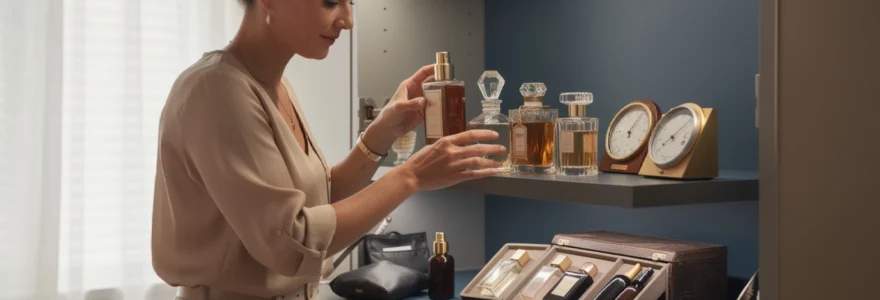
The art of perfumery represents centuries of craftsmanship, where master perfumers blend precious ingredients to create olfactory masterpieces that can transport you to distant memories or exotic locations. However, these delicate compositions face constant threats from environmental factors that can dramatically alter their character, potency, and longevity. Understanding the science behind fragrance degradation and implementing proper storage protocols can extend the life of your precious bottles from months to decades, ensuring that each spray delivers the exact aromatic experience the perfumer intended.
Proper perfume storage isn’t merely about maintaining scent quality—it’s about preserving an investment. Premium fragrances can cost hundreds of pounds per bottle, making their protection a financial priority alongside aesthetic considerations. The molecular complexity of modern perfumery requires specific environmental conditions to maintain stability, and even minor deviations from optimal storage parameters can trigger irreversible chemical reactions that fundamentally alter a fragrance’s composition.
Understanding perfume composition and degradation factors
Modern perfumery relies on intricate molecular structures that create the complex olfactory experiences we associate with luxury fragrances. These compositions typically contain between 50 to 300 individual aromatic compounds, each contributing specific notes that unfold over time on the skin. The delicate balance between these molecules makes fragrances particularly susceptible to environmental degradation, where even minor changes can cascade through the entire composition, altering the intended scent profile dramatically.
The base structure of most commercial perfumes consists of aromatic compounds dissolved in ethanol, with water and stabilising agents added to ensure consistency. This alcohol-based solution creates an environment where volatile organic compounds can interact freely, enabling the gradual release of fragrance molecules that creates the layered scent experience. However, this same molecular mobility makes perfumes vulnerable to oxidation, evaporation, and photochemical degradation processes that can fundamentally alter their character over time.
Volatile organic compounds and evaporation rates in eau de parfum vs eau de toilette
The concentration of aromatic compounds directly influences how quickly a fragrance will degrade under improper storage conditions. Eau de Parfum typically contains 15-20% aromatic compounds, while Eau de Toilette contains only 5-15%, creating significantly different evaporation profiles and stability characteristics. The higher concentration in Eau de Parfum creates a more stable molecular environment, as the aromatic compounds can form protective associations that slow individual molecule evaporation rates.
Volatile organic compounds in the top notes, particularly citrus oils and aldehydes, possess the lowest molecular weights and therefore evaporate most rapidly when exposed to air or heat. These compounds typically begin evaporating within minutes of bottle opening, which explains why citrus-heavy fragrances can seem to lose their initial brightness after repeated exposure to air. The evaporation rate increases exponentially with temperature, meaning that storage temperature control becomes critical for maintaining the intended balance between top, middle, and base notes.
Oxidation effects on aldehydes and essential oil components
Oxidation represents one of the most destructive processes affecting perfume quality, particularly impacting aldehydes and natural essential oil components that form the backbone of many luxury fragrances. When oxygen molecules interact with these delicate compounds, they can break existing molecular bonds and form new chemical structures that smell entirely different from the original composition. This process is irreversible and can transform a beloved fragrance into an unpleasant, sour-smelling liquid within months of improper storage.
Essential oils derived from natural sources prove particularly vulnerable to oxidative damage due to their complex molecular structures and the presence of unsaturated compounds that readily react with oxygen. Rose otto, jasmine absolute, and sandalwood oil can all undergo significant chemical changes when exposed to air, often developing harsh metallic or medicinal odours that overwhelm the delicate floral or woody characteristics they’re meant to provide. The oxidation process accelerates dramatically in the presence of light and heat, making environmental control absolutely critical for preserving these precious ingredients.
Light-induced photodegradation of citrus top notes and bergamot
Ultraviolet radiation triggers photochemical reactions that specifically target the delicate molecular structures found in citrus oils and bergamot extra
cts, gradually stripping away their brightness and transforming them into dull, sometimes rancid-smelling residues. Bergamot, lemon, grapefruit, and orange oils contain photosensitive molecules such as furocoumarins that are particularly prone to photodegradation. As these molecules break down, the top notes that once felt sparkling and effervescent can become flat, bitter, or oddly waxy, radically shifting the opening of the fragrance.
This degradation does not only affect the initial impression; it can also unbalance the entire perfume pyramid. When the luminous citrus top collapses prematurely, the transition into the heart and base notes feels abrupt and less nuanced, making the fragrance smell “off” even if the mid and base notes are still structurally intact. This is why storing citrus-heavy perfumes on a sunny vanity or windowsill can ruin them within a single season, while identical bottles kept in darkness may remain vibrant for years.
Temperature fluctuation impact on molecular structure stability
Temperature acts as a catalyst for many of the degradation pathways that affect perfume quality. Repeated cycles of heating and cooling create expansion and contraction within the liquid matrix, subtly stressing the molecular structures and accelerating reactions such as oxidation, hydrolysis, and polymerisation. Over time, these processes can thicken the juice, alter its colour, and distort the balance between volatile and heavier components, leaving the fragrance either overly sharp or unexpectedly muted.
Extreme heat is especially damaging, as it boosts molecular kinetic energy and speeds up every reaction taking place inside the bottle. Leaving a perfume in a hot car, near a radiator, or on a bathroom shelf exposed to steam can shorten its effective life from several years to a few months. Conversely, very low temperatures can cause certain components—especially resins and heavy base materials—to precipitate or crystallise, sometimes permanently altering the diffusion and projection of the scent once it returns to room temperature.
Optimal storage environment parameters for fragrance preservation
To preserve perfume quality over the long term, we need to treat each bottle as a miniature chemical ecosystem that thrives within a narrow range of environmental conditions. The most stable perfumes are those stored at controlled temperatures, low humidity, and minimal light exposure, with as little contact with oxygen as possible. When you align all these parameters, you dramatically slow the degradation processes described earlier, allowing the scent profile to remain faithful to the perfumer’s original vision.
In practice, creating an optimal storage environment for your fragrance collection means thinking beyond convenience. While keeping bottles in the bathroom or on a sunny dresser may be tempting, these locations rarely provide the consistent microclimate that perfume requires. Instead, we look to spaces that are cool, dry, dark, and undisturbed—much like how fine wines or archival documents are treated when long-term preservation is the priority.
Temperature control: maintaining 15-20°C storage conditions
The ideal storage temperature for most perfumes sits in the 15–20°C (59–68°F) range. Within this band, the volatility of fragrance molecules is controlled, oxidation proceeds more slowly, and the structural integrity of delicate natural ingredients remains largely intact. Temperatures above 25°C (77°F) can double the rate of many degradation reactions, which explains why fragrances kept in hot climates or near heat sources often age noticeably faster.
What does this mean for everyday perfume storage? You should avoid placing bottles near radiators, heaters, sunny windows, or electronic devices that emit heat. A bedroom wardrobe, interior cupboard, or shaded drawer often provides a more stable environment. In very warm regions, a dedicated cosmetic mini-fridge set to a moderate, consistent temperature can be useful, but repeatedly moving bottles in and out of a cold domestic fridge—where temperatures and humidity fluctuate—can be more harmful than helpful.
Humidity management and moisture protection techniques
Humidity introduces another set of risks for perfume preservation. While sealed bottles do not absorb moisture directly, high ambient humidity can accelerate label deterioration, metal component corrosion, and, in splash bottles, potential water contamination. Steam-filled bathrooms are especially problematic, as they combine elevated temperature with moisture, creating an environment that encourages both oxidation and hydrolysis of sensitive ingredients.
To manage humidity, store your perfumes in rooms that remain relatively dry throughout the year, ideally with relative humidity below 60%. If you live in a particularly humid climate, consider placing your collection inside a closed cabinet with small desiccant sachets or silica gel packets to absorb excess moisture. For collectors of rare or vintage fragrances, storing bottles in an airtight plastic container or archival storage box, with desiccants included, provides an extra layer of protection against ambient humidity over the long term.
UV light protection: amber glass vs clear crystal bottle analysis
Not all perfume bottles offer the same level of protection from light. Amber and opaque glass act as effective filters for ultraviolet radiation, significantly reducing the amount of energy that reaches the juice and thus slowing photodegradation. Clear crystal, although visually stunning and often preferred for luxury presentation, provides far less UV shielding, leaving light-sensitive ingredients—especially citrus top notes and certain naturals—more exposed to damage.
Interestingly, even coloured glass such as pale blue or pink typically offers only partial protection, since many dyes used in decorative glassware are not designed to block UV wavelengths. This means that a visually “dark” bottle displayed in sunlight may still allow harmful radiation to penetrate. The safest approach for long-term perfume storage is therefore to keep all bottles, regardless of colour, inside their original boxes or in closed cabinets, and to reserve open display for empty or decorative flacons where scent preservation is no longer a concern.
Air exposure minimisation and oxidation prevention methods
Every interaction between perfume and oxygen nudges the composition closer to oxidation. While we cannot eliminate air exposure completely—spraying requires air exchange—we can minimise it through thoughtful handling and storage. Atomiser bottles that seal tightly after use offer a significant advantage over splash or dab bottles, as the spray mechanism limits the surface area of liquid exposed to air and quickly closes the system again.
To further reduce oxidation, avoid opening multiple new bottles at once if you do not intend to rotate them regularly. Keep caps firmly fastened after each use, and resist the urge to remove atomiser heads or decant large volumes unless absolutely necessary. For collectors, decanting small amounts into travel atomisers while keeping the main bottle unopened or minimally disturbed is an effective strategy to preserve the bulk of the fragrance for years longer than a frequently opened primary bottle.
Professional storage solutions and container selection
As fragrance collections grow—whether for professional purposes or personal passion—the need for more structured storage solutions becomes clear. Professional perfumers, retailers, and serious enthusiasts rely on systems that regulate light, temperature, humidity, and mechanical shock, effectively treating perfumes like archival materials. You may not need a full laboratory setup at home, but borrowing some of these principles can transform how long your perfumes remain wearable and vibrant.
Purpose-built perfume cabinets, often lined, opaque, and fitted with soft-close doors, provide excellent protection from light and accidental knocks. For those with very large or high-value collections, temperature-controlled display units or wine refrigerators set to a moderate, stable temperature can be adapted for fragrance storage, provided humidity is controlled and strong internal lighting is used sparingly. The key is to select a solution that keeps conditions steady and reduces the frequency with which bottles are handled unnecessarily.
Container selection also plays a crucial role. Glass remains the preferred material for long-term fragrance storage because it is chemically inert under normal conditions, does not leach compounds into the fragrance, and provides an effective barrier against gas exchange when properly sealed. High-quality atomisers with tight-fitting mechanisms minimise evaporation and oxidation, while low-quality sprayers or plastic components can degrade over time, contaminating the juice with off-odours or particles. Whenever you decant, choose laboratory-grade or perfume-specific glass atomisers rather than generic plastic vials intended for short-term use.
Travel and daily-carry containers deserve special attention. While plastic travel atomisers are convenient and lightweight, they are best suited for short-term use—days or weeks rather than months. If you plan to keep a decant for longer, opt for glass travel sprays with metal casing to protect against light and impact. Always clean and dry atomisers thoroughly before refilling to avoid cross-contamination of fragrances or inadvertent dilution from residual alcohol or water.
Specific storage protocols for different fragrance categories
Not all perfumes age in the same way, and different fragrance categories have distinct vulnerabilities that influence how you should store them. Citrus colognes, heavy ouds, natural niche fragrances, and mainstream designer scents each respond differently to light, heat, and time. By tailoring your storage approach to the composition, you can significantly improve the lifespan of each bottle and avoid common disappointments such as “disappearing” top notes or unexpected sourness.
Understanding these nuances also helps you prioritise which perfumes to use more quickly and which can be safely kept for special occasions. For instance, a minimalist, all-natural citrus eau de cologne will typically require faster rotation than a resinous amber extrait rich in synthetic stabilisers. Thinking in terms of “fragility tiers” allows you to manage your collection strategically, ensuring that your most delicate compositions are enjoyed at their peak rather than left to degrade on the shelf.
Citrus-dominant and cologne-style fragrances benefit most from meticulous storage due to their high proportion of light, volatile top notes. Keep these in their original boxes, away from any light sources, and avoid prolonged exposure to warmth—for example, in a handbag on a hot day. In contrast, woody orientals, leathers, and oud-based fragrances tend to be more robust and sometimes even improve with careful aging, as heavier base molecules integrate more fully; nonetheless, they are still susceptible to oxidation if left uncapped or stored in hostile environments.
Natural and niche perfumes formulated with a high percentage of essential oils and minimal synthetic stabilisers require especially conservative storage protocols. These compositions often lack the antioxidants and UV filters found in mainstream designer releases, making them more responsive to environmental stress. For such fragrances, dark, cool cupboards or temperature-controlled storage, minimal air exposure, and limited decanting are essential. Conversely, mass-market perfumes that rely heavily on modern aroma-chemicals and fixatives typically exhibit greater intrinsic stability but still benefit from the same basic principles: darkness, cool temperatures, and tight seals.
Long-term preservation techniques for vintage and rare fragrances
Vintage and rare perfumes present a unique challenge: they are often decades old, sometimes already partially oxidised, yet highly prized for their historical formulas and now-unobtainable ingredients. Once a bottle is opened, the goal shifts from simply “storing” the perfume to actively conserving it, much like an art restorer working to slow the aging of a painting while respecting its original character. Every decision—from whether to open a sealed box to how often to spray—has a noticeable impact on how long the fragrance will remain enjoyable.
For unopened vintage bottles, the best strategy is to maintain the status quo: keep them sealed, in their original packaging, stored in a cool, dark, and dry place with minimal temperature fluctuation. If the bottle uses a splash closure rather than an atomiser, you might consider carefully decanting a small portion into a modern, airtight spray bottle for personal use, leaving the remainder as undisturbed as possible. This approach limits ongoing oxygen exposure to the bulk of the juice while allowing you to experience the fragrance without compromising the entire bottle.
Collectors sometimes debate the merits of refrigerating rare perfumes. A dedicated cosmetic or wine fridge set to a stable, moderate temperature and low humidity can be beneficial, particularly in hot climates, but frequent removal and return of bottles can introduce condensation and temperature shocks. If you choose refrigeration, reserve it for the most fragile or valuable bottles, minimise door openings, and always allow fragrances to return slowly to room temperature before spraying to avoid condensation entering the bottle or altering the first impression of the scent.
Monitoring is crucial for long-term preservation. Periodically inspect vintage and rare fragrances for changes in colour, clarity, or viscosity, and note any shifts in scent when you test a small spray. Subtle darkening or mellowing can be entirely natural—especially in formulas rich in resins, vanilla, or certain florals—while sharp sourness, metallic notes, or a pronounced “vinegar” top can signal advanced oxidation. When a bottle begins to show clear signs of decline, you may choose to enjoy it more frequently rather than saving it indefinitely, ensuring that you experience its character while it still reflects the original composition as closely as possible.
Finally, treat the physical bottle as part of the preservation project. Many vintage flacons feature natural corks, tassels, or delicate decorative elements that can degrade under high humidity or UV exposure. Store these bottles upright to prevent prolonged contact between the juice and vulnerable closures, and consider using archival storage boxes or acid-free tissue to protect labels and packaging. By combining careful environmental control with respectful handling, you give your vintage and rare fragrances the best chance of surviving not just as functional perfumes, but as authentic historical artefacts of perfumery’s golden eras.