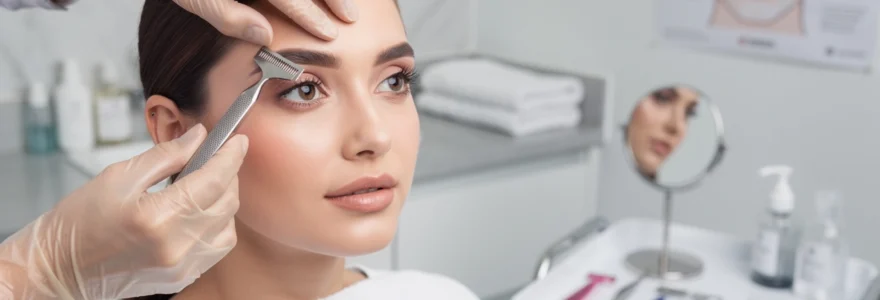
Achieving perfectly groomed eyebrows no longer requires expensive salon appointments or painful plucking sessions. The eyebrow razor has emerged as a transformative tool in facial grooming, offering professional-level precision in the comfort of your own home. This compact device combines dermaplaning technology with traditional hair removal techniques, delivering smooth, well-defined brows in seconds. Whether you’re maintaining established brow architecture or correcting overgrown areas, mastering this versatile instrument will revolutionise your beauty routine. With proper technique and understanding of blade mechanics, you can achieve results that rival professional treatments whilst saving both time and money.
Dermaplaning blade anatomy: understanding eyebrow razor construction
The effectiveness of any eyebrow razor depends fundamentally on its construction and design elements. Understanding the anatomy of these precision instruments helps you select the right tool and use it correctly. Modern eyebrow razors represent sophisticated engineering, balancing sharpness with safety to deliver controlled hair removal. Each component serves a specific purpose in the dermaplaning process, from the blade’s edge geometry to the handle’s ergonomic profile.
Single-edge stainless steel blade configuration
The heart of every eyebrow razor is its single-edge blade, typically manufactured from high-grade stainless steel. Unlike multi-blade cartridge razors designed for larger body areas, eyebrow razors feature a single cutting edge positioned at a fixed angle to the handle. This configuration provides superior control when navigating the contours of the brow bone and eye socket area. The blade width typically ranges from 10-15mm, narrow enough for precise work yet wide enough to cover small areas efficiently. Stainless steel resists corrosion from moisture and skin oils, maintaining sharpness throughout its 2-3 month lifespan under normal use conditions.
The blade’s cutting edge undergoes specialised grinding processes to achieve optimal sharpness without excessive aggression. Most professional-grade eyebrow razors feature blades ground to an angle between 20-30 degrees, striking a balance between cutting efficiency and safety. This angle allows the blade to slice through hair cleanly at the follicle level whilst minimising the risk of nicks or cuts. The thickness of the blade itself typically measures 0.1-0.15mm, providing sufficient rigidity for consistent performance whilst remaining flexible enough to follow facial contours.
Guard design and safety angle mechanisms
Protective guards distinguish quality eyebrow razors from potentially dangerous alternatives. These guards sit above or alongside the blade edge, creating a controlled distance between the cutting surface and your skin. The guard prevents excessive pressure application and limits how deeply the blade can penetrate, significantly reducing injury risk. Most designs incorporate either a solid bar guard or a comb-style guard with multiple teeth, each offering distinct advantages for different hair types and skin sensitivities.
The safety angle—the predetermined angle at which the blade meets the skin—is engineered into the razor’s head design. This fixed geometry ensures consistent results regardless of user experience level. Professional eyebrow razors typically feature safety angles between 35-45 degrees from the skin surface, optimising hair removal efficiency whilst maintaining protective distance. Some premium models include adjustable guard mechanisms, allowing you to customise the blade exposure based on hair thickness and personal comfort levels.
Handle ergonomics for precision control
Handle design dramatically influences your ability to execute precise, controlled strokes during eyebrow shaping. Ergonomically designed handles feature contoured grips that nest comfortably between your fingers, providing stability during delicate work around the eye area. The handle length typically ranges from 10-15cm, long enough to offer control without becoming unwieldy in tight spaces. Materials vary from plastic to metal, with textured surfaces or rubberised grips preventing slippage during use.
Weight distribution plays a crucial role in handling characteristics. Well-balanced razors position the centre of gravity near the grip point, reducing hand fatigue during extended grooming sessions. Some designs incorporate a wider base that tapers toward the blade end, creating a natural pivot point that enhances manoeuvrability. The angle between the handle and blade head—typically 15-30 degrees—affects visibility and access to different brow zones, with
more angled designs offering better visibility for beginners. When you test an eyebrow razor in your hand, pay attention to whether you can change direction smoothly without adjusting your grip; a well-designed handle will feel almost like an extension of your fingers. For very detailed brow work, slim handles often provide more finesse, while slightly thicker handles are ideal if you have joint issues or reduced dexterity. Ultimately, the right ergonomics reduce the learning curve and make precise brow shaping feel more intuitive and less like a high-risk task.
Blade sharpness grades: japanese vs german steel
Blade sharpness and steel quality significantly influence how smoothly an eyebrow razor glides over the skin. Two of the most respected categories in the beauty and shaving industry are Japanese and German stainless steels. Japanese blades are traditionally known for ultra-fine, extremely sharp edges, inspired by centuries of blade-making craftsmanship. German steel, on the other hand, is celebrated for durability, even wear, and consistent performance over time. When it comes to eyebrow razors, you will often find manufacturers referencing one of these steel origins in their marketing, as both deliver high precision for facial hair removal.
Japanese steel eyebrow razors typically feel very smooth on the first few uses, requiring almost no pressure to cut through fine hairs and peach fuzz. This makes them ideal if you want ultra-precise brow shaping or if your skin is sensitive to drag and tugging. The trade-off is that such fine edges can dull more quickly, especially if not dried properly after use. German steel options may feel marginally less sharp out of the box but usually maintain their performance over a longer period, making them a solid choice for those who dermaplane more frequently or want a dependable daily eyebrow razor.
In practical terms, choosing between Japanese and German steel often comes down to your grooming habits and skin type. If you dermaplane once every one to two weeks and prioritise the smoothest, most “glass-like” finish, a Japanese steel eyebrow razor is a strong option. If you perform quick brow touch-ups several times a week, a German steel blade may give you more stable results with less frequent replacement. Whichever you choose, ensure the blade is labelled hypoallergenic stainless steel to minimise the risk of irritation or metal sensitivity around the delicate eye area.
Facial hair removal technique: mastering the eyebrow razor stroke
Even the best-constructed eyebrow razor will only perform as well as your technique allows. Mastering the stroke is what turns a simple tool into a professional-level dermaplaning device for precise brow shaping. Unlike shaving larger body areas, eyebrow grooming demands small, deliberate movements that respect the natural brow architecture. Think of it less like mowing a lawn and more like sketching fine lines with a pencil: control, angle, and pressure make all the difference. With a few foundational methods, you can use an eyebrow razor to maintain your brows between appointments or even replace salon visits completely.
45-degree angle application method
The cornerstone of safe and effective dermaplaning with an eyebrow razor is the 45-degree angle application method. Holding the blade at roughly 45 degrees to the skin allows the cutting edge to glide across the surface rather than digging in. Imagine how you would slice bread with a sharp knife—angled rather than straight down; this is a similar principle. Too steep an angle (closer to 90 degrees) increases the risk of nicks and irritation, while too shallow an angle (almost flat) makes the blade less efficient and can cause dragging. By maintaining this mid-range angle, you get clean hair removal with minimal trauma to the skin.
To set up the correct angle, place the eyebrow razor so that the spine of the blade (the non-cutting edge) makes contact with your skin first, then gently roll it until the cutting edge just engages. You should feel the blade glide rather than scrape. Keep your wrist relaxed and focus on moving from your elbow or forearm so the angle stays consistent as you move along the brow area. For best results in eyebrow shaping, work in short sections of 1–2cm at a time, resetting your angle if you reposition your hand. With practice, this 45-degree angle becomes instinctive and is the key to a smooth, comfortable dermaplaning experience.
Directional shaving patterns for brow architecture
The direction in which you move your eyebrow razor has a major impact on both safety and aesthetic outcome. For most brow shaping, you’ll achieve the cleanest results by shaving in the same direction as hair growth, especially in the sensitive arch and tail areas. This “with-the-grain” technique reduces the risk of ingrown hairs and is gentler on the skin barrier. In the upper brow region, hairs typically grow downward, so you’ll glide the razor in small downward strokes, while under the brow, hair may grow both downward and slightly diagonally, requiring you to adjust accordingly. Following the natural growth pattern respects your existing brow architecture and keeps the overall shape looking soft and realistic.
In some cases—particularly when removing peach fuzz on the forehead or temple area—you can use a slight “across-the-grain” stroke for closer dermaplaning. This involves moving the eyebrow razor at a slight diagonal to hair growth, never straight against it. This method is helpful if you want foundation to sit flawlessly or if you have stubborn fine hairs that resist removal. However, reserve more aggressive directional patterns for non-brow zones and always use very light pressure. Around the actual brow outline, prioritise control and symmetry over closeness, remembering that it is easier to remove a little more later than to correct an over-thinned brow.
Skin tension control during dermaplaning
Proper skin tension is one of the most overlooked aspects of using an eyebrow razor for facial hair removal. If the skin is loose or folded, the blade can catch unexpectedly, increasing the chance of small cuts or jagged lines in your brow shape. To prevent this, use your non-dominant hand to gently pull the skin taut in the area you’re working on. For example, when shaping beneath the arch, place a finger at the outer corner of your eye and lift slightly upward and outward. This transforms the surface into a smooth, flat plane, allowing the razor to glide in controlled strokes.
Think of skin tension like stretching canvas before you paint: a tight, even surface gives you sharper, more precise lines. Without it, the blade has to travel over bumps and creases, which disrupts your stroke. Maintain only gentle tension—enough to flatten the skin but not so much that you pull the brow out of its natural resting position. Over-stretching can distort the hairline and make it harder to judge where to remove hair. As you move across different sections (inner brow, arch, tail, and temple), reposition your fingers so each new area is properly supported. This simple habit dramatically increases both safety and accuracy during brow dermaplaning.
Feathering technique for natural brow tapering
For natural-looking brows, the way you finish the edges is just as important as the overall shape. The feathering technique involves using very short, light strokes with the eyebrow razor to create a soft taper at the front and tail of the brow. Instead of removing a solid block of hair in one motion, you skim only the outermost layer of fine hairs, mimicking the effect of individual hair strokes. This is particularly effective if you’re aiming for a modern, fluffy brow look but still want clean lines. By gradually reducing density rather than slicing off entire clusters of hair, you avoid the harsh, overly “cut-out” appearance that can happen with aggressive razoring.
To feather with an eyebrow razor, hold the blade almost parallel to the hair direction—still at a safe angle—but use minimal pressure, almost as if you’re just dusting the surface. Work from the outer edges inward, assessing your progress after each pass. At the front of the brow (near the bridge of the nose), focus on removing only stray hairs that fall far outside your ideal outline, keeping some softness to maintain a natural gradient. On the tail, feathering helps you create a subtle, elegant taper rather than an abrupt stop. If you combine this technique with a brow pencil or tint later, your brows will appear fuller and more multidimensional, with the razor work invisible to the casual eye.
Professional eyebrow razor brands: tinkle vs schick vs tweezerman
When you start shopping for an eyebrow razor, you’ll quickly notice a few brand names that come up again and again: Tinkle, Schick, and Tweezerman. Each has developed a strong reputation in the dermaplaning and facial hair removal space, but they cater to slightly different needs and preferences. Tinkle razors are popular for their affordability and user-friendly design, making them a go-to for beginners and at-home grooming. Schick offers a range of precision razors with a focus on safety features and replaceable blades, which appeals to those who want reliable performance and easy access to refills. Tweezerman, known widely in the professional brow world, positions its eyebrow razors and dermaplaning tools at a more premium level, prioritising durability, sharpness, and ergonomic detail.
If you are just experimenting with eyebrow shaping at home, Tinkle razors can be an excellent entry point. They usually come in multi-packs, feature protective guards, and are gentle enough for facial peach fuzz as well as brow clean-up. Schick eyebrow razors often include wider handles and textured grips, ideal if you want a secure hold or plan to use them in the shower or bathroom where hands may be slightly damp. Tweezerman products, while more expensive per unit, often use higher-grade stainless steel and refined blade grinding processes, making them especially attractive to makeup artists, estheticians, and anyone who wants a “salon-grade” tool in their personal kit. When deciding between them, consider how often you’ll use your eyebrow razor, your budget, and whether you prioritise disposable convenience or long-term tool quality.
Pre-shaping preparation: skin conditioning and sanitisation protocols
Effective eyebrow razor use starts long before the blade touches your skin. Proper preparation minimises irritation, supports the skin barrier, and reduces the risk of post-dermaplaning breakouts. Begin by thoroughly cleansing the brow and surrounding areas with a gentle, non-stripping cleanser to remove makeup, sunscreen, and sebum. You want the skin to be completely clean and dry; avoid using heavy moisturisers, oils, or lotions immediately beforehand, as these can cause the razor to slip and reduce precision. If you have very oily skin, a light swipe of alcohol-free toner can help remove residual shine and create a more stable surface for eyebrow shaping.
Sanitisation is another crucial step, especially when you are working so close to the eye. Before each session, wipe the blade of your eyebrow razor with an alcohol-based disinfectant or a sanitising wipe, then allow it to air dry fully. This simple routine helps reduce bacterial load on the blade and lowers the risk of folliculitis or small infected nicks. If you’re using a reusable stainless steel handle with replaceable cartridges, follow the manufacturer’s cleaning instructions and always store the razor in a dry, ventilated place with its safety cap on. For those with very sensitive or reactive skin, patch testing on a small area of the jawline before working around the brows can help you gauge how your skin responds to dermaplaning.
Beyond cleansing and sanitisation, skin conditioning can make a noticeable difference to how smoothly the eyebrow razor glides. Incorporating gentle exfoliation (such as a mild enzyme or lactic acid treatment) on non-dermaplaning days can help keep dead skin build-up under control, so the blade has less resistance. However, never exfoliate with acids or scrubs on the same day you use an eyebrow razor, as this can over-strip the skin barrier and increase redness or stinging. If you are prone to inflammation, you may also consider applying a very thin layer of a soothing, fragrance-free gel or serum after shaping rather than before, to calm the area without interfering with the blade’s performance.
Common eyebrow shaping errors: razor pressure and over-trimming prevention
While eyebrow razors are designed to make brow grooming easier, certain missteps can quickly turn a simple tidy-up into a shape you regret. The two most frequent issues are using too much pressure and removing more hair than intended. Because an eyebrow razor feels light and harmless compared to traditional blades, it’s tempting to press harder to “speed things up.” In reality, this only increases friction, drag, and irritation. Similarly, trying to achieve a dramatic reshaping in one session can lead to over-thinned arches or tails that appear chopped off. Recognising these pitfalls and learning how to avoid them will help you get consistently clean, flattering brows without the drama.
Blade drag marks and skin irritation causes
Blade drag marks—those faint, red streaks that appear after shaving—are often the first sign that your technique or tool needs adjustment. They typically arise from using a dull blade, applying too much pressure, or working on inadequately prepared skin. When the eyebrow razor drags rather than glides, microscopic abrasions can form on the surface, weakening the skin barrier and causing stinging when you apply skincare or makeup. A common mistake is assuming that increased pressure will compensate for a dull blade; in reality, it only magnifies the problem. If you notice the razor skipping or catching, it’s time to replace the blade rather than pressing harder.
To minimise irritation, always work with a sharp, clean eyebrow razor and use the lightest pressure that still allows the blade to cut hair. Imagine you are removing dust from a delicate surface, not scraping paint from a wall—the touch should be that gentle. Keep the skin dry and properly tensioned, and avoid going over the same area repeatedly in a single session. If your skin is particularly reactive, you may find it beneficial to space out dermaplaning sessions to every 10–14 days and avoid using strong active ingredients (like retinoids or high-strength acids) for a couple of days before and after. Listening to your skin’s feedback is crucial; persistent redness, burning, or flaking is a sign to step back and reassess your approach.
Asymmetrical arch creation and correction
Have you ever stepped back from the mirror and realised your brows suddenly look like distant cousins rather than sisters? Asymmetrical arches are a common consequence of overzealous eyebrow razor use. It’s easy to remove a few extra hairs from one side in an attempt to “even things out,” only to chase symmetry back and forth until both brows are much thinner than planned. The root cause is often lack of a clear guide: shaping on instinct rather than following a pre-mapped outline. Because an eyebrow razor can remove multiple fine hairs in a single stroke, the margin for error is smaller than with tweezers, which pluck one hair at a time.
To prevent asymmetry, map your brows before you begin using a pencil or brow marker to outline your desired shape. Use standard reference points—the inner brow lining up with the outer edge of the nostril, the arch aligning with the iris or outer edge of the pupil, and the tail pointing toward the outer corner of the eye. Work on both brows alternately: complete a small section on one side, then mirror the same section on the other before moving on. If you do end up with uneven arches, resist the urge to keep shaving. Instead, stop, fill in the sparser brow with a pencil or powder for the short term, and give the thinner side a few weeks to regrow before making further adjustments.
Tail length miscalculation solutions
The tail of the eyebrow plays a huge role in framing the eye and balancing facial proportions, yet it’s one of the easiest areas to over-trim with an eyebrow razor. Removing too much from the tail can create a lifted but unbalanced look, or in some cases, make the brows appear “stubby” and incomplete. This often happens when users follow fleeting trends for ultra-short tails or misjudge where the natural end of the brow should be. Because the tail hairs are usually finer and sparser, a couple of careless strokes can erase them almost entirely, and regrowth may take several weeks.
To calculate ideal tail length, use a simple mapping method: hold a straight tool (like a makeup brush) from the side of your nose to the outer corner of your eye; where it intersects your brow line is a reliable guideline for where the tail should end. When using your eyebrow razor near this point, treat it as a “no-go zone” and focus only on cleaning up clear strays that fall well outside this boundary. If you’ve already shortened your brow tails too much, you can visually extend them with brow products while you wait for regrowth. Some people also find that applying a targeted brow serum can support faster, fuller recovery, though this varies from person to person.
Post-dermaplaning aftercare: barrier repair and ingrown hair prevention
What you do after using an eyebrow razor is just as important as the shaping process itself. Dermaplaning, even when done gently, temporarily disrupts the outermost layer of the skin barrier by removing fine hairs and surface cells. This makes the area more receptive to skincare but also more vulnerable to irritation and environmental stress. Immediate aftercare should focus on soothing, hydrating, and protecting the freshly treated skin without clogging pores or triggering breakouts. Think of it as “cool-down” time after a workout: a necessary recovery phase that keeps your results looking smooth and polished.
Right after shaping, rinse the area with cool or lukewarm water to remove any loose hairs and debris, then gently pat dry with a clean towel—never rub. Follow with a lightweight, fragrance-free moisturiser that contains barrier-supporting ingredients such as ceramides, glycerin, or hyaluronic acid. If your skin is prone to redness, a serum with niacinamide or aloe vera can help calm the area. During the first 24–48 hours after dermaplaning, avoid harsh actives like retinoids, strong acids, or physical scrubs on the brow and surrounding zones. Sun protection is non-negotiable: apply a broad-spectrum SPF 30 or higher daily, as freshly dermaplaned skin can be more sensitive to UV exposure, which may increase the risk of pigmentation or irritation.
In terms of ingrown hair prevention, eyebrow dermaplaning is generally lower risk than shaving coarser areas such as the bikini line or beard region, but issues can still arise if you shave against the grain or apply too much pressure. Keeping your strokes light and aligned with hair growth significantly reduces this risk. If you’re particularly prone to ingrowns, you can incorporate a very gentle chemical exfoliant (such as a low-percentage salicylic or lactic acid) once or twice a week—on days when you are not using your eyebrow razor—to help keep follicles clear. Always observe how your skin responds and scale back if you notice dryness or flaking.
Finally, look after the tool itself as part of your aftercare routine. Rinse the eyebrow razor blade under running water or wipe with a damp cloth to remove hair, then disinfect with an alcohol-based spray or wipe and allow it to dry completely before replacing the safety cap. Store it in a cool, dry place rather than in a steamy bathroom cabinet to reduce corrosion and bacterial growth. Replace the blade or disposable razor every 2–3 months, or sooner if you notice any tugging or loss of sharpness. By pairing thoughtful post-dermaplaning care with good tool hygiene, you support skin health, prevent complications, and ensure that each brow shaping session leaves you with clean, defined, and irritation-free results.