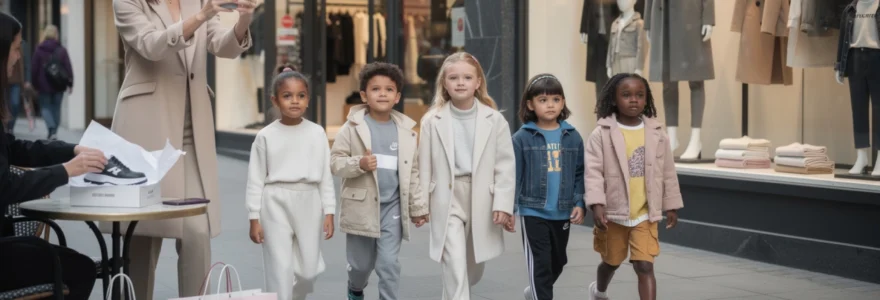
The children’s fashion industry has undergone a remarkable transformation over the past decade, evolving from an afterthought in retail strategy to a dynamic, trend-setting sector that rivals adult apparel in both commercial influence and cultural impact. What was once considered a purely functional market focused on durability and affordability has blossomed into a sophisticated industry worth billions, where luxury brands compete alongside fast fashion giants for the attention of discerning young consumers and their style-conscious parents. This shift reflects broader changes in consumer behaviour, the rise of social media, and evolving attitudes toward childhood itself. As premium designers launch dedicated children’s lines and kid influencers command millions of followers, the boundaries between adult and children’s fashion continue to blur in fascinating and sometimes controversial ways.
The rise of kidswear market valuation and revenue growth trajectories
The global children’s fashion market has experienced impressive expansion, with industry analysts projecting the sector to reach approximately $225.6 billion by 2028. This growth trajectory, whilst representing a compound annual growth rate (CAGR) of 2.4%, demonstrates remarkable resilience compared to other apparel categories, particularly considering declining birth rates in developed markets. The childrenswear segment proved notably robust during the pandemic years, when adult fashion suffered significant contractions. This resilience stems from what industry experts term the “essential nature” of children’s clothing—the simple fact that growing children require frequent wardrobe refreshment regardless of economic conditions.
What makes these figures particularly noteworthy is the shifting price point distribution within the market. Between 2018 and 2023, premium and luxury childrenswear segments captured increasing market share, defying traditional assumptions that parents would resist investing in garments with relatively short lifecycles. This willingness to spend reflects changing consumer priorities, with affluent millennials and Gen Z parents viewing children’s clothing as an extension of their own personal brand and values. The democratisation of luxury through social media exposure has normalised premium pricing in categories once dominated by budget-conscious purchases.
However, the market faces headwinds that will shape its evolution through 2028 and beyond. Shrinking family sizes across developed and emerging economies present a fundamental challenge to volume-based growth strategies. The average number of children per household continues to decline in key markets including China, where the reversal of the one-child policy has failed to produce the anticipated baby boom, and across European nations where economic uncertainty and changing lifestyle priorities influence family planning decisions. Consequently, brands must pursue value growth through premium positioning and increased wallet share rather than relying on expanding customer bases.
Social media amplification through child influencers and brand ambassadors
The intersection of children’s fashion and social media has created an entirely new paradigm for trend dissemination and brand awareness. Unlike traditional marketing channels where children’s clothing occupied subordinate positions in seasonal catalogues, digital platforms have elevated kidswear to standalone content categories that generate engagement rates often surpassing adult fashion content. This phenomenon extends beyond simple product showcasing to encompass lifestyle narratives where children’s outfits become integral to family brand storytelling.
Instagram and TikTok’s role in elevating mini fashion icons
Instagram revolutionised children’s fashion visibility by creating a visual marketplace where outfit photography transcends geographical and socioeconomic boundaries. Parents routinely document their children’s daily looks with the same attention to composition, lighting, and styling previously reserved for professional fashion photography. These posts, tagged with specific brands and style hashtags, create discoverability pathways that connect consumers directly with independent designers and boutique retailers who might never afford traditional advertising campaigns. The platform’s algorithmic prioritisation of high-engagement content means that particularly photogenic or creatively styled children can achieve viral visibility, transforming individual posts into brand-building opportunities.
TikTok has accelerated this trend through short-form video content that captures not just static outfits but the personality and movement of young fashion subjects. The platform’s predominantly Gen Z user base demonstrates remarkable engagement with children’s content, creating unexpected crossover appeal where fashion-forward kids become aspirational figures for teenagers and young adults. Dance challenges, outfit transitions, and “get ready with me” videos featuring children as young as toddlers accumulate millions of views, translating directly into purchase behaviour as viewers seek to replicate featured looks.
Ryan kaji and north west as commercial fashion catalysts
Individual child influencers
like Ryan Kaji and North West illustrate how children’s fashion can become a powerful commercial engine in its own right. Ryan, star of the massively popular Ryan’s World YouTube channel, has grown from toy reviews into a fully-fledged brand ecosystem that includes clothing lines in major retailers. His image on T-shirts, pyjamas and accessories turns simple childrenswear into licensed product with built-in demand, blurring the line between media franchise and fashion label. For brands, partnering with a child who already commands the trust and attention of millions of families is far more efficient than building awareness from scratch.
North West, meanwhile, operates at the intersection of celebrity culture, luxury fashion and social media virality. As the child of Kim Kardashian and Kanye West, her appearances at fashion shows, on reality TV and across Instagram and TikTok have normalised the idea of luxury outfits for children as a form of self-expression rather than special-occasion indulgence. When North wears a miniature Balenciaga look or early drops of Yeezy Kids, the imagery circulates globally within hours, creating aspiration not only for children but for parents eager to project a certain lifestyle. In both cases, the child becomes a fashion catalyst whose wardrobe choices can shift sales, influence design decisions and accelerate trends far beyond the traditional kidswear audience.
Mommy blogger networks and their impact on childrenswear trends
Beyond celebrity offspring and YouTube megastars, a vast ecosystem of “mommy bloggers” and parenting influencers plays a crucial role in shaping what children wear. These creators, often seen as more relatable than traditional celebrities, share daily outfit posts, shopping hauls and “day in the life” reels where childrenswear appears organically rather than as overt advertising. Because their followers are usually parents in the same life stage, recommendations about children’s fashion brands carry significant weight and can drive rapid spikes in demand for specific pieces. A single viral post of a toddler in a distinctive raincoat or organic cotton romper can sell out stock within days.
These influencer networks also act as informal trend labs for kidswear brands. By monitoring which posts perform best and which styles are saved, shared and commented on, companies gain real-time insight into emerging preferences in children’s fashion. Are parents gravitating towards gender-neutral palettes, nostalgic cartoon prints or miniature versions of streetwear? Instead of commissioning costly focus groups, brands can watch these conversations unfold in Instagram comments and Facebook groups. In that sense, mommy bloggers function like hyperlocal fashion editors, curating what feels practical, aspirational and age-appropriate, and helping translate high-level trends into everyday outfits that work for busy families.
Unboxing culture and children’s fashion haul content economics
Unboxing videos and fashion hauls have moved from niche YouTube content to a mainstream marketing channel, and childrenswear is now firmly part of this economy. When children or parents film the process of opening packages, trying on outfits and reacting in real time, they provide a level of detail and authenticity that static product photos cannot match. Viewers see how fabrics move, how sizing runs and how pieces mix-and-match with existing wardrobes, which reduces uncertainty and nudges them towards a purchase. For retailers, this is the digital equivalent of a friend’s recommendation combined with an in-store fitting room experience.
Economically, this unboxing culture generates a feedback loop that rewards both creators and brands. Influencers receive affiliate commissions, sponsorship fees or gifted products, giving them incentive to feature specific childrenswear labels and new drops. Brands, in turn, gain cost-effective exposure to highly targeted audiences, using engagement metrics to decide which items deserve larger production runs or repeat seasons. It’s similar to a live focus group that also functions as advertising. For you as a parent or industry professional, understanding this dynamic is key: the clothes that dominate your feed aren’t always the result of organic demand alone, but of a finely tuned system where content performance and sales data inform each other in near real time.
Luxury maisons expansion into premium childrenswear collections
As childrenswear has become more visible and aspirational, luxury maisons have moved aggressively into the space with dedicated kids’ collections. What began as occasional baby gifts or logo-emblazoned rompers has evolved into full seasonal ranges mirroring adult runway themes. The logic is straightforward: if parents are willing to invest in designer handbags and ready-to-wear as expressions of identity, a subset will also pay a premium for children’s fashion that signals the same values. In essence, childrenswear becomes another touchpoint in the luxury lifestyle ecosystem, enabling brands to foster loyalty across generations.
This expansion also reflects a strategic response to slower growth in some adult segments. By tapping into the childrenswear market, luxury labels access a category that proved more resilient during economic turbulence and benefits from frequent replacement due to growth spurts. Accessories, outerwear and occasionwear for children offer particularly attractive margins, while gifting occasions such as birthdays, christenings and holidays provide recurring demand. The result is that children’s fashion now appears in flagship windows, high-profile campaigns and even couture-level collaborations, rather than being tucked away as a secondary offering.
Gucci kids, dior baby, and burberry children’s strategic positioning
Gucci Kids, Dior Baby and Burberry Children exemplify how luxury brands strategically position childrenswear to reinforce their core identity. Gucci leans into its maximalist aesthetic, translating bold prints, animal motifs and retro logos into playful yet recognisably “Gucci” pieces for children. This approach appeals to parents who want continuity between their own wardrobe and their child’s outfits, making family portraits or social media posts feel visually cohesive. Gucci Kids is often positioned alongside womenswear and menswear in-store, underlining the message that kids’ fashion is not an afterthought but part of the main brand universe.
Dior Baby, by contrast, emphasises softness, craftsmanship and heritage. Delicate embroidery, refined colour palettes and premium materials align with Dior’s broader narrative of timeless elegance, allowing the brand to dominate at the luxury gifting end of the children’s fashion market. Burberry Children focuses on iconic elements like the trench coat and check pattern, effectively “training” the next generation in brand recognition from a very early age. For all three, childrenswear is less about short-term profit and more about embedding the brand in family rituals and memories, thereby securing long-term affinity.
Mini-me fashion phenomenon and matching parent-child capsules
The “mini-me” fashion phenomenon—matching or coordinated outfits for parents and children—has become one of the most visible manifestations of childrenswear’s rising influence. Luxury, premium and even mass-market brands now offer parent-child capsules where signature pieces are produced in both adult and children’s sizes. On social media, coordinated looks photograph extremely well, making them highly shareable content for family influencers and aspirational parents. In many ways, these capsules function like limited-edition drops in streetwear: they generate urgency, encourage collection and signal in-the-know status.
For brands, mini-me fashion deepens emotional engagement. Matching outfits tap into themes of bonding, identity and belonging, turning a simple dress or sweatshirt into a symbol of family unity. At the same time, they help childrenswear “borrow” the cultural capital of adult fashion. When a child wears a mini version of a runway look or iconic sneaker, they become part of the same trend cycle as adults, which further blurs generational boundaries in fashion. You can think of this as storytelling through styling: parents project their values and aesthetic tastes, while children participate—willingly or not—in a curated public image.
Balenciaga and vetements youth lines disrupting traditional kidswear aesthetics
While many luxury childrenswear lines focus on cuteness or classicism, brands like Balenciaga and Vetements have pushed youth fashion in a radically different direction. Their kids’ collections often mirror the oversized silhouettes, ironic slogans and streetwear influences seen in adult lines, resulting in children dressed in what looks like scaled-down versions of edgy, avant-garde outfits. This disrupts conventional expectations that children’s clothing should be pastel, whimsical or overtly “sweet,” and instead positions kids as participants in the same fashion conversation as grown-ups.
Critics argue that these aesthetics can feel jarring or even inappropriate, importing adult cynicism and hype culture into childhood. Supporters counter that it simply acknowledges children’s existing exposure to streetwear and luxury logos through music, gaming and social media. From a market perspective, Balenciaga and Vetements prove that childrenswear can absorb experimental ideas and still find a paying audience, particularly among parents who see dressing their kids as an extension of their own fashion-forward identity. In this way, youth lines become a testing ground for how far the boundaries of kidswear can be stretched.
Price point analysis of designer children’s garments versus adult collections
On a per-piece basis, designer children’s garments often sit at a slightly lower absolute price point than adult equivalents, but the premium relative to non-designer kidswear is substantial. A logo T-shirt from a luxury maison might cost a third less for a child than for an adult, yet still be several times the price of a high-street alternative. Given that children outgrow clothing quickly, why are parents willing to pay these premiums? The answer lies in perceived value: branding, craftsmanship, social status and the emotional resonance of giving or owning something “special.”
For brands, childrenswear margins can be attractive because fabric usage is lower while pricing remains aspirational. However, the shorter lifecycle and smaller size ranges require careful inventory planning; overproduction is costly in a segment where resale and discounting can dilute brand equity. From the consumer side, we see a bifurcation: some families reserve designer kidswear for events and photographs, pairing it with more affordable basics day-to-day, while others integrate premium pieces into regular rotation, justified as “investment” in quality. Understanding these behavioural segments is crucial for any label positioning itself in the upper tiers of children’s fashion.
Fast fashion retailers prioritising children’s trend-driven merchandise
Whilst luxury brands elevate the aspirational side of kidswear, fast fashion retailers have democratised access to trend-driven children’s clothing on a massive scale. Chains such as Zara, H&M, Primark and online players like Shein and ASOS now release kids’ collections that closely track adult trends, from utility cargo trousers and tie-dye to cottagecore dresses and mini streetwear sets. For many parents, this offers a middle ground: children can participate in current looks without the investment required for premium brands. As a result, childrenswear is no longer limited to basic jeans and graphic tees; it’s a fast-moving category where prints, silhouettes and colour stories shift from season to season.
This prioritisation of fashion-forward kids’ collections is also a strategic move for retailers facing saturation in adult lines. By catering to style-conscious millennial and Gen Z parents—and increasingly, to children who express clear preferences from an early age—fast fashion brands secure additional revenue streams and customer loyalty. The risk, of course, is that rapid turnover in children’s fashion can exacerbate sustainability concerns, as garments with already short lifespans are replaced even more quickly. The challenge for retailers is to balance excitement and novelty with quality and responsibility.
Zara kids and H&M children’s rapid prototyping cycles
Zara Kids and H&M Children are particularly adept at applying their fast-turnaround design models to childrenswear. Drawing from real-time sales data and trend forecasting, they can move a design from sketch to store in a matter of weeks, allowing them to capitalise on viral kids’ fashion moments spotted on social media or celebrity children. When a specific print, colour or silhouette gains traction online, these brands are often first to offer an accessible interpretation for the mass market. For parents, this means children’s wardrobes can echo the same directional trends appearing in adult fashion editorials and street style.
This rapid prototyping cycle, however, functions like a double-edged sword. On the positive side, it gives families affordable access to contemporary design and allows retailers to experiment with new ideas without enormous upfront commitments. On the negative side, it can normalise disposable attitudes to childrenswear, encouraging frequent purchasing of low-cost items that may not be built to last. As you evaluate options for your own children or your brand strategy, it’s useful to view this model like a high-speed conveyor belt: incredibly efficient at delivering what’s “now,” but requiring firm guardrails to avoid excess waste.
Shein and ASOS kids leveraging data analytics for micro-trend adoption
Online-first retailers such as Shein and ASOS Kids push the trend-driven model even further by leveraging sophisticated data analytics. They track search terms, click-through rates, social media mentions and even image-recognition data to identify micro-trends in children’s fashion—think dinosaur prints in a specific colourway, or flared leggings with a particular stripe detail. Once a pattern appears, they can produce small test batches, monitor performance and then scale up or down accordingly. It’s akin to running thousands of tiny experiments to determine what resonates with different niches of parents and children.
For consumers, this results in a dizzying array of options and hyper-specific styles that might not be available in brick-and-mortar stores. Yet the underlying economic incentive is clear: keep you browsing longer and buying more. In the context of children’s clothing, where needs are legitimate but wants are highly influenced by novelty and peer visibility, this data-driven approach can be powerful. It raises important questions, though: at what point does giving kids “exactly what they want” tip into overconsumption, and how can brands use data responsibly to support better-quality, longer-lasting childrenswear rather than just faster cycles?
Uniqlo’s LifeWear philosophy applied to functional children’s basics
In contrast to ultra-fast trend adoption, Uniqlo applies its LifeWear philosophy to childrenswear, focusing on functionality, comfort and timeless design. Its kids’ ranges prioritise soft fabrics, easy-care finishes, UV protection and thoughtful details like adjustable waistbands or tagless labels to reduce irritation. While Uniqlo still nods to broader fashion themes through colour and pattern choices, the core proposition is that children’s clothing should support everyday life rather than chase fleeting trends. For many families, this approach offers a welcome counterbalance to the constant churn of micro-trends.
Uniqlo’s model underscores an important point: influential children’s fashion doesn’t have to be loud to matter. By quietly raising expectations around quality, practicality and price-value, the brand has shaped what parents consider “basic” kidswear. You might not see a Uniqlo hoodie go viral on TikTok, but you’re likely to find it in playgrounds and classrooms worldwide. In a way, this is influence through infrastructure—like a well-designed road system, it makes everything run more smoothly, even if it rarely becomes the centre of attention.
Gender-neutral design philosophy reshaping kidswear manufacturing
One of the most significant conceptual shifts in children’s fashion is the move towards gender-neutral design. For decades, kidswear aisles were split into rigid “boys” and “girls” sections, with colour, motifs and silhouettes reinforcing traditional stereotypes. Today, many brands are questioning this binary, offering collections where the same garments can be worn by any child regardless of gender. This might mean earthy or pastel palettes instead of strict pink/blue divides, playful prints that avoid gendered messaging, or unisex silhouettes like joggers and oversized tees.
From a manufacturing perspective, gender-neutral design can streamline production by reducing the number of SKUs and simplifying inventory management. Instead of producing separate variants for each gender, factories can focus on fit, durability and fabric performance. At the same time, the shift reflects broader cultural conversations about identity and inclusivity. Parents increasingly want children’s fashion to support exploration rather than prescribe roles, and kids themselves express a desire to choose based on what feels comfortable and “like me.” The result is a more flexible wardrobe where pieces can be shared among siblings and passed down more easily, extending garment lifecycles and supporting sustainability goals.
Sustainability demands from millennial and gen Z parents driving innovation
As millennial and Gen Z parents become the primary buyers of children’s fashion, sustainability has moved from niche concern to mainstream expectation. These generations are acutely aware of climate change, textile waste and labour issues, and they often see childrenswear as an opportunity to “do better” than previous consumption patterns. Because kids grow quickly, parents are especially sensitive to the environmental impact of constantly replacing clothing. This has spurred demand for more durable materials, ethical production and circular models such as resale and rental, transforming how childrenswear is designed, sold and used.
For brands, sustainability initiatives are no longer optional add-ons but core to competitive strategy. Companies that can credibly demonstrate eco-friendly practices, transparent supply chains and responsible pricing are more likely to win loyalty in a crowded market. At the same time, there is a need for nuance: parents still need affordability and practicality, so sustainable children’s fashion must meet real-world constraints. The most successful innovations tend to combine environmental benefits with tangible value for families, such as longer-lasting garments, better comfort or easier care.
Organic cotton certification and GOTS standards in children’s apparel
One area where sustainability and children’s fashion intersect strongly is in the use of organic cotton and certified materials. Many parents worry about skin sensitivity and potential exposure to harmful chemicals, leading them to seek out garments labelled with standards like GOTS (Global Organic Textile Standard). GOTS-certified pieces must meet strict criteria across the entire supply chain, from organic fibre cultivation to dyeing processes and social compliance in factories. For baby and toddler clothing in particular, these certifications act as a shorthand for safety and quality.
From an industry standpoint, embracing certified organic cotton can be both a marketing advantage and a logistical challenge. Organic fibres are often more expensive and subject to supply fluctuations, requiring careful sourcing and pricing strategies. Nonetheless, the long-term trend points towards broader adoption. When you see major retailers dedicating whole sections to organic kidswear, it signals that what was once a premium niche is becoming a baseline expectation—much like seatbelts in cars evolved from optional upgrades to standard equipment.
Rental platforms like borrow baby and retykle circular economy models
To address the problem of short garment lifecycles, rental platforms such as Borrow Baby, Retykle and other regional players have introduced circular economy models tailored specifically to childrenswear. Parents can rent high-quality pieces—often from premium or designer brands—for a fraction of the purchase price, then return them once children outgrow them. The items are cleaned, repaired if necessary and re-circulated to new families, extending their useful life many times over. This system is particularly attractive for occasionwear, outerwear and rapidly outgrown baby clothing.
These platforms effectively decouple access to stylish, well-made kidswear from the need for outright ownership. For environmentally conscious parents, this feels like a win-win: less waste, lower cost-per-wear and the ability to experiment with different styles. From the industry side, rental models encourage brands to prioritise durability and repairability, since garments must withstand multiple use cycles. As we collectively reconsider what it means to “own” versus “use,” children’s fashion may become one of the first categories where rental and subscription services achieve mainstream adoption.
Patagonia and stella McCartney kids’ eco-conscious material selection
Patagonia and Stella McCartney Kids stand out as examples of how strong sustainability commitments can be integrated into children’s fashion from the ground up. Patagonia’s kids’ lines emphasise recycled materials, Fair Trade Certified factories and repair programs, mirroring the brand’s broader environmental activism. Their childrenswear is designed to be passed down, with robust construction and timeless styling that resists rapid trend obsolescence. In effect, each jacket or fleece becomes part of a chain of use, often spanning multiple siblings or even families.
Stella McCartney Kids similarly champions eco-conscious materials, avoiding leather and fur while investing in innovative fibres and low-impact dyes. The collections often incorporate playful prints and bold colours, proving that sustainable kidswear doesn’t need to sacrifice creativity. Both brands show that it is possible to position children’s fashion as aspirational and ethical at the same time. For other labels, they serve as a benchmark—and a challenge—to re-evaluate sourcing decisions and product lifecycles in light of rising consumer expectations.
Hand-me-down culture revival through resale platforms
Finally, the oldest sustainability practice in children’s fashion—hand-me-downs—has been reinvented through digital resale platforms. Marketplaces like ThredUp, Vinted, Kidizen and localised apps make it easier than ever for parents to buy and sell pre-loved kidswear. What used to be an informal exchange among family and friends is now a structured secondary market with searchable categories, quality filters and buyer protection. As inflationary pressures squeeze household budgets, this option has become not only environmentally responsible but also financially appealing.
The revival of hand-me-down culture challenges the notion that influence in fashion comes only from newness. When a particular brand or style resells quickly and retains value, it gains status in a different way—similar to how classic designer handbags function in adult fashion. Parents increasingly factor resale potential into purchasing decisions, favouring well-made garments from recognisable labels over ultra-cheap pieces that won’t survive a second life. In this sense, children’s fashion is evolving towards a more circular, community-based ecosystem, where garments move through multiple wardrobes and stories rather than ending up prematurely in landfill.