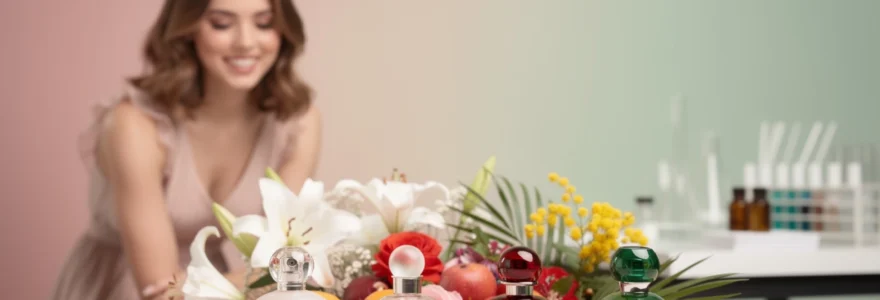
In the crowded landscape of contemporary perfumery, where trends shift with alarming rapidity and brand loyalty becomes increasingly elusive, Cacharel has maintained a remarkable position as the definitive fragrance house for youthful femininity. Since launching its first perfume in 1978, the French brand has carved out a unique space that transcends generational boundaries—a feat few fragrance houses have accomplished with such consistency. The secret lies not in revolutionary marketing campaigns or celebrity endorsements, but in an unwavering commitment to capturing the essence of romantic discovery, first experiences, and the transformative journey of young womanhood. With signature scents like Anaïs Anaïs continuing to dominate bestseller lists nearly five decades after their debut, Cacharel demonstrates that authentic emotional resonance outweighs fleeting fashion trends. The brand’s ability to balance nostalgia with contemporary relevance speaks to something fundamental in the human experience—the universal desire to express identity through scent during those pivotal moments of self-discovery.
The olfactory architecture of cacharel’s signature fragrance DNA
What distinguishes Cacharel from competitors in the youth fragrance market is its consistent olfactory identity—a carefully constructed signature that weaves through every release. The house favours transparent florals, soft musks, and delicate fruity accords that never overwhelm the senses. This approach reflects a sophisticated understanding of how younger consumers experience fragrance: as an extension of personality rather than a statement of luxury or status. Where brands like Chanel emphasize opulence and Dior showcases architectural complexity, Cacharel prioritizes accessibility and emotional immediacy. The compositions typically feature bright top notes that capture attention, heart notes rich in white florals that evoke innocence and romance, and base notes with just enough depth to suggest maturity without crossing into heavy territory. This three-act structure mirrors the journey from adolescence to adulthood that the brand celebrates.
Anaïs anaïs: the 1978 white floral masterpiece that defined youthful femininity
When perfumer Roger Pellegrino created Anaïs Anaïs for Cacharel’s perfume debut, he established a template that would influence the youth fragrance category for generations. The composition centres on a luminous white floral bouquet dominated by hyacinth, lily of the valley, and jasmine—flowers traditionally associated with purity and spring renewal. What made the formulation revolutionary was its sheer quality, achieved through careful dilution and the strategic use of aldehydes that created a halo effect around the wearer. Unlike the powerhouse fragrances dominating the 1970s market, Anaïs Anaïs whispered rather than shouted. The inclusion of subtle leather and cedar base notes provided just enough structure to prevent the composition from becoming saccharine, whilst maintaining the delicate character that appealed to first-time perfume buyers. This balance between innocence and sophistication explains why the fragrance has never left the bestseller charts, with mothers introducing daughters to the same scent they wore decades earlier.
The longevity science behind Anaïs Anaïs deserves particular attention. Despite its ethereal character, the fragrance demonstrates remarkable staying power through Pellegrino’s use of fixatives that anchor volatile floral molecules to the skin. The inclusion of oakmoss and sandalwood in micro-doses creates a molecular scaffolding that allows lighter notes to persist throughout the day. This technical achievement—making a gentle fragrance last—represents one of perfumery’s most challenging feats, requiring precise understanding of how different aromatic compounds interact with human skin chemistry over time.
Noa’s musky transparency and minimalist bottle design philosophy
Launched in 1998, Noa marked Cacharel’s evolution into a more contemporary aesthetic whilst maintaining the brand’s romantic core. Perfumer Annick Menardo crafted a composition that introduced musky transparency to the Cacharel vocabulary—a style that would become highly influential in the following decade. The fragrance opens with peony and white musk, creating an almost watercolour-like impression that feels modern yet timeless. Unlike traditional musk-based fragrances that lean heavily on animalic notes, Noa uses clean
and airy, pairing it with notes of coriander, green leaves, and a gentle coffee accord in the base. The result is a veil-like scent that feels more like clean skin enhanced than a traditional “perfume cloud.” For many wearers, Noa became a signature office fragrance or a go-to scent for everyday serenity, precisely because it projects intimacy rather than drama. Its musky transparency speaks to a new kind of youthful romance—one that values introspection and calm as much as excitement and passion.
The minimalist philosophy of Noa extends beyond its formula into its iconic spherical bottle. Designed as a clear glass orb containing a single pearl, the flacon visually articulates the fragrance concept: a small, precious core of individuality floating in a world of transparency. This design choice mirrors late‑90s minimalism in fashion and design, while still aligning with Cacharel’s gentle, dreamlike universe. For consumers discovering Noa today, the combination of clean musk, soft florals, and a contemplative bottle makes it an ideal choice if you are seeking a subtle, romantic and youthful fragrance that never feels heavy-handed.
Amor amor’s fruity-floral accord revolution in early 2000s perfumery
If Anaïs Anaïs represents first innocence and Noa quiet introspection, Amor Amor is Cacharel’s declaration of explosive first love. Launched in 2003, the fragrance entered a market increasingly dominated by gourmand and fruity-floral scents, but it distinguished itself through a bold, almost saturated use of fruit notes. Blackcurrant, blood orange, and juicy citrus accords create a vivid opening that feels like the rush of adrenaline when you fall for someone at first sight. This “fruity overdose” is then wrapped around a floral heart of jasmine and rose, ensuring that the composition remains recognizably romantic beneath its playful surface.
What made Amor Amor revolutionary for early‑2000s perfumery was its ability to be both accessible and technically sophisticated. Many mass-market fruity florals of the time leaned into sticky sweetness; Amor Amor, in contrast, balances its fruit basket with warm, sensual base notes of vanilla, amber, and Tonka bean. This layered structure gives the juice a three-dimensional character: sparkling at first spray, velvety in the drydown. For younger consumers moving from body sprays into “real” perfume, it offered an immediate emotional hook—love at first spritz—backed by a quality of construction that encouraged long‑term loyalty.
The fragrance quickly became a bestseller across Europe and beyond, solidifying Cacharel’s reputation as a brand that understood youth culture without talking down to it. Even today, Amor Amor remains a frequent recommendation for those searching for a romantic and youthful fragrance for date nights or special occasions. Its fruity-floral accord feels like the olfactory equivalent of a red dress: bold, flirtatious, and impossible to ignore, yet still grounded in classic feminine codes.
Eden’s mandarin and mimosa composition: tropical romanticism reimagined
Eden, launched in 1994, occupies a more polarizing yet fascinating place within Cacharel’s portfolio. Where Anaïs Anaïs is ethereal and Noa is translucent, Eden is lush, almost baroque in its construction. The fragrance opens with a sunlit burst of mandarin and bergamot, immediately transporting the wearer to an imaginary tropical garden. This citrus brightness is quickly enveloped by a multi-layered floral heart dominated by mimosa, water lily, and lotus, creating a humid, aquatic impression that was far ahead of its time.
Rather than leaning into beachy clichés, Eden explores a more dreamlike form of tropical romanticism. The base features patchouli, sandalwood, and tonka, which add an earthy, slightly spicy undercurrent reminiscent of warm skin after a day in the sun. For some, this complexity makes Eden a challenging wear; for others, it is precisely this contrast between fresh mandarin top notes and sensual, mossy depths that makes the scent unforgettable. Like a surreal painting, Eden asks you to look twice, rewarding those who enjoy distinctive, personality-driven perfumes.
From a market perspective, Eden helped Cacharel expand beyond purely “innocent” femininity into bolder, more sensual territory while still speaking to youthful freedom. It appeals to wearers who want their romantic and youthful fragrance to have an edge—to suggest adventure, travel, and self-discovery rather than just sweetness. In this way, Eden reimagines tropical themes not as holiday escapism, but as a metaphor for inner exploration and the lush complexity of coming of age.
Cacharel’s master perfumers and their collaborative creation process
Behind Cacharel’s most enduring fragrances stand some of the industry’s most respected perfumers. Rather than relying on a single “house nose,” Cacharel has historically collaborated with leading talents from major fragrance firms, fostering a culture of co-creation. This approach allows each perfume to feel distinct while still reinforcing the brand’s coherent romantic and youthful DNA. The process typically involves tight creative briefs focusing on emotional storytelling—first love, first independence, first journey—rather than purely abstract olfactory descriptors.
In practice, this means perfumers work in close partnership with brand teams, evaluators, and consumer testing panels to ensure that a concept lands with its target audience. Especially in the youth segment, balance is crucial: too avant-garde and the fragrance risks alienating new users; too simplistic and it blends into a sea of generic florals. Cacharel’s master perfumers navigate this tension by embedding technical innovation—new molecules, novel accords—inside approachable, emotionally resonant narratives. It is this blend of artistry and strategy that helps the brand continually refresh its appeal without abandoning its core identity.
Annick menardo’s contribution to noa’s aldehydic-musk balance
Annick Menardo, the nose behind Noa, is renowned for her ability to craft scents that feel both minimal and emotionally rich. With Noa, she set out to create what could be described as “quiet luminosity”—a fragrance that glows rather than sparkles. To achieve this effect, Menardo played with a delicate aldehydic top that lifts the floral and musky notes without veering into the soapy territory associated with classic aldehydic perfumes. Think of it as adding soft backlighting to a photograph: everything appears clearer, but nothing is harsh.
The real innovation, however, lies in the balance of clean musk and transparent florals. Menardo used multiple musk molecules with varying diffusion levels, layering them to create a cocooning aura around the wearer. Light touches of coriander, coffee, and sandalwood in the base anchor these musks, preventing the composition from feeling too evanescent. For the wearer, this translates into a romantic and youthful scent that feels like second skin—subtle enough for close encounters, yet present enough to provide comfort throughout the day. In a market increasingly drawn to “your skin but better” fragrances, Noa’s aldehydic-musk architecture feels remarkably modern even decades after its launch.
Laurent bruyère’s fruity overdose technique in amor amor development
Laurent Bruyère, co-creator of Amor Amor, approached the project with a clear intention: to bottle the rush of infatuation using a bold fruity-floral structure. Instead of treating fruit notes as merely playful top accents, he pushed them to the forefront, using an overdose of citrus and red fruits to generate immediate impact. Technically, this required careful calibration; too much fruit could have turned the fragrance into a syrupy cocktail. Bruyère balanced this potential excess with a robust floral heart of jasmine and rose, ensuring that the composition retained a recognizably “perfume-like” backbone.
To support the fruity overdose, Bruyère and his co-authors integrated warm, gourmand-leaning base notes—vanilla, Tonka bean, and amber—creating a sensual cushion that extends the life of the top notes on the skin. This is analogous to placing bright paint on a textured canvas: the colour pops, but the underlying structure gives it depth and staying power. For brand positioning, this technique was ideal. It allowed Cacharel to tap into the early‑2000s love affair with fruity perfumes, while maintaining the sophistication and romance expected from a designer fragrance house.
Amor Amor’s success demonstrates how a calculated overdose can become a defining feature rather than a flaw. For consumers, the result is an addictive, recognizable signature: one spray is enough to trigger memories of first dates, parties, and electric encounters. This is the power of technical innovation placed in service of storytelling—a hallmark of Cacharel’s collaborative creation process.
The firmenich and IFF partnership legacy in cacharel fragrance development
Cacharel’s longstanding relationships with major fragrance houses such as Firmenich and IFF (International Flavors & Fragrances) have been central to its ability to stay both relevant and reliable. These partnerships give Cacharel access to cutting-edge aroma chemicals, proprietary accords, and some of the world’s most experienced perfumers. When you spray a romantic and youthful Cacharel fragrance, you are not just experiencing a creative vision; you are also benefiting from extensive research in areas like diffusion, stability, and skin compatibility.
Firmenich, for example, has been behind numerous musks and floral molecules that enable the translucent, long-lasting effects found in scents like Noa. IFF, on the other hand, has contributed to more opulent and complex constructions such as Anaïs Anaïs and Eden, where multifaceted floral and green notes are essential. Through these collaborations, Cacharel can innovate without sacrificing affordability, a key factor for younger consumers entering the prestige fragrance category for the first time. It is a bit like having a couture gown cut with the help of a world-class atelier but priced for ready-to-wear.
These alliances also help Cacharel navigate increasing regulatory constraints and sustainability concerns. Access to advanced ingredient portfolios—including biodegradable musks and responsibly sourced naturals—allows the brand to reformulate classics and develop new fragrances that respect both safety standards and environmental expectations. In a context where consumers are more informed than ever, this invisible technical backbone reinforces the trust that has made Cacharel a timeless choice for romantic and youthful fragrances.
Roger pellegrino’s original anaïs anaïs formula and its longevity science
Roger Pellegrino’s work on Anaïs Anaïs remains a reference point in how to make a delicate fragrance last. His challenge was to translate the softness of white flowers—lily of the valley, hyacinth, jasmine—into a composition that would persist on the skin without becoming heavy. To do this, he employed a clever mix of naturals and synthetics, building a pyramid where each note supports the next. Aldehydes provide initial lift, while coumarin, cedarwood, sandalwood, and a trace of leather form a subtle but resilient base.
Pellegrino also took advantage of oakmoss and labdanum, used in minute quantities, to create what could be called a “scent scaffold.” These ingredients, known for their tenacity, act like the frame of a building: barely visible, yet crucial for structural integrity. The floral heart is then “hung” onto this frame, allowing its more volatile molecules to cling to the skin over several hours. For wearers, the experience is almost paradoxical—a fragrance that feels light, powdery, and tender, yet remains detectable long after application.
This longevity science helps explain why Anaïs Anaïs continues to appeal across generations. A mother might remember the same soft trail on her scarf decades ago; a daughter experiences it as fresh and vintage-chic today. In an era where many romantic and youthful fragrances fade quickly, Anaïs Anaïs stands as proof that gentle does not have to mean short-lived, provided the formula is engineered with precision.
Fragrance longevity and sillage performance across cacharel collections
Performance—how long a perfume lasts and how far it projects—is a key consideration when choosing a romantic and youthful fragrance, especially for younger consumers mindful of value. Cacharel’s portfolio offers a spectrum of longevity and sillage tailored to different comfort levels. On one end, Anaïs Anaïs and Noa provide moderate longevity (typically 5–7 hours on average skin) with soft to moderate sillage. They are ideal if you prefer an intimate scent bubble suitable for work, school, or close-contact situations.
On the other end, Amor Amor and Eden deliver more assertive performance. Their richer bases—featuring vanilla, Tonka, patchouli, and woods—extend wear time to 7–9 hours for many users, with a more noticeable scent trail during the first few hours after application. This makes them well-suited for evenings out, dates, or occasions where you want your fragrance to make a clear impression. Importantly, even these bolder scents avoid the blunt-force projection of some powerhouse perfumes, remaining within the realm of approachable sensuality.
How can you maximize the longevity of a Cacharel perfume? Applying to well-moisturized skin, focusing on pulse points (wrists, neck, behind the ears), and lightly misting clothing or hair can all enhance performance without overwhelming your surroundings. Layering a body lotion with a matching or complementary scent is another practical tip, especially with lighter compositions like Noa. Ultimately, Cacharel’s collection offers enough variation that you can build a small “wardrobe” of romantic and youthful fragrances with different sillage profiles—one for everyday wear, one for special memories, and one for those moments when you want to feel daring.
The brand’s strategic positioning between chloé and nina ricci in the youth market
In the competitive landscape of designer perfumery, Cacharel occupies a distinctive niche between houses like Chloé and Nina Ricci. Chloé is often associated with polished, grown-up femininity—powdery rose, beige trench coats, and minimalist luxury. Nina Ricci, particularly with its apple-shaped bottles and fairy-tale narratives, leans into whimsical sweetness and fantasy. Cacharel bridges these worlds by offering romantic and youthful fragrances that feel emotionally rich and accessible, yet not overtly sugary or overtly “luxury for luxury’s sake.”
Price positioning plays a crucial role in this strategy. Cacharel fragrances typically sit at the more affordable end of the prestige segment, making them attractive first purchases for teenagers and young adults. At the same time, the brand’s French heritage and collaborations with top perfumers lend it a credibility that resonates with more experienced fragrance lovers. It is, in effect, a stepping stone: many people’s first encounter with “real perfume” after body sprays, but with enough sophistication to remain in their collection for years.
Brand imagery further solidifies this middle-ground positioning. Campaigns for Anaïs Anaïs, Noa, and Amor Amor focus on emotional narratives—first love, self-discovery, sisterhood—rather than celebrity endorsements or overt glamour. This emphasis on story over status helps Cacharel connect with consumers who value authenticity and relatability. For you as a fragrance wearer, this means the brand often feels like a companion on your personal journey, rather than an aspirational pedestal you are trying to reach.
Bottle aesthetics and packaging semiotics in cacharel’s visual identity
Cacharel’s visual universe is as carefully crafted as its olfactory one. Bottle design and packaging act as a kind of non-verbal language, communicating the mood and target audience of each fragrance before you even take a sniff. Across the line, you will notice recurring themes: rounded shapes, soft curves, and tactile elements that invite touch. These choices reinforce the idea of fragrance as a comforting, intimate companion on the path to adulthood, rather than a sharp, intimidating luxury object.
The semiotics—what these design details “say” to us—are powerful. Frosted glass suggests softness and mystery; clear transparency hints at honesty and minimalism; vibrant lacquered colours evoke passion and energy. By aligning bottle aesthetics with the emotional story of each scent, Cacharel creates a cohesive brand identity that is instantly recognizable on the shelf. When you see an Anaïs Anaïs or Amor Amor bottle, you are not just identifying a product; you are recognizing a familiar chapter in the broader narrative of romantic and youthful femininity.
Jean depreux’s curved glass innovation for anaïs anaïs frosted bottle
The original Anaïs Anaïs bottle, designed by Jean Depreux, is a masterclass in translating olfactory ideas into visual form. Its rounded, slightly chubby silhouette echoes the tenderness and softness of the scent inside. The frosted white glass, combined with delicate floral motifs, creates an impression of porcelain—fragile yet enduring, like a cherished keepsake on a dressing table. The silver-toned cap adds a subtle touch of sophistication without tipping into ostentation.
Depreux’s use of curved glass was innovative for its time, especially in the youth fragrance category, where bottles often skewed either very simple or overtly gimmicky. By contrast, Anaïs Anaïs feels timeless, with a vintage charm that has aged gracefully. The curvature of the bottle also has a functional dimension: it sits comfortably in the hand, reinforcing the idea of perfume as a personal, intimate gesture. For many women, that first Anaïs Anaïs bottle became more than packaging; it was a visual symbol of entering a new stage of life.
The minimalist transparency of noa’s spherical flacon design
Noa’s bottle takes Cacharel’s love of curves in a more minimalist direction. The transparent glass sphere, containing a single small “pearl” at its center, communicates serenity and purity at a glance. Visually, it stands apart from more ornate designs on the market, aligning with late‑90s trends toward clean lines and understated elegance. Yet it remains firmly rooted in Cacharel’s dreamlike sensibility through its soft edges and almost meditative symbolism.
The embedded pearl functions as a metaphor for the inner self—the quiet core of identity that Noa seeks to enhance rather than mask. This is packaging semiotics in action: the design tells you that this fragrance is about introspection, calm, and quiet radiance. For you as a consumer, picking up the bottle is almost like holding a small snow globe or worry stone; it invites a moment of pause before you spray, reinforcing the idea of scent as a ritual of self-connection.
Amor amor’s red lacquered sphere: colour psychology in perfume merchandising
Where Anaïs Anaïs is porcelain-soft and Noa is crystal-clear, Amor Amor makes an unapologetically bold statement through its red lacquered bottle. The cylindrical-spherical hybrid, wrapped in a vivid scarlet hue with metallic accents, is designed to evoke a beating heart or a love potion vial. From a colour psychology standpoint, red is associated with passion, energy, and desire—all emotions Amor Amor seeks to capture in olfactory form.
In a retail environment crowded with pastel and transparent bottles, this intense red silhouette immediately draws the eye. For younger shoppers, it reads as daring and fun, signaling that the fragrance inside will not be shy. The industrial-style ring around the sprayer adds a touch of rebelliousness, subtly echoing piercings or hardware jewelry popular in youth fashion. Together, these visual cues frame Amor Amor as the go-to romantic and youthful fragrance for nights out, crushes, and unforgettable firsts.
Reformulation challenges and IFRA compliance in maintaining cacharel’s classic accords
Like all heritage fragrance houses, Cacharel has had to navigate the complex landscape of reformulation, driven largely by evolving safety regulations from bodies such as IFRA (International Fragrance Association) and changing raw material availability. Ingredients like oakmoss, certain musks, and specific allergens have faced tighter restrictions or usage limits over the past two decades. For classics such as Anaïs Anaïs and Eden—where these materials play supporting but crucial roles—maintaining the original “feel” of the scent while updating the formula is a delicate balancing act.
Perfumers working on these reformulations often describe the process as restoring a painting with new pigments. The goal is not to create a new work, but to preserve the original composition’s harmony using safer, more sustainable materials. This might involve replacing natural oakmoss with low-allergen fractions, or recreating the creamy depth of sandalwood using synthetic analogues. Inevitably, very sensitive noses may notice subtle differences compared to vintage bottles, but for the majority of wearers, the emotional signature—soft florals, romantic musks, tender woods—remains intact.
At the same time, reformulation offers an opportunity to align timeless fragrances with contemporary expectations. Modern consumers often seek lighter, cleaner interpretations of classics, along with better performance on different skin types and in varied climates. By leveraging new aroma chemicals and improved stability technologies, Cacharel can fine-tune diffusion, longevity, and overall comfort. The result is that a romantic and youthful Cacharel fragrance purchased today is not a museum piece; it is a living, breathing scent that continues to evolve with its audience while honouring its original soul.