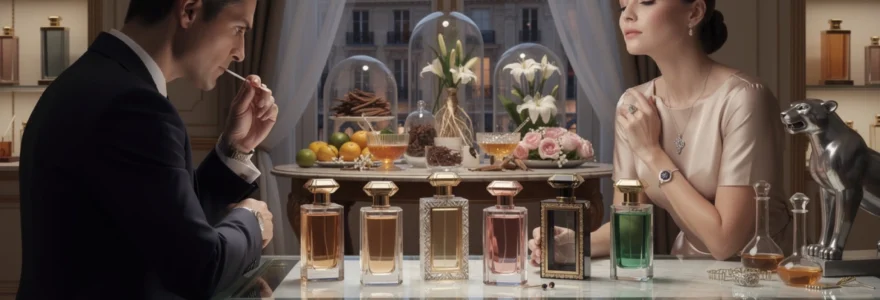
In the rarefied world of haute parfumerie, few names command the reverence and prestige that Cartier has cultivated over nearly two centuries. When you encounter a Cartier fragrance, you’re not simply purchasing a scent—you’re acquiring a piece of olfactory heritage steeped in royal patronage, artistic innovation, and uncompromising standards of excellence. The maison’s transition from jeweller of kings to master perfumer represents one of the most successful evolutions in luxury brand history, where the principles of high jewellery craftsmanship have been seamlessly translated into the invisible art of perfumery. This transformation raises a compelling question: what elevates Cartier fragrances beyond mere luxury accessories into the realm of cultural artifacts and sensory masterpieces?
Cartier’s heritage in haute parfumerie: from jeweller to fragrance maison
The journey of Cartier into the world of perfumery was neither accidental nor opportunistic—it was a deliberate extension of a luxury philosophy that had already captivated royalty, celebrities, and connoisseurs worldwide. Founded in 1847 by Louis-François Cartier, the house established itself as more than a purveyor of precious stones; it became an architect of desire, creating objects that embodied both material wealth and intangible aspiration. This foundational ethos would prove essential when Cartier ventured into the ephemeral realm of fragrance, where reputation and heritage carry as much weight as the quality of raw materials.
The 1981 launch of cartier’s first fragrance collection
The debut of Must de Cartier in 1981 marked a watershed moment in the convergence of jewellery and perfumery. Created by Jean-Jacques Diener of Givaudan, this inaugural fragrance was conceived as “the scent of desire”—a bold positioning that reflected Cartier’s confidence in translating its visual language into olfactory terms. The perfume’s architecture drew inspiration from Guerlain’s legendary Shalimar, yet introduced a distinctly modern Cartier sensibility through its opening notes of green galbanum and mandarin, contrasted against a rich, sensual floral-ambery-animalic heart. The bottle itself, inspired by Cartier’s iconic gold lighter, established a design principle that persists today: perfume flacons should be as covetable as the fragrances they contain.
This launch wasn’t merely about entering a lucrative market; it represented Jeanne Toussaint’s vision materializing four decades after she registered “Cartier Parfums” in 1938. The delay between registration and realization demonstrates the maison’s patience in waiting for precisely the right moment and formula—a hallmark of luxury brands that prioritize legacy over quarterly profits.
Louis cartier’s philosophy of luxury translated into olfactory art
Louis Cartier’s revolutionary approach to jewellery design—characterized by clean lines, geometric precision, and the innovative use of platinum—established aesthetic principles that would eventually inform Cartier’s perfumery philosophy. His conviction that luxury should embody both timeless elegance and audacious innovation created a template for the maison’s creative output across all categories. In perfumery, this translates to compositions that balance familiarity with surprise, tradition with experimentation, and opulence with restraint.
The Art Deco movement, which Louis Cartier championed in jewellery design during the 1920s, finds its olfactory equivalent in Cartier fragrances through structured compositions, bold contrasts, and a preference for architectural clarity over baroque complexity. You can perceive this aesthetic in how Cartier perfumes often feature a single dominant note or accord that is explored from multiple facets, rather than the crowded, indistinct compositions that characterize many mainstream fragrances.
Master perfumer collaborations: mathilde laurent’s exclusive role since 2005
The appointment of Mathilde Laurent as Cartier’s first and only in-house perfumer in 2005 represented a paradigm shift in how luxury jewellery houses approach fragrance creation. Unlike the typical industry model where brands commission perfumes
from external fragrance houses, Cartier chose to give Laurent an embedded, almost curatorial role within the maison. Working from an office in the heart of the creation studios rather than a remote laboratory, she absorbs the brand’s codes—panther motifs, Art Deco geometry, architectural lines—then reinterprets them in scent. This proximity allows for what she calls a “family” dynamic: ideas circulate freely between design, marketing, and management, and each new perfume emerges from dialogue rather than a top‑down brief.
Laurent’s tenure has defined the contemporary olfactory identity of Cartier. From the luminous chypre of La Panthère to the transparent realism of Les Épures de Parfum, her work balances technical precision with poetic freedom. Crucially, she is not asked to create dozens of competing trials for focus groups; instead, she crafts a single, tailor‑made composition for each project, refined through considered feedback. This haute couture approach to formulation, rare in today’s mass market, is a major reason Cartier fragrances feel so coherent, refined, and timeless.
The rue de la paix atelier: where fragrance meets high jewellery craftsmanship
To understand why Cartier fragrances are synonymous with luxury, it helps to picture where many of the brand’s ideas take shape: the historic ateliers near Rue de la Paix in Paris, long associated with the maison’s high jewellery. Here, jewellery designers, watchmakers, and fragrance creatives share the same culture of exacting standards. Every gemstone is weighed, every setting scrutinised—much like every drop of raw material in a Cartier formula is measured, tested, and re‑tested before it earns its place.
This environment fosters an “atelier mindset” that permeates Cartier perfumery. Fragrances are not treated as separate, disposable products but as part of a continuum that includes tiaras, Tank watches, and Love bracelets. When Laurent speaks of designing a perfume the way a jeweller designs a necklace—balancing volumes, contrasts, and light—she is describing both a metaphor and a daily reality. The same discipline that goes into a diamond necklace for a Maharaja informs the meticulous construction of a composition like Déclaration or Oud & Santal.
Rare and precious raw materials in cartier perfume formulations
Cartier’s reputation for luxury would ring hollow if its fragrances were built on generic, low‑grade ingredients. Instead, the maison sources some of the most coveted raw materials in modern perfumery, often in concentrations closer to pure parfum extract than standard eau de parfum. This commitment is particularly evident in its high perfumery lines, where record levels of naturals—rare ouds, refined iris, delicately harvested citrus and florals—are pushed to the fore. The result is an olfactory texture and depth you can smell from the first spray to the last whisper on skin.
Why does this matter to you as a wearer? Because high‑quality raw materials age, evolve, and project differently from synthetic shortcuts. They create a scent trail that feels three‑dimensional rather than flat, much like the difference between costume jewellery and a finely set Cartier diamond. Investing in rare ingredients is costly and time‑consuming, but it is one of the clearest reasons Cartier perfumes sit firmly in the realm of luxury and refinement.
Oud assafi from assam: the heart of oud & oud collection
Among the most emblematic examples of Cartier’s material choices is the use of exceptional oud in the Les Heures Voyageuses collection. Often referred to as “liquid gold,” oud is one of perfumery’s most expensive ingredients, and Cartier works with top‑tier qualities such as Oud Assafi from Assam. This particular grade is prized for its balance: woody, smoky, and resinous, yet unexpectedly smooth, without the harsh medicinal facets that can make lesser ouds overwhelming.
In creations like Oud & Santal and Oud & Pink, oud is treated almost like a central gemstone, with sandalwood or rose acting as the surrounding setting. Laurent uses high concentrations, so much so that many of these compositions verge on pure parfum strength. You experience oud’s facets the way you might examine a cut stone from different angles: first the wild, animalic glint, then a silky, almost plum‑like sweetness, finally a deep, meditative woodiness that lingers for hours. For fragrance lovers seeking why Cartier fragrances smell unmistakably opulent, this “liquid gold” artistry is a compelling answer.
Tunisian neroli and calabrian bergamot in les heures de parfum
Not all luxury ingredients are dark and resinous. In Les Heures de Parfum collection, Cartier showcases sparkling citrus and white florals that may seem simple on paper, but whose quality is exceptional on skin. Tunisian neroli, distilled from bitter orange blossoms, brings a honeyed, green brightness that feels like sunlight filtered through white petals. Paired with zesty, delicately bitter Calabrian bergamot, it forms the luminous top notes of several compositions, including fresher Heures that explore light and air.
These ingredients might appear in many perfumes, but Cartier’s insistence on origin, harvest method, and extraction technique elevates them. Think of it as the difference between an everyday lemon and a carefully cultivated Amalfi lemon used in haute cuisine. You notice it not just in the first spray, but in how the freshness lasts longer than you’d expect, how it blends seamlessly into florals and woods without collapsing into a generic “cologne” effect. For anyone who loves refined, citrus‑based luxury fragrances, Cartier’s treatment of neroli and bergamot is a masterclass in understated elegance.
Natural iris pallida extraction techniques for L’Heure brillante
Iris is often called the “blue diamond” of perfumery—and for good reason. It can take up to six years from planting to extracting usable iris butter from Iris pallida rhizomes, and the raw material can cost more per kilo than gold. In L’Heure Brillante and related creations, Cartier relies on high‑quality iris from regions like Tuscany and Grasse, processed via slow, low‑temperature extraction to preserve its powdery, carroty, and slightly metallic nuances.
Laurent treats iris less as a retro cosmetic note and more as an abstract light source within the composition, echoing Cartier’s fascination with how gemstones capture and reflect light. The result is an iris accord that feels bright, almost effervescent, instead of heavy or old‑fashioned. If you’ve ever wondered why certain luxury perfumes feel more “polished” than others, this kind of painstaking work on a single note—backed by expensive raw material and patient maturation—goes a long way towards explaining it.
Sustainable sourcing: cartier’s partnerships with grasse rose producers
Today, luxury is increasingly defined not only by rarity but also by responsibility. Cartier has invested in sustainable sourcing partnerships, particularly around emblematic ingredients like rose. Working with producers in the Grasse region, the maison supports traceable, small‑scale agriculture for Rosa centifolia and Rosa damascena, ensuring both quality and long‑term viability. These roses appear in creations such as L’Heure Osée, Oud & Pink, and the radically pure Pure Rose from Les Épures de Parfum.
For you as a wearer, this means the “Cartier rose” carries not only exquisite scent—dewy, textured, luminous—but also the reassurance of ethical luxury. The brand’s focus on preserving biodiversity, supporting local know‑how, and maintaining high traceability standards mirrors its work with responsibly sourced gemstones. In a world where many fragrances cut corners with synthetic shortcuts, Cartier’s commitment to both natural beauty and sustainability underscores why its perfumes occupy a more elevated, refined space.
Architectural bottle design and artisanal glass-making techniques
Cartier likes to speak of fragrance as “invisible jewellery”—and nowhere is this clearer than in its approach to bottle design. Rather than treating flacons as mere containers, the maison designs them as architectural objects that echo its high jewellery codes: clean lines, considered proportions, and exquisite detailing. From the minimalist columns of Les Épures de Parfum to the sculpted panther head of La Panthère, each bottle is conceived to feel like a precious object you’ll want to keep long after the last drop has vanished.
This attention to form is not just aesthetic. The weight of the glass, the precision of the cap’s fit, the tactility of engraved patterns—all these physical sensations reinforce the message that you are holding something rare and valuable. Much as a Cartier bracelet closes with a satisfying click, a Cartier perfume bottle opens and closes with engineered smoothness, turning everyday spritzing into a small ritual of luxury.
The gadroon pattern: translating art deco jewellery motifs into crystal
One of the most recognisable Cartier motifs is the gadroon—those parallel, fluted grooves found on rings, bracelets, and watch bezels. In recent perfume launches, including the new perfuming bases unveiled at Paris Perfume Week, this pattern appears delicately engraved in glass and metal. The cream jars and oil bottles are ringed with golden gadroons, visually tying them to Cartier’s heritage pieces.
This is more than decoration; it’s a semiotic bridge between high jewellery and high perfumery. When you run your fingers over the ridges of a gadroon‑edged bottle, you are experiencing the same design language that appears on a Santos watch or a Trinity ring. The fluted lines catch the light like facets on a gem, turning the flacon into a miniature, functional sculpture. It’s a subtle reminder that for Cartier, even “invisible” luxury like scent must wear a visible, tactile frame worthy of the maison.
Baccarat crystal collaboration for limited edition flacons
For select limited editions and high perfumery releases, Cartier has collaborated with Baccarat and other master crystal makers to create flacons that blur the line between perfume bottle and collectible art object. These pieces, often released in very small numbers, feature hand‑blown crystal, individually numbered bases, and sometimes hand‑applied gold or enamel detailing. They are closer to museum pieces than everyday packaging.
While most fragrance lovers will encounter these creations only in archives or exhibitions, their existence reinforces Cartier’s overall standard. Knowing that the same brand capable of designing a tiara for a coronation also commissions crystal artisans to craft perfume bottles at that level of artistry shapes how we perceive even its more accessible lines. It is like knowing that a couture house shows on the Paris runway; even if you buy a ready‑to‑wear piece, you feel the halo of that craftsmanship.
Vermeil caps and gold-plated details in santos de cartier packaging
Details matter in luxury, and Cartier pays close attention to the metalwork on its perfume bottles. In ranges inspired by iconic watch and jewellery collections such as Santos de Cartier, you’ll often find caps finished in vermeil or gold‑plated metal, echoing the screws and bezels of the timepieces. The result is packaging that feels reassuringly weighty in the hand, with metallic accents that catch the light much like jewellery on the skin.
This consistency of design language is crucial to why Cartier fragrances feel so integrated into the wider brand universe. When you place a Santos bottle beside a Santos watch or a Love bracelet, you recognise the same aesthetic codes—screws, polished surfaces, clean geometry—playing out in different materials. For you as a client or collector, that harmony enhances the sense that each fragrance is not a stand‑alone item but part of a broader, meticulously curated lifestyle.
Signature scent profiles: deconstructing cartier’s olfactory identity
If we strip away the bottles and branding, what remains that makes a perfume immediately recognisable as Cartier? Over the decades, the maison has developed a distinct olfactory signature: elegant yet daring, luminous rather than heavy, often built around one or two key notes explored with architectural precision. Instead of chasing trends, Cartier tends to create new structures that later become reference points in the industry, much like the Tank watch or the Love bracelet did for design.
By deconstructing some of the house’s most emblematic fragrances, we can better understand this identity. You’ll notice recurring themes: chypre sophistication, transparent florals, spicy woods, and a certain feline sensuality that feels confident rather than cloying. Whether you are new to Cartier or building a collection, recognising these signatures helps you choose the Cartier fragrance that best aligns with your own sense of luxury and refinement.
La panthère’s chypre floral structure and gardenia accord innovation
La Panthère, launched under Mathilde Laurent, has quickly become as emblematic for Cartier perfumes as the panther is for its jewellery. Structurally, it is a modern chypre floral, built on a sophisticated base of mossy, woody notes supporting a luminous gardenia heart. Instead of leaning into vintage heaviness, Laurent created an abstract “radiant gardenia” accord that feels airy and alive, as if lit from within—an olfactory echo of Art Deco light and shadow.
What makes La Panthère particularly innovative is its subtle animalic dimension. Laurent uses musk and carefully calibrated animalic notes to evoke the idea of a perfumed panther, adding texture and sensuality without veering into harshness. It’s a reminder that true luxury fragrances can be bold and slightly wild while remaining impeccably refined—much like wearing a panther‑set diamond bracelet that catches every eye without shouting.
Déclaration’s cardamom and cedarwood masculine architecture
In 1997, Déclaration, composed by Jean‑Claude Ellena, redefined what a masculine luxury fragrance could be. Built around a distinctive accord of cardamom, bitter orange, spices, and dry woods, it feels at once transparent and structured—more like an elegant sketch than an overworked oil painting. The cedarwood base provides a clean, almost pencil‑shaving backbone, while spices like cardamom and cumin add warmth and a whisper of human skin.
For many fragrance enthusiasts, Déclaration has become a benchmark scent: intellectual yet sensual, introspective yet assertive. Its architecture mirrors Cartier’s design philosophy in watches and jewellery—minimalist lines that reveal depth on closer inspection. If you’re looking for a men’s luxury fragrance that signals quiet confidence rather than loud projection, Déclaration remains one of the maison’s most compelling answers.
Baiser volé: lily as a singular note composition technique
Baiser Volé showcases another Cartier hallmark: the ability to take a single flower and build an entire fragrance universe around it. Here, the focus is lily, interpreted from petal to pistil to leaf. Instead of cluttering the formula with numerous competing notes, Laurent employs a “singular note” composition technique, isolating and amplifying different facets of lily—green, powdery, creamy—within a streamlined structure.
The result is a scent often described as “invisible jewellery”: refined, close to the skin, and impeccably polished. It feels like slipping on a slender diamond bracelet that only reveals its sparkle in certain lights. If you enjoy luxury floral perfumes but dislike excessive sweetness, Baiser Volé offers a masterclass in how restraint and focus can create a more sophisticated, memorable impression.
L’envol’s honey-musk contrast and patchouli base notes
L’Envol de Cartier explores a different side of the house’s olfactory identity: airy yet addictive, inspired by the idea of spiritual and physical elevation. Built around a honey accord combined with soft musks and a modernised patchouli base, the fragrance plays on contrast. The honey brings warmth and a golden glow, while the musks and dry woods create a sense of weightlessness, like light filtering through amber glass.
This tension between grounded richness and upward lift mirrors Cartier’s broader aesthetic of balancing opulence with clarity. For wearers, L’Envol offers an alternative to the usual heavy, gourmand masculines: a luxury fragrance that feels both comforting and liberating, with patchouli used not as a bohemian cliché but as an elegant structural pillar.
Exclusivity through limited distribution and collection privée strategy
Many brands talk about exclusivity, but Cartier builds it into the very way its fragrances are distributed. Rather than flooding every possible retailer, the maison curates where and how its scents appear. High perfumery collections are sold primarily in Cartier boutiques and a handful of specialist counters, while even more widely available lines are presented in a way that reinforces the house’s rarefied image.
This controlled approach is comparable to limiting the production of a high‑complication watch: it preserves desirability, protects quality perception, and ensures that the client experience remains carefully orchestrated. For you, it also means that wearing certain Cartier fragrances truly feels like belonging to a select circle—an important dimension of luxury that goes beyond the juice itself.
Les épures de parfum: ultra-niche positioning in fragrance retail
Les Épures de Parfum epitomise Cartier’s ultra‑niche strategy. These scents—such as Pure Rose, Pur Muguet, and Pur Magnolia—are sold in limited locations and at price points comparable to high jewellery‑aligned perfumery. Each composition aims to capture nature “as is,” without gourmand overlays or heavy musks, resulting in almost photorealistic interpretations of flowers and greenery.
Positioned somewhere between fine art and olfactory haiku, Les Épures are not designed to please everyone. Instead, they speak to connoisseurs who appreciate minimalism and are willing to invest in a fragrance that feels like a rare, perfectly cut stone. Their scarcity in retail channels—often confined to flagship boutiques and select luxury perfumeries—further reinforces their status as insider secrets in the fragrance world.
Cartier boutique-only releases and counter scarcity tactics
Beyond formal collections, Cartier occasionally issues boutique‑only exclusives, limited editions, or early releases tied to specific stores or regions. This tactic, common in high jewellery and watchmaking, is used sparingly in perfumery but effectively: it encourages discovery within Cartier’s own environment, where the full story of the maison can be experienced at once.
Scarcity here is not accidental stock shortage but a strategic decision. When you can only smell certain fragrances at a Cartier counter or boutique, your visit becomes an experience rather than a transaction. Trained ambassadors can guide you through textures, raw materials, and layering possibilities, much like a jeweller presents different settings and stones. This curated, high‑touch approach is central to why Cartier fragrances maintain their aura of exclusivity amid a crowded market.
Price architecture: positioning above mainstream designer fragrances
Cartier’s price positioning is another clear signal of its luxury intent. While not as stratospheric as some niche houses, its fragrances typically sit above mainstream designer offerings, especially in higher concentrations and exclusive lines. This “price architecture” reflects the cost of rare raw materials, slow development cycles, and artisanal packaging, but it also plays a psychological role: it frames Cartier perfumes as long‑term investments rather than impulse buys.
From a practical standpoint, you might ask: are they worth it? If you value projection, longevity, and the feeling that your scent will not be worn by everyone in the room, the answer for many fragrance enthusiasts is yes. Factor in refillable formats, perfuming bases, and layering options, and Cartier’s offerings often become part of a personal ritual—more akin to owning a cherished watch or ring than simply finishing a bottle and moving on.
Brand semiotics: visual language and cultural capital in perfume marketing
Beyond composition and distribution, Cartier fragrances derive much of their perceived luxury from the maison’s powerful visual and cultural codes. From the iconic red box to the panther emblem, these semiotic elements act like shorthand for prestige, heritage, and refined taste. When applied to perfumery, they transform each bottle into a carrier of cultural capital—a way for you to signal belonging to a world of discreet yet unmistakable luxury.
This is where jewellery, watches, and fragrance fully converge. A campaign for La Panthère or Santos rarely isolates the scent; instead, it situates it among other symbols of Cartier: precious metals, architectural facades, historical references, and carefully chosen ambassadors. In doing so, the maison ensures that spraying on a Cartier perfume feels less like “just” applying scent and more like stepping into a well‑defined narrative of elegance.
Panthere iconography: from jeanne toussaint to fragrance symbolism
The panther is perhaps Cartier’s most potent symbol, introduced by legendary creative director Jeanne Toussaint in the early 20th century. Initially appearing in jewellery and objets d’art, the feline quickly came to signify independence, sensuality, and a certain fearless femininity. When La Panthère perfume was launched, this iconography migrated seamlessly into perfumery: the bottle’s sculpted panther head, the campaign imagery, and the chypre‑floral scent itself all echo this mythology.
For wearers, choosing La Panthère is as much about adopting an identity as it is about liking gardenia. You are aligning yourself with a lineage of Cartier muses and clients who have embraced the panther as a symbol of strength and allure. This layered symbolism, rooted in decades of jewellery design, gives Cartier fragrances a depth of meaning that extends beyond olfaction—another key reason they are perceived as more luxurious than many stand‑alone perfume brands.
Red cartier box recognition and luxury gift-giving rituals
Few objects in luxury are as instantly recognisable as the Cartier red box with its gold trim. Originally designed for jewellery, it now often encloses fragrance coffrets, perfuming bases, and limited editions. This shared packaging code transforms a bottle of perfume into something closer to a jewel: when you open that hinged lid, you are participating in the same ritual as someone receiving a Love bracelet or a pair of diamond earrings.
In the context of gift‑giving, this matters enormously. A Cartier fragrance in its red box communicates effort, taste, and a desire to mark an occasion with something meaningful. It becomes more than “just a perfume”; it is a token of recognition, a small ceremony in cardboard and satin. That powerful emotional charge is part of the intangible value you pay for—and one of the reasons Cartier scents are such popular choices for milestones like anniversaries, weddings, and significant career achievements.
Celebrity brand ambassadors: rami malek and annabelle wallis impact
Finally, Cartier leverages carefully selected cultural figures to embody its fragrance universe. Actors like Rami Malek and Annabelle Wallis, both ambassadors for Cartier, are chosen not merely for fame but for the qualities they project: intelligence, charisma, a blend of modernity and classic poise. When they appear in campaigns or at red carpet events wearing Cartier jewellery and scent, they reinforce the maison’s image as the choice of discerning, accomplished individuals.
This association does more than drive short‑term sales. It situates Cartier fragrances within a broader cultural conversation about success, artistry, and self‑expression. When you wear a Cartier scent, you are subtly tapping into that narrative—aligning yourself with a brand whose symbols, stories, and ambassadors all point towards a life lived with elegance and intention. In a world overloaded with fragrance options, that coherent, aspirational story is a powerful reason why Cartier perfumes remain synonymous with luxury and refinement.