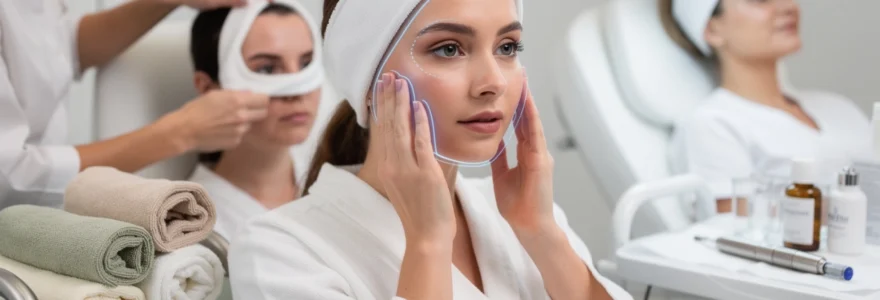
The integration of a makeup headband into your daily skincare regimen represents far more than a simple aesthetic choice. This seemingly modest accessory has evolved into an essential tool that bridges the gap between professional spa treatments and home skincare protocols. Modern dermatological research increasingly supports the use of barrier accessories during skincare application, with makeup headbands emerging as a critical component for maintaining optimal skin health and treatment efficacy.
Professional estheticians and dermatologists have long recognised the importance of creating controlled environments during skincare treatments. The makeup headband serves as a fundamental element in this controlled approach, preventing contamination whilst ensuring maximum product absorption. Beyond its practical applications, this accessory transforms routine skincare into a mindful, spa-like experience that encourages consistency and proper technique.
Dermatological science behind makeup headband efficacy in skincare protocols
The scientific foundation supporting makeup headband usage extends beyond simple convenience, encompassing multiple physiological and dermatological benefits. Research demonstrates that maintaining clear boundaries between treated and untreated skin areas significantly improves therapeutic outcomes. The headband creates a physical barrier that prevents cross-contamination whilst allowing skincare professionals to monitor treatment progress more effectively.
Contemporary dermatological studies indicate that environmental factors during skincare application directly influence product penetration rates and overall treatment success. When hair remains in contact with treated skin areas, it creates microclimates that can alter pH levels and introduce unwanted bacteria or product residue. The controlled isolation provided by quality makeup headbands eliminates these variables, creating optimal conditions for active ingredient absorption.
Sebaceous gland activity reduction through hairline isolation
The strategic isolation of the hairline through proper headband placement directly impacts sebaceous gland behaviour in the temporal and frontal regions. Hair naturally contains oils and styling product residues that can migrate onto facial skin, triggering increased sebum production as the skin attempts to maintain its natural barrier function. By preventing this oil transfer, makeup headbands help regulate sebaceous activity, particularly benefiting individuals with combination or oily skin types.
Clinical observations demonstrate that consistent hairline isolation during skincare routines leads to measurably reduced shine and breakout frequency in the T-zone area. This effect becomes particularly pronounced when using active ingredients such as retinoids or alpha hydroxy acids, which require uncontaminated application surfaces for optimal efficacy. The headband ensures these powerful ingredients remain concentrated on intended treatment areas without dilution from hair-based contaminants.
Transepidermal water loss prevention along facial periphery
Maintaining optimal hydration levels along the facial periphery presents unique challenges due to the transitional nature of this skin area. The junction between facial skin and hairline experiences increased transepidermal water loss (TEWL) due to mechanical friction from hair movement and reduced barrier function. Quality makeup headbands create a protective microenvironment that minimises moisture evaporation whilst allowing skincare products to form proper occlusive barriers.
The prevention of hair-induced friction represents a critical factor in maintaining peripheral skin integrity. Each strand of hair acts as a microscopic abrasive when in contact with facial skin, creating micro-lesions that compromise barrier function. Professional-grade headbands eliminate this friction, allowing the skin’s natural repair mechanisms to function optimally whilst protective skincare formulations can establish effective barriers against environmental damage.
Comedogenic contamination barriers from hair product residue
Hair styling products pose significant comedogenic risks when they migrate onto facial skin during daily activities or skincare routines. These formulations often contain heavy silicones, waxes, and polymers designed to provide hold and texture to hair, but these same ingredients can clog facial pores and trigger inflammatory responses. Makeup headbands create essential barriers that prevent this cross-contamination, particularly during cleansing and treatment phases.
The molecular structure of common hair products makes them particularly problematic for facial skin. Ingredients such as dimethicone crosspolymers and polyquaternium compounds can form occlusive films on facial skin that trap bacteria and sebum, leading to persistent comedonal acne. Professional skincare protocols consistently incorporate headband usage to eliminate these contamination pathways, resulting in
reduced incidence of closed comedones, particularly along the forehead and temples where hair products most commonly accumulate. For clients using heavy styling creams, gels, or hairsprays, consistent use of a makeup headband during both morning and evening routines functions as a simple yet highly effective comedogenic barrier. Over several weeks, this reduction in pore-clogging residue can translate into fewer inflammatory lesions and a smoother, more uniform skin texture.
Ph balance maintenance in temporal and frontal regions
The delicate pH balance of the skin in the temporal and frontal regions is easily disrupted by contact with hair and haircare products. Many shampoos, conditioners, and styling treatments sit at a different pH than the ideal range for facial skin, which hovers between 4.7 and 5.5. When these products migrate onto the face, they can temporarily elevate or depress surface pH, impairing enzyme activity involved in barrier repair and desquamation. A well-fitted makeup headband minimises this transfer, helping to preserve a stable, skin-friendly environment along the hairline.
Maintaining pH balance is especially crucial for individuals managing sensitive skin conditions such as rosacea, seborrheic dermatitis, or post-acne erythema. In these cases, even subtle pH shifts can trigger flushing, itching, or micro-inflammation. By physically separating hair from treated skin areas, the headband allows pH-optimised toners, essences, and serums to work without interference. Over time, this consistent protection supports a more resilient acid mantle, reducing the likelihood of irritation flare-ups and promoting a calmer, more even complexion in these frequently overlooked peripheral zones.
Professional application techniques for spa-grade makeup headbands
To unlock the full benefits of a makeup headband in your skincare routine, application technique matters just as much as material quality. Professional spas treat headband placement as part of their standard operating protocol, ensuring coverage, comfort, and safety before any active ingredients touch the skin. When we replicate these esthetician-approved methods at home, we not only improve treatment efficacy but also reduce the risk of mechanical irritation, pressure marks, or slippage during multi-step routines.
Whether you are performing a simple cleanse or an advanced at-home facial, adopting structured headband techniques can transform your experience. Proper tension, positioning relative to the hairline, and attention to pressure distribution all contribute to a secure yet comfortable fit. These details may feel minor in the moment, but in cumulative daily use they can be the difference between a soothing spa-like ritual and an accessory that causes headaches, redness, or hair breakage.
Esthetician-approved positioning methods for optimal coverage
Professional estheticians typically position spa-grade makeup headbands approximately one to two finger-widths behind the natural hairline. This placement is intentional: it secures the bulk of the hair while still leaving the frontal edge of the hairline accessible for thorough cleansing and treatment. When you place the band too far forward, you risk compressing fine baby hairs against the skin, trapping product and moisture; too far back and fringe or face-framing pieces may fall forward during your routine.
To mirror in-clinic positioning at home, start by brushing or gently combing hair away from the face, then place the centre of the headband at the mid-forehead and stretch it around towards the nape. Adjust in small increments until you can see and reach the entire facial perimeter, including temples and the upper edges of the cheeks. Ask yourself: can you easily apply cleanser, exfoliant, or SPF right up to the hairline without lifting the band? If the answer is yes, you have achieved optimal coverage for a precise and hygienic skincare application.
Pressure point distribution to prevent circulation compromise
One often-overlooked aspect of makeup headband usage is the distribution of pressure across the scalp and periphery of the face. Excessive localised pressure, especially around the temples, behind the ears, and at the occipital region, can lead to discomfort, indentations, or even mild circulation compromise. In spa practice, professionals routinely check for even tension by gently running their fingertips along the edge of the band, assessing for any areas that feel significantly tighter than others.
At home, you can perform a similar check after securing your headband. If you feel throbbing at the temples, tightness behind the ears, or notice skin blanching where the band meets the forehead, loosen or reposition it immediately. Think of the ideal fit like a supportive sports bra for your hairline: firm enough to stay put during movement and cleansing, but never so tight that you become aware of it within a few minutes. This balanced pressure distribution protects both skin microcirculation and hair follicles, supporting comfortable long-term use.
Fabric tension calibration for sensitive skin types
Individuals with sensitive or reactive skin require particular attention to fabric tension when integrating a makeup headband into their skincare routine. Excessive compression from elastic can exacerbate conditions like contact dermatitis or trigger pressure-induced urticaria (hive-like welts). Professional guidance typically recommends choosing wider bands with softer, more elasticised edges for these skin types, as they disperse tension over a greater surface area and reduce friction.
To calibrate tension, start on the loosest setting if your headband features adjustable Velcro or snap closures. Gradually increase tightness until the band no longer slips during gentle head movements or while you perform cleansing motions. If you remove the band after your routine and notice linear redness that persists longer than 10–15 minutes, this is a sign that the tension was too high. Over time, learning your ideal tension setting becomes as intuitive as tying your hair in a comfortable ponytail, making daily headband use both safe and pleasant for sensitive skin.
Pre-treatment hair sectioning protocols using terry cloth bands
For more intensive skincare sessions, such as at-home peels or multi-mask routines, pre-treatment hair sectioning can significantly improve control and cleanliness. Professional therapists often begin by dividing the hair into loose sections and securing bulk lengths away from the face before placing a terry cloth band. This two-step approach ensures that the headband is not solely responsible for containing thick or long hair, reducing slippage and pressure.
At home, you can replicate this protocol by loosely clipping or tying back the crown and nape sections first, then applying your terry cloth makeup headband to manage shorter, face-framing strands. Terry cloth is particularly effective here because its looped fibres provide gentle grip without damaging the cuticle. The result is a more stable, spa-grade setup that keeps hair consistently away from active formulas, allowing you to focus on technique and timing rather than constant readjustment.
Material composition analysis of premium skincare headbands
The performance of a makeup headband in your skincare routine depends heavily on its material composition. Premium headbands are engineered not only for comfort but also for specific functional outcomes such as moisture management, antimicrobial protection, and hypoallergenic performance. As with choosing a cleanser or serum, understanding fabric technology helps you select a headband that aligns with your skin type, hygiene priorities, and sustainability goals.
From advanced microfibre constructions to bamboo-infused and cotton-blend textiles, each material category brings distinct advantages. Some prioritise rapid drying and high absorbency, making them ideal for water-intensive routines, while others focus on minimising microbial growth or reducing friction on sensitive skin. When we view the makeup headband as a technical skincare tool rather than a simple accessory, the importance of fabric science becomes immediately clear.
Microfibre technology in spa sister and CONAIR professional models
Microfibre headbands, such as those seen in popular Spa Sister and CONAIR professional models, leverage ultra-fine synthetic fibres to deliver exceptional absorbency and softness. These fibres, often thinner than a human hair, create a dense network of tiny capillaries that quickly draw moisture away from the skin and hairline. In practice, this means that splashes from cleansing, rinsing, or mask removal are rapidly wicked into the band rather than dripping down the neck or saturating the hair.
For users who perform double cleansing or prefer water-heavy routines, microfibre technology provides a practical advantage. The fabric dries faster than traditional cotton terry, reducing the window of time in which damp textiles can harbour bacteria or mildew. Additionally, the plush texture of quality microfibre models delivers a cushion-like feel on the forehead and temples, which many clients describe as similar to the padded bands used in high-end spa facilities. This combination of performance and comfort makes microfibre a leading choice for everyday skincare headband use.
Antimicrobial properties of bamboo-infused headband fabrics
Bamboo-infused fabrics have gained traction in recent years due to their inherent antimicrobial and deodorising properties. When used in the construction of makeup headbands, bamboo viscose or bamboo-charcoal blends can inhibit the growth of odour-causing bacteria that thrive in warm, moist environments near the hairline. This is particularly beneficial for users who perspire easily during hot showers, facial steaming, or heat-based treatments.
Beyond microbial control, bamboo textiles are valued for their breathability and moisture-regulating abilities, helping to maintain a more stable microclimate where the band contacts the skin. Imagine the difference between wearing a synthetic sports top and a performance bamboo tee during a workout; the same principle applies here. For individuals prone to folliculitis, acne mechanica, or scalp sensitivities, the reduced bacterial load and improved airflow around the headband area can translate into fewer flare-ups and greater overall comfort during extended wear.
Hypoallergenic cotton blends versus synthetic performance materials
When deciding between hypoallergenic cotton blends and fully synthetic performance materials for a skincare headband, the trade-offs mirror those in athletic or sleepwear. Cotton-rich fabrics are often the best choice for highly sensitive or allergy-prone skin because they minimise the risk of contact irritation and allow the skin to breathe. Many premium headbands use combed or ring-spun cotton blends with a touch of elastane, resulting in a soft, stable fit that is gentle on the epidermis and hairline.
Synthetic materials, on the other hand, tend to excel in moisture-wicking, shape retention, and rapid drying. For someone whose priority is a mess-free, quick-drying accessory that can withstand frequent washing, these performance fabrics may be more suitable. The ideal solution for many users lies in hybrid designs that combine a soft, cotton-rich inner face (against the skin) with a more durable synthetic exterior. This dual-layer approach balances comfort with technical performance, ensuring your makeup headband supports rather than compromises your skincare routine.
Integration with advanced skincare treatment modalities
As at-home skincare routines increasingly incorporate advanced modalities once reserved for clinics—such as chemical peels, LED light therapy, and microneedling—the role of the makeup headband becomes even more strategic. In these contexts, the headband is not merely a hair accessory but a critical part of the treatment setup and safety protocol. Proper use can improve precision, reduce cross-contamination risk, and support more predictable outcomes from high-performance actives and devices.
Integrating a professional-grade headband into advanced treatments also reinforces a mindset of intentional, protocol-driven skincare. When you take an extra moment to secure your hairline and create a clean working perimeter, you naturally become more mindful of contact times, application patterns, and aftercare steps. This shift towards “treatment thinking” can be the difference between inconsistent, hit-or-miss results and the kind of steady, measurable progress usually associated with supervised dermatological care.
Chemical peel application enhancement using forehead isolation
During both superficial and medium-depth chemical peels, precise application boundaries are essential to prevent unintended overlap onto the scalp or into the hairline. A snug, absorbent makeup headband acts as a physical stop, absorbing any stray droplets or drips before they can reach sensitive, untreated areas. This forehead isolation is especially important when working with acids such as glycolic, salicylic, mandelic, or trichloroacetic acid, which can cause irritation or breakage if they remain in contact with hair shafts or scalp skin.
In practice, many professionals lightly tuck fine baby hairs beneath the edge of the headband before beginning a peel, creating a secure border while still leaving the full facial surface accessible. At home, if you are using over-the-counter peeling solutions, you can adopt a similar approach: apply your headband, ensure the fringe is contained, and then map your peel application area visually from temple to temple. This level of control not only enhances safety but also supports more even peeling patterns and smoother post-treatment recovery.
LED light therapy positioning optimisation with adjustable bands
LED light therapy devices—whether full-face masks, handheld panels, or flexible wraps—rely on consistent positioning to deliver uniform light energy across the skin. Loose or shifting hair can interfere with this coverage, casting shadows or obstructing certain zones, particularly along the forehead and temples. An adjustable makeup headband helps stabilise both the hair and, in some cases, the device itself, ensuring optimal proximity and alignment during the session.
Users often find that securing an adjustable band just behind the device’s edge improves comfort and prevents slippage, especially during longer red- or near-infrared-light treatments that may last 10–20 minutes. Think of the headband here as a supportive frame, similar to how a camera tripod enhances image clarity by preventing micro-movements. When hair is fully cleared from the treatment field, light can reach every contour of the facial surface, maximising the potential benefits for collagen stimulation, inflammation reduction, and overall skin tone refinement.
Retinoid treatment protocol contamination prevention
Topical retinoids—whether prescription-strength tretinoin or cosmetic-grade retinol—are among the most studied and effective anti-ageing and acne treatments. However, they can also be highly irritating when inadvertently transferred to unintended areas, such as the eyelids, lips, or scalp. A well-placed makeup headband serves as a first-line defence against this kind of accidental migration, particularly at the hairline where fingers can easily drag product into the roots during application.
In a structured retinoid protocol, best practice is to don the headband immediately after cleansing and drying the skin, then apply a pea-sized amount of product in thin layers, avoiding direct contact with the band’s edge. This setup reduces the risk that residual retinoid will be picked up by hair strands and later deposited on more sensitive regions while you sleep. Over months of consistent use, this small barrier measure can significantly reduce episodes of retinoid dermatitis in the scalp margin and support more comfortable, sustainable long-term treatment.
Microneedling session preparation using professional-grade headwear
Microneedling, whether performed by a clinician or with an at-home device, requires an impeccably clean working field to minimise infection risk and post-procedure irritation. Professional protocols almost always include securing the hair fully away from the face using wide, absorbent headbands before skin disinfection begins. This prevents loose strands from touching the freshly needled skin, which behaves like a series of micro-channels immediately after treatment.
When preparing for at-home microneedling, you should replicate this approach by thoroughly cleansing both hairline and facial skin, then applying a professional-grade headband that covers the full circumference of the forehead and temples. The headband not only keeps hair off the treatment area but can also act as a buffer for any antiseptic solutions or numbing creams, ensuring they do not run into the eyes or scalp. In this context, the makeup headband functions as part of your sterility strategy, reinforcing safe technique and more predictable healing.
Clinical evidence supporting makeup headband usage in dermatology
While makeup headbands may not yet feature as a standalone variable in large-scale dermatological trials, related evidence strongly supports their role as barrier tools within structured skincare routines. Numerous studies highlight the impact of hair product migration, occlusion, and mechanical friction on acne, folliculitis, and irritant dermatitis along the facial periphery. By interrupting these pathways, headbands align with broader, evidence-based recommendations for reducing comedogenic and irritant exposures in acne-prone and sensitive skin.
Clinical observations from dermatology practices and medical spas further corroborate these findings. Practitioners frequently note that patients who adopt stricter hairline hygiene—including regular use of headbands during cleansing and treatment—show improvement in breakouts concentrated along the forehead, temples, and upper cheeks. Although the headband itself is a low-tech intervention, it supports adherence to high-impact behaviours such as thorough hairline cleansing, consistent sunscreen placement right up to the edge of the scalp, and reduced transfer of styling products during sleep. In aggregate, these shifts contribute to measurable gains in skin clarity and barrier integrity.
Maintenance protocols and hygiene standards for skincare headbands
Like any tool that comes into repeated contact with skin, a makeup headband must be maintained according to clear hygiene standards to remain an asset rather than a liability in your skincare routine. Over time, residual sebum, skincare products, and environmental debris can accumulate within the fibres, creating a potential breeding ground for bacteria and yeast. Regular cleaning not only preserves the band’s performance characteristics—such as absorbency and elasticity—but also supports a healthier microenvironment along the hairline.
Best practice is to treat your skincare headband with the same diligence you apply to your makeup brushes or pillowcases. For daily users, washing the band after every two to three uses is a sensible baseline, with more frequent laundering recommended for acne-prone or highly sensitive skin. Use mild, fragrance-free detergents and lukewarm water to prevent fibre degradation, and allow the band to dry completely between uses to minimise microbial growth. By embedding these maintenance protocols into your routine, you ensure that your headband continues to function as a hygienic, high-performance ally in your pursuit of clear, resilient skin.