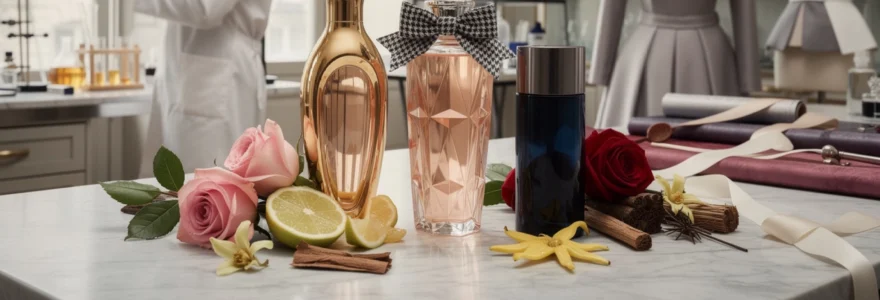
# Dior Fragrances: A Symbol of Elegance and Haute Couture Heritage
When Christian Dior opened his fashion house on Avenue Montaigne in 1946, he understood something fundamental about luxury: true elegance engages all the senses. While his revolutionary New Look silhouettes transformed post-war fashion in 1947, Dior simultaneously launched Miss Dior, establishing an indissoluble bond between haute couture and perfumery that would define the brand for generations. This strategic vision positioned fragrance not as a mere accessory, but as an essential expression of the Dior aesthetic—a philosophy that continues to distinguish the house in today’s competitive luxury market. The relationship between Dior’s couture atelier and its perfume creations represents far more than brand extension; it embodies a holistic approach to beauty where olfactory compositions mirror the architectural precision, artistic vision, and emotional resonance of runway designs.
Christian dior’s couture philosophy and its translation into olfactory compositions
Christian Dior’s approach to fashion was fundamentally architectural. He famously declared that he designed dresses as an architect designs buildings, with precise proportions, structural integrity, and an understanding of how each element supports the whole. This architectural sensibility permeated every aspect of his creative output, including his fragrances. When you examine the construction of classic Dior perfumes, you’ll notice the same attention to balance, proportion, and harmony that characterizes his most celebrated gowns.
The new look revolution: how 1947 silhouettes shaped fragrance architecture
The revolutionary Corolle collection of 1947—dubbed the New Look by American press—featured rounded shoulders, cinched waists, and voluminous skirts that celebrated feminine curves with unprecedented extravagance. This silhouette wasn’t merely aesthetic; it represented a structural philosophy that would influence Dior’s perfume architecture. Just as the New Look created dramatic contrasts between different garment sections, Dior fragrances employ bold juxtapositions between top, heart, and base notes. The generous use of fabric in those swirling skirts finds its olfactory equivalent in the lavish employment of precious raw materials, particularly in the original Miss Dior formulation, which featured an opulent bouquet of florals that was considered remarkably generous for its era.
The New Look’s emphasis on structure over decoration translated directly into perfume compositions that prioritized architectural integrity over fleeting trends. Where many commercial fragrances of the period relied heavily on single dominant notes, Dior’s creations featured complex frameworks where multiple elements supported each other in carefully calibrated relationships. This approach required exceptional technical mastery and established a standard of compositional sophistication that would become a hallmark of the house.
Monsieur dior’s personal aesthetic codes in perfume creation
Christian Dior maintained specific aesthetic preferences that appeared consistently across his work in fashion and fragrance. He favoured refined femininity over overt sensuality, preferring suggestion to explicit statement. His colour palette gravitated toward soft pastels, particularly his beloved grey and white combinations, which he considered the epitome of Parisian elegance. In perfumery, this translated to compositions that emphasized luminosity and transparency rather than heavy, opaque accords. The original Diorissimo (1956), created as a tribute to his favourite flower—lily of the valley—perfectly exemplifies this aesthetic with its crystalline clarity and delicate radiance.
Monsieur Dior also possessed an unwavering belief in the power of beauty to elevate everyday life. He viewed fashion and fragrance as vehicles for dreams, stating that “fabric is the sole vehicle of our dreams.” This romantic philosophy shaped the emotional character of Dior perfumes, which were designed not merely to smell pleasant but to transport the wearer to a realm of refined beauty. Each fragrance was conceived as an olfactory interpretation of an ideal—whether the fresh optimism of Miss Dior or the serene elegance of Diorissimo.
The atelier’s fabric selection process mirrored in scent layering techniques
In the Dior atelier, fabric selection involved meticulous evaluation of texture, weight
and drape before a single seam was sewn. Similarly, Dior perfumers evaluate raw materials not only for their intrinsic aroma, but for how they will behave in layers, over time, and in combination with other notes. Just as a stiff taffeta will create a different silhouette from fluid chiffon, a bright Italian bergamot will shape the opening of a fragrance differently from a soft neroli. The result is a type of olfactory tailoring: top notes act like the outer fabric that first catches the eye, heart notes function as the lining that rests against the skin, and base notes form the hidden structure that holds everything together. This couture-like approach to layering gives Dior fragrances their characteristic evolution on the skin, where the “fit” of the scent feels as considered as a custom-made gown.
Dior’s scent compositions are also “fitted” to specific emotional narratives in much the same way fabrics are chosen to tell a story on the runway. A crisp, airy musk might be used where a designer would select organza to suggest lightness, while a dense amber accord plays the role of heavy velvet, conveying depth and sensuality. For those exploring Dior perfume as part of their personal wardrobe, this parallel can be a useful guide: think of selecting a fragrance as you would choose a fabric for the day—light and luminous for daytime ease, textured and intense for evening drama. In doing so, you participate in the same decision-making framework that has guided Dior’s atelier for decades.
Grey and white colour palette influence on miss dior and diorama formulations
Christian Dior’s signature grey and white palette was far more than a visual preference; it encapsulated his idea of refined, understated luxury. He often described grey as the colour of Parisian skies and façades—discreet yet full of nuance. Translating this chromatic subtlety into fragrance, the original Miss Dior and Diorama were composed to evoke a similar sense of elegant restraint. Rather than relying on overly sweet or flamboyant accords, these perfumes balanced chypre structures with airy florals and soft musks, creating an olfactory equivalent of Dior grey: sophisticated, textured, and quietly luminous.
In Miss Dior, this “grey and white” philosophy manifests in the interplay between its green galbanum freshness and its delicate floral heart, softened by a mossy, woody base. The effect is neither dark nor overly bright, but a calibrated middle ground—much like a perfect dove-grey suit that works in almost any setting. Diorama, introduced in 1949, extended this idea with a more gourmand, spiced character that still maintained a cool, elegant composure. For contemporary fragrance lovers, understanding this chromatic influence can help decode why Dior fragrances often feel both classic and modern at once: they are built on tonal harmony rather than loud contrasts, just like Dior’s most iconic couture looks.
Master perfumers behind dior’s iconic fragrance portfolio
The enduring prestige of Dior fragrances is inseparable from the visionary perfumers who have shaped the house’s olfactory language. Much as successive creative directors have interpreted Dior’s fashion codes, a select group of master perfumers has translated those codes into scents that define entire eras. From Edmond Roudnitska’s radical minimalism to François Demachy’s contemporary richness, each nose has extended Dior’s haute couture heritage into perfumery with technical mastery and artistic daring. Understanding their contributions allows us to appreciate Dior fragrances not just as products, but as chapters in a continuous creative dialogue.
Edmond roudnitska’s pioneering work on diorissimo and eau sauvage
Edmond Roudnitska is often regarded as the architect of modern Dior perfumery. His creation of Diorissimo in 1956 marked a turning point in fragrance design, aligning perfectly with Christian Dior’s love for lily of the valley and his desire for a scent that captured its elusive freshness. Rather than constructing a heavy, multi-layered bouquet, Roudnitska used a streamlined composition built around muguet-inspired molecules to create a fragrance that felt luminous and almost weightless—like a white silk dress moving in a spring breeze. This minimalist, transparent style anticipated a whole generation of “clean” florals that would dominate the market decades later.
With Eau Sauvage (1966), Roudnitska transformed men’s perfumery in a similar way. Introducing hedione, a then-novel jasmine-derived molecule, he created a fresh yet sensual accord that redefined masculine elegance. Eau Sauvage was to men’s fragrance what a perfectly cut Dior suit was to menswear: sharp, modern, and effortlessly chic. Even today, it is frequently cited by perfumers as a benchmark in balanced composition. If you are building a refined fragrance wardrobe, including at least one Roudnitska creation—whether Diorissimo or Eau Sauvage—offers a direct line to the origins of Dior’s olfactory sophistication.
François demachy’s contemporary vision as Parfumeur-Créateur since 2006
Appointed Dior’s in-house Parfumeur-Créateur in 2006, François Demachy ushered in a new era focused on richness of materials, global appeal, and technical innovation. His tenure saw the launch or reinvention of major pillars such as Sauvage, J’adore L’Or, and modern interpretations of Miss Dior, each designed to resonate with contemporary tastes while retaining Dior’s haute couture DNA. Demachy placed particular emphasis on sourcing exceptional raw materials—often from exclusive Dior partnerships in Grasse, Calabria, or elsewhere—ensuring that even mass-market launches carried an artisanal backbone.
Demachy also expanded Dior’s presence in the niche and luxury segment through the Maison Christian Dior (formerly Collection Privée) line. These compositions, including scents like Bois d’Argent and Ambre Nuit, allowed for more experimental structures and higher concentrations of rare ingredients, mirroring the distinction between ready-to-wear and haute couture. For consumers, this meant unprecedented access to “couture-level” perfumery in bottle form. Demachy’s work demonstrates how a heritage house can scale globally without diluting its core values of craftsmanship and elegance—a balancing act many luxury brands aspire to achieve.
Maurice roger’s contribution to diorling and miss dior originale
Maurice Roger played a crucial role in preserving and refining the feminine codes that Christian Dior had established. His work on Miss Dior Originale helped maintain the integrity of the iconic chypre structure while adapting it to evolving regulatory and market constraints. Reformulating a classic without losing its soul is akin to restoring a historic building: each change must be invisible yet structurally essential. Roger’s ability to preserve Miss Dior’s green, elegant character ensured its continued relevance as a symbol of haute couture fragrance.
Diorling, another key fragrance associated with Roger, embodied a more assertive Dior woman—one aligned with the emerging freedoms of the 1960s. Its blend of leather, florals, and chypre notes offered a sophisticated, somewhat androgynous profile that anticipated later gender-fluid trends in perfumery. For those exploring the deeper archives of Dior fragrances, Diorling reveals how the house has long used scent to reflect shifts in women’s roles and identities, while still framing them within a context of impeccable style.
Jean-louis sieuzac’s革olutionary approach to fahrenheit’s violet-gasoline accord
Jean-Louis Sieuzac brought a radical, almost rebellious energy to Dior’s fragrance portfolio with the launch of Fahrenheit in 1988. At a time when many men’s fragrances leaned either towards aromatic fougères or heavy orientals, Fahrenheit introduced an unexpected accord often described as “violet leaves dipped in gasoline.” This startling juxtaposition of metallic-green notes with leathery, petroleum-like facets created a scent that felt both futuristic and oddly nostalgic, like a classic car parked under a blooming tree.
Sieuzac’s boldness demonstrated that Dior was willing to push olfactory boundaries just as dramatically as it did in couture under designers like John Galliano. Fahrenheit’s composition is a masterclass in contrast management: the potentially harsh gasoline nuance is tempered by warm woods and subtle florals, resulting in a fragrance that is daring yet wearable. For modern consumers accustomed to niche perfumes, Fahrenheit stands as an early example of mainstream experimentation—a reminder that Dior has long been at the forefront of creative risk-taking in fragrance.
Signature raw materials and exclusive extraction methods in dior perfumery
One of the key factors that makes Dior fragrances synonymous with elegance and haute couture heritage is the house’s commitment to exceptional raw materials. Just as a couture gown begins with the finest silks and embroideries, a Dior perfume starts with ingredients sourced from specific terroirs and often cultivated through long-term partnerships. These materials are then treated with advanced extraction techniques that preserve their most delicate facets, resulting in compositions with remarkable depth and clarity. This “farm to flacon” philosophy is central to Dior’s positioning in the luxury fragrance market.
Grasse rose centifolia cultivation at les fontaines parfumées estate
In Grasse, the historic cradle of French perfumery, Dior has invested heavily in the cultivation of Rose Centifolia, a variety renowned for its complex, honeyed, and slightly spicy aroma. At the Les Fontaines Parfumées estate, the house collaborates with local farmers to ensure sustainable cultivation and exclusive access to harvests. This mirrors the way Christian Dior once commissioned specific textiles for his couture collections, guaranteeing uniqueness and consistency season after season. The rose absolute obtained here features in key compositions, including certain versions of J’adore and the Maison Christian Dior line.
The cultivation process is intensely labour-intensive: blossoms are handpicked at dawn during a brief flowering period in May, then swiftly processed to capture their full aromatic spectrum. For fragrance enthusiasts, knowing that a Dior perfume contains Grasse Rose Centifolia is akin to recognizing a couture label on a garment—it signals a level of craftsmanship and rarity not found in standard offerings. If you value authenticity in your scent wardrobe, prioritizing Dior fragrances that highlight this note can be a way to align your choices with the brand’s highest artisanal standards.
Calabrian bergamot cold-press techniques for j’adore infinissime
Calabrian bergamot is another cornerstone of Dior’s olfactory identity, especially in luminous compositions like J’adore Infinissime. Sourced from the sun-drenched groves of southern Italy, this citrus fruit provides a sparkling, slightly floral top note that sets the tone for many Dior fragrances. The house relies on advanced cold-press extraction methods that preserve the bergamot’s volatile aromatic molecules, resulting in a cleaner, more faceted essence. Think of it as the difference between raw silk and synthetic satin: both may shine, but one has an unmistakable natural richness.
In J’adore Infinissime, this high-quality bergamot serves as the olfactory equivalent of a perfectly cut neckline—it frames the composition and draws the wearer in. The crisp, effervescent opening smoothly transitions into the voluptuous floral heart, demonstrating how a well-extracted citrus note can enhance the perception of elegance and radiance. For those selecting a Dior perfume for daytime wear, choosing formulas with Calabrian bergamot can provide that “tailored freshness” that feels polished rather than casual.
Turkish rosa damascena absolute in miss dior blooming bouquet
While Grasse roses anchor Dior’s French heritage, the house also turns to Turkish Rosa Damascena for its vibrant, dewy floral signatures, particularly in Miss Dior Blooming Bouquet. Grown in the Isparta region, these roses are harvested in the early morning and quickly processed to produce an absolute with a bright, slightly honeyed profile. This material lends Blooming Bouquet its soft yet joyful character, capturing the impression of petals just opening in the sun. The result is a fragrance that feels like a pastel watercolour painting rendered in scent.
The choice of Turkish rose absolute, rather than relying solely on synthetic rose molecules, adds a natural complexity that elevates the composition above many mainstream florals. Subtle spicy and green nuances peek through, much as fine embroidery reveals new details the closer you look. If you are drawn to feminine, floral fragrances that remain sophisticated rather than sugary, seeking out Dior creations built around Rosa Damascena is a practical way to align your signature scent with the house’s refined aesthetic.
Indonesian patchouli heart fractioning for sauvage elixir intensity
Patchouli, long associated with depth and mystery in perfumery, receives a distinctly modern treatment in Dior’s Sauvage Elixir. Instead of using a conventional patchouli oil, the house works with a “patchouli heart” obtained through fractionation—an advanced process that isolates the most desirable components while removing harsher, earthy facets. Sourced from Indonesia, this refined material delivers a cleaner, more luminous interpretation of patchouli that supports the fragrance’s intense structure without overwhelming it.
In Sauvage Elixir, this patchouli heart functions like the internal boning of a couture dress: largely invisible, yet essential to the overall shape and lasting power. It reinforces the spicy, aromatic top and the rich amber base, creating a long-lasting trail that feels powerful but controlled. For fragrance collectors who appreciate high-performance scents, understanding the role of fractionated patchouli can shed light on why Dior’s more intense formulations feel polished rather than heavy. It is a technical solution that ensures impact while preserving the brand’s signature elegance.
Architectural bottle design as extension of haute couture craftsmanship
Dior’s dedication to elegance and haute couture heritage extends beyond the juice itself to the design of its perfume bottles. These flacons are conceived as miniature architectural objects, echoing the lines, textures, and symbols found in Dior fashion and accessories. Just as a couture gown is incomplete without its finishing touches—embroidery, buttons, linings—a Dior fragrance is inseparable from its bottle, which communicates the scent’s personality before a single spray. Collectors often liken these designs to wearable art, bridging the worlds of beauty and design.
Amphora silhouette of j’adore: baccarat crystal and masstige interpretations
The J’adore bottle, with its elongated amphora silhouette and golden necklaces, is among the most recognizable icons in contemporary perfumery. Inspired by ancient amphorae and the feminine curves celebrated in Dior couture, it visually echoes the hourglass shapes of the New Look while projecting a timeless, almost sculptural elegance. High-end limited editions have been crafted in Baccarat crystal, transforming the design into a true objet d’art that sits comfortably alongside museum-worthy glassware.
At the same time, the standard J’adore bottles available at retail translate this luxurious concept into a masstige format without losing the essential design codes. The interplay of transparency and gold, the tactile neck ring, and the graceful proportions all contribute to a sense of occasion each time you use it. For many wearers, this ritual—picking up the bottle, feeling its weight, and misting the fragrance—parallels the experience of slipping into a beautifully tailored dress. In a crowded market, such coherent bottle architecture reinforces J’adore’s positioning as a benchmark of modern Dior femininity.
Miss dior’s houndstooth bow: couture atelier millefeuille technique translation
Miss Dior’s visual identity has evolved over time, but one constant has been its dialogue with classic Dior couture motifs, particularly the houndstooth pattern and the couture bow. The contemporary bottles often feature a finely detailed bow at the neck, inspired by the house’s “millefeuille” technique—layers upon layers of fabric, ribbon, or tulle built up to create texture and depth. This same sense of layered construction is mirrored in the fragrance itself, where floral, fruity, and musky notes are stacked to create a complex yet harmonious whole.
The use of houndstooth, whether engraved on the glass base or referenced in packaging, ties Miss Dior back to Christian Dior’s beloved graphic patterns seen in early suit designs. When you place a Miss Dior bottle on your vanity, you are effectively placing a fragment of the Avenue Montaigne atelier in your everyday life. This fusion of fashion codes and olfactory storytelling reinforces the idea that Miss Dior is not just a perfume; it is a distilled expression of the house’s couture heritage designed for daily wear.
Sauvage magnetic cap engineering and masculine brutalist aesthetics
Sauvage takes a different visual approach, aligning its design with contemporary notions of masculine elegance and understated luxury. The bottle’s clean cylindrical form, gradated inky-blue glass, and discreet branding evoke a kind of olfactory brutalism—stripped of ornament, focused on strength and purity of line. One of its most distinctive features is the magnetic cap, engineered to snap satisfyingly into place and align perfectly each time. This detail may seem small, but it reflects the same precision and finish you would expect from a Dior Homme suit.
The weight and tactile feel of the Sauvage bottle contribute to its perception as a premium object, enhancing the user experience and reinforcing the fragrance’s positioning as a modern classic. For consumers, these design elements offer practical benefits (ease of use, secure closure) while also delivering a subtle psychological cue of quality. In an era where many brands cut corners on packaging, Dior’s investment in such engineering underscores its commitment to holistic luxury—from formula to flacon.
Dior’s perfume launch strategy aligned with fashion week collections
Dior’s fragrances do not exist in a vacuum; they are strategically integrated into the brand’s broader fashion calendar and storytelling ecosystem. Launches are often timed to coincide with key couture or ready-to-wear shows, ensuring that new scents are introduced within a rich visual and cultural context. This alignment allows Dior to present perfume not simply as a beauty product, but as part of a larger narrative that includes silhouettes, colours, fabrics, and even runway soundtracks. For consumers, this creates a multi-sensory experience that strengthens emotional connection to both the fashion and the fragrance.
Autumn-winter 2021 couture show synchronisation with miss dior parfum release
A notable example of this integrated strategy was the synchronisation of the updated Miss Dior Parfum with the Autumn-Winter 2021 couture show. The collection, directed by Maria Grazia Chiuri, explored themes of tactility, intimacy, and the emotional weight of fabric—a perfect backdrop for a fragrance reinvented around a lush, textural rose heart. Runway staging, floral installations, and even the palette of the garments subtly echoed the romantic yet assertive spirit of the new Miss Dior, creating a unified brand message across mediums.
For the audience, both onsite and digital, the effect was powerful: as they discovered the collection’s sculpted silhouettes and embroidered surfaces, they were simultaneously introduced to a scent positioned as their olfactory counterpart. This cross-pollination helps Dior reinforce the notion that choosing a Miss Dior fragrance is akin to selecting a couture piece tailored to modern life. If you follow fashion week coverage, paying attention to concurrent Dior fragrance releases can offer insight into how the house envisions its ideal wearer at that moment in time.
Ready-to-wear campaign imagery cross-pollination with fragrance advertising
Dior also leverages visual synergies between its ready-to-wear campaigns and fragrance advertising. Similar lighting styles, locations, and artistic directors are often used across both domains, ensuring that a J’adore billboard or a Sauvage digital spot feels of a piece with seasonal fashion imagery. This consistency strengthens brand recall and subtly positions perfume as another “look” in your wardrobe. It answers an unspoken question many consumers have: how does this scent fit into my style universe?
By featuring signature accessories, such as the Lady Dior bag or Dior eyewear, within fragrance campaigns, the house further blurs the lines between categories. You might see the same model wearing a Dior dress in a print campaign and then starring in a fragrance film, creating a seamless narrative of lifestyle aspiration. For anyone building a cohesive personal brand or image, this can be instructive: aligning your chosen fragrance with your wardrobe choices, just as Dior does, will naturally enhance your overall presence.
Ambassador selection: charlize theron, natalie portman, and johnny depp’s brand embodiment
The choice of brand ambassadors is another strategic lever Dior uses to reinforce its fragrances as symbols of elegance and haute couture heritage. Charlize Theron, the face of J’adore, embodies a blend of statuesque glamour and modern strength that mirrors the fragrance’s radiant yet assertive character. Her long-running association with the scent has helped position J’adore as a timeless choice for women who want to feel both feminine and powerful, much like slipping into a golden couture gown.
Natalie Portman represents a different facet of Dior femininity for Miss Dior—intellectual, romantic, and socially engaged—aligning the fragrance with contemporary values of authenticity and purpose. Johnny Depp, as the face of Sauvage, brings a rugged, artistic persona that underscores the scent’s raw yet sophisticated masculinity. These casting decisions are not incidental; they are carefully calibrated to embody the emotional and stylistic profiles Dior envisions for each fragrance. When you select a Dior perfume, you are, in a sense, choosing which of these narratives resonates most with your own identity.
Sustainability initiatives in dior fragrance production and ingredient sourcing
As consumer expectations around environmental and social responsibility continue to rise, Dior has increasingly integrated sustainability into its fragrance operations. This evolution aligns with broader LVMH commitments and reflects a recognition that true luxury today must consider not only aesthetics and performance, but also provenance and impact. From upcycling by-products to investing in low-carbon production facilities, Dior is working to ensure that its symbols of elegance and haute couture heritage are also compatible with a more responsible future.
Upcycling program for ylang-ylang waste at mayotte plantations
One concrete initiative involves the upcycling of ylang-ylang by-products at partner plantations in Mayotte. Traditionally, only a portion of the harvested flowers would be used for essential oil distillation, with significant organic matter discarded. Dior, in collaboration with local producers, has implemented processes to repurpose this residual biomass—transforming it into compost, natural mulch, or even sources for secondary extractions. This approach reduces waste, enhances soil health, and supports more regenerative agricultural practices.
For fragrance lovers, this may seem like a behind-the-scenes detail, yet it speaks volumes about how seriously Dior treats its supply chain. Just as a couture atelier aims to minimize fabric waste and honour the value of every material, these upcycling efforts demonstrate respect for both nature and the communities involved. If sustainability is a priority for you when choosing a luxury perfume, exploring Dior fragrances that highlight responsibly sourced ylang-ylang can be a meaningful way to align your values with your purchases.
Carbon-neutral distillation facilities in partnership with LVMH environmental standards
Dior has also been investing in lower-impact production infrastructure, including distillation facilities designed to approach or achieve carbon neutrality. By optimizing energy efficiency, utilizing renewable energy sources where possible, and implementing heat-recovery systems, these sites significantly reduce the carbon footprint associated with extracting essential oils and absolutes. These efforts are guided by LVMH’s LIFE (LVMH Initiatives For the Environment) program, which sets measurable targets for emissions, water use, and biodiversity protection across the group.
While exact figures can vary by site and year, industry reports indicate that fragrance and cosmetics divisions within major luxury groups have been among the fastest to adopt such technologies, given the energy intensity of traditional distillation processes. For Dior, this transition is not only an environmental imperative but also a way to future-proof its access to high-quality ingredients in a changing climate. As you curate a fragrance collection today, knowing that a house is investing in cleaner production can add an extra layer of satisfaction to the sensory pleasure of wearing its scents.
Responsible sourcing charter for sandalwood and vetiver supply chains
Finally, Dior has implemented responsible sourcing charters for key raw materials such as sandalwood and vetiver, which are often associated with deforestation risks and complex land-use issues. By working directly with certified suppliers and cooperatives in regions like New Caledonia, India, and Haiti, the house aims to ensure traceability, fair compensation, and adherence to environmental best practices. These partnerships often include long-term contracts that provide economic stability to local communities while encouraging sustainable cultivation and replanting initiatives.
In olfactory terms, ethically sourced sandalwood and vetiver contribute creamy, woody depth and smoky, earthy elegance to many Dior compositions, from classic masculines to modern unisex creations. In ethical terms, they help align the pleasure of wearing a luxurious scent with a more conscientious consumption model. As awareness about the social and ecological dimensions of perfumery grows, Dior’s efforts in this area strengthen its claim to be not just a guardian of haute couture heritage, but also a participant in shaping a more sustainable future for luxury.