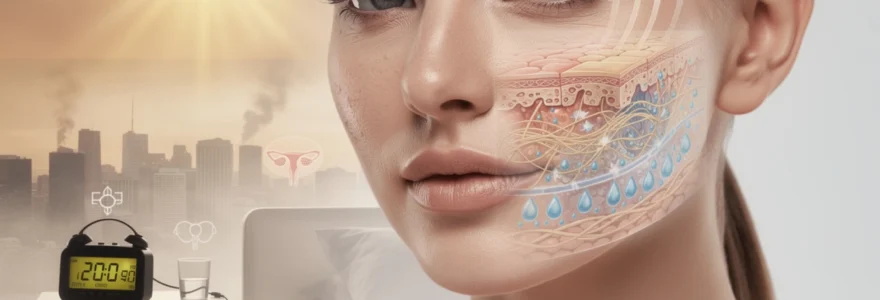
The delicate nature of facial skin makes it particularly vulnerable to moisture loss, leading to the formation of fine lines that many mistake for premature ageing. Dehydration lines represent a distinct skin concern that differs fundamentally from chronological wrinkles, manifesting as temporary creases caused by insufficient water content in the epidermis. These superficial lines can appear suddenly and fluctuate throughout the day, creating a tired or aged appearance that may cause considerable distress. Understanding the underlying mechanisms behind their formation is crucial for developing effective treatment strategies that restore skin’s natural hydration balance and smooth appearance.
Understanding dehydration lines: epidermal water loss and cellular manifestations
Dehydration lines emerge when skin cells lose their optimal water content, causing them to contract and create visible surface irregularities. Unlike structural wrinkles that result from collagen breakdown, these lines reflect a temporary state of cellular dehydration that can be reversed through appropriate intervention. The skin’s uppermost layer, the stratum corneum, functions as a protective barrier that normally retains moisture through a complex network of lipids and natural moisturising factors.
When this barrier becomes compromised, water molecules escape more readily from the deeper layers of skin, leaving behind a deflated cellular structure. This process creates the characteristic appearance of fine, crepey lines that become more pronounced in dry environments or after cleansing. The phenomenon occurs most commonly around the eyes, mouth, and forehead, where skin thickness is naturally reduced and sebaceous gland activity is minimal.
Trans-epidermal water loss (TEWL) mechanisms in fine line formation
Trans-epidermal water loss represents the primary mechanism through which dehydration lines develop, occurring when moisture evaporates from the skin’s surface faster than it can be replenished from within. This process accelerates when the lipid barrier becomes disrupted, allowing water molecules to escape through microscopic gaps between corneocytes. Environmental factors such as low humidity, wind exposure, and heating systems significantly exacerbate TEWL rates.
Research indicates that healthy skin maintains TEWL rates of approximately 4-8 grams per square metre per hour, but compromised barriers can experience rates exceeding 20 grams per square metre per hour. This dramatic increase in water loss creates immediate visible changes in skin texture, with affected areas appearing dull, tight, and lined. The severity of dehydration lines correlates directly with TEWL measurements, making this an important diagnostic indicator.
Hyaluronic acid depletion and dermal matrix changes
Hyaluronic acid serves as the skin’s primary moisture reservoir, capable of binding up to 1,000 times its weight in water within the dermal matrix. Natural ageing processes gradually reduce hyaluronic acid synthesis, while environmental stressors accelerate its degradation through enzymatic breakdown. This depletion significantly impacts the skin’s ability to maintain adequate hydration levels, contributing to the formation of dehydration lines.
The molecular structure of hyaluronic acid creates a gel-like matrix that supports cellular volume and maintains skin plumpness. When concentrations drop below optimal levels, cells lose their three-dimensional integrity, collapsing inward and creating surface depressions. This process particularly affects areas with naturally lower hyaluronic acid content, such as the periorbital region, where dehydration lines frequently manifest first.
Stratum corneum barrier function compromise
The stratum corneum’s barrier function depends on a precise balance of ceramides, cholesterol, and free fatty acids that form protective lipid bilayers between skin cells. Disruption of this lipid composition compromises the barrier’s integrity, allowing increased water loss and reduced protection against environmental aggressors. Factors contributing to barrier dysfunction include over-cleansing, harsh skincare ingredients, and exposure to extreme temperatures.
When barrier function becomes compromised, the skin compensates by increasing cellular turnover rates, often leading to incomplete keratinisation and further structural weakening. This creates a cycle of ongoing barrier dysfunction that perpetuates dehydration line formation. Restoration of barrier function requires targeted intervention with appropriate lipid replacement therapies and gentle skincare protocols.
Glycosaminoglycan
Glycosaminoglycan reduction and moisture retention capacity
Glycosaminoglycans (GAGs), including hyaluronic acid, chondroitin sulfate, and dermatan sulfate, act as powerful water-binding molecules within the dermis and lower epidermis. They function like microscopic sponges, attracting and retaining large volumes of water to maintain turgor pressure and resilience. When GAG levels decline, the skin’s ability to hold moisture diminishes markedly, predisposing it to dehydration lines and a dull, fatigued appearance.
Multiple studies have shown that intrinsic ageing, oxidative stress, and chronic inflammation accelerate the breakdown of GAGs and impair their synthesis. As these structural hydrators deplete, the extracellular matrix becomes less dense and more prone to collapse under mechanical forces like facial expressions. You may notice this as fine, mesh-like lines that appear more obvious in certain lighting or after cleansing. Supporting GAG synthesis through targeted skincare and in-clinic treatments helps restore the skin’s moisture retention capacity and visibly smooth these superficial creases.
Primary causative factors behind dehydration line development
While epidermal water loss and matrix changes explain how dehydration lines form, several upstream triggers determine why they develop in the first place. These causative factors often overlap: environmental exposure, lifestyle patterns, hormonal shifts, and intrinsic ageing work together to weaken the barrier and reduce water-holding molecules. Recognising which factors apply to you is essential for creating a personalised strategy to prevent and treat dehydration lines effectively.
Some triggers, like UV radiation and pollution, are difficult to avoid entirely but can be mitigated with protective measures. Others, such as sleep deprivation and low water intake, relate more directly to daily habits. By addressing both internal and external influences on skin hydration, you can significantly reduce the frequency and severity of dehydration lines and support long-term skin health.
Environmental aggressors: UV radiation and free radical damage
UV radiation is one of the most powerful accelerators of dehydration lines, even before visible sun damage appears. UV exposure disrupts the lipid organisation within the stratum corneum and increases trans-epidermal water loss, leaving the surface dry, tight, and prone to fine creasing. At the same time, UV-induced free radicals attack lipids, proteins, and DNA, degrading key components such as ceramides and GAGs that help the skin retain moisture.
Air pollution adds another layer of stress. Particulate matter and ozone can oxidise surface lipids and trigger chronic low-grade inflammation, further compromising barrier function. You might notice that during periods of high pollution or after sun-heavy holidays, dehydration lines around the eyes and mouth become more pronounced. Consistent use of broad-spectrum sunscreen, antioxidant serums (for example, vitamin C, E, and ferulic acid), and gentle cleansing to remove pollutants is essential for limiting environmentally driven epidermal dehydration.
Intrinsic ageing: collagen synthesis decline and elastin degradation
Intrinsic, or chronological, ageing gradually reduces the skin’s structural resilience, making it more susceptible to dehydration lines. Fibroblasts in the dermis slow their production of collagen types I and III, while existing collagen becomes fragmented and less organised. Elastin fibres also degrade, reducing the skin’s ability to spring back after repeated movement. This structural loosening increases the likelihood that transient dehydration creases will eventually imprint as permanent wrinkles.
At the same time, aged skin tends to produce fewer natural moisturising factors and lipids, which are critical for maintaining barrier integrity and water content. Think of it as a mattress losing both its springs (collagen and elastin) and its padding (lipids and humectants): any pressure or moisture loss is more visible on the surface. Although we cannot halt intrinsic ageing, targeted skincare—particularly retinoids, peptides, and barrier-supporting ingredients—can help offset these changes and minimise the progression from dehydration lines to fixed wrinkles.
Lifestyle factors: sleep deprivation and inadequate water intake
Modern lifestyle habits play a major role in the development of dehydration lines. Chronic sleep deprivation, for instance, impairs overnight skin repair processes and alters circadian regulation of barrier function. Studies have shown that poor sleepers often exhibit higher TEWL and more pronounced facial lines, especially around the eyes where the skin is thinnest. If you frequently wake up with fine creases that slowly fade during the day, disrupted sleep may be a contributing factor.
Inadequate water intake further compounds the issue. When the body is dehydrated, it prioritises essential organs over the skin, reducing water delivery to peripheral tissues. Combined with diuretics like caffeine and alcohol, this can quickly translate into flatter, less elastic skin cells and visible dehydration lines. Simple adjustments—such as aiming for 1.5–2 litres of fluids per day, moderating alcohol, and establishing a consistent sleep schedule—can markedly improve skin hydration from the inside out.
Hormonal fluctuations: oestrogen deficiency and sebum production changes
Hormonal shifts, particularly fluctuations in oestrogen, significantly influence skin hydration dynamics. Oestrogen supports collagen synthesis, sebum production, and GAG formation; when levels decline—such as during perimenopause and menopause—the skin often becomes drier, thinner, and more prone to fine lines. Many women notice a sudden increase in dehydration lines on the cheeks and around the mouth during these phases, even if they have never previously struggled with dry skin.
Changes in androgens and progesterone can also alter sebum composition and quantity, indirectly affecting barrier function. While oily skin types may still experience surface shine, they can simultaneously suffer from underlying dehydration if the barrier lipids are unbalanced or if harsh, oil-stripping products are used. Being aware of hormonal influences allows you to anticipate these changes and adjust your skincare—focusing on richer moisturisers, ceramide-based formulas, and gentle, non-stripping cleansers—as your skin’s needs evolve.
Clinical assessment and professional diagnostic methods
Accurate differentiation between dehydration lines and true wrinkles is essential for effective treatment planning, and this often requires professional clinical assessment. Dermatologists and advanced aesthetic practitioners use a combination of visual examination, palpation, and instrumental measurements to evaluate skin hydration and barrier integrity. They will typically assess where lines appear, how deep they are, and whether they fluctuate with hydration or remain constant regardless of topical moisturising.
Non-invasive diagnostic tools can provide objective data. Corneometry measures stratum corneum hydration levels, while tewametry quantifies TEWL, offering insight into barrier function. High-resolution digital photography and dermoscopy help visualise surface texture and micro-relief patterns, distinguishing transient dehydration lines from structural wrinkles. In some settings, 3D skin imaging and ultrasound may be used to evaluate dermal thickness and collagen density. This evidence-based approach ensures that you receive targeted interventions rather than generic “anti-ageing” treatments that may not address the true underlying concern.
Topical treatment protocols for dehydration line management
Topical treatments remain the first-line approach for managing dehydration lines, especially when combined with lifestyle and environmental adjustments. An effective protocol typically addresses three key goals: restoring barrier lipids, increasing water-binding capacity, and stimulating long-term structural renewal. Rather than relying on a single “miracle” product, layering complementary formulas—such as humectant serums, barrier-repair moisturisers, and targeted actives—produces more stable, visible results.
When building a routine to treat dehydration lines, product tolerance and skin type should guide your choices. Sensitive or compromised skin benefits from a slower introduction of potent actives like retinoids or alpha hydroxy acids, while resilient skin may tolerate more frequent use. In all cases, consistency is crucial. Dehydration lines often improve noticeably within days or weeks once hydration and barrier support are optimised, but maintaining those results requires ongoing care.
Retinoid therapy: tretinoin and adapalene application techniques
Retinoids such as tretinoin and adapalene are best known for their anti-ageing and acne benefits, but they also play a valuable role in managing dehydration lines. By increasing epidermal turnover and stimulating collagen synthesis in the dermis, retinoids help refine surface texture and support the underlying framework so that transient lines are less likely to become etched-in wrinkles. However, because retinoids can initially cause dryness and irritation, careful application techniques are essential to avoid worsening dehydration.
To minimise irritation, most dermatologists recommend starting with a low concentration (for example, 0.025% tretinoin or over-the-counter adapalene 0.1%) applied two to three nights per week. You can use the “sandwich” method—applying a thin layer of moisturiser, then your retinoid, followed by another layer of moisturiser—to buffer potential dryness. Pea-sized amounts are sufficient for the entire face, avoiding the immediate eye area unless specifically directed by a professional. Over several months, retinoid therapy can significantly improve fine surface lines, including dehydration lines, as the skin becomes thicker, smoother, and better able to retain moisture.
Peptide complex formulations: matrixyl 3000 and argireline benefits
Peptides offer a gentler alternative or adjunct to retinoids for targeting dehydration lines and early textural changes. Complexes such as Matrixyl 3000 (a combination of palmitoyl tripeptide-1 and palmitoyl tetrapeptide-7) work by signalling fibroblasts to boost collagen and GAG synthesis, improving both structural support and hydration. Over time, this can soften fine lines and enhance the skin’s ability to maintain a plump, smooth appearance.
Argireline (acetyl hexapeptide-8) operates via a different mechanism, modulating neurotransmitter release at the neuromuscular junction to reduce the intensity of facial muscle contractions. While its effects are milder than injectable neuromodulators, regular use around expression-prone areas—such as crow’s feet and forehead lines—can help prevent repetitive creasing from imprinting dehydration lines. Peptide serums are typically well tolerated and can be layered comfortably under moisturisers morning and evening, making them suitable for long-term maintenance of hydrated, line-minimised skin.
Ceramide restoration: CeraVe and SkinCeuticals barrier repair systems
Because barrier compromise is a central driver of dehydration lines, restoring the lipid matrix with ceramide-rich formulations is a cornerstone of effective treatment. Ceramides account for approximately 50% of stratum corneum lipids by weight, forming organised lamellar structures that limit water loss. When ceramide levels drop—due to harsh cleansing, ageing, or environmental exposure—TEWL increases and fine creases become more apparent. Replenishing these lipids helps “seal in” moisture and create a smoother surface.
Brands such as CeraVe and SkinCeuticals offer evidence-based barrier repair systems that combine ceramides with cholesterol and fatty acids in physiologically relevant ratios. For example, CeraVe’s moisturisers incorporate a multi-ceramide blend with patented delivery technology, while SkinCeuticals Triple Lipid Restore 2:4:2 uses a targeted 2:4:2 ratio of ceramides, cholesterol, and fatty acids. Applying these products regularly—particularly after cleansing and before bed—supports the rebuilding of a robust barrier, thereby reducing TEWL and softening the appearance of dehydration lines.
Alpha hydroxy acid protocols: glycolic and lactic acid concentrations
Alpha hydroxy acids (AHAs), including glycolic and lactic acid, help improve dehydration lines by refining the stratum corneum and enhancing the penetration of hydrating ingredients. By dissolving the bonds between dead corneocytes, AHAs promote a smoother, more even surface that reflects light better and appears less crepey. Lactic acid, in particular, offers dual benefits as both an exfoliant and a humectant, making it a valuable choice for dry or dehydrated skin types.
For at-home use, low to moderate AHA concentrations—typically 5–10% lactic acid or 5–8% glycolic acid—applied two to three times per week are generally sufficient for texture refinement without excessive irritation. Higher strengths should be reserved for professional care. It is important to pair AHAs with robust moisturisation and daily sunscreen, as exfoliation can temporarily increase sensitivity. When used judiciously within a broader hydration-focused routine, AHAs can help reveal fresher, more receptive skin that responds better to humectants and barrier-repair treatments.
Advanced dermatological interventions and In-Clinic procedures
When topical skincare and lifestyle modifications are not enough to address established dehydration lines or early wrinkles, advanced dermatological interventions can provide a more intensive boost. These in-clinic procedures target deeper layers of the skin, stimulating collagen production, enhancing hyaluronic acid levels, and improving overall skin quality. They are especially helpful if you are seeking faster or more dramatic improvements in areas such as the under-eyes, cheeks, and perioral region.
Most advanced treatments are designed to complement—not replace—your daily routine. Think of them as high-impact interventions that build a stronger foundation, while ongoing home care maintains the results. A consultation with a qualified dermatologist or aesthetic practitioner is essential to determine which combination of procedures will best address your specific pattern of dehydration lines, skin type, and tolerance.
Microneedling with growth factor serums: SkinPen and dermapen techniques
Microneedling utilises fine, medical-grade needles to create controlled micro-injuries in the skin, triggering a wound-healing response that stimulates collagen and elastin production. Devices such as SkinPen and Dermapen offer precise depth control, allowing practitioners to target the superficial and mid-dermis where dehydration lines and early wrinkles form. As new collagen and GAGs are synthesised, the skin gradually becomes thicker, firmer, and better able to retain moisture.
When combined with growth factor or peptide-rich serums applied during or immediately after treatment, microneedling can enhance the penetration and efficacy of these bioactive ingredients. This synergy accelerates improvements in texture and hydration. Sessions are typically spaced four to six weeks apart, with three to six treatments recommended depending on severity. Mild redness and sensitivity are expected for 24–72 hours, during which time a gentle, hydrating routine and strict sun protection are crucial.
Radiofrequency treatments: thermage and profound RF for collagen stimulation
Radiofrequency (RF) treatments deliver controlled thermal energy to the dermis, heating collagen fibres and inducing a tightening and remodelling response. Systems such as Thermage (monopolar RF) and Profound RF (fractional RF with microneedling) target deeper structural layers without damaging the epidermis, making them suitable for improving laxity and fine lines that coexist with dehydration. As collagen remodels and new fibres form over several months, the skin appears smoother and more elastic.
Because RF energy also influences the extracellular matrix, including GAG content, treated skin often shows enhanced hydration and reduced crepiness. A single Thermage session can provide gradual improvements over six to twelve months, while Profound RF may require fewer treatments due to its more intensive approach. Post-procedure care focuses on soothing and hydrating the skin while avoiding heat, vigorous exercise, and direct sun exposure for several days.
Injectable hydration: profhilo and skinboosters hyaluronic acid therapy
Injectable hyaluronic acid (HA) therapies specifically designed for bioremodelling and deep hydration offer a powerful option for stubborn dehydration lines. Unlike traditional fillers that primarily add volume, treatments such as Profhilo and various Skinboosters use low- to medium-crosslinked HA injected superficially across broad areas. Once injected, the HA spreads within the tissue, attracting water and stimulating fibroblasts to produce more collagen and elastin.
This approach can be particularly effective for the mid-face, neck, and décolletage, where diffuse fine lines and textural dryness are common. Most protocols involve two to three initial sessions spaced four weeks apart, followed by maintenance treatments every six to twelve months. Results include improved skin elasticity, radiance, and a noticeable softening of dehydration lines. As with all injectables, treatment should only be performed by an experienced medical professional to minimise risks and ensure natural-looking outcomes.
Chemical peel protocols: TCA and jessner solution applications
Chemical peels using agents such as trichloroacetic acid (TCA) and Jessner solution (a combination of salicylic acid, lactic acid, and resorcinol) can help reduce dehydration lines by promoting controlled exfoliation and dermal remodelling. Medium-depth TCA peels penetrate beyond the epidermis into the upper dermis, stimulating new collagen and GAG production as the skin heals. Jessner peels, often used in combination or as preparatory treatments, refine surface texture and enhance the penetration of subsequent peels or topical actives.
These procedures are best reserved for individuals with appropriate skin types and under the care of a skilled practitioner, as incorrect application or aftercare can lead to complications such as hyperpigmentation or scarring. Downtime varies from a few days of mild flaking with lighter formulations to one to two weeks of peeling and redness with deeper peels. Long term, properly performed peels can significantly improve the appearance of fine lines, uneven tone, and photodamage that contribute to a dehydrated, aged look.
Prevention strategies and long-term maintenance protocols
Preventing dehydration lines is far more efficient than attempting to reverse them once they have evolved into permanent wrinkles. Long-term maintenance focuses on three pillars: consistent barrier protection, regular hydration support, and proactive management of environmental and lifestyle stressors. By treating your skin much like you would a high-performance fabric—gentle cleansing, adequate conditioning, and protection from harsh conditions—you can preserve its smoothness and elasticity for longer.
Daily use of a gentle, pH-balanced cleanser, followed by a hydrating serum and ceramide-rich moisturiser, forms the core of an effective routine. Broad-spectrum sunscreen with at least SPF 30 should be applied every morning, even on cloudy days, to prevent UV-induced barrier disruption and GAG degradation. At night, incorporating reparative actives such as low-strength retinoids or peptides supports ongoing renewal. Complement these topical measures with lifestyle habits—adequate sleep, balanced nutrition rich in essential fatty acids and antioxidants, regular physical activity, and sufficient water intake—to create an internal environment that supports optimal skin hydration.