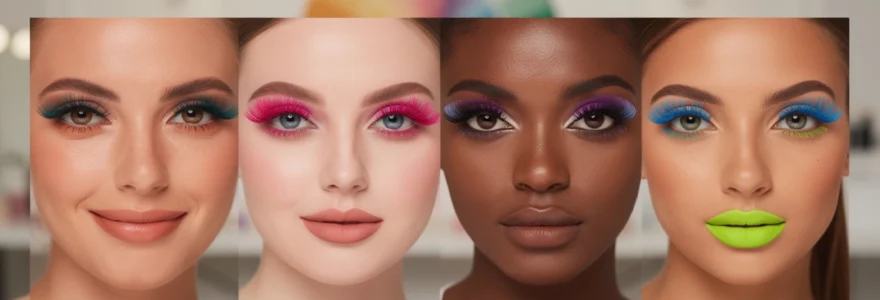
Coloured mascara has emerged as one of the most exciting beauty trends transforming traditional makeup routines across the globe. This vibrant approach to lash enhancement offers makeup enthusiasts an effortless way to inject personality and creativity into their daily looks without requiring extensive skill or time investment. The resurgence of coloured mascara represents more than just a nostalgic nod to Y2K aesthetics; it demonstrates how modern beauty consumers are embracing bold self-expression and breaking free from conventional black-and-brown limitations. Whether you’re preparing for festival season, seeking to complement your natural eye colour, or simply wanting to experiment with playful beauty trends, coloured mascara provides infinite possibilities for creative expression.
Essential colour theory principles for mascara application techniques
Understanding colour theory fundamentals transforms coloured mascara application from random experimentation into strategic artistry. The colour wheel serves as your primary guide, revealing which shades will enhance your natural features most effectively. Complementary colours, positioned opposite each other on the wheel, create maximum contrast and visual impact when applied to lashes. This scientific approach ensures your mascara choice amplifies rather than competes with your existing features.
Complementary colour matching with natural eye pigmentation
Brown eyes, representing approximately 79% of the global population, benefit tremendously from blue-toned mascaras that sit directly opposite brown on the colour spectrum. Electric blue, navy, and cobalt shades instantly intensify the warmth and depth of chocolate and amber irises. For lighter brown eyes with golden flecks, turquoise and teal options provide stunning contrast while highlighting those precious metallic undertones that make each eye unique.
Blue eyes achieve remarkable vibrancy when paired with orange-family mascaras, though these bold choices require confidence and careful application. Burgundy, coral, and rust-toned formulas offer more wearable alternatives that still honour complementary principles. These warmer shades create beautiful contrast without overwhelming delicate blue pigmentation, making them perfect for both daytime and evening applications.
Green eyes, the rarest eye colour affecting only 2% of the population, pair magnificently with red and purple mascara families. Deep burgundy, wine, and plum shades enhance the natural earthiness of green irises while creating sophisticated drama. Pink mascaras, particularly in deeper rose or magenta tones, provide unexpected yet flattering contrast that makes green eyes appear more luminous and captivating.
Undertone analysis for warm and cool chromatic selections
Eye colour complexity extends far beyond surface appearance, with subtle undertones significantly influencing optimal mascara selection. Warm undertones in brown eyes often feature golden, amber, or copper flecks that respond beautifully to cool-toned mascaras. Conversely, eyes with cool undertones benefit from warm mascara selections that provide necessary balance and visual interest.
Hazel eyes present unique challenges and opportunities due to their chameleon-like quality and multi-tonal composition. These eyes often shift between green, brown, and gold depending on lighting conditions and surrounding colours. Purple mascaras excel at bringing out green elements, while bronze and copper shades emphasise golden flecks within hazel irises.
Saturation levels and intensity calibration methods
Mascara saturation dramatically affects overall impact and wearability of coloured formulas. Highly saturated options deliver maximum colour payoff but require confident application and appropriate styling contexts. Festival environments, creative photoshoots, and artistic makeup applications provide ideal opportunities for intense colour saturation experimentation.
Medium saturation levels offer versatility for transitioning between subtle daily wear and more dramatic evening applications. These formulas build beautifully through layering techniques, allowing customisation of colour intensity based on specific occasions and personal preferences. Lower saturation options provide gentle colour hints that enhance natural beauty without dramatic transformation.
Seasonal colour palette integration with mascara formulations
Seasonal colour coordination elevates coloured mascara from novelty accessory to sophisticated beauty tool. Spring palettes embrace fresh, vibrant shades like mint green, lavender, and coral that reflect renewal and optimism. Summer collections feature bold, saturated colours including electric
teal, hot pink, and vivid sapphire that look particularly striking in direct sunlight or under event lighting. Autumn invites richer, earthier mascara colours such as brick red, plum, forest green, and bronze that echo seasonal foliage and pair beautifully with warmer, deeper complexions. Winter palettes lean into cool, high-contrast tones—think inky navy, charcoal, berry, and even metallic silver—that complement crisp winter light and more structured, editorial makeup looks.
Integrating seasonal colour palettes into your mascara wardrobe does not mean abandoning personal preference; rather, it offers a framework for rotating shades in a way that feels intentional and modern. You might lean into softer, pastel lashes alongside dewy skin in spring, then switch to bold cobalt or emerald lashes with bronzed skin in summer. As the weather cools, deeper burgundy or chocolate mascara can replace classic black for everyday wear, before transitioning into dramatic jewel-toned or metallic lashes for winter parties and New Year celebrations.
Professional application techniques for vibrant mascara formulations
Once you have selected the right coloured mascara for your eye shade and undertone, professional application techniques ensure the pigment appears vibrant, clean, and long-wearing. The difference between a polished colourful lash look and a messy one often comes down to technique rather than product quality alone. By mastering strategic layering, wand positioning, and support products like primers and setting sprays, you can achieve looks that feel runway-ready yet remain wearable in real life.
Layering methods for maximum chromatic impact
Layering coloured mascara is essential when you want maximum chromatic impact without compromising lash definition. Professional artists often begin with a thin coat of classic black or deep brown mascara at the roots to create depth and the illusion of thicker lash lines. Once this base has dried slightly, they apply one to three coats of coloured mascara through the mid-lengths and tips, building intensity gradually rather than attempting full opacity in a single swipe.
For subtle daytime looks, one sheer layer of colour over a neutral base can be enough to catch the light and make eyes appear brighter. In contrast, festival or editorial makeup frequently involves multiple passes, allowing the brush to slightly dry between coats for better grip and saturation. If you notice clumping during layering, use a clean spoolie to gently comb through the lashes while the product is still pliable; this redistributes pigment and preserves separation without sacrificing colour payoff.
Precision wand manipulation for uniform colour distribution
Even the most expensive colourful mascara can appear patchy if the wand is not handled correctly. Professional makeup artists treat the mascara wand almost like a calligraphy pen, changing angles and pressure to tailor application. Start at the base of the lashes, wiggling the wand from side to side to deposit pigment and lift from the roots, then pull through to the tips in a smooth, steady motion. This “wiggle and sweep” technique ensures uniform colour distribution and guards against heavy clumps at the ends.
To catch the tiny lashes in the inner and outer corners, rotate the wand vertically and use the very tip to paint individual hairs with short, controlled strokes. This detail work is particularly important with bold shades like cobalt, magenta, or emerald, as any gaps are more noticeable than with black. If you tend to get mascara on your lids or under-eyes, try tilting your chin slightly up while looking down into a mirror; this angle opens up more space to work, reducing smudging while still allowing you to see exactly where the colour is going.
Mascara primer integration with pigmented formulas
Mascara primer plays a crucial role when working with colourful formulas, especially if you have naturally dark lashes that can mute lighter pigments. A white or translucent lash primer creates a clean canvas, allowing pastel or neon shades to show at full intensity rather than disappearing into brown or black hair. Think of it as the lash equivalent of an eyeshadow base: without it, colour can appear dull or uneven; with it, every swipe looks more vivid and professional.
For maximum impact, apply primer from root to tip, ensuring every lash is coated and slightly lifted. Allow it to become tacky—but not completely dry—before layering on your coloured mascara; this timing helps the pigments grip better and prevents dusty fallout. If you prefer a softer effect for everyday wear, you can limit primer to the mid-lengths and tips, leaving roots bare or coated in a neutral shade for a more diffused result that still feels playful but office-appropriate.
Setting spray applications for longevity enhancement
Coloured mascara looks are often worn for long events—concerts, weddings, or long workdays—where smudging or fading can quickly ruin the effect. While setting spray is traditionally used for complexion products, professionals also leverage it to support vibrant lash looks. The goal is not to spray mascara directly, which can cause clumping, but to create an overall humidity-resistant veil that helps the entire makeup look, including lashes, withstand heat and movement.
After completing your eye makeup, close your eyes and mist a fine, even layer of setting spray across the face from a distance of around 20–30 centimetres. This helps lock in the oils and creams around your eyes, reducing the risk of pigment transfer from lashes onto lids. For particularly humid conditions, some artists lightly spritz a clean spoolie with setting spray and gently comb it through fully dried lashes, adding an extra seal without disturbing the coloured mascara underneath.
Editorial-inspired monochromatic mascara looks
Monochromatic makeup—where eyes, cheeks, and lips share a similar colour family—has become a go-to technique in editorial beauty because it looks cohesive, modern, and intentionally styled. When you swap black mascara for a coloured version in the same tonal range as your blush or lipstick, the result feels high-fashion yet surprisingly wearable. The key is choosing a single hue and playing with variations in depth and texture rather than stacking competing colours that can overwhelm the face.
For example, a burgundy mascara paired with a soft berry cream blush and a diffused wine-stain lip creates a moody, romantic look perfect for evening events or autumn days. A warm terracotta mascara complemented by peachy cheeks and a sheer apricot gloss feels effortless and sun-soaked, ideal for late summer. If you love cooler tones, try navy lashes with a wash of taupe shadow, a muted mauve blush, and a rosewood lip; the result is subtly sculpted yet editorial, with the blue lashes adding quiet intrigue whenever you blink.
To keep monochromatic looks polished rather than flat, vary the textures across the face. Pair satin or glossy lips with a more matte eye, or combine a luminous highlighter with softly blurred cream products. This interplay of finishes prevents the single-colour story from looking one-dimensional and instead creates the kind of depth you would see in a campaign image or runway close-up. Ask yourself: does my chosen colour appear in at least two places on my face? If so, your monochromatic mascara look is likely to feel balanced and intentional.
Multi-tonal gradient mascara styling techniques
Multi-tonal mascara looks take colourful lashes one step further by incorporating gradient and contrasting shades across different parts of the lashes. Rather than relying on a single block of colour, you can create ombré, two-tone, or feathered effects that look intricate but are surprisingly achievable with a bit of practice. These techniques are particularly impactful in photos and video, where subtle shifts in colour become more noticeable with every blink.
Ombré transition methods using urban decay perversion and tarte big ego
Ombré mascara looks rely on a smooth transition from darker roots to brighter or lighter tips, similar to a balayage effect on hair. Using a deep, ultra-black formula such as Urban Decay Perversion at the base and a brighter coloured option like Tarte Big Ego on the mid-lengths and ends creates depth at the lash line while still delivering playful colour. Start by applying a full coat of Urban Decay Perversion from root to about halfway up the lash, concentrating pigment where you want the most density and definition.
Once that layer has set for 20–30 seconds, take Tarte Big Ego in your chosen shade—perhaps fuchsia, purple, or electric blue—and gently comb it through the mid-lengths and tips, avoiding the roots. To blend the transition, lightly pinch the lashes between your thumb and a clean spoolie while the coloured layer is still soft; this presses the two shades together and softens any harsh line between black and colour. The result is an ombré lash that looks intricate up close yet remains surprisingly wearable from a distance.
Two-tone application with NYX professional makeup colour mascara range
Two-tone mascara looks allow you to showcase multiple colours at once without advanced blending techniques. The NYX Professional Makeup colour mascara range offers a variety of vivid shades ideal for experimenting with upper and lower lash contrasts or inner-versus-outer corner designs. One popular method involves applying a deeper, more classic shade—such as navy or plum—to the upper lashes, while reserving a brighter hue like turquoise or hot pink for the lower lashes.
If you prefer bolder editorial statements, you can also split the upper lashes themselves into two zones: one colour on the inner half and another on the outer half. For example, apply a teal NYX mascara to the inner two-thirds of the lashes, then layer a violet or cobalt shade on the outer third, slightly overlapping where they meet. This creates a subtle gradient without the need for intricate blending and looks particularly striking when paired with simple, neutral eyeshadow and a clean, polished base.
Feathering techniques for seamless colour blending
Feathering is a technique borrowed from both hair colouring and fine art, where soft, short strokes are used to blend shades without harsh demarcation lines. On lashes, feathering allows you to transition between coloured mascaras smoothly, making gradients look seamless and intentional. After applying your primary mascara shade, take a second colour on the very tip of the wand and lightly “tap and pull” through small sections of the lashes, focusing on the mid-lengths and tips.
Work in tiny, overlapping strokes rather than full sweeps; imagine you are painting individual feathers rather than coating a solid surface. This method works especially well when blending analogous shades—such as teal into blue, or plum into burgundy—because the similarity in undertone makes transitions nearly invisible. If you accidentally apply too much of the secondary colour, simply run a clean spoolie or a lightly loaded brush of the original shade through the lashes to restore balance while preserving the multi-dimensional effect.
Statement mascara looks for special occasions and events
Coloured mascara can serve as the focal point of an entire event look, especially when you want something impactful yet easier to maintain than a complex eyeshadow blend. For weddings, proms, or formal dinners, consider deep burgundy or chocolate-lilac mascaras that add intrigue without clashing with elegant attire. These shades photograph beautifully, subtly enhancing eye colour while avoiding the harshness that sometimes occurs with solid black in flash photography. Pair them with softly defined eyeliner and a neutral lid to keep the focus firmly on the lashes.
For concerts, festivals, or themed parties, you can push the boundaries with neon or metallic mascaras that catch stage lighting and smartphone flashes. Think electric blue paired with holographic highlighter, emerald lashes with gold glitter accents, or even layered pastel shades for a dreamy, fairycore effect. If you are attending an all-day outdoor event, opt for waterproof or tubing coloured mascaras that resist sweat and humidity; combine them with a reliable setting spray and minimal under-eye creams to reduce transfer and smudging over time.
Corporate events and networking occasions do not necessarily exclude colourful lashes, but they call for more strategic restraint. A navy or deep plum mascara can read as nearly neutral from a distance while still offering that playful touch up close. Ask yourself what message you want your eye makeup to send: is it polished and approachable, or bold and avant-garde? Once you answer that question, you can tailor your coloured mascara choice to enhance your outfit, setting, and professional goals.
Maintenance and removal protocols for pigmented mascara formulations
High-pigment coloured mascaras can be more demanding than their classic counterparts when it comes to maintenance and removal. Strong dyes, waterproof polymers, and tubing technologies are designed to grip the lashes, which is excellent for wear time but risky if removal is rushed or aggressive. Prioritising gentle, thorough cleansing protects both the delicate skin around the eyes and the integrity of your natural lashes, ensuring you can enjoy bold colours without long-term damage.
During wear, avoid rubbing your eyes or picking at flaking product, as this can break or prematurely shed lashes. If you know you have a long day ahead, consider carrying cotton buds and a small micellar water sample or stick cleanser to correct any minor smudges under the eyes. For those who wear contact lenses or have sensitive eyes, look for ophthalmologist-tested, fragrance-free coloured mascaras and always remove lenses before starting your cleansing routine at night.
Removal should begin with loosening the pigment rather than scrubbing it away. For traditional and waterproof coloured mascaras, saturate a cotton pad with a bi-phase eye makeup remover or oil-based cleanser, then press it gently over closed lashes for 15–20 seconds. This soak allows oils to dissolve waxes and polymers so the product can slide away with minimal friction. For tubing formulas, lukewarm water and gentle pressure between your fingertips are often enough to slide off the “tubes” intact, looking almost like tiny rubber sleeves in the sink.
After mascara has been removed, cleanse the entire face with your usual cleanser to eliminate any residue, and follow with a hydrating eye cream or lightweight eye serum to replenish moisture. If you wear colourful mascara regularly, incorporating a lash-conditioning serum or castor-oil-based treatment a few nights a week can help maintain lash strength and flexibility. With consistent, careful maintenance, you can continue to experiment with the most vivid mascara trends while keeping your natural lashes healthy, full, and ready for your next playful look.