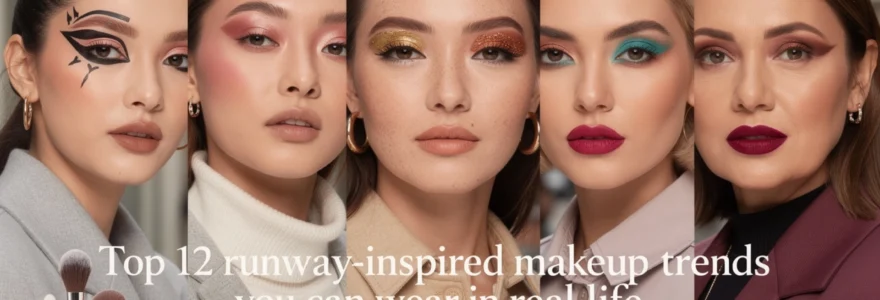
Fashion weeks across Paris, Milan, London, and New York have delivered a treasure trove of beauty inspiration for the upcoming seasons. From the dramatic eye statements at Chanel to the architectural contouring at Giorgio Armani, runway makeup artists have pushed creative boundaries whilst offering surprisingly wearable interpretations for everyday beauty enthusiasts. The key lies in understanding how to translate these high-fashion concepts into practical techniques that enhance your natural features without appearing costume-like.
The autumn/winter 2025 collections have particularly emphasised the return of bold eye makeup, with designers embracing everything from metallic foils to graphic liner applications. What makes these trends especially exciting is their adaptability – you can incorporate elements of runway drama into your daily routine without requiring professional makeup artist training or theatrical application skills.
Avant-garde eye makeup techniques from fashion week runways
The runways have consistently proven that eyes remain the focal point of innovative beauty statements. This season’s collections demonstrate a particular fascination with architectural precision and unexpected colour applications that challenge traditional makeup conventions. Understanding these avant-garde techniques provides the foundation for creating striking looks that feel both current and personally expressive.
Graphic eyeliner applications using tape and stenciling methods
Giorgio Armani’s graphic eyeliner presentations showcased the power of clean, geometric lines that extend beyond conventional winged applications. Professional makeup artists achieve these precise results using medical-grade tape as guides, creating sharp angles and negative space effects that appear deceptively complex. The technique involves applying tape in strategic positions around the eye area, building colour only in exposed sections, then carefully removing the tape to reveal crisp edges.
For everyday adaptation, consider using household tape or specialist makeup stencils to create subtle geometric accents. Start with thin lines that follow your natural eye shape, gradually building confidence with bolder applications. The key principle involves working with your eye’s natural architecture rather than fighting against it, ensuring the graphic elements enhance rather than overwhelm your features.
Monochromatic eyeshadow blending techniques for editorial looks
Valentino’s tonal makeup approach demonstrated how monochromatic eyeshadow applications can create sophisticated depth without relying on contrasting colours. This technique involves using multiple shades within the same colour family, building intensity through layered applications rather than dramatic colour transitions. Professional artists achieve this effect by selecting three to four shades that share the same undertone, applying the lightest shade as a base and gradually intensifying colour towards the lash line.
The blending process requires patience and quality brushes designed for seamless colour diffusion. Begin with minimal product application, building coverage gradually to avoid harsh lines or patchy areas. This approach works particularly well with warm terra cotta tones, cool grey families, or rich burgundy variations that complement different skin undertones naturally.
Negative space eye art inspired by dior and fendi collections
Both Dior and Fendi showcased negative space techniques that create visual interest through strategic colour omission rather than addition. These designs incorporate bare skin as an intentional design element, using precisely applied colour to frame and highlight natural eye contours. The effect requires careful planning and steady application, as the untouched areas become as important as the coloured sections.
Professional execution involves mapping the design beforehand, using concealer to create clean boundaries between coloured and natural areas. For practical adaptation, focus on simple geometric shapes that complement your eye shape, such as triangular cutouts at the inner corners or linear designs along the lower lash line. The sophisticated result demonstrates that effective eye makeup doesn’t always require complete coverage.
Metallic foil application methods for High-Impact lid statements
The gold rush trend identified across multiple runways showcases various approaches to metallic application, from subtle shimmer accents to full-coverage foil effects. Professional makeup artists use specialised mixing mediums that transform powder eyeshadows into liquid metal applications, creating mirror-like finishes that catch light dramatically. The technique requires precise application timing, as the medium activates quickly and sets permanently once dry.
For home application, consider using commercially available foil eyeshadows or mixing loose pigments with
For home application, consider using commercially available foil eyeshadows or mixing loose pigments with a drop of setting spray or mixing medium on the back of your hand. Press the metallic colour onto the lid with a flat synthetic brush or fingertip rather than sweeping it back and forth, which can create streaks. If a full-foil lid feels too runway for your day-to-day makeup, concentrate the metallic shade just at the centre of the mobile lid or along the lower lash line. This creates a dimensional, eye-catching effect that still feels wearable, especially in softer tones like champagne, rose gold, or antique bronze.
To extend wear time, apply a thin layer of eye primer or a cream shadow base before your metallic product. This not only prevents creasing but also intensifies the pigment for that high-impact lid statement you see at fashion week. On hooded eyes, keep most of the metallic close to the lash line, diffusing it upwards only slightly so the shimmer flashes when you blink rather than disappearing entirely into the crease. With a bit of experimentation, you can dial metallic foils from subtle gleam to editorial drama in seconds.
Deconstructed base makeup formulations for everyday wear
While eyes stole the spotlight on many runways, another major trend emerged backstage: deconstructed base makeup that lets real skin texture show through. Instead of dense, full-coverage foundations, artists favoured sheer, skin-like layers that move with the face and photograph beautifully under harsh lights. This approach to base makeup, often called the “runway skin” effect, prioritises freshness and dimension over flat, mask-like coverage. The result is a complexion that looks polished yet believable, ideal if you want your makeup to read as “great skin” rather than “great foundation.”
Adapting this trend for real life means rethinking the role of foundation, concealer, powder, and highlighter in your routine. Rather than using one product to do everything, we strategically combine lighter formulas in thin layers for a custom finish. This method is not only more forgiving on dry or textured skin, it also holds up better throughout a long workday or evening event. Think of it as building a house with a flexible framework instead of solid concrete walls: there is structure and support, but also movement and breathability.
Skin-like foundation techniques using stippling and press methods
Skin-like foundation application begins long before you open your bottle or compact. Backstage, artists always work on well-prepped skin that has been gently exfoliated and hydrated to create a smooth canvas. Once skincare has absorbed, they reach for lightweight foundations, skin tints, or silicone-based formulas that mimic the natural sheen and movement of bare skin. Rather than buffing vigorously, they use stippling and pressing motions to embed the product into the skin’s surface, avoiding tell-tale streaks or brush marks.
To recreate this runway-inspired foundation technique, dot a small amount of product in the centre of the face—around the nose, chin, and between the brows—where most of us need coverage. Using a damp sponge, a duo-fibre brush, or even clean fingers, press and roll the product outward instead of dragging it. This stippling method preserves the skin’s natural texture while diffusing redness and tone irregularities. You can always add a second ultra-thin layer where needed, but resist the temptation to cover every inch; the most modern base makeup lets freckles, moles, and a hint of lived-in skin show through.
If you have oilier areas or active blemishes, focus your foundation only on those specific regions, leaving the rest of the face with minimal product. This targeted approach is particularly helpful if you like wearing bolder eye or lip looks, as it prevents the overall effect from becoming heavy. You will find that when your base looks breathable and refined, graphic eyeliner or metallic foils feel more wearable, even in daylight.
Strategic concealer placement for runway-inspired dimension
On the runway, concealer is rarely used to erase every shadow; instead, it is placed strategically to sculpt and brighten the face without visible heaviness. The classic “triangle of light” under the eyes has evolved into smaller, targeted placements that lift rather than blanket the area. Artists often apply a thin stripe of concealer at the inner corner of the eye, a touch at the outer corner to lift, and a pinpoint amount on any localised darkness or discolouration. Blended carefully, this creates dimension similar to studio lighting, but in a subtle, everyday-ready way.
To adapt this technique, choose two concealer shades: one that matches your skin tone for spot concealing, and one that is half to one shade lighter for brightening. Use a small brush to apply the skin-tone shade directly over blemishes or redness, then gently tap the edges with your fingertip or a tiny sponge until it melts into your foundation. For the brightening shade, focus on areas you want to visually lift—under the inner eye, the sides of the nose, the shadow beside the nostrils, and the corners of the mouth where they naturally turn down.
Have you noticed how a single, well-placed highlight can change the entire expression of a face in a fashion editorial? Strategic concealer works similarly, acting as soft, invisible contouring when placed thoughtfully. Keep the product amounts minimal; you can always build up in feather-light layers. By using concealer to create structure and light rather than as a blanket cover-up, you maintain the fresh, deconstructed base that defines modern runway makeup.
Powder-free setting techniques for natural skin texture
Traditional setting powders can sometimes dull the luminosity carefully created with skin-like foundations and luminous skincare. That is why many runway teams opt for powder-free setting techniques, using fine mists, blotting papers, and micro-layered products to control shine while maintaining a real-skin finish. This approach is particularly effective under bright runway lights, where heavy powder can register as chalky or flattening in photos and video.
For everyday wear, you can borrow this technique by limiting powder to only the areas that truly need it, or skipping it altogether if your skin is dry. After applying your base, lightly press a tissue or blotting paper over your T-zone to absorb excess moisture without disturbing the product underneath. Then, mist a hydrating or long-wear setting spray across the face, holding the bottle at least 20–30 centimetres away for a fine cloud rather than droplets. As the mist dries, it helps mesh the layers of makeup and skincare together, much like steaming a garment after tailoring it.
If you prefer some powder, use a tiny, fluffy brush and tap it only on high-movement areas such as the sides of the nose or the centre of the forehead. Avoid sweeping motions, which can disturb the base; instead, press and roll the brush so the powder melds with the skin. This selective, powder-free or low-powder technique preserves natural radiance and texture, giving that coveted “I woke up like this” effect, even if you did not.
Luminous highlight placement beyond traditional cheekbone application
Highlighting has evolved far beyond the classic stripe on the cheekbone. On recent runways—from Dior to Gucci—artists placed luminosity in unconventional areas to sculpt the face in a fresh, editorial way. Rather than obvious shimmer, they often used cream and liquid highlighters with a subtle sheen, applying them in thin, translucent veils. The goal is to mimic the way light naturally hits hydrated skin, not to create a visible metallic stripe.
To try this at home, think of highlight placement in three categories: structural, expressive, and textural. Structural highlights go on high points that influence the perceived shape of your face: tops of the cheekbones blending into the temples, the bridge (not the tip) of the nose, and just above the arch of the brow. Expressive highlights sit near features that move when you smile or speak, such as the cupid’s bow, the centre of the lower lip, and the inner corners of the eyes. Textural highlights, finally, are used very sparingly on areas like the centre of the eyelid or the chin to suggest a healthy, almost post-facial glow.
Imagine highlight as studio lighting you are painting onto your face—where would you place a soft spotlight? Use your fingertips to tap product on in very small amounts, building slowly until you reach the level of radiance you like. If your skin is oily, stick to cream highlighters with a satin finish and avoid very reflective formulas on the T-zone. This nuanced approach to highlight placement instantly elevates simple everyday makeup into something quietly runway-inspired.
Statement lip colour applications from couture collections
From vampy reds at Louis Vuitton to unconventional teal gloss at Roksanda, statement lips continue to be a pillar of runway-inspired makeup you can wear in real life. The difference between editorial and wearable often lies not in the colour itself, but in how the rest of the face is balanced. On the catwalk, you will frequently see bold lips paired with pared-back skin and minimal eye makeup, allowing the mouth to become the focal point. This formula translates seamlessly to day or evening, whether you prefer deep berry tones, classic reds, or more experimental shades like inky plum or blackened teal.
To achieve couture-level impact, preparation is key. Gently exfoliate your lips with a soft cloth or dedicated scrub, then apply a hydrating balm and let it absorb while you do the rest of your makeup. When you are ready for colour, blot away any excess balm and outline your lips with a pencil that matches your chosen shade or your natural lip tone. This step not only defines shape but also acts as a barrier to prevent feathering, which is especially important with darker pigments.
For a crisp, runway-perfect finish, apply your lipstick with a brush in thin layers, building saturation gradually. Clean the edges with a tiny amount of concealer on a flat brush for a seamless line—this trick is used backstage constantly, even on models with naturally symmetrical lips. If you prefer a softer, more modern look, apply the colour to the centre of the lips and blend outward with your fingertip for a blurred, stained effect. This “soft-focus” technique, seen at Erdem and several New York shows, is particularly flattering on drier lips and feels far less high-maintenance than a fully lined, matte mouth.
Wondering which runway-inspired lip colours are easiest to pull off? Deep raspberry, wine, and brick tones tend to complement a wide range of skin tones and feel seasonally appropriate during autumn and winter. For spring and summer, soft coral, rosewood, and pink-coral shades echo the tonal makeup trends at shows like Burberry and Erdem. Pair your statement lip with simple, brushed-up brows, a hint of mascara, and luminous skin to keep the look modern rather than retro.
Architectural contouring methods adapted from fashion photography
Contouring has long been a staple of fashion photography, where controlled lighting and shadow sculpt the face for maximum impact. Recently, this concept has shifted from heavy, blocky stripes to more architectural methods that emphasise bone structure while remaining almost invisible to the eye. On runways like Giorgio Armani and Prada, contouring is often so subtle that you notice the model’s cheekbones, not the makeup itself. This is the kind of sculpting that translates beautifully into real life, especially if you prefer a polished yet understated aesthetic.
To create architectural contouring, start by assessing your face in good, natural light. Where do natural shadows fall when you tilt your head slightly downwards? Those are the areas you will lightly enhance rather than redraw. Instead of a very deep, cool-toned contour, choose a product just one to two shades deeper than your skin tone with a neutral or slightly shadowy undertone. Cream sticks, contour balms, or sheer sculpting powders all work well because they blend smoothly and can be layered for intensity.
Apply a minimal amount under the cheekbones, following the natural hollow that appears when you gently suck in your cheeks, but stop two fingers away from the corners of the mouth so the effect remains lifted. Add a touch along the perimeter of the forehead if you want to visually reduce height, and a sliver along the jawline for added definition if needed. Think of this as sketching with a pencil rather than painting with a marker—light, feathery placements that you can diffuse easily.
Blend with a damp sponge or a soft, angled brush, always moving product upwards to avoid dragging the face down. If you over-apply, simply go back in with your foundation sponge to tap over the edges and soften them. For photographs, you can add a subtle contour along the sides of the nose or under the bottom lip to create a fuller pout, but keep these placements light for everyday makeup. The aim is to enhance the architecture that already exists, not to construct an entirely new face.
Colour theory applications from pantone runway collaborations
Season after season, Pantone’s colour forecasts influence everything from tailoring and textiles to beauty looks on the runway. Understanding basic colour theory used in these collaborations helps you choose makeup shades that flatter your features and wardrobe, while still feeling fashion-forward. Designers and makeup artists often work with complementary, analogous, or monochromatic colour schemes to create cohesive looks that photograph beautifully from head to toe. When you apply the same principles to your own routine, those seemingly bold runway hues suddenly become far more wearable.
Rather than chasing every new shade that trends on social media, it can be more effective to identify two or three runway-inspired colour families that work with your undertone and personal style. For example, if you are drawn to the earthy oranges and terracottas seen at Burberry or Max Mara, you can adapt them as soft washes on the eyes, muted blush on the cheeks, and a warm nude or brick lip. If you love cool-toned berries and plums from brands like Versace or Louis Vuitton, integrate them through eyeliner, lipstick, or even nail polish for a coordinated yet subtle nod to the runway.
Complementary colour blocking techniques for wearable drama
Complementary colours—those opposite each other on the colour wheel—create instant visual contrast and energy. On the runway, you might see electric blue liner paired with orange shadow, or green shadow offset by a touch of red or berry on the lips. In everyday makeup, we can soften these contrasts while keeping their dynamic effect. Think of it as turning down the volume on a song you love so you can enjoy it at work, not just at a concert.
To experiment with complementary colour blocking in a wearable way, start by choosing one feature to emphasise, such as your eyes. If you have brown or hazel eyes, try a muted teal or olive liner paired with a soft peach or copper lid—this combination draws out the warmth in your irises without reading as theatrical. Blue and green eyes look striking with rust, apricot, or terracotta tones, inspired by the “gold rush” and warm palettes seen backstage. For a subtle nod to colour blocking, you can also pair a cool-toned greige eyeshadow (like at Tory Burch) with a warmer rose or brick lip.
Another approach is to keep the majority of your makeup neutral, then add a single complementary accent. For example, wear a classic brown smoky eye with a thin line of cobalt blue along the lower lash line, or a nude eye with a pop of lilac in the inner corner. This echo of runway colour blocking offers drama without overwhelming your features. Ask yourself: which small area can I treat as my “editorial accent” today? A little goes a long way when the colours are chosen thoughtfully.
Seasonal palette integration using fashion week trend forecasting
Fashion week does not just dictate silhouettes and fabrics; it also sets the tone for seasonal colour palettes in beauty. Typically, autumn/winter runways lean into richer, deeper hues—burgundy, forest green, navy, and burnished gold—while spring/summer collections favour fresher, lighter tones like coral, soft pink, and pastel blue. Integrating these seasonal palettes into your makeup helps your looks feel current and harmonious with your wardrobe, especially if you love planning outfits ahead of time.
To make trend forecasting practical, consider curating a small seasonal capsule of makeup each quarter. For autumn, that might mean a berry lipstick, a rusty-toned eyeshadow quad, and a warm apricot blush inspired by Simone Rocha’s ruddy cheeks. For winter, you could lean into cool greige shadows, deeper wine lips, and barely-there brows reminiscent of Roberto Cavalli. When spring arrives, rotate in coral glosses, pink-coral lip stains, and light-reflective highlighters that echo the fresh skin seen at Carolina Herrera or Erdem.
This does not require a complete overhaul of your collection; often, you already own products that align with runway trends but have not reached for recently. By intentionally grouping them based on seasonal runway colour stories, you will find it easier to create cohesive, fashion-forward looks each morning. It is similar to building a capsule wardrobe—smaller, curated selections that work together effortlessly often yield more creativity than an overflowing drawer.
Tonal makeup coordination with wardrobe colour matching
Tonal makeup—where your eyes, cheeks, and lips sit within the same colour family—was a standout trend at shows like Valentino, Burberry, and Gucci. When extended to coordinate with your clothing, it creates an almost monochrome harmony that looks incredibly polished, even when the individual elements are simple. Think terracotta eyes with a caramel sweater and nude lip, or rose-toned lids with a blush dress and soft berry mouth. The effect is cohesive without being overly matchy-matchy.
To build a tonal look, start with the colour of your outfit as your anchor. Is it warm (camel, rust, mustard, chocolate) or cool (navy, grey, black, jewel tones)? For warm outfits, reach for makeup shades with golden or peach undertones—apricot blush, warm brown liner, brick red or caramel lipsticks. For cool outfits, opt for taupe or greige eyeshadow, cool pink or mauve blush, and blue-based reds or berry lips. You do not need an exact match; being in the same tonal family is enough to achieve that editorial cohesion.
One easy trick is to pick a single product—a lipstick, blush, or eyeshadow—that closely echoes a colour in your clothes, then keep everything else neutral. For example, if you are wearing a deep green dress, a soft mossy liner or sage eyeshadow brings the look together subtly. If your blazer has hints of coral, a matching lip ties the outfit and makeup into a deliberate, runway-inspired statement. Over time, you will start to instinctively recognise which tones in your wardrobe pair best with your go-to makeup products.
Professional application tools and brush selection for runway precision
Behind every flawless runway look is a carefully edited set of tools. While professional artists may carry dozens of brushes and applicators, you do not need an overflowing kit to achieve runway-inspired makeup in real life. Instead, focus on a small collection of high-performing tools that allow for precision, blending, and control. The right brush can make graphic eyeliner sharper, eyeshadow transitions smoother, and base makeup more seamless—much like using a fine-tipped pen instead of a thick marker when you want handwriting to look elegant.
For eyes, a trio of brushes covers most needs: a small, firm angled brush for liner and detailed work; a medium, tapered blending brush for soft transitions in the crease; and a flat shader brush for packing colour or metallic foil on the lid. These shapes mirror what you see backstage when artists create everything from negative space art to monochromatic smoky eyes. For base makeup, a duo-fibre brush or damp sponge offers that airbrushed, stippled foundation finish, while a smaller, fluffy brush works perfectly for targeted powder, contour, or highlight.
If you enjoy statement lips, consider investing in a lip brush even if your products come in bullet or liquid form. Applying bold colours with a brush gives you more control around the edges and helps you build saturation gradually, just as artists do for couture shows. A fine synthetic detail brush is also invaluable for cleaning up with concealer around eyeliner wings or lip lines, acting almost like an eraser for tiny mistakes.
Tool maintenance is just as important as tool selection. Clean your brushes regularly—ideally once a week for cream and liquid products—to prevent product build-up and bacteria that can lead to breakouts or patchy application. Use a gentle brush cleanser or mild soap, reshape the bristles, and dry them flat to preserve their shape. With well-chosen, well-cared-for tools, you will find it far easier to recreate the precision and polish of runway makeup, even if you are applying your look in a hurry before work rather than backstage at fashion week.