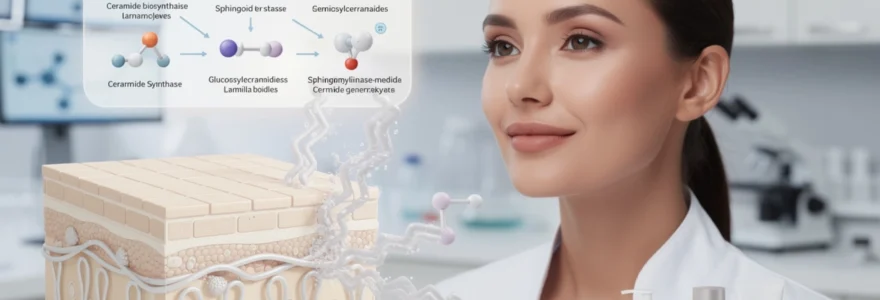
Your skin’s ability to protect itself from environmental stressors, retain moisture, and maintain a youthful appearance hinges on a complex network of lipid molecules working in concert. Among these molecular guardians, ceramides stand as the cornerstone of cutaneous barrier function, comprising approximately 50% of the lipid content in the outermost layer of your skin. These sophisticated lipid molecules orchestrate the delicate balance between preventing water loss and shielding against external threats, making them essential for maintaining skin health across all demographics and age groups.
Recent dermatological research has illuminated the profound impact of ceramide composition on various skin conditions, from atopic dermatitis to premature ageing. Understanding how these molecules function at both structural and biochemical levels provides invaluable insight into developing targeted skincare interventions that address the root causes of barrier dysfunction rather than merely treating superficial symptoms.
Biochemical structure and classification of ceramide lipids in the stratum corneum
The stratum corneum, your skin’s outermost defensive layer, contains an intricate assembly of ceramide molecules that vary considerably in their structural composition. These lipids comprise a sphingoid base connected to a fatty acid chain through an amide bond, creating a diverse family of molecules with distinct physical properties. Scientists have identified at least twelve major ceramide subclasses in human skin, each designated by a specific nomenclature system that reflects its structural characteristics. This molecular diversity isn’t merely academic—each ceramide variant contributes uniquely to barrier integrity and skin homeostasis.
The ceramide profile in healthy skin follows a remarkably consistent pattern, though individual variations exist based on anatomical location, age, and genetic factors. Understanding this biochemical architecture helps explain why certain skincare formulations prove more effective than others in restoring compromised barrier function. When you examine the molecular structure closely, you’ll notice that subtle variations in the sphingoid base and fatty acid components create dramatically different behaviours within the lipid matrix.
Sphingosine base variations: phytosphingosine, sphingosine, and 6-hydroxysphingosine
The sphingoid base represents the fundamental backbone of ceramide molecules, and three primary variants dominate epidermal composition. Sphingosine (designated as ‘S’ in ceramide nomenclature) features an 18-carbon chain with a single hydroxyl group and a trans-double bond, providing structural rigidity to the lipid bilayers. Phytosphingosine (‘P’) contains an additional hydroxyl group at the C-4 position, enhancing its hydrophilic character and antimicrobial properties—a feature particularly relevant for maintaining skin’s microbiome balance.
The third variant, 6-hydroxysphingosine (‘H’), possesses a hydroxyl group at the sixth carbon position, enabling unique interactions with other lipid components. Research conducted at international dermatology conferences in 2023 revealed that the relative proportions of these sphingoid bases shift significantly in diseased skin conditions. Your skin’s ability to synthesise adequate quantities of phytosphingosine-based ceramides appears particularly crucial for managing inflammatory responses and preventing pathogenic colonisation.
Fatty acid chain length distribution in epidermal ceramides
The fatty acid component of ceramides exhibits remarkable variability, with chain lengths ranging from 16 to 36 carbons in healthy human skin. This distribution follows a Gaussian pattern centred around C24 fatty acids, though the presence of ultra-long-chain fatty acids (C28-C36) proves essential for optimal barrier function. These extended hydrocarbon chains penetrate deeply into the lipid bilayers, creating a molecular scaffold that stabilises the entire structure against mechanical stress and temperature fluctuations.
Interestingly, the fatty acid chain length distribution correlates directly with transepidermal water loss measurements. Studies using mass spectrometry have demonstrated that individuals with compromised barrier function typically show a shift towards shorter chain lengths, with reduced concentrations of C26 and longer fatty acids. This finding has prompted skincare researchers to investigate whether topical supplementation with specific chain-length ceramides could restore the optimal distribution pattern and improve barrier metrics.
Ceramide subclasses: CER[NP], CER[AP],
CER[EOS] functional differences
In modern ceramide nomenclature, the letters refer to the type of sphingoid base and attached fatty acid. CER[NP] designates a ceramide containing a non-hydroxy fatty acid (N) linked to phytosphingosine (P), while CER[AP] pairs an alpha-hydroxy fatty acid (A) with phytosphingosine. CER[EOS], on the other hand, is a more complex acylceramide that combines an esterified omega-hydroxy fatty acid (EO) with sphingosine (S), and is further bound to linoleic acid via an ester bond.
These structural nuances translate into distinct functional roles within the stratum corneum lipid matrix. CER[NP] and CER[AP] contribute significantly to the densely packed lamellar phases that reduce transepidermal water loss, with CER[AP] often enhancing hydrogen bonding due to its extra hydroxyl group. CER[EOS] behaves almost like a molecular “bridge,” spanning multiple lipid layers and anchoring into the corneocyte envelope, which is crucial for long-range order and mechanical resilience.
When researchers analyse skin from individuals with atopic dermatitis, they consistently observe a relative reduction in CER[EOS] and alterations in CER[NP]/CER[AP] ratios. This imbalance disrupts the optimal lipid organisation, making the barrier more permeable and prone to irritation. From a formulation standpoint, replicating a healthy mix of CER[NP], CER[AP], and CER[EOS] in moisturisers has become a key strategy in designing barrier-repair skincare that closely mimics the skin’s natural lipid profile.
Acylceramides and their role in corneocyte lipid envelope formation
Acylceramides are a specialised subset of ceramides distinguished by an ultra-long omega-hydroxy fatty acid that is further esterified with linoleic acid. This unique architecture allows them to serve as precursors to the corneocyte lipid envelope (CLE), a monolayer of covalently bound lipids that coats the outer surface of corneocytes. Think of the CLE as a waterproof varnish over the “bricks” of your skin barrier, with acylceramides acting as the key ingredients in that varnish.
During terminal differentiation of keratinocytes, enzymes such as transglutaminase 1 facilitate the covalent attachment of omega-hydroxy acylceramides to proteins in the cornified envelope. This process creates a scaffold onto which additional lipids, including cholesterol and free fatty acids, can organise into highly ordered lamellae. When acylceramide synthesis is impaired, as seen in certain forms of ichthyosis and severe atopic dermatitis, the CLE becomes discontinuous or fragile, leading to scaling, increased water loss, and heightened sensitivity.
Recent studies using electron microscopy and advanced spectroscopy have shown that restoring acylceramide content can normalise the appearance of lamellar structures and improve barrier function within weeks. For you as a consumer, this means that not all ceramide-containing creams are equal—products that include acylceramide-mimetic structures or that support linoleic acid availability may deliver more robust, long-lasting improvements in barrier integrity. This is particularly relevant if your skin is chronically dry, reactive, or affected by inflammatory dermatoses.
Ceramide synthesis pathways: de novo production and sphingomyelin hydrolysis
Ceramides in the epidermis are not simply supplied from the bloodstream; they are predominantly synthesised locally through tightly regulated biochemical pathways. The two principal routes are de novo synthesis in the endoplasmic reticulum and generation via hydrolysis of complex sphingolipids such as sphingomyelin and glucosylceramides. These intersecting pathways ensure that keratinocytes can dynamically adjust ceramide levels in response to environmental stress, pH changes, and inflammatory signals.
Understanding how these pathways operate offers practical insight into why certain nutrients, prescription drugs, or skincare ingredients can alter your skin barrier for better or worse. For example, disturbances in de novo synthesis can lead to global ceramide deficiency, while targeted disruption of sphingomyelin hydrolysis may selectively affect bioactive ceramides involved in signalling. By supporting these pathways through both systemic health and topical care, we can help maintain a more stable, resilient skin barrier over time.
Serine palmitoyltransferase and ceramide synthase enzyme activity
The de novo ceramide synthesis pathway begins with serine palmitoyltransferase (SPT), a rate-limiting enzyme located in the endoplasmic reticulum. SPT catalyses the condensation of L-serine with palmitoyl-CoA, producing 3-ketodihydrosphingosine, which is then reduced and further processed into dihydroceramide. Subsequently, desaturases introduce the characteristic trans-double bond seen in many epidermal ceramides, completing the backbone for later modification. You can think of SPT as the “starting gun” for the entire ceramide synthesis cascade.
Ceramide synthases (CerS) represent a family of enzymes that determine which fatty acids are attached to the sphingoid base. Different CerS isoforms show preference for specific chain lengths, such as C24 or very-long-chain fatty acids, ultimately shaping the overall ceramide profile in the stratum corneum. Alterations in CerS expression have been documented in ageing skin and in inflammatory disorders, often correlating with increased transepidermal water loss and sensitivity. Supporting optimal CerS activity, whether through maintaining good nutritional status or avoiding chronic oxidative stress, indirectly sustains your skin’s natural ceramide diversity.
Experimental work published over the past five years suggests that environmental factors—UV radiation, pollution, and even psychological stress—can modulate SPT and CerS expression in keratinocytes. This helps explain why your skin may feel drier and more reactive after prolonged sun exposure or during periods of high stress. While we cannot yet “switch on” these enzymes with a simple cream, emerging actives that signal through nuclear receptors or antioxidant pathways may help preserve enzyme function and, by extension, ceramide production.
Glucosylceramide processing by beta-glucocerebrosidase in lamellar bodies
As keratinocytes migrate towards the upper epidermis, they package precursor lipids such as glucosylceramides into secretory organelles called lamellar bodies. Upon exocytosis at the stratum granulosum–stratum corneum interface, these precursors are transformed into mature ceramides by the enzyme beta-glucocerebrosidase (BGCase). This enzymatic step is highly sensitive to local pH, with optimal activity occurring in the mildly acidic environment characteristic of healthy skin.
If BGCase activity is compromised—whether by genetic factors, an elevated skin surface pH, or certain detergents—the conversion of glucosylceramides to ceramides is reduced. Electron microscopy in such settings often reveals disorganised or incomplete lamellar structures, and clinically you see symptoms like roughness, scaling, and increased susceptibility to irritation. This is one reason why using harsh alkaline cleansers can be so detrimental: they temporarily raise the skin’s pH, impair BGCase activity, and weaken the permeability barrier.
From a practical standpoint, maintaining an intact acid mantle through gentle, pH-balanced cleansing and avoidance of over-exfoliation supports BGCase and other lipid-processing enzymes. Some advanced moisturisers even incorporate pseudo-ceramide structures and pH-modulating agents to optimise the environment for endogenous enzyme activity. By prioritising these barrier-friendly habits, you are effectively helping your skin convert lipid precursors into the ceramides it needs to stay supple and resilient.
Sphingomyelinase-mediated ceramide generation in keratinocytes
Beyond the de novo route and glucosylceramide processing, keratinocytes can generate ceramides via hydrolysis of sphingomyelin, a major component of cell membranes. This reaction is catalysed by a group of enzymes known as sphingomyelinases (SMases), which exist in various isoforms distinguished by their optimal pH (acid, neutral, and alkaline). In the epidermis, acid and neutral SMases are particularly important for both structural ceramide production and signalling functions related to apoptosis and inflammation.
When SMase activity is upregulated—for example, following UV exposure or certain cytokine signals—local ceramide levels can rise sharply. These ceramides may then act as bioactive lipids, influencing cell differentiation, programmed cell death, or inflammatory cascades. While this sounds alarming, it is actually part of a finely tuned system: transient increases in ceramide generation help orchestrate orderly keratinocyte turnover and barrier renewal.
However, chronic dysregulation of SMase activity can contribute to disease. Excessive activation may promote inflammation and barrier disruption, whereas insufficient activity can lead to structural ceramide deficiency. For you, this underscores why controlling chronic inflammation (through adequate sun protection, lifestyle choices, and appropriate skincare) is not just about comfort—it directly affects how well your skin can synthesise and recycle ceramides through sphingomyelin hydrolysis.
Acid sphingomyelinase deficiency and Niemann-Pick disease skin manifestations
Acid sphingomyelinase (ASM) is a lysosomal enzyme responsible for breaking down sphingomyelin into ceramide and phosphorylcholine. In Niemann-Pick disease types A and B, genetic mutations severely reduce or abolish ASM activity, leading to sphingomyelin accumulation in multiple organs. While the neurological and visceral consequences of this rare disorder are better known, the skin also exhibits distinct changes that shed light on the importance of ASM in barrier function.
Histological examinations of patients with Niemann-Pick disease have revealed altered lamellar body morphology, abnormal lipid deposition, and impaired organisation of the stratum corneum lipid matrix. Clinically, this often translates into xerosis (abnormally dry skin), increased sensitivity, and delayed barrier recovery after injury. Essentially, when ASM is missing, the normal balance between sphingomyelin and ceramide is disrupted, and the skin cannot assemble its protective lipid architecture efficiently.
Although Niemann-Pick disease is rare, it illustrates a broader concept: disruptions in single enzymes of ceramide metabolism can have outsized impacts on skin health. This understanding helps guide research into more common conditions such as atopic dermatitis, where subtler changes in ASM or other sphingolipid enzymes may contribute to chronic barrier dysfunction. For those managing complex dermatological conditions, enzyme-targeted therapies may eventually complement topical ceramide replacement to provide deeper, more sustained relief.
Permeability barrier function and transepidermal water loss regulation
The primary physiological role of ceramides is to support the skin’s permeability barrier, limiting water loss while blocking entry of irritants and pathogens. This barrier function is often quantified through transepidermal water loss (TEWL), a measure of how much water passively evaporates through the skin. In healthy adults, TEWL values typically range from 5–15 g/m²/h on non-exposed sites, but can rise dramatically when ceramide levels or composition are disrupted.
Have you ever noticed your skin feeling tight and flaky after using a harsh cleanser or during cold, dry weather? In both scenarios, increased TEWL is a key underlying factor. Ceramides, together with cholesterol and free fatty acids, arrange into highly ordered lamellar structures that act like interlocking roof tiles, slowing down the escape of water. When ceramide content drops, those “tiles” become misaligned or sparse, and water escapes more readily, leaving your skin dehydrated and vulnerable.
Lamellar bilayer organisation and lipid phase behaviour
Within the stratum corneum, lipids are not randomly distributed; they form repeat lamellar structures with well-defined periodicities. Ceramides, especially long-chain and acylceramides, play a central role in establishing orthorhombic packing, the most tightly ordered and impermeable arrangement. This highly ordered phase can be contrasted with hexagonal or liquid-disordered phases, which are more permeable and associated with barrier impairment.
Advanced biophysical techniques such as small-angle X-ray scattering and differential scanning calorimetry have revealed that healthy skin exhibits a coexistence of long-period and short-period lamellae, both heavily dependent on ceramide composition. Alterations in chain length distribution or headgroup structure can shift the balance towards more fluid, less ordered phases. You can imagine this like changing the size and shape of tiles in a mosaic: if the pieces no longer fit perfectly together, gaps appear and the overall structure weakens.
Moisturisers designed to support barrier repair increasingly aim to recreate these lamellar structures using biomimetic lipids. Formulations that contain ceramides, cholesterol, and fatty acids in specific ratios can self-assemble into lamellae that closely resemble those in native stratum corneum. By doing so, they not only provide immediate occlusion but also integrate with and stabilise your skin’s own lipid matrix over time.
Ceramide-cholesterol-free fatty acid molar ratios in barrier integrity
While ceramides are the dominant lipid class in the stratum corneum, they do not act alone. Cholesterol and free fatty acids are equally critical partners, and the molar ratio between these three components strongly influences barrier performance. In healthy human skin, this ratio is roughly 1:1:1, though slight variations exist between individuals and body sites. Deviations from this balanced ratio have been consistently linked with increased TEWL and greater susceptibility to irritation.
Experimental models in which one lipid component is selectively reduced show that even topical ceramides cannot fully restore barrier function if cholesterol or free fatty acids are lacking. This is analogous to building a stable wall: you need both bricks and mortar in the right proportions, otherwise the structure crumbles under stress. Likewise, an excess of one lipid at the expense of others can lead to suboptimal packing and phase separation within the lamellae.
For everyday skincare, this means that products marketed as “ceramide creams” are most effective when they also contain complementary lipids in physiologically relevant ratios. Many dermatologist-recommended formulations consciously mimic the 1:1:1 balance to optimise both immediate hydration and long-term barrier repair. When you read an ingredient list, looking for the combination of ceramides, cholesterol, and non-fragrant fatty acids (such as stearic or linoleic acid) can help you identify genuinely barrier-supportive products.
Corneometer and tewameter measurements of ceramide-depleted skin
Clinical studies of ceramide-depleted skin rely on objective instruments to quantify changes in hydration and barrier function. A Corneometer measures stratum corneum hydration by assessing the dielectric properties of the superficial skin layers, whereas a Tewameter evaluates TEWL by detecting water vapour flux from the skin surface. Together, these non-invasive tools provide a detailed picture of how well your skin retains moisture and how intact the barrier truly is.
In subjects with atopic dermatitis, psoriasis, or even simple xerosis, Tewameter readings frequently show TEWL values two to three times higher than in matched healthy controls. Corneometer measurements in these individuals also indicate reduced capacitance, consistent with lower water content in the stratum corneum. When ceramide-rich, barrier-repair moisturisers are applied regularly, both metrics tend to move towards normal ranges within a few weeks, paralleling clinical improvements such as reduced roughness and itching.
These findings underscore an important point: changes in ceramide composition are not just theoretical—they translate into measurable, meaningful differences in how your skin behaves and feels. If you are working with a dermatologist or skin therapist, serial TEWL and hydration measurements can be a powerful way to monitor the effectiveness of your skincare regimen. Over time, consistent improvements in these numbers often correspond to more resilient, comfortable, and visually healthy skin.
Ceramide deficiency in atopic dermatitis and psoriasis pathophysiology
Atopic dermatitis (AD) and psoriasis are two of the most extensively studied inflammatory skin diseases, and in both, ceramide deficiency plays a central role in pathophysiology. In AD, numerous studies have documented reduced total ceramide levels, a shift towards shorter-chain species, and decreased CER[EOS] content in lesional and even non-lesional skin. This altered profile weakens the permeability barrier, increasing TEWL and facilitating penetration of allergens and irritants, which in turn fuels chronic inflammation and itching.
Psoriasis presents a somewhat different but equally significant disturbance of ceramide metabolism. Lesional psoriatic skin often displays abnormal ceramide subclass distribution, altered sphingoid base composition, and changes in enzymes involved in ceramide synthesis and degradation. In addition to structural roles, ceramides here act as signalling molecules that can modulate keratinocyte proliferation and apoptosis—processes famously dysregulated in psoriasis. The result is a vicious cycle where barrier dysfunction and inflammation perpetuate each other.
From a practical perspective, recognising ceramide deficiency as a driving factor in these diseases helps explain why basic barrier care is a cornerstone of treatment, even when potent anti-inflammatory medications are used. Regular application of ceramide-containing emollients can lower TEWL, reduce flare frequency, and sometimes allow for lower doses of topical corticosteroids or calcineurin inhibitors. If you live with AD or psoriasis, integrating a well-formulated barrier-repair moisturiser into your daily routine is not just cosmetic; it is a clinically relevant part of long-term disease management.
Topical ceramide delivery systems: liposomes, niosomes, and nanoemulsions
Delivering ceramides effectively into the upper layers of the epidermis is more complex than simply adding them to a cream. Native ceramides are highly lipophilic and have limited solubility, which can hinder their distribution and integration into the stratum corneum. To overcome these challenges, modern formulations increasingly rely on advanced delivery systems such as liposomes, niosomes, and nanoemulsions to enhance penetration, stability, and bioavailability of ceramide molecules.
These systems act a bit like tiny transport vehicles, packaging ceramides in structures that can merge with or traverse the intercellular lipid domains. By optimising size, surface charge, and composition, formulators can influence how deeply and how uniformly ceramides are deposited within the skin barrier. For you, this means that two products listing “ceramide” on the label may behave very differently in practice, depending on how well the delivery technology has been engineered.
Topical ceramide delivery systems: liposomes
Liposomes are spherical vesicles composed of phospholipid bilayers that can encapsulate both hydrophilic and lipophilic substances. When used for ceramide delivery, liposomes can incorporate ceramides within their bilayer, allowing these lipids to fuse with the stratum corneum and release their payload directly into the existing lipid matrix. Because their structure mimics biological membranes, liposomes can interact favourably with skin lipids, enhancing deposition and reducing irritation.
Several studies have demonstrated that liposomal ceramide formulations improve hydration and barrier recovery more effectively than simple oil-in-water emulsions containing free ceramides. For example, in controlled trials, liposome-based creams have led to faster reductions in TEWL and greater increases in Corneometer-measured hydration over 4–8 weeks of use. However, liposomes can be relatively fragile, subject to oxidation and hydrolysis, which requires careful formulation and packaging.
When selecting skincare, you may notice references to “encapsulated ceramides” or “multi-lamellar vesicles” on product literature. These terms often indicate liposome-like systems designed to stabilise and gradually release ceramides. Although not every product discloses full technical details, brands that invest in such delivery technologies typically conduct in-house or third-party testing to substantiate their barrier-repair claims.
Topical ceramide delivery systems: niosomes
Niosomes are structurally similar to liposomes but are formed from non-ionic surfactants instead of phospholipids. This substitution can offer advantages in stability, cost, and ease of production, making niosomes an attractive option for large-scale cosmetic and dermatological formulations. Like liposomes, niosomes can encapsulate ceramides within their bilayer, facilitating controlled delivery into the stratum corneum.
In comparative studies, niosomal formulations have shown promising results for enhancing skin penetration of various active ingredients, including lipids and antioxidants. For ceramides, niosomes can help maintain dispersion in the aqueous phase of a cream or gel while protecting the ceramide molecules from premature degradation. This can translate into more consistent performance over the shelf life of the product and during real-world use.
From a user’s perspective, you are unlikely to see “niosomes” listed on an ingredient list, but you may encounter terms like “vesicular delivery system” or proprietary names that imply non-ionic vesicles. While independent data are still emerging, early evidence suggests that niosome-based ceramide products may be especially beneficial in leave-on formulations intended for chronic conditions such as atopic dermatitis, where sustained barrier support is crucial.
Topical ceramide delivery systems: nanoemulsions
Nanoemulsions are finely dispersed oil-in-water or water-in-oil systems with droplet sizes typically below 200 nanometres. This ultra-small droplet size increases surface area and can improve the spreadability, stability, and penetration of lipophilic actives such as ceramides. Unlike vesicular systems, nanoemulsions do not possess a bilayer structure, but they can solubilise ceramides within the oil phase and facilitate their uniform distribution across the skin surface.
Because nanoemulsions are often transparent or translucent and have a light, non-greasy feel, they are popular in modern cosmetic formulations aimed at users who prefer elegant textures. Studies have shown that nanoemulsion-based moisturisers can enhance skin hydration and barrier repair while delivering high user satisfaction due to their sensorial profile. This combination of efficacy and cosmetic elegance is particularly appealing if you are looking for daily use products that support ceramide levels without feeling heavy.
Of course, the term “nano” can raise safety questions. Current evidence indicates that nanoemulsions designed for topical use primarily act within the stratum corneum and do not penetrate into systemic circulation, especially when composed of biocompatible lipids. Nevertheless, as with any advanced technology, careful formulation and regulatory oversight are essential to ensure long-term safety and performance.
Clinical evidence from ceramide-containing formulations: CeraVe, eucerin, and cetaphil
Over the past two decades, several mainstream skincare brands have built their core product lines around ceramide technology, providing a rich body of clinical data. Among the most studied are formulations from CeraVe, Eucerin, and Cetaphil, which combine ceramides with supporting lipids and humectants to target barrier repair. These products offer practical examples of how the biochemical principles discussed earlier translate into real-world improvements in skin health.
CeraVe products, for instance, typically feature a blend of three essential ceramides (CER[NP], CER[AP], and CER[EOS]) in a patented MultiVesicular Emulsion (MVE) system. Clinical trials have shown that regular use of CeraVe moisturisers significantly improves hydration, reduces TEWL, and alleviates symptoms in mild to moderate atopic dermatitis, often within 2–4 weeks. Users frequently report less itching, smoother texture, and better tolerance of other topical treatments when MVE-based ceramide creams are part of their routine.
Eucerin’s barrier-focused lines, such as those formulated for atopic skin, combine ceramides with omega fatty acids and anti-inflammatory agents like licochalcone A. In randomised controlled studies, these formulations have been shown to prolong remission phases in atopic dermatitis and reduce the need for topical corticosteroids. The inclusion of omega-6 fatty acids supports acylceramide synthesis, while the ceramides themselves help restore lamellar structure and reduce TEWL. For individuals prone to flares, this dual approach can be particularly effective.
Cetaphil has also incorporated ceramides into several of its moisturisers designed for dry and sensitive skin, often pairing them with glycerin and panthenol for enhanced hydration and skin-soothing effects. Clinical evaluations of these products demonstrate improvements in Corneometer-measured hydration and subjective comfort in users with xerosis and mild eczema. While formulations and technologies differ between brands, the consistent finding is that ceramide-containing moisturisers outperform ceramide-free comparators in restoring barrier function and reducing dryness-related symptoms.
When you are deciding between products, it can be helpful to look beyond marketing claims and consider the underlying lipid science and available clinical evidence. Products from CeraVe, Eucerin, and Cetaphil that highlight ceramides, cholesterol or related sterols, and physiologic fatty acids—often in combination with advanced delivery systems—are generally strong choices for supporting a healthy skin barrier. By selecting such evidence-backed formulations and using them consistently, you give your skin the structural building blocks it needs to maintain hydration, resilience, and overall health over the long term.