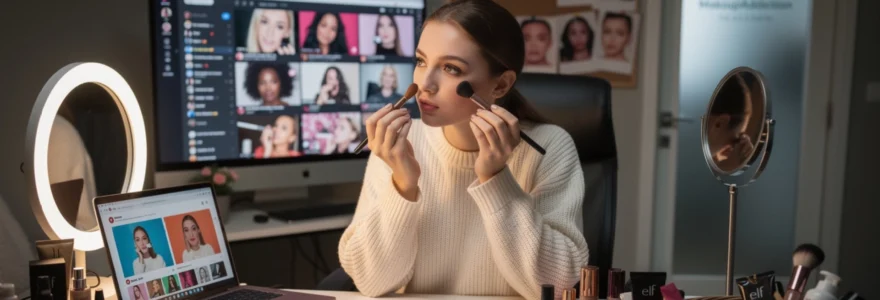
The beauty industry has undergone a dramatic transformation over the past decade, with social media platforms and online content creating unprecedented access to makeup education. From Instagram tutorials to YouTube channels dedicated to contouring techniques, aspiring makeup enthusiasts now have countless resources at their fingertips. This democratisation of beauty knowledge has sparked an ongoing debate about the value of self-directed learning versus formal makeup training. The landscape has shifted so dramatically that many individuals are questioning whether traditional makeup artistry qualifications remain necessary in an era where viral trends can launch careers overnight. As the industry continues to evolve, understanding both the advantages and limitations of self-taught makeup education becomes increasingly crucial for anyone considering this creative path.
Mastering foundational techniques through YouTube tutorials and online resources
The digital revolution has transformed how aspiring makeup enthusiasts acquire skills, with platforms like YouTube offering thousands of hours of free educational content. Self-taught makeup lovers can access demonstrations from internationally recognised makeup artists, beauty influencers, and everyday enthusiasts who share their techniques with remarkable detail. This accessibility has broken down geographical barriers, allowing someone in a remote village to learn the same cut-crease technique that professionals use on fashion runways. The sheer volume of content available means that learners can explore multiple perspectives on the same technique, developing a nuanced understanding of different application methods.
Navigating charlotte tilbury and lisa eldridge’s educational content
Industry veterans like Charlotte Tilbury and Lisa Eldridge have leveraged digital platforms to share decades of professional experience with the masses. Their tutorials offer insights into colour theory, product layering, and the subtle nuances that distinguish amateur application from professional artistry. However, self-taught enthusiasts must develop discernment when selecting which creators to learn from, as not all online content reflects industry-standard practices. The challenge lies in distinguishing between techniques that work brilliantly on camera but may not translate to real-world application, particularly in different lighting conditions or for various skin types.
Self-paced learning with colour theory and face mapping principles
One significant advantage of self-directed education is the ability to progress at an individualised pace. Complex concepts like colour theory—understanding complementary shades, undertones, and how pigments interact with different skin tones—can be revisited repeatedly until mastery is achieved. Face mapping principles, which guide where to apply products for optimal facial balance, can be studied and practised without the pressure of keeping pace with a classroom environment. This flexibility allows for deeper exploration of subjects that particularly interest you, whether that’s the chemistry of cosmetic formulations or the historical evolution of beauty standards across cultures.
Building a personalised curriculum without formal accreditation
Self-taught makeup enthusiasts enjoy the freedom to create a bespoke learning journey tailored to their specific interests and goals. If your passion lies in editorial makeup rather than bridal applications, you can dedicate your study time accordingly. This personalised approach eliminates the requirement to master techniques that may never align with your career aspirations. However, this same freedom can create significant knowledge gaps. Without a structured curriculum designed by experienced educators, you might inadvertently skip foundational skills that underpin advanced techniques, only discovering these deficiencies when faced with challenging application scenarios.
Accessing reddit’s MakeupAddiction and beauty guru communities for peer feedback
Online communities have emerged as valuable resources for self-taught makeup enthusiasts seeking feedback and support. Platforms like Reddit’s MakeupAddiction subreddit provide spaces where thousands of beauty lovers share their work, critique techniques, and exchange product recommendations. These communities foster a sense of connection and mutual learning that can partially compensate for the absence of formal instruction. Nevertheless, peer feedback from fellow enthusiasts—who may themselves be learning—differs substantially from critique provided by qualified instructors with years of professional experience. The quality and accuracy of advice can vary wildly, and well-intentioned suggestions may perpetuate common mistakes rather than correcting them.
Cost-effective product acquisition and Trial-and-Error experimentation
Financial accessibility represents one of the most compelling arguments for self-directed makeup education. Formal makeup courses often require substantial investment, with diploma programmes in the UK ranging from £3,000 to £15,000 depending on the institution and course
fees alone, not including the cost of a professional kit. By contrast, a self-taught makeup enthusiast can start learning with a small collection of affordable products, gradually expanding their kit as their skills and interests develop. This trial-and-error approach to product experimentation encourages curiosity and problem-solving, as you learn firsthand how different formulas, textures, and finishes behave on your skin. While there is still a financial cost to building a personal collection, you remain in control of how much you spend and when, rather than having it dictated by a course provider.
Drugstore alternatives: NYX, revolution, and e.l.f. versus high-end investment
One of the biggest advantages for a self-taught makeup enthusiast is the ability to experiment with drugstore dupes before committing to high-end investment pieces. Brands like NYX, Makeup Revolution, and e.l.f. have dramatically improved their formulations over the last decade, often offering products that perform surprisingly close to luxury staples at a fraction of the price. This makes it possible to test multiple foundations, concealers, or eyeshadow colour stories without exhausting your budget. However, it can be tempting to overbuy because products are inexpensive, leading to cluttered collections and wasted items that expire before being used.
Balancing accessible and premium products becomes an art in itself. Many self-taught enthusiasts choose to invest in one or two high-end staples—such as a reliable base product or a professional-grade eyeshadow palette—while relying on budget-friendly options for experimentation. This hybrid approach can mimic the versatility of a professional kit without the initial four-figure outlay. Yet without formal guidance, you may struggle to identify where high-end formulations truly matter (for example, complexion and skincare prep) versus where affordable products are more than sufficient.
Minimising financial risk through sample sachets and mini product testing
Strategic use of sample sachets, travel sizes, and mini sets can significantly reduce the financial risk of trying new products. Many retailers now offer deluxe samples as part of loyalty schemes, while some brands sell curated mini kits that allow you to test performance, wear time, and shade match before committing to a full-size product. For a self-taught makeup enthusiast, this approach mirrors the way professional artists build “working kits” through years of testing on different skin types. You can keep a simple log of what works and what fails, noting ingredients, textures, and application methods.
Despite these advantages, sampling has its limitations. Small quantities can make it harder to assess how products behave over time—for instance, whether a foundation oxidises after several hours or a mascara dries out within weeks. You may also be swayed by marketing-driven sets that prioritise trendy launches over timeless staples. Without the curriculum of a makeup school guiding you toward classic, long-wearing products, it is easy to get distracted by seasonal releases and influencer hype, leading to inconsistent performance across your collection.
Understanding product formulation without professional-grade training
As a self-taught enthusiast, your understanding of product formulation typically comes from brand marketing, blog posts, and the occasional deep dive into ingredient lists. You may learn that hyaluronic acid attracts moisture or that volatile silicones create a blurring effect, but you are unlikely to receive the structured education cosmetic chemists or pro artists get. This can make it harder to differentiate between genuinely innovative formulas and repackaged trends with minimal real-world benefit. When a product is advertised as “HD ready” or “skincare-infused,” how do you know if that aligns with your skin’s needs or your makeup goals?
On the positive side, the rise of science-backed skincare and beauty content has given motivated self-learners access to far better information than was available even five years ago. Independent chemists, dermatologists, and estheticians often break down formulations in accessible language, helping you make more informed choices about foundations, primers, and setting products. Still, without professional-grade training, there will always be blind spots—such as understanding pigment load percentages or how certain preservatives affect product stability over time. These gaps do not prevent you from achieving beautiful results, but they can limit your ability to troubleshoot complex issues like consistent caking, separation, or flashback under photography.
Developing skills without professional hygiene standards and certification
Hygiene is one of the most significant areas where self-taught makeup enthusiasts often lag behind professionally trained artists. In many online tutorials, brushes are reused without visible sanitisation, mascaras are applied directly from the tube on multiple models, and cream products are dipped into repeatedly with fingers. When you are only applying makeup on yourself, lax hygiene may seem low risk, but the moment you begin practising on friends, family, or paying clients, poor sanitation can lead to infections, allergic reactions, or cross-contamination of products. Formal makeup courses spend considerable time teaching disinfecting protocols, product decanting, and safe practice with disposables—knowledge that is rarely emphasised in influencer content.
Without certification or structured training, you must take personal responsibility for learning and implementing hygiene standards that meet or exceed industry expectations. This includes understanding how to disinfect tools, when to replace mascaras and liquid liners, and why double-dipping into cream products is discouraged. It also means investing in brush cleansers, 70% isopropyl alcohol, and disposable wands, which can feel like unnecessary extras if you are not aware of the risks. While a self-taught route offers freedom, it also requires discipline: you must seek out reliable sources on hygiene and be willing to adopt practices that might never be mentioned in your favourite tutorial.
Navigating misinformation and unverified application methods
The open nature of the internet is both a blessing and a curse for the self-taught makeup enthusiast. On one hand, you can access niche techniques and global perspectives that would never appear in a local classroom; on the other hand, there is no quality control on who posts advice. Viral hacks—such as using deodorant as primer or PVA glue as a peel-off mask—may garner millions of views, but they are not necessarily safe, ethical, or effective. Without a grounding in evidence-based practice, it becomes challenging to separate helpful innovation from techniques that can irritate skin or undermine long-term skin health. How do you decide which advice to follow when every creator seems equally confident?
Distinguishing evidence-based techniques from social media trends
Learning to distinguish evidence-based makeup techniques from fleeting social media trends is a crucial skill for any self-taught artist. Evidence-based practices are rooted in long-standing professional experience, cosmetic science, and an understanding of different environments (such as photography, stage, or everyday wear). For instance, applying thin, buildable layers of foundation is supported by both pro artistry and cosmetic chemistry, as it reduces the risk of caking and improves longevity. In contrast, extreme “baking” with heavy powder under the eyes may photograph well under ring light but often leads to dryness, creasing, and visible texture in daylight.
One helpful strategy is to look for consistency across multiple credible sources. If professional artists, educators, and dermatologists repeat the same principle—like the importance of proper skin prep before foundation—it is more likely to be reliable than a one-off TikTok experiment. You can also ask yourself: does this technique respect the biology of the skin, or does it rely on harsh, drying, or abrasive steps? Over time, you develop an internal filter that lets you enjoy creative trends while anchoring your routine in methods that are both safe and sustainable.
Understanding skin undertones without pantone matching systems
Professional makeup courses often use structured tools—such as Pantone matching systems or calibrated colour wheels—to teach undertones and shade matching. As a self-taught enthusiast, you likely rely instead on visual comparisons, online swatches, and trial-and-error at the counter. This can work remarkably well on your own face, which you see every day in different lighting, but becomes more challenging when you start applying makeup on others. Without a systematic framework, you may confuse cool with neutral undertones, misjudge olive complexions, or default to shades that look right under store lighting but turn ashy or orange outdoors.
That said, you can still build strong undertone recognition with patience and practice. Think of it like training your ear for music: the more you compare shades side by side, the more subtle distinctions you begin to notice. Swatching foundations from different undertone families on your jawline, taking photos in natural and artificial light, and keeping notes on what works can gradually replace the need for formal colour systems. You might not speak the precise technical language of a colour scientist, but you can still achieve accurate matches. The limitation is that progress may be slower and more dependent on personal experimentation, especially if you do not routinely work with a wide range of skin tones.
Recognising limitations in advanced techniques like airbrush application
Advanced techniques such as airbrush application, prosthetic work, or high-definition media makeup are rarely covered in depth through casual online content. While you can find tutorials on airbrush foundation, many focus on product promotion rather than on compressor maintenance, correct PSI levels, or sanitation procedures. As a self-taught enthusiast, you may feel confident with traditional brushes and sponges but uncertain about investing in specialised equipment that requires both technical knowledge and strict hygiene. Attempting to learn such skills purely from short-form content can be like learning to drive by watching racing videos—you see the outcome but not the nuanced control behind it.
Recognising these limitations is actually a strength. You might decide that, as a hobbyist, you do not need airbrush skills at all, or you may choose to attend a focused workshop or short course specifically on this topic while continuing to self-teach the rest. The key is to acknowledge that certain areas of makeup artistry have steeper learning curves and higher safety stakes. Being honest about what you can and cannot do confidently protects both you and any future clients, and it prevents the frustration that comes from expecting professional-level results without equivalent training.
Building a portfolio and client base without formal qualifications
In the era of Instagram and TikTok, a strong visual portfolio can sometimes outweigh formal qualifications, especially for self-taught makeup enthusiasts focused on freelance work. You can begin by documenting looks on yourself, then gradually expand to friends, family, and volunteer models, showcasing range in skin tones, ages, and styles. Over time, this digital gallery becomes your calling card—proof that you can execute soft glam, bold editorial, or natural bridal looks even without a certificate on the wall. Platforms such as Reddit’s MakeupAddiction, Instagram Reels, and short-form video content give you access to audiences that traditional print portfolios never could.
However, building a client base without recognised credentials comes with credibility challenges. Some potential clients, particularly for weddings or commercial shoots, may feel more comfortable booking artists with VTCT, NVQ, or equivalent qualifications, assuming (often correctly) that they have been trained in hygiene, time management, and working under pressure. As a self-taught artist, you must compensate through transparency and professionalism: clear pricing, signed agreements, punctual communication, and consistent quality across your work. You might also face more scrutiny in the early stages, with clients asking detailed questions about your experience. Over time, glowing reviews, word-of-mouth referrals, and a polished portfolio can bridge this credibility gap, but it typically takes longer than for those who emerge from established academies with built-in networking opportunities.
Transitioning from hobbyist to professional makeup artist: credibility gaps
The transition from self-taught makeup enthusiast to professional artist is often where the pros and cons of your learning path become most apparent. On the upside, you may already have a distinctive style, a loyal social media following, and an intuitive understanding of what resonates with your audience. On the downside, you are now entering a regulated environment where issues like insurance, liability, contracts, and industry standards can no longer be ignored. The question shifts from “Can you create a beautiful look?” to “Can you do so safely, consistently, and legally while charging for your services?” Addressing this credibility gap requires both mindset shifts and practical groundwork.
Insurance and liability considerations for self-taught practitioners
Once you start accepting payment for your services, you move into a different legal and ethical category. In the UK and many other countries, professional makeup artists are expected—or in some cases required—to hold public liability insurance and, ideally, treatment risk insurance. These policies protect you if a client claims harm, such as an allergic reaction, infection, or injury during service. Some insurers will cover self-taught practitioners, but others may require proof of training, which can place you at a disadvantage compared to formally qualified artists. It is crucial to research insurers that recognise experience and informal training, and to keep detailed records of your patch tests, client consultations, and aftercare advice.
From a risk-management perspective, being self-taught means you must be proactive in educating yourself about contraindications, patch testing protocols, and emergency procedures. Do you know what to do if a client experiences contact dermatitis mid-appointment? How will you document that they disclosed (or did not disclose) sensitive skin or allergies? These questions might feel far removed from the creative joy that drew you to makeup in the first place, but they are central to sustainable professionalism. Investing time in understanding your legal responsibilities can actually increase your confidence, allowing you to take on paid work with clearer boundaries and a stronger sense of security.
Competing with VTCT and NVQ-qualified makeup artists in the UK market
In the UK, many salons, bridal agencies, and media productions explicitly request VTCT, NVQ, or equivalent qualifications when hiring makeup artists. This does not mean self-taught practitioners are shut out of the market, but it does mean you may need to prove yourself through alternative routes. You might find more opportunities working independently, collaborating with photographers on test shoots, or building a niche in content creation rather than traditional salon roles. Over time, a strong track record—backed by reviews, repeat bookings, and visible results—can persuade clients that your skills are on par with formally trained peers.
One pragmatic option is to view self-teaching and formal qualifications as complementary rather than mutually exclusive. Many successful artists begin by learning through online content and practice, then later enrol in shorter accredited courses to obtain the paperwork needed for certain jobs or insurance plans. This hybrid path allows you to retain the creativity and self-direction that define your early journey while filling in gaps recognised by industry bodies. In a competitive market, combining a standout portfolio with recognised qualifications can give you both the aesthetic edge of a self-taught artist and the institutional credibility of a formally trained one.
Addressing knowledge deficits in dermatology and allergenic ingredients
Perhaps the most serious limitation of being entirely self-taught is the lack of formal education in basic dermatology and allergenic ingredients. Professional courses often include modules on skin anatomy, common conditions (such as rosacea, eczema, and acne), and how these interact with cosmetic products. As a hobbyist, you may only encounter these topics when something goes wrong—a client breaks out after a product, or a redness flare appears during application. Without a theoretical framework, you might attribute the issue to the wrong cause, repeating the same mistake on future clients. Understanding when to proceed with makeup and when to advise someone to seek medical or dermatological advice is part of ethical practice.
To bridge this gap, self-taught makeup enthusiasts can seek out reputable resources from dermatologists, allergy organisations, and cosmetic chemists. Learning to read ingredient lists for common allergens—such as certain fragrance components, lanolin, or specific preservatives—can significantly reduce the risk of adverse reactions. Patch testing on the inner arm or behind the ear, keeping client records, and asking targeted questions during consultation are all practices you can adopt without a formal qualification. Still, there is a limit to how far self-study can substitute for structured education in this area. Recognising that you are not a dermatologist and staying within the bounds of your expertise is essential for maintaining trust and safety as you move from enthusiastic hobbyist to respected professional.