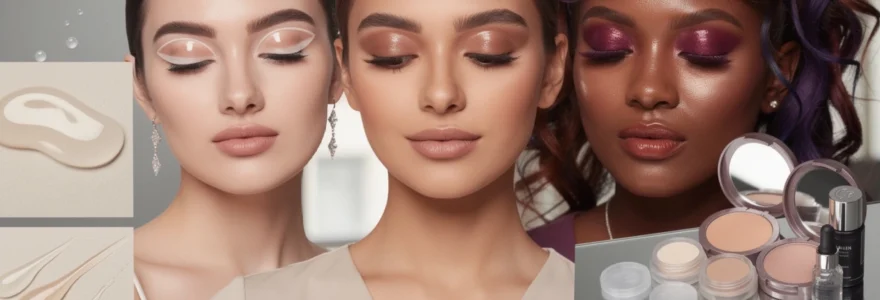
The glossy eyelid has emerged as one of the most captivating and polarizing beauty trends in recent years, challenging traditional notions of what constitutes wearable eye makeup. With over 35,000 #glossyeyes posts on Instagram and high-fashion runways showcasing lacquered lids season after season, this high-shine aesthetic represents more than just a fleeting moment—it signals a broader shift toward experimental, playful beauty that prioritizes texture and finish over conventional colour application. The look ranges from barely-there sheen to full latex-effect shine, offering versatility that makes it surprisingly adaptable across different contexts and personal styles. Whether you’re drawn to the editorial drama of a fully lacquered lid or prefer a subtle, dewy wash of luminosity, understanding the science, technique, and styling considerations behind glossy eyelids will help you determine whether this trend deserves a place in your makeup repertoire.
Glossy eyelid formulation technology: Gel-Based vs Oil-Based finishes
The foundation of any successful glossy eyelid look lies in understanding the formulation technology behind these products. Unlike traditional eyeshadows that rely on powder pigments, glossy lid products employ complex base structures designed to deliver shine while maintaining some degree of longevity on the mobile eyelid—one of the most challenging areas for makeup adhesion. The two primary formulation categories are gel-based and oil-based finishes, each offering distinct performance characteristics that affect application, wear time, and visual impact.
Gel-based formulas typically incorporate water as a primary ingredient, combined with film-forming polymers that create a flexible, lightweight coating on the skin. These formulations tend to dry down to a semi-set finish, reducing transfer but maintaining shine through light-reflecting particles suspended in the gel matrix. Oil-based products, conversely, remain emollient throughout wear, delivering maximum shine but requiring more careful application to prevent migration into the crease. The choice between these formulation types depends largely on your intended wear duration, climate conditions, and personal tolerance for maintenance throughout the day.
Silicone-infused topcoats and Light-Reflecting polymers
Modern glossy eyelid products frequently incorporate silicone derivatives such as dimethicone and cyclopentasiloxane, which provide slip during application while creating a smooth, reflective surface once settled. These silicones form a breathable barrier that helps lock pigment in place while maintaining the wet-look finish that defines the aesthetic. Light-reflecting polymers—synthetic microspheres that capture and redirect light—work in tandem with silicones to amplify shine without relying solely on oils that might compromise wear time. This combination represents a significant advancement over earlier iterations of glossy eye products that were essentially repurposed lip glosses, which lacked the staying power required for eyelid application.
Hyaluronic acid gel formulas for Wet-Look effects
An innovative development in glossy eyelid formulation involves the incorporation of hyaluronic acid—traditionally associated with skincare—into eye makeup products. This moisture-binding molecule creates a plump, hydrated appearance on the eyelid while contributing to the wet-look effect that characterizes the most editorial versions of this trend. Hyaluronic acid gel formulas typically feel lighter on the lid than oil-based alternatives and offer superior compatibility with layering techniques, allowing you to build intensity without heaviness. These formulations also tend to be more compatible with sensitive skin, as hyaluronic acid itself possesses soothing properties that counteract potential irritation from other formula components.
Non-creasing glycerin blends and longevity testing
The persistent challenge with any glossy eyelid product is preventing creasing—the tendency for product to settle into the natural folds of the eyelid, creating visible lines that compromise the smooth, reflective finish. Formulators address this through carefully balanced glycerin blends that provide just enough moisture to maintain shine without introducing the excessive slip that causes migration. Independent laboratory testing of glossy eye products typically involves wear trials of 8-12 hours under controlled temperature and humidity conditions, with photographic documentation every two hours to assess creasing patterns. Products that pass these rigorous tests employ proprietary polymer
polymers, waxes, and stabilizers that create an elastic film over the lid, helping the glossy layer flex with your eye movements rather than cracking or pooling in one place. Many brands now publish basic results from these longevity tests, such as “up to 8 hours creaseless wear” or “tested in 80% humidity,” which can serve as a useful benchmark when you are comparing products for glossy eyelids.
Pat McGrath labs lust gloss vs charlotte tilbury eyes to mesmerise
Two of the most referenced products in conversations about glossy eyelids are Pat McGrath Labs Lust Gloss and Charlotte Tilbury Eyes to Mesmerise, even though they sit in different product categories. Lust Gloss is technically a lip gloss, loved for its vinyl-like shine and cushiony feel, while Eyes to Mesmerise is a cream eyeshadow with a luminous, almost molten-metal sheen. Both can be used to achieve high-shine eyelid looks, but they approach the effect from opposite ends of the formulation spectrum—Pat McGrath leaning more oil-based with emollients and high-shine polymers, Charlotte Tilbury leaning cream-gel with film formers and pearls for reflective radiance.
When used on the eyes, Lust Gloss excels as a glossy topper in strategic areas such as the center of the lid, where you can tap a minimal amount to create a “spotlight” effect without overwhelming the entire eye look. Eyes to Mesmerise, on the other hand, can function as both base and finish, offering a smoother, longer-wearing option for those who want glossy eyelids that behave more like traditional eye makeup. For many artists and enthusiasts, the sweet spot lies in combining these approaches: a thin wash of Eyes to Mesmerise for colour and structure, finished with the lightest tap of Lust Gloss to push the shine into true lacquer territory.
Application techniques for High-Shine eyelid looks across skin types
Even the most advanced glossy eyelid formula will underperform without the right application strategy. Because the eyelid is a small, mobile, and often oily area, technique can be the difference between a controlled, wet-look eye and a creased, migrating mess by midday. Tailoring your approach to your skin type—particularly if you have oily, dry, or textured lids—helps you create glossy eyelids that feel intentional rather than impractical. Below, we break down application methods, ratios, and tools that work with the realities of real skin.
Priming protocols for oily hooded lids and textured skin
For oily or hooded eyelids, priming is non-negotiable if you want long-wearing glossy lids. A thin layer of a silicone-based eye primer creates a gripping surface that helps prevent gloss from slipping into the crease, much like a base coat does for nail polish. If you struggle with excess oil, you can even press a small amount of translucent powder onto the primer before applying any colour; this counter-intuitive step mattifies the base so that the only shine comes from your glossy topcoat, not from sebum breaking through.
Textured lids—whether due to dryness, fine lines, or eczema-prone skin—benefit from a slightly different protocol. Here, a hydrating but non-greasy eye cream, allowed to absorb fully, provides a smooth canvas that prevents glossy products from catching on rough patches. Think of it as “ironing” the eyelid surface before you apply your glossy finish. In both cases, using less product than you think you need is crucial; high-shine formulas tend to amplify whatever is on the skin, so a well-prepped, thinly primed lid gives your glossy eyelid look the best chance to appear glassy rather than greasy.
Layering methods: cream shadow base to gloss topper ratios
The most wearable glossy eyelid looks usually rely on a base-and-topper system: a cream or liquid eyeshadow for colour and structure, and a gloss or balm to deliver shine. The ratio between these two layers is where you can fine-tune intensity. A 70:30 ratio—approximately 70% pigment base to 30% gloss—is ideal for most everyday high-shine eyes, offering enough structure that the look reads as “eyeshadow with shine” rather than pure gloss. If you are aiming for an editorial latex lid, you might approach a 50:50 balance, but expect more maintenance and potential creasing.
To build glossy eyelids that last, allow each layer to settle before adding the next, similar to letting coats of nail polish dry. Start with a sheer wash of cream shadow, blend edges, and wait 30–60 seconds until it feels slightly set. Then, tap on your gloss in very thin layers, focusing on the mobile lid and avoiding the inner corner where migration is most noticeable. You can always add more gloss for photographs or short events, but for long wear, controlled restraint at the layering stage pays off.
Finger-tap application vs synthetic flat brush precision
Application tools also influence both the finish and longevity of glossy eyelids. Using your fingertip to tap on gloss warms the product, helping it melt into the base and creating a diffused, editorial sheen. This method is forgiving and ideal if you like the “lived-in” look where slight creasing feels deliberate, almost like a glossy smoky eye. Fingers are also excellent for sheer gloss washes, where you want the product to fuse with skin rather than sit on top in a thick layer.
If you prefer crisp shapes or want to keep gloss away from certain areas—such as the lash line or inner corner—a synthetic flat brush offers more precision. Think of it like using a paintbrush rather than a sponge: you can place gloss only on the center of the lid, create a controlled halo effect, or follow the architecture of a graphic eyeliner without disturbing it. A hybrid approach often works best: use a brush to place the product where you want that high-impact glassiness, then use a clean fingertip to soften any edges so the glossy eyelid still feels fluid and modern.
Setting strategies for humid climates and extended wear
How do you keep glossy eyelids intact in humidity or for all-day events? While you cannot truly “set” wet-look gloss the way you set powder shadow, you can stabilize the layers beneath it. One effective strategy is to build a long-wear, almost budge-proof base (waterproof cream shadow or gel liner blended out) and then apply a whisper-thin layer of gloss only on the flattest part of the lid, avoiding the crease. This way, even if the gloss shifts, the colour underneath remains intact and flattering.
Another technique involves micro-setting around, but not on, the glossy area. After creating your glossy eyelid, take a small blending brush with translucent powder and softly set the edges of the look—the brow bone, outer corner, and lower lash line. This acts like a dam, slowing down migration. In very humid climates, accepting a more “dewy satin” finish instead of ultra-glossy can be a smart compromise: choose cream shadows with built-in sheen rather than adding a separate gloss layer, so your look remains luminous but more structurally sound.
Editorial glossy eyelid trends from fashion week runways to red carpets
The resurgence of glossy eyelids is closely tied to high-fashion runways and red carpet beauty, where makeup artists can push boundaries and test how far shine can go before it becomes unwearable for everyday life. These editorial interpretations may seem extreme, but they often set the direction for more subtle, mainstream versions you see on social media and in brand campaigns. By looking at standout moments—from Valentino’s lacquered lids to the influence of Euphoria—we can trace how glossy eyelids evolved from niche to near-mainstream.
Valentino spring 2023 and the transparent lacquered lid movement
At Valentino’s Spring 2023 show, Pat McGrath delivered one of the most influential takes on glossy eyelids in recent seasons: transparent, high-shine lids that looked almost shellacked, paired with otherwise minimal, luminous skin. Rather than relying on heavy pigment, these looks used clear or barely tinted gloss layered over neutral bases, creating the effect of a “lacquered canvas” that caught the runway lights from every angle. It was a masterclass in how glossy eyelids can feel both futuristic and soft, more about texture than colour.
This transparent lacquered lid movement quickly filtered into editorial beauty stories and brand campaigns, where we saw similar wet, glass-like finishes styled with brushed-up brows and nude lips. For the everyday wearer, this runway trend translates into sheer gloss washes in skin-like tones—think champagne, beige, or soft peach—applied sparingly so they read as deliberate glow rather than oiliness. Valentino’s version essentially asked: what if the lid itself became a reflective surface, like a polished stone, rather than a backdrop for bold pigment?
Euphoria’s alexa demie and Gen-Z maximalist gloss aesthetics
While fashion week gave us minimalist glass lids, pop culture—particularly Euphoria—pushed glossy eyelids in the opposite direction. Alexa Demie’s character, Maddy, helped cement a Gen-Z glossy aesthetic that combines shine with graphic elements: crystal embellishments, floating liner, and saturated colour. Here, gloss is not just a topcoat—it is part of a maximalist, multi-texture story where glitter, shimmer, and lacquer coexist in a single eye look. For many younger beauty fans, this style made glossy eyelids feel accessible, fun, and unapologetically bold.
In practice, this Gen-Z glossy eyelid often involves layering: a bold monochrome shadow or liner, topped with selective gloss on key planes of the lid to amplify dimension. You might see jewel-toned lids coated with clear gloss, rhinestones pressed onto still-tacky surfaces, or iridescent eye glosses used as a bridge between liner and shadow. The takeaway for those of us adapting the look is that gloss can coexist with strong shapes and colours—as long as you manage placement carefully and accept that slight creasing becomes part of the character of the look.
Isamaya ffrench’s architectural gloss techniques for vogue editorials
Makeup artist Isamaya Ffrench has taken glossy eyelids into even more experimental territory through her work for Vogue and other high-fashion publications. Her approach often treats gloss as an architectural tool: sculpting unexpected shapes across the eye socket, blending it into temples, or using it to exaggerate bone structure rather than simply coating the movable lid. In some editorials, gloss is applied over blocked-out brows or graphic pigment, turning the whole upper face into a single reflective plane.
For everyday glossy eyelids, Ffrench’s work serves as an advanced blueprint. You may not replicate the exact shapes, but you can borrow the idea of using gloss to highlight structure. For instance, placing a strip of clear gloss along the highest point of the lid, just under the brow bone, accentuates depth the way a highlighter does on cheekbones. Or you might confine gloss to the outer third of the lid to draw the eye upward, echoing a lifted eyeliner effect. By thinking of gloss as a sculpting medium, not only as “shine,” you open up far more creative—yet still wearable—ways to use it.
Wear-time challenges and dermatological considerations for glossy eye makeup
Despite its visual appeal, glossy eye makeup introduces practical and dermatological challenges that matte shadows simply do not. Constant blinking, natural oils, and the delicate nature of periocular skin all work against long-lasting, comfortable glossy eyelids. At the same time, the ingredients used to create that mirror-like shine can sometimes irritate sensitive eyes or interfere with contact lenses. Understanding the science of creasing, transfer resistance, and ingredient safety helps you make informed choices about when and how to wear the look.
Transfer-resistance testing and crease migration science
When we talk about “transfer resistance” in glossy eyelids, we are essentially asking: how well can a shiny, semi-wet product resist the mechanical friction of blinking and rubbing? Laboratory tests simulate these conditions through repeated flexing of artificial eyelid materials coated with product, as well as real-world wear trials where participants record creasing and smudging over time. Products with higher concentrations of film-forming polymers and volatile silicones tend to perform better, as they set into flexible films that move with the skin instead of sliding around like pure oil.
Crease migration—the visible pooling of product in the eyelid fold—is almost inevitable with heavily layered gloss, but good formulation and careful application can delay it. Imagine pouring syrup over a folded napkin: if you pour a lot at once, it will quickly collect in the folds, but if you brush on a thin, even coat, it will cling longer to the surface before settling. Glossy eyelids behave the same way. Thin layers, semi-set bases, and products designed specifically for eye use dramatically reduce the speed and severity of creasing, making the look more practical beyond a quick photo moment.
Contact lens compatibility and Ophthalmologist-Approved formulas
For contact lens wearers, glossy eyelids pose an extra consideration: any product that migrates or flakes into the eye can cling to the lens, causing blurred vision, discomfort, or even corneal abrasion. Ophthalmologist-tested and -approved formulas undergo additional safety evaluations, including assessments of how easily they rinse from the eye and whether their particles adhere to soft or hard lenses. Choosing dedicated eye glosses rather than improvising with lip products is especially important if you wear contacts regularly.
Look for labels that explicitly state “ophthalmologist-tested,” “safe for contact lens wearers,” or “suitable for sensitive eyes.” These products are more likely to use finely milled pigments, non-irritating emollients, and stabilizers that minimize shedding into the eye area. If you do wear contacts, applying a minimal amount of gloss and keeping it away from the immediate waterline reduces the risk further. As a rule of thumb, if a product feels stingy or causes a film over your vision when you blink, remove it promptly and switch to a more eye-safe option for your glossy eyelid looks.
Sensitive eyelid reactions to petrochemicals and alternative ingredients
The skin of the eyelids is some of the thinnest on the body, making it more susceptible to irritation from certain ingredients commonly found in glossy products, such as mineral oils, petrolatum, and specific synthetic fragrances. While these petrochemicals are considered safe for cosmetic use in general, individuals with atopic dermatitis, allergies, or a compromised skin barrier may experience redness, itching, or swelling when they come into prolonged contact with them—especially in an occlusive, glossy layer. Because glossy eyelids often mean extended contact with semi-occlusive textures, any sensitivity can be amplified.
If you know your skin is reactive, consider glosses formulated with alternative emollients such as plant-derived esters, hydrogenated vegetable oils, or squalane, which can deliver shine with a lower irritation potential for some users. Patch-testing is wise: apply a small amount of the product to the inner arm or along the outer orbital bone for 24 hours before using it directly on the lid. You can also experiment with hybrid formulas that mix skincare and makeup—like hyaluronic acid gels or aloe-based balms—to achieve a dewy lid effect with a gentler ingredient profile, making glossy eyelids more comfortable for sensitive skin types.
Adapting glossy eyelids for professional settings and daytime wear
With their runway origins, glossy eyelids might initially seem too bold for the office or daytime routines. Yet, when we soften the intensity and adjust colour choices, the same technology that creates a latex-like editorial lid can deliver subtle, polished shine suitable for boardrooms and coffee meetings. The key lies in framing gloss as a sophisticated texture shift—more like a satin blouse than a sequined dress. By controlling opacity, placement, and tone, you can make glossy eyelids feel like a modern update to classic neutral eyeshadow rather than a statement reserved for nightlife.
Sheer gloss washes vs High-Impact lacquer for corporate environments
In professional settings, sheer gloss washes are usually more appropriate than full-impact lacquered lids. Think of a sheer wash as the makeup equivalent of lip balm with a hint of sheen: it enhances natural features without drawing overt attention. To create this effect, use a neutral cream shadow close to your skin tone, then tap a very small amount of clear or lightly tinted gloss just on the center of the lid. When your eyes catch the light in a meeting, the lid appears hydrated and awake rather than overtly “done.”
High-impact lacquered lids—where gloss is thick, reflective, and covers the entire lid—are best reserved for creative workplaces, evening events, or fashion-forward environments. If your role allows for more expressive makeup, you can experiment with slightly stronger shine in muted colours, but consider the overall balance: pair your glossy eyelids with understated lips and a clean base so the look reads as intentional styling rather than distraction. Asking yourself, “Would I be comfortable presenting in this makeup?” is a helpful checkpoint when deciding how glossy to go for work.
Monochromatic neutral glosses in taupe and champagne tones
Monochromatic neutral looks are one of the easiest ways to make glossy eyelids feel sophisticated. By keeping your eyes, cheeks, and lips within the same colour family—soft taupes, beige-pinks, or champagne golds—you create harmony that allows the texture contrast to take center stage. A taupe cream shadow with a matching sheer gloss on top, paired with a nude lip and subtle bronzer, reads polished and modern without veering into editorial territory.
Champagne tones are particularly flattering for daytime glossy eyelids because they mimic natural light on the skin. A thin layer of champagne cream shadow alone can give a “glass lid” impression; adding a pinpoint of gloss right above the iris intensifies the effect only when you blink or look down, keeping it low-key. This monochrome strategy also simplifies your routine: one small palette of neutrals and a clear gloss can take you from desk to dinner by simply amplifying the gloss layer and deepening your liner after work.
Minimalist K-Beauty glass skin translation to eyelid aesthetics
If you are drawn to the K-beauty “glass skin” aesthetic—where the complexion appears translucent, hydrated, and light-reflective—you can borrow its principles for your eyelids. Instead of heavy gloss, think in terms of layered translucency and subtle dew. Start with a lightweight, hydrating eye cream, then apply a sheer, skin-tone cream shadow with a satin finish. Finally, tap an almost imperceptible amount of balm or gel gloss just where the lid naturally catches light, usually the inner third or center.
This minimalist approach creates glossy eyelids that align with the quiet luxury of glass skin: everything looks healthy and moisturized rather than overtly made-up. The lid appears as an extension of your complexion routine, not a separate, high-drama element. For daytime wear, this translation of glass skin to the eyelid offers the best of both worlds—a nod to trend-driven glossy textures, wrapped in the restraint and refinement that many professional or low-key environments demand.
Product recommendations across price points and performance categories
With glossy eyelids now a staple in both editorial shoots and everyday makeup bags, the market offers options across a wide range of budgets and performance needs. When choosing products, it helps to categorize them by function: dedicated eye glosses designed for longevity, multi-use balms that give softer sheen, and high-shine lip glosses that can double as eye toppers for short-term wear. Below is a simplified framework to guide your selection, whether you are building your first glossy kit or refining an existing collection.
At the prestige level, dedicated eye glosses and cream shadows with built-in shine tend to offer the most reliable performance for long-wearing glossy eyelids. These formulas often feature advanced polymers, ophthalmologist testing, and nuanced shades that flatter a variety of skin tones. Mid-range and drugstore brands, meanwhile, excel at offering multi-use sticks, balms, and liquid shadows that can be layered to achieve custom levels of shine without straining your budget. Even skincare-adjacent products—like clear hydrating gels or ointments—can be repurposed for soft-focus dew on the lid, as long as you patch-test and avoid the waterline.
Ultimately, the best product for you depends on how you intend to wear the trend. If you want statement, high-shine lids for short events or photos, a traditional lip gloss or lacquer used sparingly over a cream base may suffice. If you are aiming for comfortable, crease-resistant glossy eyelids you can wear to work or all day, investing in a purpose-built eye gloss or luminous cream shadow will likely give you better results. By understanding formulation, technique, and context, you can curate a small but effective arsenal of products that make this bold trend not just wearable, but genuinely practical for your own beauty routine.