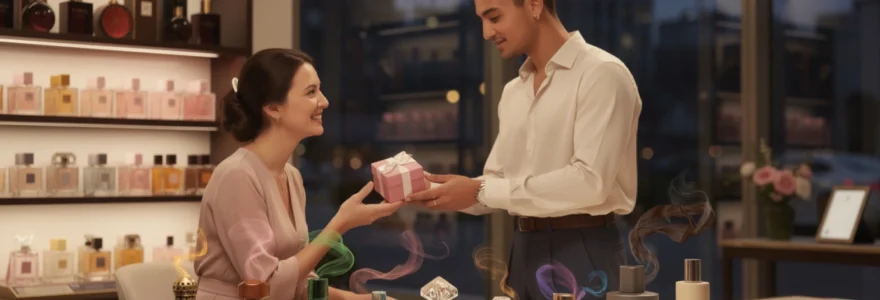
Selecting the ideal fragrance as a gift represents one of the most intimate and thoughtful gestures in modern gifting culture. Unlike conventional presents that serve functional purposes, perfume transcends mere utility to become an extension of the recipient’s personality and emotional landscape. The olfactory connection between scent and memory creates lasting impressions that endure far beyond traditional gift experiences.
The complexity of choosing perfume for another person stems from the deeply personal nature of fragrance preferences. Each individual’s scent journey reflects their unique biochemistry, cultural background, lifestyle choices, and emotional associations. Understanding these nuanced factors transforms what might seem like an overwhelming selection process into an engaging exploration of the recipient’s character and preferences.
Modern perfumery offers an extraordinary range of compositions, from classical French houses to contemporary niche creators, each presenting distinct olfactory signatures. The successful perfume gift requires careful consideration of fragrance families, concentration levels, and presentation elements that align with both the occasion and the recipient’s sophisticated tastes.
Understanding fragrance families and olfactory profiles for gift selection
The foundation of intelligent perfume gifting rests upon comprehensive knowledge of fragrance classification systems. Professional perfumers categorise scents into distinct families based on their dominant olfactory characteristics, creating a structured approach to understanding how different compositions might appeal to various personality types and preferences.
Contemporary fragrance families encompass seven primary categories: floral, oriental, woody, fresh, fougère, chypre, and gourmand. Each family contains numerous subcategories and hybrid compositions that blur traditional boundaries, reflecting the evolution of modern perfumery techniques and consumer preferences. Understanding these classifications enables gift-givers to navigate the complex landscape of available options with greater confidence and precision.
Oriental and amber compositions: tom ford black orchid and maison margiela by the fireplace
Oriental fragrances represent the epitome of luxurious, warm complexity in modern perfumery. These compositions typically feature rich base notes including amber, vanilla, benzoin, and various exotic spices that create enveloping, sophisticated scent profiles. Tom Ford Black Orchid exemplifies this category through its opulent blend of black truffle, bergamot, and dark florals, creating an intensely dramatic fragrance experience.
Maison Margiela By the Fireplace offers a more contemporary interpretation of oriental warmth, incorporating smoky wood notes with comforting vanilla and chestnut accords. This fragrance appeals to individuals who appreciate cosy sophistication and enjoy scents that evoke intimate, memorable moments. Oriental fragrances suit recipients who gravitate towards evening wear, appreciate luxury experiences, and possess confident, magnetic personalities.
Fresh citrus and aquatic notes: hermès un jardin sur le toit and issey miyake L’Eau d’issey
Fresh fragrances encompass citrus, aquatic, and green compositions that deliver invigorating, clean olfactory experiences. Hermès Un Jardin Sur Le Toit captures the essence of rooftop gardens through its blend of grass, pear, and rose petals, creating a sophisticated interpretation of natural freshness. This composition appeals to individuals who appreciate understated elegance and prefer daytime fragrances.
Issey Miyake L’Eau d’Issey revolutionised aquatic perfumery through its innovative combination of lotus, cyclamen, and precious woods. The fragrance creates an impression of pure, crystalline water enhanced by delicate floral touches. Recipients who favour fresh compositions typically lead active lifestyles, appreciate minimalist aesthetics, and prefer subtle yet distinctive scent signatures that complement rather than overwhelm their natural presence.
Floral bouquet classifications: chanel no. 5 and dior j’adore complex structures
Floral fragrances represent the largest and most diverse category in perfumery, ranging from single-flower compositions to complex multi-floral bouquets. Chanel No. 5 remains the archetypal example of sophisticated floral complexity, featuring aldehydic top notes that enhance its rose and jas
petals. Its balanced structure of jasmine, ylang-ylang, and sandalwood has made it an enduring symbol of refined femininity and the benchmark for many modern floral creations.
Dior J’adore offers a more contemporary floral bouquet, weaving together notes of ylang-ylang, rose, and jasmine with fruity top notes and a polished musky base. This kind of complex floral structure suits recipients who enjoy classic elegance with a modern twist and who are comfortable wearing recognisable, iconic fragrances. When you are selecting a floral perfume gift, consider whether the recipient prefers airy, dewy petals, rich white florals, or powdery vintage nuances, as each creates a very different emotional impression.
Woody and aromatic base notes: creed aventus and le labo santal 33 profiles
Woody and aromatic fragrances place emphasis on materials such as sandalwood, cedarwood, vetiver, and various resins, often combined with herbal or spicy facets. Creed Aventus is a prominent example of a contemporary woody-chypre style, blending pineapple and blackcurrant with birch, patchouli, and oakmoss. Its composition projects confidence, dynamism, and modern masculinity, although many fragrance enthusiasts consider it comfortably unisex.
Le Labo Santal 33, built around a smoky sandalwood accord with cardamom, leather, and violet, has become an emblem of urban, gender-neutral perfumery. These woody and aromatic profiles are ideal when you want to gift a perfume that feels sophisticated, understated, and long-wearing, particularly for professionals or creatives who value a distinctive yet polished olfactory signature. If your recipient gravitates towards minimalist fashion, earthy interiors, or artisanal coffee shops, a woody or aromatic fragrance family is often an excellent starting point.
Recipient analysis through scent preference assessment techniques
Once you understand the main fragrance families, the next step in perfume gifting is analysing the recipient’s tastes with as much nuance as possible. We can think of this phase as a kind of informal scent consultancy, where small observations reveal surprisingly precise preferences. Rather than guessing blindly, you are gathering subtle clues from their daily habits, personality traits, and environment to identify a fragrance that feels intuitively “right.”
By combining observational methods with basic personality models and an awareness of seasonality and age demographics, you can approach perfume selection with the same rigour you might apply to choosing a piece of art. The aim is not to impose your own taste but to translate what you already know about them into an olfactory profile. In practice, this process is both analytical and creative, uniting data points with emotional insight.
Observational methods for existing fragrance collections and daily choices
The most reliable indicator of what someone will enjoy is what they already wear, use, and repurchase. If you have access to their dressing table or bathroom shelf, discreetly note the brands and specific perfumes in their rotation, then research the dominant notes and fragrance families of those compositions. For example, a line-up featuring Lancôme La Vie Est Belle, Viktor & Rolf Flowerbomb, and YSL Libre points clearly towards sweet florals and gourmand elements, whereas a wardrobe of Terre d’Hermès, Dior Homme, and Bleu de Chanel suggests woody, aromatic, and citrus-amber themes.
Daily product choices offer clues too. Do they favour citrus body washes, vanilla body lotions, or herbal shampoos? Are their home candles dominated by clean cotton, smoky woods, or culinary spices? These details often mirror their perfume preferences. You can also pay attention to comments: when walking past a department store counter, which tester do they instinctively spray, and which do they find “too strong,” “too sweet,” or “too masculine”?
Personality-scent correlation models: extrovert versus introvert preferences
Although personality is not destiny, certain broad tendencies do appear in consumer fragrance studies. Extroverted individuals, who enjoy social visibility and energetic environments, often gravitate towards bolder, high-projection scents such as spicy orientals, fruity florals, and smoky woods. These perfumes act like an olfactory spotlight, announcing their presence and reinforcing their naturally expressive behaviour.
More introverted recipients may prefer close-to-the-skin compositions, such as soft musks, airy florals, and sheer citrus fragrances. These scents offer personal comfort and quiet elegance rather than overt drama, comparable to a well-tailored blazer rather than a sequinned jacket. When choosing perfume as a gift, reflect on how your recipient enters a room: do they like to be noticed immediately, or do they reveal themselves gradually? Matching diffusion and intensity to their social style is often more important than any individual note.
Seasonal wearing patterns and climate adaptation preferences
Climate and seasonality profoundly influence how a perfume performs and how it is perceived. In hot, humid environments, rich orientals and heavy gourmands can become overwhelming, whereas light citrus, aquatic, and green notes feel refreshing and wearable. Conversely, in cold or dry climates, delicate fragrances may disappear quickly, while amber, vanilla, leather, and incense notes bloom beautifully on the skin, creating a comforting aura.
If your recipient lives in a tropical region or spends much of their time outdoors, prioritise breezy eau de toilette or fresh eau de parfum compositions with moderate sillage. For those in temperate or colder cities, gifting a deeper, winter-appropriate scent can feel like offering them an olfactory cashmere scarf. Observing their existing seasonal habits—do they switch fragrances as the weather changes, or wear the same perfume year-round?—helps you decide whether to choose a versatile all-rounder or a distinctly seasonal signature.
Age demographics and generational scent preferences in modern perfumery
While there are no strict age rules in perfumery, different generations often respond to particular olfactory trends. Younger consumers, especially Gen Z, tend to embrace gourmand notes (vanilla, caramel, cotton candy) and clean musks, influenced by social media-driven “signature scent” culture and celebrity launches. They often prefer accessible designer or celebrity fragrances with strong branding and immediate impact.
Millennial and Gen X recipients may display a split preference: some lean into minimalist niche perfumery and unisex woods, while others remain loyal to classic designer pillars they discovered in their twenties and thirties. Older demographics often appreciate structured florals, chypres, and refined woods that echo earlier eras of perfumery. When gifting across generations, you can either align with these patterns for instant familiarity or gently introduce something new that still respects their established tastes—for instance, a modern interpretation of a vintage-style floral.
Technical evaluation of fragrance concentration levels and longevity
Beyond the scent profile itself, the technical characteristics of a perfume—its concentration, longevity, and projection—play a decisive role in whether it will suit the recipient’s lifestyle. Fragrance concentration is typically expressed along a spectrum from Eau de Cologne (very light) through Eau de Toilette (EDT), Eau de Parfum (EDP), and in some cases Extrait de Parfum (highly concentrated). Higher concentrations usually contain more aromatic oils, resulting in greater intensity and longer wear, though formulation quality is equally important.
For someone who works in close quarters, such as healthcare, education, or corporate environments, a subtle EDT or a soft-sillage EDP may be ideal, allowing them to enjoy a personal scent cloud without overwhelming colleagues. Conversely, a fragrance enthusiast who enjoys evening events, fine dining, or nightlife may appreciate a bold EDP or extrait that leaves a noticeable trail. When evaluating potential gifts, consult reviews that mention average wear time, projection, and performance in different climates, and remember that “beast mode” longevity is not always the goal—sometimes, elegance lies in restraint.
Gender-neutral and unisex fragrance selection strategies
Modern perfumery increasingly rejects rigid gender binaries, favouring fragrance descriptions based on mood and materials rather than “for men” or “for women.” This shift opens a rich space for gender-neutral and unisex perfume gifting, particularly when you are unsure of the recipient’s preferences or wish to avoid reinforcing stereotypes. Woods, musks, citruses, and certain florals adapt beautifully to any wearer, allowing the individual’s skin chemistry and style to shape the final impression.
When selecting a unisex fragrance as a gift, focus on balance: compositions that blend freshness with warmth, or florals with resins, often feel both approachable and sophisticated. Think of these perfumes as the olfactory equivalent of a perfectly cut white shirt—equally elegant on any body, styled according to the wearer’s personality. Unisex fragrances are especially suitable for professional gifts, for recipients who explicitly dislike gendered branding, or for couples who might enjoy sharing a “house scent.”
Luxury versus niche perfumery: navigating price points and exclusivity
Another essential consideration in the art of gifting perfume is deciding where your chosen fragrance should sit on the spectrum from mainstream designer to ultra-exclusive niche. Luxury and niche perfumes often promise higher-quality materials, more complex compositions, and smaller production runs, but designer fragrances offer reliability, recognisability, and easier accessibility. Your budget, the depth of your relationship with the recipient, and the significance of the occasion all influence where you should position your gift.
As a rule of thumb, milestone events—significant anniversaries, graduations, or major career achievements—can justify investment in luxury or niche perfumery that feels truly special. For broader gifting occasions such as birthdays or seasonal holidays, an iconic designer scent or a well-curated discovery set may strike the perfect balance between thoughtfulness and practicality. Ultimately, exclusivity is only valuable if the fragrance itself suits the recipient; a less expensive perfume that they love and finish is a far better gift than an unopened, ultra-luxury bottle gathering dust.
Prestige houses: chanel, dior, and hermès investment pieces
Prestige houses such as Chanel, Dior, and Hermès occupy a unique position in the perfume world: they combine heritage, craftsmanship, and broad recognition. Gifting a fragrance from one of these maisons signals both respect and discernment, particularly when you choose from their more refined lines, such as Chanel’s Les Exclusifs, Dior’s La Collection Privée, or Hermès’ Hermessence series. These collections often feature higher-quality ingredients, sophisticated compositions, and elegant minimalist packaging.
Investment pieces from prestige houses work especially well for recipients who already appreciate fashion or design, or who enjoy building a curated fragrance wardrobe rather than following every trend. When choosing from these lines, consider the recipient’s existing relationship with the brand: do they already love a particular Chanel or Dior classic? A more exclusive creation from the same house can feel like a natural, elevated progression, deepening their connection to the brand story they already enjoy.
Artisanal niche brands: byredo, diptyque, and frederic malle offerings
Artisanal niche brands such as Byredo, Diptyque, and Editions de Parfums Frédéric Malle cater to fragrance enthusiasts who value originality, storytelling, and nuanced composition. These houses are often at the forefront of contemporary olfactory trends, blending unexpected notes—fig with blackcurrant, incense with lipstick accords, or metallic aldehydes with woods—to create perfumes that feel like wearable works of art. Gifting from these brands communicates that you recognise the recipient’s sophisticated, perhaps slightly avant-garde taste.
Because niche perfumes can be polarising, they are best reserved for recipients who already show curiosity about fragrance or who appreciate artistic risk in other domains, such as music, fashion, or interior design. Discovery sets from these houses are an excellent compromise, allowing your recipient to explore several compositions before choosing a favourite. In many cases, the experience of exploration—testing different scents across days and moods—is as meaningful as the final choice.
Independent perfumers: l’artisan parfumeur and serge lutens unique compositions
Independent perfumery houses like L’Artisan Parfumeur and Serge Lutens occupy a sweet spot between artistic expression and cult status. L’Artisan Parfumeur is known for its poetic, nature-inspired compositions—think forests, spices, and ephemeral seasonal moments—while Serge Lutens explores darker, more baroque themes such as incense-filled temples, spices, and shadowy florals. These perfumes often feel like chapters from a novel, each bottle telling a distinct, atmospheric story.
Choosing an independent house for your perfume gift suggests that you see the recipient as someone distinctive, perhaps even enigmatic. These compositions can be incredibly memorable, but they rarely aim for complete universality; they are like niche films rather than blockbuster movies. If your recipient enjoys being “the only one in the room” wearing a particular scent, or if they have expressed fatigue with mainstream offerings, an independent perfumer’s creation can be a powerful, affirming gift.
Designer celebrity collaborations: rihanna fenty and ariana grande commercial appeals
Designer and celebrity fragrance collaborations, such as Rihanna’s Fenty Eau de Parfum or Ariana Grande’s various perfume lines, play a vital role in modern perfume gifting by offering accessible price points and instantly recognisable branding. These fragrances often feature crowd-pleasing profiles—sweet gourmands, fruity florals, or creamy musks—designed to appeal to a broad audience and to align with the celebrity’s public persona. For recipients who follow pop culture or are fans of a particular artist, such a perfume can feel like a personal connection to someone they admire.
Commercial appeal does not necessarily equate to low quality; many celebrity launches are developed by renowned perfumers and backed by established fragrance conglomerates. However, these perfumes generally prioritise immediate likeability over avant-garde experimentation. As gifts, they are particularly suited to younger recipients, casual fragrance wearers, or situations where you want the gesture to feel fun, trending, and light-hearted rather than intensely serious or formal.
Professional gifting etiquette and presentation methodologies
The final dimension of the art of gifting perfume concerns how you present the fragrance and in which contexts it is appropriate. In professional environments, perfume gifting requires careful etiquette: while a well-chosen unisex fragrance can be an elegant token of appreciation for a colleague, mentor, or client, anything overtly sensual, polarising, or expensive may send unintended signals. Neutral, office-friendly compositions with modest sillage are generally safest, and it is wise to consider cultural norms regarding scent and personal gifts in your industry or region.
Presentation, meanwhile, transforms a bottle into a complete gifting experience. Thoughtful wrapping, quality tissue paper, and a handwritten note explaining why you chose this particular scent elevate even a modestly priced perfume into something memorable. You might reference a shared memory (“This reminded me of the café we always meet at”) or an admired trait (“I wanted something that captured your calm confidence”). By articulating your intention, you turn the fragrance from a simple product into a personalised gesture—an invisible signature that links you and the recipient each time they wear it.