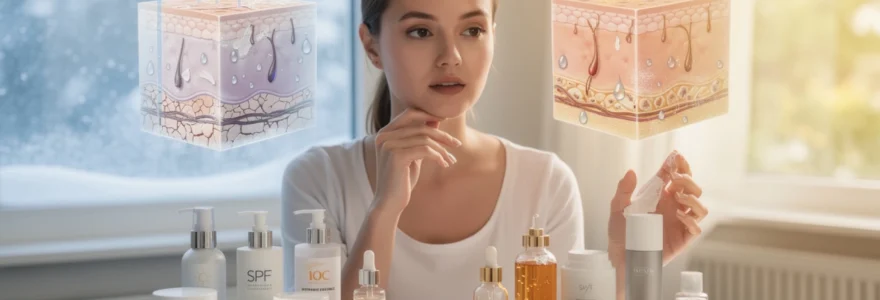
Your skin is a dynamic organ that responds continuously to environmental fluctuations. Just as you wouldn’t wear a winter coat in summer, maintaining the same skincare routine year-round may not provide optimal results for your complexion. The question isn’t whether seasonal changes affect your skin—they undeniably do—but rather how significant these adjustments need to be and which specific products warrant rotation. Understanding the physiological mechanisms behind seasonal skin responses enables you to make informed decisions about when to modify your regimen and when consistency should prevail. The dermatological evidence increasingly supports a nuanced approach: certain elements of your routine should remain constant, whilst others benefit from strategic seasonal adaptation.
How seasonal environmental changes impact skin physiology and barrier function
The skin’s outermost layer, the stratum corneum, acts as your body’s primary defence against environmental stressors. This remarkable barrier consists of corneocytes embedded in a lipid matrix, functioning much like bricks and mortar. When external conditions shift dramatically between seasons, this protective structure experiences significant challenges that can compromise its integrity. Temperature extremes, humidity variations, and atmospheric pressure changes all influence how effectively your skin maintains homeostasis.
Research demonstrates that the skin’s microbiome composition also varies seasonally, with bacterial diversity peaking in summer months and declining during winter. This microbial shift correlates with altered sebum production and pH levels, which in turn affect barrier function. Understanding these physiological responses helps explain why you might experience unexpected breakouts during seasonal transitions or notice that your previously perfect moisturiser suddenly feels inadequate.
Transepidermal water loss (TEWL) fluctuations across winter and summer months
Transepidermal water loss represents one of the most significant measurable changes in skin behaviour across seasons. During winter months, TEWL can increase by up to 25% compared to summer levels, primarily due to reduced atmospheric humidity and exposure to indoor heating systems. This accelerated moisture evaporation leaves the stratum corneum dehydrated, compromising its ability to perform essential barrier functions. When TEWL exceeds the skin’s natural hydration capacity, you’ll notice tightness, flaking, and increased sensitivity.
Conversely, summer conditions typically reduce TEWL rates, though high temperatures increase perspiration, which can lead to its own set of challenges. The combination of sweat and sebum creates an environment conducive to bacterial proliferation, potentially triggering inflammatory responses. Monitoring your skin’s hydration levels throughout the year—through both tactile observation and professional assessment—provides valuable insight into when formulation adjustments become necessary.
UV index variations and melanogenesis response throughout the year
The UV index fluctuates considerably across seasons, with summer months typically registering readings three to four times higher than winter measurements in temperate climates. This variation doesn’t diminish the importance of year-round sun protection, but it does influence the specific photoprotection strategies you should employ. UVA radiation remains relatively constant throughout the year and penetrates glass, meaning your skin faces ultraviolet exposure even during indoor winter months. UVB radiation, whilst more intense in summer, still poses risks during colder seasons, particularly when reflected off snow surfaces.
Your skin’s melanogenesis response—the production of protective pigment—adapts to seasonal UV exposure patterns. Following summer months, you might notice lingering hyperpigmentation that requires targeted treatment during autumn and winter when melanocyte activity naturally decreases. This presents an optimal window for addressing sun damage and uneven skin tone through appropriate active ingredients.
Humidity levels and stratum corneum hydration capacity
Relative humidity levels dramatically influence the stratum corneum’s ability to maintain adequate hydration. The natural moisturising factor (NMF), composed of amino acids, lactate, urea, and other hygroscopic compounds, functions optimally when environmental humidity exceeds 50%. Winter indoor environments frequently drop below 30% relative humidity, severely compromising the NMF’s effectiveness. This reduction necessitates increased reliance on exogenous humectants and occlusives to compensate for diminished natural hydration mechanisms.
During humid summer months, the stratum corneum can absorb moisture from the atmosphere, potentially reducing your need for heavy occlusive formulations. However
During humid summer months, the stratum corneum can absorb moisture from the atmosphere, potentially reducing your need for heavy occlusive formulations. However, excess humidity also softens the outer skin layers, which can disrupt the orderly “brick and mortar” structure when combined with aggressive cleansing or over-exfoliation. This is why some people experience both oiliness and surface dehydration in muggy weather. Strategically adjusting your skincare products with the seasons—especially your cleansers, moisturisers and actives—helps preserve barrier integrity and keeps stratum corneum hydration within an optimal range.
Temperature-induced sebum production and lipid composition alterations
Ambient temperature has a measurable effect on sebum output and lipid composition. Studies suggest that sebum excretion can increase by 10–20% in hotter months, which is why you may notice more shine, congestion and enlarged-looking pores in summer. Higher temperatures also modify the ratio of free fatty acids, squalene and wax esters in sebum, sometimes favouring a more comedogenic profile. In contrast, lower winter temperatures tend to reduce surface lipids while simultaneously increasing their viscosity, making the skin feel rougher and more fragile.
These seasonal changes don’t alter your underlying skin type—oily, dry, combination or normal—but they do influence how that skin type behaves. For example, a naturally oily T‑zone might become significantly more problematic in July than in January, while dry cheeks can feel almost painfully tight in February. Adapting your skincare routine with the seasons by tweaking textures (gel versus cream), surfactant strength, and the balance between humectants and emollients allows you to support the skin’s lipid barrier without tipping it toward either congestion or excessive dryness.
Active ingredients that require seasonal rotation in your regimen
Some active ingredients are remarkably versatile and can be used year-round with only minor adjustments, while others demand more careful seasonal planning. The goal is not to overhaul your skincare routine every three months but to fine-tune concentrations, frequencies and combinations as environmental stressors shift. When temperatures drop and humidity plummets, your tolerance for potent exfoliants and retinoids may decrease, whereas in summer, heightened UV exposure changes the risk-benefit balance of certain actives. Understanding which ingredients benefit from seasonal rotation helps you maintain results without triggering unnecessary irritation.
Retinoids and photosensitivity: adjusting tretinoin and adapalene concentrations
Retinoids such as tretinoin, adapalene and retinaldehyde remain gold-standard ingredients for managing acne and photoageing, but they also increase photosensitivity and compromise barrier resilience if overused. During high-UV summer months, you may find it wiser to reduce the concentration or frequency of prescription tretinoin, particularly if you are prone to redness, peeling or hyperpigmentation. For many people, switching from nightly application to every-other-night (or even two to three times per week) in summer maintains anti-ageing benefits whilst lowering the risk of sun-induced irritation.
In winter, when UV index values are lower but TEWL is higher, the priority shifts to mitigating dryness and retinoid dermatitis. You might continue your usual retinoid strength but buffer it with a richer moisturiser, repair serum or “sandwich” technique—applying moisturiser before and after your retinoid. Adapalene, which is relatively stable to light and often less irritating, can sometimes be continued at a more consistent frequency year-round, provided your sunscreen habits are impeccable. The key is to watch for signs of over-exfoliation—stinging, persistent flaking, burning—and adjust seasonally rather than following a rigid schedule.
Alpha hydroxy acids (glycolic and lactic acid) frequency modifications
Alpha hydroxy acids (AHAs) such as glycolic and lactic acid are powerful chemical exfoliants that help smooth texture, fade hyperpigmentation and support collagen renewal. However, because they thin the stratum corneum’s outermost layers, they also enhance photosensitivity and can destabilise a dry or compromised barrier. In summer, you may want to cut back on high-strength glycolic acid peels and daily AHA toners, using them instead once or twice per week at night. Combining vigorous AHA use with intense UV exposure can be a recipe for post-inflammatory hyperpigmentation, especially on deeper skin tones.
During cooler, lower-UV months, many people choose to increase their AHA usage to tackle lingering sunspots and uneven tone acquired over summer. Think of autumn and winter as prime “treatment seasons” for controlled resurfacing. Lactic acid, being gentler and more hydrating, often suits drier winter skin better than glycolic acid. Even then, pairing any AHA with a barrier-supportive routine—ceramides, cholesterol, fatty acids—is crucial, and you should be prepared to dial back frequency at the first sign of stinging or increased sensitivity from indoor heating.
Niacinamide consistency versus seasonal vitamin C serum integration
Niacinamide is the multitasker that rarely needs a seasonal holiday. It supports barrier function, regulates sebum production, calms redness and improves uneven tone, making it a stable cornerstone of a year-round skincare routine. Because it is generally well tolerated across skin types and climates, you can usually maintain a consistent niacinamide concentration (typically 2–10%) regardless of the season. Its barrier-strengthening and anti-inflammatory properties are particularly helpful during transitional months, when your skin is adjusting to changing temperatures and humidity.
Vitamin C, by contrast, often benefits from seasonal modulation. In summer, a well-formulated antioxidant serum with L‑ascorbic acid or a stable vitamin C derivative can provide valuable protection against UV-induced free radical damage and help prevent new pigmentation. However, potent L‑ascorbic acid formulas can sometimes sting more on sensitised or wind-chapped winter skin. If you find this happening, you might switch to a gentler derivative (such as sodium ascorbyl phosphate or ascorbyl glucoside) or reduce application to every other morning. In practice, many people use niacinamide consistently but “dial up” vitamin C in spring and summer, then adjust texture and strength as the weather cools.
Hyaluronic acid molecular weight selection for different climate conditions
Hyaluronic acid (HA) is often marketed as a simple hydrator, but its behaviour on your skin depends heavily on molecular weight and environmental conditions. High-molecular-weight HA sits closer to the surface, forming a light film that enhances immediate plumpness and reduces TEWL, making it especially useful in dry winter air when paired with an occlusive moisturiser. Low- and ultra-low-molecular-weight HA penetrate more deeply, supporting longer-term hydration but also carrying a higher risk of irritation in compromised skin. In harsh, cold climates, relying solely on lightweight HA gels without sealing them in can actually worsen dryness by pulling water from deeper skin layers when ambient humidity is very low.
In humid summer conditions, lighter HA serums often provide sufficient hydration without the need for heavy occlusives. Here, mid- to low-molecular-weight HA can shine, as the surrounding air provides extra moisture for the molecule to bind. Think of HA like a sponge: in a steamy bathroom (high humidity), it soaks up water happily; in a desert-like office with central heating, it needs to be wrapped in a protective “plastic bag” of emollients and occlusives to stop that water from evaporating. Tailoring the molecular weight blend and how you layer HA-based products with the seasons ensures you get the hydrating benefits without inadvertently depleting your skin’s moisture reserves.
Adapting SPF formulations and application protocols year-round
Sun protection is the one non-negotiable step that should never disappear from your skincare routine, regardless of season. That said, the ideal sunscreen texture, filter type and reapplication strategy will vary depending on climate, UV index and your day-to-day environment. Rather than asking whether you need SPF in winter (you do), a more helpful question is: which sunscreen formulation makes consistent use easiest in my current conditions? By adapting SPF with the seasons—while maintaining at least SPF 30 daily—you protect against cumulative damage that drives premature ageing, hyperpigmentation and skin cancer.
Mineral versus chemical sunscreen performance in high summer UV exposure
In peak summer, UVB radiation and overall UV index values are at their highest, especially between 10 a.m. and 4 p.m. This is when the choice between mineral (physical) and chemical filters becomes particularly relevant. Mineral sunscreens containing zinc oxide and titanium dioxide act like microscopic mirrors, reflecting and scattering UV rays at the skin’s surface. They begin working immediately after application and are often preferred by those with sensitive skin or conditions like rosacea. However, in hot, humid conditions, thicker mineral formulas can feel occlusive and may be more prone to sweating off, which can reduce real-world protection if not reapplied diligently.
Chemical filters (such as avobenzone, octisalate, or modern filters like Tinosorb) absorb UV energy and convert it into a small amount of heat, typically offering excellent cosmetic elegance and water resistance in lightweight textures. For oily or acne-prone skin in summer, gel or fluid chemical sunscreens may be the most wearable option, encouraging adequate application of the recommended 2 mg/cm² (roughly a quarter to half a teaspoon for face and neck). Ultimately, the best broad-spectrum sunscreen for high-summer UV is the one you will apply liberally and reapply every two hours outdoors—whether that’s a tinted mineral formula or an invisible chemical fluid.
Winter SPF 30 minimum standards for UVA protection maintenance
Although the sun may feel weaker in winter, UVA rays—responsible for much of the photoageing and indirect DNA damage—remain relatively constant year-round. They penetrate clouds and glass, meaning your skin is still exposed during overcast days and while sitting near windows. This is why dermatologists recommend maintaining at least SPF 30 with high UVA protection even in colder months. You might opt for a richer, more moisturising sunscreen in winter to double as a day cream, but dropping SPF entirely can undermine months of diligent anti-ageing work.
Snow and high altitudes further complicate the picture by reflecting up to 80% of UV radiation, increasing exposure to both UVA and UVB. If you engage in winter sports or spend extended time outdoors, an SPF 50 broad-spectrum formula, reapplied regularly, becomes essential. Think of winter SPF as preventive maintenance for your collagen: even if you are not burning, low-level cumulative UVA damage is still occurring. Choosing elegant formulations—such as hydrating creams with ceramides or niacinamide—makes it easier to maintain this habit when the perceived risk seems lower.
Reapplication strategies for indoor heating and blue light exposure
Many people underestimate their UV exposure on office days spent largely indoors. While most modern windows filter out most UVB, significant UVA can still pass through, contributing to photoageing on the “driver’s side” of the face and hands. In addition, indoor heating systems dry the air, which can degrade the film of sunscreen on your skin more quickly, particularly if the formulation is already on the drier side. If you apply your sunscreen at 7 a.m. and sit by a bright window until late afternoon, you may not be getting the level of protection implied by the SPF on the label.
Practically, you can adapt your reapplication strategy without disrupting makeup by using SPF face mists, sticks or cushion compacts over the top of your base products. Whilst the evidence for blue light from screens causing significant skin damage at typical exposure levels remains mixed, some high-energy visible (HEV) light may contribute to hyperpigmentation in susceptible individuals. If this is a concern, look for sunscreens and day serums that include iron oxides, antioxidants and pigmentary filters, which offer broader coverage beyond traditional UV wavelengths. The seasonal tweak here is simple: in darker winter months when you spend more time inside, prioritise formulas that are comfortable under heating and practical to reapply during a workday.
Moisturiser occlusive profiles: switching between emollient and humectant ratios
Moisturisers are not all created equal; their performance depends on the ratio of humectants (water-attracting ingredients), emollients (skin-softening lipids) and occlusives (barrier-forming agents). Your skin’s seasonal needs often hinge on which of these categories should dominate. In cold, dry weather, a moisturiser that is rich in emollients and occlusives can be the difference between a resilient barrier and cracked, irritated skin. In hot, humid conditions, the same formula may feel suffocating and lead to congestion or breakouts. By learning how to read ingredient lists and understand occlusive profiles, you can switch textures with the seasons while keeping your core routine simple.
Ceramide-rich barrier creams for cold weather dermatitis prevention
Ceramides, cholesterol and fatty acids form the backbone of the skin’s lipid matrix, and their ratio is crucial for optimal barrier repair. In autumn and winter, when TEWL spikes and humidity plummets, ceramide-rich creams can help prevent xerosis (dry skin) and cold-weather dermatitis. These formulations often have a thicker, cream or balm texture and may feel heavier than your usual summer lotion, but they closely mimic the skin’s own “mortar,” reinforcing the barrier from the outside. For those prone to eczema or atopic dermatitis, starting a ceramide-focused regimen early in the season can reduce the severity and frequency of flare-ups.
To integrate barrier creams into your seasonal skincare routine, you don’t necessarily need to abandon lighter formulas altogether. Many people find success by reserving ceramide-rich moisturisers for night-time use in winter or for application immediately after showers, when the skin is still slightly damp. Think of these products as a protective coat for your skin’s barrier, much like you’d wear an insulated jacket in cold weather. When combined with gentle cleansing and limited use of stripping actives, they significantly improve skin comfort and resilience.
Lightweight gel-based formulations with glycerin for hot climate hydration
In contrast, hot and humid months call for lighter, more breathable moisturisers that prioritise humectants such as glycerin, hyaluronic acid and panthenol. Gel-creams and fluid lotions are ideal here; they deliver water-based hydration without adding excessive occlusive layers that can trap sweat and sebum. Glycerin, in particular, is a workhorse humectant that draws water into the stratum corneum and has been shown in studies to improve barrier function even at relatively low concentrations. When paired with a well-formulated sunscreen, a glycerin-rich gel moisturiser is often sufficient for normal to oily skin in summer.
If you live in a tropical or very humid climate year-round, your “summer” moisturiser might actually be your default formulation, with only minor tweaks needed seasonally. However, even in these conditions, air-conditioned indoor environments can still be drying, so a balance of humectants and light emollients remains important. A useful analogy: in hot weather, your skin needs a breathable raincoat rather than a thick wool coat—protection without suffocation. Choosing non-comedogenic, fast-absorbing textures helps keep pores clear while maintaining adequate hydration.
Petrolatum and dimethicone layering techniques in transitional months
Transitional seasons like spring and autumn can be tricky, as your skin’s needs may swing from one extreme to the other within a single week. This is where strategic layering of occlusives such as petrolatum and dimethicone becomes especially valuable. Petrolatum, in particular, is one of the most effective TEWL blockers available, reducing water loss by up to 99% when applied at sufficient thickness. Used sparingly as a “slugging” step over a lighter moisturiser, it can rescue extremely dry, chapped areas during cold snaps without requiring you to overhaul your entire product lineup.
Dimethicone offers a lighter, more cosmetically elegant occlusive effect, often incorporated directly into moisturisers and primers. In shoulder seasons, you might use a dimethicone-containing lotion on most of your face and reserve petrolatum for vulnerable zones such as the corners of the mouth, around the nostrils or on the hands and lips. This targeted approach allows you to adapt to unstable weather—radiators on in the morning, sunshine by afternoon—without constantly swapping products in and out of your skincare routine. Monitoring how your skin feels day to day, and adjusting occlusive intensity accordingly, is more effective than following a rigid seasonal calendar.
Dermatological conditions that exhibit seasonal exacerbation patterns
Many chronic skin conditions follow predictable seasonal patterns, flaring under specific environmental triggers. Recognising these patterns in your own skin allows you to anticipate problems and proactively adjust your skincare routine with the seasons, rather than reacting only after a flare-up occurs. Conditions such as atopic dermatitis, seborrhoeic dermatitis and rosacea are particularly sensitive to changes in temperature, humidity and UV exposure. Tailoring your skincare and treatment plan to these rhythms—often in collaboration with a dermatologist—can significantly improve quality of life.
Atopic dermatitis flare-ups and winter itch management protocols
Atopic dermatitis (eczema) frequently worsens in winter due to low humidity, cold air and indoor heating, all of which increase TEWL and disrupt the lipid barrier. Patients often report intense “winter itch” and more frequent fissuring or oozing lesions on hands, arms and flexural areas. For eczema-prone individuals, a winter skincare routine should emphasise fragrance-free cleansers, lukewarm showers and liberal use of thick, ceramide-rich emollients applied multiple times per day. Occlusive ointments on top of moisturisers at night can further support barrier repair and reduce nocturnal itching.
Proactive use of prescribed topical corticosteroids or calcineurin inhibitors at the very first sign of a flare—rather than waiting until inflammation is severe—can shorten episodes and minimise the need for stronger medication. Some dermatologists recommend “weekend therapy,” using low-dose anti-inflammatory creams once or twice weekly in historically problematic areas during high-risk months. From a lifestyle standpoint, using a humidifier, wearing breathable natural fabrics and avoiding overly hot baths all contribute to better winter eczema control.
Seborrhoeic dermatitis peak periods and ketoconazole treatment timing
Seborrhoeic dermatitis, which commonly affects the scalp, eyebrows, nasolabial folds and chest, often peaks during colder months as well. The combination of reduced UV exposure (which has a mild anti-inflammatory effect), increased stress around holidays and frequent hat-wearing can exacerbate flaking and redness. Yeast of the genus Malassezia, which contributes to this condition, thrives in lipid-rich environments, and seasonal changes in sebum composition can shift this balance. As a result, you may notice more dandruff, itchy scalp or facial scaling in late autumn and winter.
Incorporating medicated shampoos or washes containing ketoconazole, zinc pyrithione or selenium sulfide two to three times per week can help keep symptoms in check. For the face, short-contact therapy with ketoconazole cream or low-potency corticosteroids, as directed by a dermatologist, is often most effective when started at the earliest signs of a flare. During remission phases, gentle, non-stripping cleansers and light, non-occlusive moisturisers help maintain barrier function without feeding yeast overgrowth. If you track your flare pattern across seasons, you can time preventive treatment cycles to begin just before your typical peak period.
Rosacea triggers: heat-induced erythema versus cold wind aggravation
Rosacea is notorious for its sensitivity to environmental extremes, with both heat and cold acting as triggers depending on the individual. In summer, high temperatures, direct sun and hot beverages can provoke flushing and persistent erythema. Here, your seasonal skincare strategy should include high-SPF mineral sunscreen, physical shade (hats, umbrellas), lightweight, fragrance-free moisturisers, and avoidance of overly occlusive products that trap heat. Cooling gels with ingredients such as niacinamide or centella asiatica may help soothe reactive skin, but any new product should be patch-tested carefully.
In winter, cold wind and rapid temperature changes—such as moving from freezing outdoor air into overheated indoor spaces—can be equally problematic. The skin’s vascular response in rosacea is already hyper-reactive, and these abrupt shifts can exacerbate telangiectasias and burning sensations. A richer, barrier-focused moisturiser, along with gentle scarves or face coverings in harsh weather, helps buffer these extremes. Across all seasons, minimising known personal triggers (spicy foods, alcohol, very hot showers) and keeping your skincare routine minimal and non-irritating are pillars of rosacea management. When topicals alone aren’t sufficient, dermatological treatments like pulsed dye laser or prescription medications can be timed to less sunny months to reduce post-procedure pigment risks.
Evidence-based assessment: clinical studies on seasonal skincare efficacy
While seasonal skincare advice can sometimes sound anecdotal, a growing body of research supports adjusting your routine with the seasons. Clinical studies have documented measurable differences in TEWL, sebum secretion, hydration and pigmentation parameters between winter and summer, even in the same individuals. For example, multiple investigations in temperate climates have shown that stratum corneum hydration is significantly lower and TEWL significantly higher in late winter compared to late summer, correlating with increased reports of dryness and sensitivity. These objective measurements back up what many of us feel subjectively when our skin suddenly seems “difficult” at certain times of year.
Intervention studies further suggest that seasonally tailored skincare regimens can produce superior outcomes compared to static routines. Trials using ceramide-dominant moisturisers in winter months, for instance, have demonstrated improvements in barrier function, reduced itch scores and better clinical appearance in dry and eczema-prone skin versus standard emollients alone. Similarly, protocols that increase the use of photoprotective antioxidants and high-SPF sunscreens during peak UV seasons show reductions in markers of oxidative stress and pigmentation over time. In essence, your skin behaves like any other biological system: it responds best when support is aligned with its current environmental challenges.
What does this mean for your day-to-day skincare decisions? Rather than chasing every seasonal trend, focus on a few evidence-based levers: maintain year-round sunscreen usage, increase barrier support and occlusives in cold, dry conditions, lighten textures and refine active usage in hot, humid months, and anticipate predictable flare patterns if you have a chronic skin condition. By combining clinical insights with attentive observation of your own skin’s behaviour, you can build a seasonal skincare routine that is both scientifically grounded and personalised—helping your complexion stay balanced, comfortable and resilient 12 months of the year.