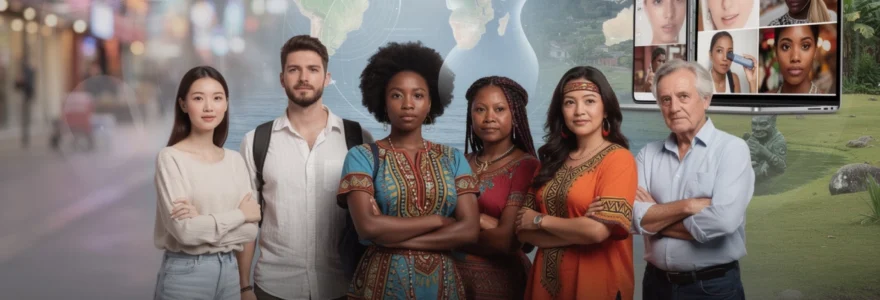
The act of crossing borders and immersing oneself in foreign cultures creates profound shifts in how individuals perceive and define beauty. Travel operates as a transformative lens, challenging preconceived notions about aesthetic ideals and expanding personal definitions of attractiveness. When travellers encounter diverse beauty practices across different societies, they often experience a fundamental recalibration of their own aesthetic preferences and values.
This phenomenon extends far beyond surface-level observations of different fashion styles or makeup trends. The psychological and cognitive processes underlying beauty perception undergo measurable changes when individuals engage with new cultural contexts. Research indicates that prolonged exposure to different aesthetic standards can permanently alter neural pathways associated with visual processing and preference formation.
The globalisation of travel has created an unprecedented opportunity for cross-cultural aesthetic exchange. As millions of people traverse continents annually, they carry with them not only their own beauty standards but also return home with evolved perspectives on what constitutes attractiveness and desirability.
Cultural anthropological frameworks: how geographic mobility reshapes aesthetic perception
Cultural anthropology provides essential frameworks for understanding how travel experiences fundamentally alter beauty perception. The concept of cultural relativism becomes particularly relevant when examining how travellers adapt their aesthetic preferences to align with local standards. This process involves complex psychological mechanisms that extend beyond conscious decision-making into subconscious preference formation.
The anthropological principle of participant observation takes on new meaning in the context of travel-induced beauty perception changes. Travellers inadvertently become participant observers in foreign beauty cultures, absorbing visual cues and cultural meanings associated with different aesthetic presentations. This immersive experience creates lasting impressions that influence future beauty assessments.
Hofstede’s cultural dimensions theory applied to beauty standards
Geert Hofstede’s cultural dimensions theory offers valuable insights into how beauty standards vary across cultures and influence traveller perceptions. The dimension of individualism versus collectivism particularly impacts beauty ideals, with individualistic cultures often emphasising personal expression through appearance, while collectivist societies may prioritise conformity to group aesthetic norms.
Power distance, another key dimension, manifests in beauty standards through the emphasis placed on luxury cosmetics, designer fashion, and expensive beauty treatments as markers of social status. Travellers from low power distance cultures often experience culture shock when encountering societies where beauty standards are heavily stratified by economic class.
Cross-cultural aesthetic adaptation through extended exposure
Extended exposure to foreign beauty standards creates measurable changes in aesthetic preferences through a process known as perceptual learning. This phenomenon occurs when travellers spend significant time in cultures with markedly different beauty ideals, gradually shifting their own preferences to incorporate elements of local aesthetic standards.
The adaptation process typically follows predictable stages: initial resistance or surprise, followed by curiosity, experimentation, and eventual integration of new aesthetic elements into personal beauty frameworks. Long-term expatriates demonstrate the most pronounced changes in beauty perception, often adopting hybrid aesthetic preferences that blend their original cultural standards with those of their adopted culture.
Ethnographic evidence from digital nomad communities
Digital nomad communities provide fascinating case studies for examining travel-induced beauty perception changes. These individuals, who work remotely while constantly travelling, develop unique aesthetic preferences that reflect their exposure to multiple cultures simultaneously. Their beauty standards often become increasingly fluid and adaptable.
Ethnographic studies of digital nomad communities reveal patterns of aesthetic code-switching, where individuals consciously adapt their appearance to align with local beauty standards depending on their current location. This behavioural adaptation reflects deeper cognitive changes in how beauty is conceptualised and valued.
Neuroplasticity and visual processing changes in expatriate populations
Recent neuroscience research has identified measurable changes in brain activity patterns among expatriate populations, particularly in regions associated with visual processing and aesthetic judgment. The brain’s remarkable plasticity allows for the rewiring of neural pathways responsible for beauty perception when exposed to sustained cultural differences.
Functional magnetic resonance imaging studies have shown altered activation patterns in the orbitofrontal cortex and anterior cingulate cortex among long-term expatriates when viewing faces and bodies from their adopted culture compared to their culture of origin. These neurological changes
suggest that repeated exposure reshapes what the brain flags as “attractive” or “normal.” In practical terms, this means that long-term travellers and expatriates often find themselves genuinely drawn to facial features, body types, and styling choices that would have felt unfamiliar—or even unattractive—before they moved. Over time, the visual system optimises for the environment in which it operates, much like how your ears adjust to a new language’s sounds. Travel, therefore, does not just broaden your mind metaphorically; it fine-tunes your sensory systems to recognise and value a wider spectrum of beauty.
Regional beauty paradigm variations: comparative analysis across continents
While beauty standards are never completely uniform within a region, travelling across continents reveals distinct aesthetic paradigms that shape how people present themselves. Experiencing these contrasting ideals firsthand can disrupt the seemingly “universal” beauty standards promoted by global media. As you move from East Asia to Scandinavia, or from West Africa to the Andes, you encounter different answers to the same question: what does it mean to look good, respectable, or desirable here?
Instead of one monolithic global beauty ideal, travel reveals overlapping but distinct visual cultures. These local paradigms, rooted in climate, history, religion, and economics, invite travellers to reconsider their own routines—from skincare and haircare to body image and fashion. Gradually, many frequent travellers build a hybrid beauty identity, selectively borrowing from the regions that resonate most with their values and experiences.
East asian K-Beauty influence on western travellers in seoul and tokyo
For Western travellers, few experiences challenge beauty assumptions as strongly as visiting Seoul or Tokyo. In cities where multi-step skincare routines, preventive dermatology, and subtle cosmetic procedures are normalised, beauty is framed less as a quick fix and more as a long-term health investment. Western visitors, many of whom arrive with a makeup-first mentality, are often struck by how much emphasis locals place on texture, luminosity, and evenness of the skin rather than on heavy colour cosmetics.
The K-beauty and J-beauty ecosystems also reframe ageing, sun exposure, and self-care. Daily sunscreen, sheet masks, and gentle exfoliation routines are treated as non-negotiable habits rather than luxury extras. Travellers who initially buy products as souvenirs often report sustained behaviour change after returning home—adopting double cleansing, layering hydrating products, or prioritising “glass skin” and “mochi skin” over full-coverage foundation. In this way, short-term travel can catalyse long-term shifts in how Western consumers define a “healthy” or “beautiful” complexion.
There is also a subtler psychological shift. When you spend time in Seoul’s subway or Tokyo’s business districts, you see crowds of people whose natural features are celebrated and enhanced, not masked. Eyes that do not fit the Western “almond” ideal, smaller lips, and softer jawlines are framed as aspirational within local beauty media. For many Western travellers, this direct exposure can loosen the grip of Eurocentric facial ideals and open space for a more pluralistic view of beauty back home.
Scandinavian minimalist aesthetics impact on mediterranean visitors
Scandinavian countries, particularly Sweden, Denmark, and Norway, are often associated with minimalist aesthetics characterised by clean lines, functional clothing, and understated grooming. For visitors from Mediterranean cultures—where expressive fashion, bold colours, and more overt glamour often dominate—this restrained approach can be both disorienting and inspiring. Beauty in Scandinavia tends to emphasise practicality, natural textures, and an almost effortless look that blurs the line between fashion and everyday wear.
Mediterranean travellers frequently notice how Scandinavian beauty routines prioritise skin health, simple hairstyles, and neutral palettes over highly stylised appearances. This doesn’t mean beauty is less valued; rather, it is integrated into a broader lifestyle of comfort, outdoor activity, and climate-conscious dressing. As a result, visitors may start to reconsider the link between beauty and effort, asking themselves: do I feel more like myself in understated clothes and minimal makeup, or in the more polished styles I am used to?
Many travellers report returning home with a new appreciation for capsule wardrobes, natural fabrics, and pared-back routines. The Scandinavian model suggests that beauty can signal ease, autonomy, and environmental awareness rather than constant performance. Over time, this exposure may soften rigid beliefs that “looking put-together” always requires high heels, heavy fragrance, or meticulously styled hair.
Sub-saharan african body positivity standards in ghana and nigeria
Travel to countries like Ghana and Nigeria often reveals a radically different relationship with body size and shape than that found in many Western societies. Curvier bodies—especially fuller hips, thighs, and buttocks—are frequently celebrated as signs of vitality, fertility, and even prosperity. In urban centres like Accra and Lagos, music videos, billboards, and everyday street style highlight body types that Western media has historically marginalised or stigmatised.
For visitors who have internalised thin-centric beauty standards, this can be a powerful corrective experience. Watching women move confidently in fitted dresses, bold prints, and vibrant colours, without apologising for belly, thighs, or cellulite, offers a living counterargument to restrictive Western ideals. You may find yourself questioning long-held beliefs about what a “beach body” or “professional body” should look like.
At the same time, it is important not to romanticise. Local beauty pressures exist too—skin lightening products, hair straightening, and Eurocentric features are still marketed aggressively in some areas. Yet the everyday visibility of diverse body shapes being openly admired can help travellers expand their own internal beauty spectrum. Many report a reduction in body shame and a new sense of freedom in clothing choices after time spent in Sub-Saharan African contexts that normalise and celebrate physical abundance.
Indigenous beauty rituals experienced by travellers in peru and new zealand
Engaging with Indigenous beauty rituals in places like Peru and New Zealand introduces a spiritual and ecological dimension to aesthetic standards. In Andean communities, traditional textiles, braiding styles, and the use of natural pigments from plants and minerals function as both beauty practices and cultural storytelling. Similarly, among Māori communities in Aotearoa New Zealand, ta moko (traditional tattooing) and hair adornments carry deep genealogical and spiritual significance.
Travellers who participate respectfully—as observers or, when invited, as clients in Indigenous-run spas or workshops—often come away with a transformed understanding of beauty as heritage rather than trend. For example, learning that a pattern woven into a Peruvian shawl encodes family history, or that a particular hair adornment signals tribal affiliation, makes it difficult to view beauty as purely cosmetic ever again. Beauty becomes a visible archive of identity, land, and lineage.
This perspective can have lasting effects on how travellers relate to their own practices back home. Instead of chasing fast-changing trends, some begin seeking rituals that feel rooted—whether that means embracing natural hair texture, using locally sourced ingredients, or reviving styles connected to their ancestry. Travel thus acts as a mirror, prompting you to ask: in my culture, which beauty practices honour where I come from, and which simply reflect imported ideals?
Digital media convergence: social platform algorithms and travel-induced beauty shifts
Modern travel is rarely an offline experience. Social media platforms shape not only where we go, but also what we notice and how we interpret local beauty standards. Algorithms curate image feeds based on location tags, engagement history, and trending aesthetics, creating a feedback loop between what you see on the ground and what you see on your screen. As a result, your perception of a destination’s beauty norms is filtered through both lived experience and algorithmically amplified imagery.
When travellers arrive in a new city and start posting content, platforms quickly adapt, serving them local influencers, popular hashtags, and region-specific beauty trends. This convergence can accelerate aesthetic adaptation: you are not just seeing everyday people in the streets but also highly curated examples of “what’s beautiful here” online. Over time, repeated exposure to these images can normalise new standards—for example, preferring gradient lips after time in Seoul, or freckle-accentuating filters after visiting Australia.
However, algorithmic curation also carries risks. It can flatten complex, diverse local beauty cultures into a few viral archetypes, reinforcing stereotypes rather than challenging them. Travellers might leave believing that “everyone” in a destination looks or aspires to look a certain way, when in reality they have been seeing only the most marketable slice of the population. Being aware of this digital distortion is crucial if we want travel to broaden, rather than narrow, our perception of global beauty standards.
For socially conscious travellers, one practical strategy is to diversify their digital inputs while abroad. Following local activists, body-positive creators, and smaller accounts—not just high-profile influencers—can provide a more nuanced picture of how beauty, race, gender, and class intersect in a given place. In doing so, you actively resist algorithmic homogenisation and cultivate a richer, more inclusive understanding of beauty wherever you go.
Psychological mechanisms: cognitive dissonance and aesthetic preference reconstruction
At the psychological level, travel often triggers cognitive dissonance around beauty standards. When what you see celebrated in a new culture conflicts with what you were taught to admire, an internal tension arises. For example, if you grew up believing that pale skin is ideal but travel to a beach culture where tanned skin is praised, you may feel a subtle discomfort: can both ideals be “right” at the same time?
To resolve this dissonance, the mind typically takes one of three paths. It can reject the new standard and double down on the old one, it can fully adopt the new standard and abandon the old, or it can integrate elements of both into a more flexible framework. Frequent travellers tend to follow the third path, gradually reconstructing aesthetic preferences to accommodate multiple, sometimes contradictory, ideals. Beauty becomes less about a single checklist and more about context, function, and personal meaning.
This reconstruction process can be likened to learning a new language. At first, you mentally translate everything back into your mother tongue; in aesthetic terms, you compare everyone you see to your home standard. With time, however, you begin to “think” in the new beauty language, recognising attractiveness that doesn’t map neatly onto your original template. Eventually, you may become effectively bilingual in beauty: able to appreciate, say, the angular elegance prized in some European fashion circles and the softer, rounder features celebrated elsewhere, without feeling that one cancels out the other.
Importantly, this psychological flexibility can lead to greater self-compassion. When you witness many different ways to be considered beautiful across cultures, it becomes harder to believe that only one body type, skin tone, or age is acceptable. Many travellers report a reduction in self-criticism and an increase in curiosity: instead of asking, “Do I fit the ideal?” they start asking, “Which aspects of my appearance resonate with me, and in which cultural contexts do they shine?”
Socioeconomic stratification: class mobility through travel and beauty capital acquisition
Beauty is not only an aesthetic category; it also functions as a form of social and economic capital. Travel can significantly alter how individuals acquire and deploy this “beauty capital.” In many societies, access to certain beauty practices—luxury skincare, cosmetic procedures, branded clothing—is closely tied to class position. When people travel, they are exposed to new beauty economies that can either democratise or further stratify these resources.
For travellers from lower- or middle-income backgrounds, visiting countries where high-quality beauty services are more affordable can create opportunities for class mobility through appearance. Dental work, dermatological treatments, or professional styling obtained abroad may translate into increased confidence and perceived professionalism at home. At the same time, travellers from higher-income backgrounds may discover that the markers of beauty capital in their own country (designer labels, specific procedures) carry different or lesser status elsewhere, prompting them to reassess where they invest their aesthetic efforts.
Travel can also highlight how beauty standards reinforce local class boundaries. In some destinations, lighter skin, particular hairstyles, or specific brands function as visible indicators of education, income, or urban status. Seeing these dynamics up close encourages critical reflection: are the beauty goals you have been chasing actually aligned with your values, or are they simply echoing class-based hierarchies? This realisation can be uncomfortable, but it is a crucial step toward more ethical and self-aware beauty practices.
From a practical standpoint, understanding beauty as capital helps travellers navigate new environments more consciously. Instead of uncritically adopting every trend encountered abroad, you can ask: what social work is this beauty practice doing here? Does participating in it support empowerment and self-expression, or does it mainly signal wealth and exclusivity? In making these distinctions, travel becomes not just a way to collect new products or looks, but a way to interrogate the social systems behind them.
Longitudinal studies: measuring quantifiable changes in beauty perception post-travel
While many of these shifts can be felt intuitively, researchers have begun to document them systematically through longitudinal studies. These studies follow individuals over months or years, measuring how travel experiences alter their explicit and implicit beauty preferences. Methods range from surveys and interviews to more technical tools like eye-tracking and reaction-time tests that reveal unconscious biases toward certain faces or body types.
Findings consistently show that extended travel—especially stays longer than three months—correlates with increased tolerance for diversity in appearance and reduced adherence to a single, rigid ideal. Participants often report higher appreciation for features previously considered “atypical” in their home culture, such as natural hair textures, wrinkles, or non-slim body types. In some studies, even brief study-abroad experiences resulted in measurable changes in which faces participants rated as most attractive several months later.
Researchers also note that the depth of cultural immersion matters. Travellers who primarily stay in tourist enclaves show less change than those who live with host families, work locally, or build friendships across cultural lines. This suggests that passive observation is not enough; meaningful contact and emotional connection are key drivers of aesthetic transformation. Just as language proficiency improves with real conversation, beauty perception shifts most when you are truly embedded in another way of life.
For individuals, this research offers both reassurance and a challenge. It confirms that our sense of what is beautiful is not fixed; it is malleable, responsive, and capable of growth over time. At the same time, it invites us to be intentional: if travel has the power to reshape our beauty standards, how might we use that power to move toward greater inclusivity, self-acceptance, and respect for the diverse ways humans choose to present themselves around the world?