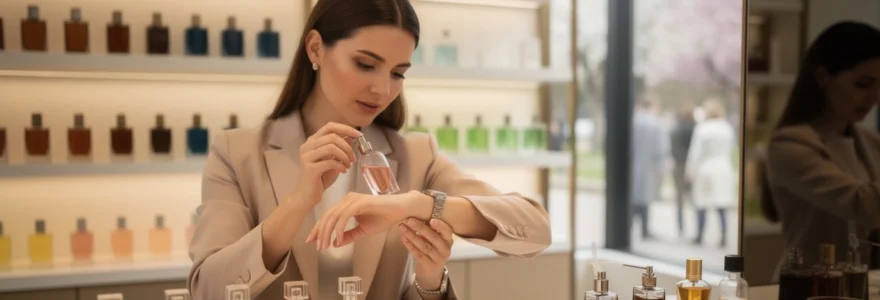
Testing a fragrance before purchase represents one of the most crucial decisions in personal scent selection, yet many fragrance enthusiasts approach this process with limited understanding of proper evaluation techniques. The complexity of modern perfumery demands sophisticated testing methods that account for molecular structure, skin chemistry interactions, and temporal evolution patterns. Professional perfumers spend years developing their olfactory assessment skills, yet consumers often make purchasing decisions based on fleeting impressions that fail to capture the true essence of a fragrance’s performance characteristics.
The financial implications of incorrect fragrance selection extend beyond mere disappointment, with premium fragrances commanding prices between £80-400 per bottle. Understanding proper testing protocols prevents costly mistakes whilst ensuring you discover scents that truly complement your personal chemistry and lifestyle requirements. Modern fragrance testing encompasses multiple dimensions, from understanding molecular volatility patterns to recognising how environmental factors influence scent projection and longevity.
Understanding fragrance architecture and olfactory pyramid structure
Every expertly crafted fragrance follows a structured hierarchy known as the olfactory pyramid, comprising three distinct layers that reveal themselves sequentially over time. This architectural framework governs how you experience a scent from initial application through its final dry-down phase, making it essential to understand each component’s role in the overall composition. Professional evaluation requires patience to experience this complete evolution, as judging a fragrance solely on its opening notes would be analogous to reviewing a symphony after hearing only the first movement.
The complexity of modern fragrance architecture has evolved significantly over recent decades, with contemporary perfumers employing advanced molecular techniques to create sophisticated scent structures. Understanding these compositional elements enables more informed testing decisions and helps predict how a fragrance will perform throughout its wearing cycle. The interplay between different pyramid levels creates the distinctive character that makes each fragrance unique, influencing factors such as projection strength, longevity duration, and seasonal compatibility.
Top notes: bergamot, citrus, and aldehydes initial impact assessment
Top notes serve as the fragrance’s opening statement, comprising highly volatile molecules that evaporate rapidly upon application. These initial impressions typically last between 10-30 minutes and include ingredients such as bergamot, lemon, grapefruit, and various aldehydic compounds that create immediate sensory impact. Bergamot, derived from the Citrus bergamia fruit, provides the distinctive Earl Grey tea association whilst contributing a sophisticated bitter-sweet quality that many premium fragrances utilise as their signature opening.
Citrus elements like petitgrain, neroli, and sweet orange create effervescent qualities that capture attention but should never form the sole basis for purchasing decisions. Aldehydes, synthetic compounds that add sparkling metallic or soapy facets, featured prominently in iconic fragrances like Chanel No. 5 and continue influencing contemporary compositions. When testing fragrances, resist the temptation to judge based solely on these fleeting impressions, as they represent merely the introduction to a more complex olfactory journey.
Heart notes: rose absolue, jasmine sambac, and woody accords development
Heart notes emerge after the top note evaporation and represent the fragrance’s true personality, typically developing between 30 minutes to 4 hours after application. This middle phase showcases the perfumer’s artistic vision through carefully balanced floral, spicy, fruity, or green accords that define the composition’s character. Rose absolue, extracted through solvent methods, provides intense floral richness that differs significantly from steam-distilled rose otto, offering deeper, more luxurious facets that sophisticated wearers appreciate.
Jasmine sambac, prized for its intoxicating nocturnal bloom, contributes complex indolic characteristics that range from creamy sensuality to animalic intensity depending on concentration levels. Woody heart notes incorporating cedar, sandalwood, or synthetic molecules like Iso E Super create structure and depth whilst providing smooth transitions between the volatile top notes and persistent base elements. Testing during this heart note phase reveals whether you genuinely connect with a fragrance’s essential character, making this evaluation period crucial for accurate assessment.
Base notes: sandalwood, patchouli, and ambergris longevity evaluation
Base notes comprise the fragrance’s foundation, featuring
Base notes comprise the fragrance’s foundation, featuring the heaviest, slowest-evaporating molecules that can linger on skin, hair, and clothing for 6–12 hours or more. Classic materials such as sandalwood, patchouli, vetiver, labdanum, and ambergris (or modern amber accords) form this structural backbone and determine whether a perfume truly earns its place in your wardrobe. When you test a fragrance correctly, the base notes are what you will smell at the end of the day, long after the initial sparkle has disappeared.
Sandalwood contributes creamy, lactonic warmth and a meditative, almost milky woodiness that often reads as luxurious and skin-like. Patchouli, rich in sesquiterpenes, brings earthy depth, chocolate facets, and a damp, woody character that can feel either bohemian or refined depending on its treatment. Ambergris in traditional perfumery, now usually replaced by ambroxan-type molecules, adds a diffusive, salty, animalic glow that amplifies other notes rather than dominating them. To evaluate base note longevity when testing, check the scent on your skin after 4, 6, and 8 hours, and notice: do you still perceive structure and nuance, or has the perfume collapsed into a vague musk haze?
Sillage projection and diffusion radius testing methods
Beyond how long a fragrance lasts, correct perfume testing must also assess sillage (the scent trail) and diffusion radius (how far the fragrance projects from your body). Two fragrances can have identical longevity yet radically different presence: one may hug the skin, while the other announces your arrival before you enter a room. When you are buying a fragrance for specific contexts—office, intimate evenings, or nightlife—this distinction becomes critically important.
To test projection professionally, apply 2–3 sprays at normal wearing strength and wait at least 30–45 minutes for the top notes and alcohol to settle. Then, extend your arm and see whether you can smell the fragrance at arm’s length; ask a trusted friend to stand 1–2 metres away and describe how clearly they perceive it. Over a 4–6 hour period, repeat this check periodically to map how the diffusion radius changes: strong sillage that becomes a soft aura after a few hours is often ideal for versatile daily wear. If you are testing alone, walk briefly out of a room and return—if you can still smell a light cloud upon re-entering, the fragrance has meaningful sillage.
Professional skin testing protocols and application techniques
Once you understand the olfactory pyramid in theory, the next step is applying professional-level skin testing protocols before buying perfume. Fragrance houses and evaluators follow disciplined routines because they know how easily a rushed test can mislead even a trained nose. You do not need a laboratory to adapt these methods; you simply need to be intentional about where you spray, how much you apply, and how you manage variables like pH, sebum, and temperature.
Correct skin testing begins with a neutral canvas: avoid other perfumes, strongly scented body products, and heavy deodorants on testing days. If you have very dry skin, a thin layer of unscented moisturiser on your pulse points can create a more realistic picture of how the fragrance will behave in daily wear. From there, strategic placement, time-stamped observations, and controlled comparison with blotters will give you a much clearer sense of whether a fragrance truly suits you.
Pulse point selection: wrist, neck, and behind ears strategic placement
Pulse points are preferred for testing perfume on skin because increased blood flow slightly raises local temperature, helping fragrance molecules volatilise and project. The inner wrist, neck (particularly the sides of the neck), and the area behind the ears are the most informative locations for correct fragrance testing. Each area offers a slightly different balance between projection, intimacy, and practical accessibility for sniffing throughout the day.
For structured testing of a new perfume, apply one scent to the inner wrist or crook of the elbow and another (if needed) to the opposite arm—avoiding more than two fragrances at once reduces cross-contamination and olfactory confusion. The neck and behind the ears are excellent for assessing how the perfume behaves in your “natural” wearing style, but they are less convenient if you want to monitor the scent every 30–60 minutes in public. Always spray from a distance of roughly 15–20 cm, allow the liquid to air dry, and resist rubbing the area, which can accelerate top-note evaporation and distort the opening.
Skin chemistry ph levels and sebum production impact analysis
Correct fragrance testing also means acknowledging that your skin is not a neutral surface; it is a living, slightly acidic organ with its own microbiome, pH, and sebum production. Studies indicate that the skin’s surface pH usually ranges from 4.5 to 5.5, and even small variations can influence how aroma molecules break down over time. If your skin is more acidic and dry, bright notes may flash off faster, and base notes may appear sharper; if your skin is slightly oilier, fragrances often last longer and smell warmer or sweeter.
During testing, ask yourself: does this perfume become sour, murky, or “off” after 1–2 hours, or does it melt harmoniously into your natural scent? Some people find that white florals turn indolic and animalic on their skin, while others notice that patchouli-heavy perfumes seem cleaner and more transparent. To account for these differences, test the same fragrance on two different days, ideally after a shower and again after a normal day with natural sebum present. If the perfume remains pleasant and coherent in both conditions, it is far more likely to be a reliable choice for purchase.
Temperature variation effects on molecular volatility and scent throw
Temperature exerts a powerful influence on volatility and scent throw, which is why a perfume can feel discreet in winter yet overwhelming in mid-summer. Higher temperatures accelerate evaporation, increasing projection but shortening perceived longevity; lower temperatures slow diffusion, leading to closer-to-skin performance but often longer wear. When testing a fragrance correctly before buying, you should consider how it behaves across at least two temperature contexts, especially if you plan to wear it year-round.
A practical approach is to test your chosen perfume indoors at a comfortable room temperature of around 20–22°C, then again on a warmer day or after light physical activity when your skin is slightly warmer. Notice whether the perfume becomes cloying, overly sweet, or sharp in the heat, or whether it simply radiates more beautifully. Conversely, in cooler conditions, ask if the scent still has enough presence to be noticeable, or if it collapses into a faint whisper. This kind of controlled, comparative testing mimics what professional evaluators do when they assess a fragrance’s versatility across seasons.
Blotter paper vs direct skin application comparative testing
Blotter paper, or mouillettes, are invaluable tools for initial screening, but they can never fully replace testing perfume directly on skin before buying. Paper offers a consistent, pH-neutral medium that allows you to compare multiple fragrances side-by-side at low cost, which is ideal when you are shortlisting options in a store or working through a discovery set. On a blotter, it is easier to evaluate construction, note transitions, and basic performance without the complicating variable of skin chemistry.
However, a blotter cannot replicate the warmth, moisture, and microbiome of human skin, all of which fundamentally alter how a fragrance behaves. A composition that seems balanced and elegant on paper may turn harsh, sweaty, or flat on your body after 2–3 hours. The most effective strategy is therefore sequential: use blotters to narrow down to 2–3 serious candidates, then move to direct skin application for extended wear tests. Think of blotters as a trailer for a film and skin as the full screening—helpful to watch the trailer, disastrous to buy a ticket based on that alone.
Multiple fragrance sampling without olfactory fatigue management
Olfactory fatigue—sometimes called “nose blindness”—is a neurological adaptation where receptors become less responsive after repeated exposure. In practical terms, if you test too many perfumes at once, everything starts to smell strangely similar or simply disappears, leading to poor decisions. Professional evaluators are acutely aware of this and limit themselves to a small number of focused tests per session, often spacing intense sessions with periods of neutral air.
When you test fragrance correctly in a retail environment, cap yourself at three, maximum four, distinct scents per session: first on blotters, then perhaps one or two on skin. Between tests, step away from the fragrance counter and breathe fresh, unscented air for several minutes; some perfumers also recommend smelling your own clean skin or the inside of your elbow to recalibrate. Avoid relying on coffee beans—the research shows they create contrast but do not truly “reset” the nose. If you feel your sense of smell dulling or you start struggling to distinguish notes, that is your cue to stop, take a break, and return another day rather than pushing through.
Temporal scent evolution and dry-down period analysis
Perhaps the most overlooked part of correct fragrance testing before buying is the temporal analysis of the scent’s evolution—that is, consciously observing how the perfume changes from first spray to final dry-down. A typical eau de parfum will move through a recognisable trajectory: bright top notes for 10–30 minutes, heart development over the next 1–3 hours, and then a base that can linger 6–10 hours or more on skin and textiles. Each of these phases carries different emotional and practical implications: a challenging opening can soften into beauty, while a charming start may decay into something bland or unpleasant.
To evaluate this evolution, treat your test day almost like a mini experiment. Note the application time, then check in deliberately at 15 minutes, 1 hour, 3 hours, 6 hours, and, if possible, the next morning on clothing or a scarf. Ask yourself targeted questions at each stage: Is the transition from top to heart smooth or abrupt? Does the base become powdery, woody, sweet, or musky, and do you enjoy that direction? Many legendary perfumes—Guerlain Shalimar or classic chypres, for example—only reveal their true brilliance in the dry-down, long after a casual shopper would have dismissed them at the counter. By committing to this temporal analysis, you dramatically reduce the risk of regretting an expensive full bottle.
Fragrance family classification and personal preference mapping
Understanding fragrance families is one of the most effective ways to test perfumes intelligently before buying, especially when confronted with hundreds of options. Professional perfumers and evaluators classify scents into families—such as oriental amber, fresh aquatic, woody aromatic, floral, or gourmand—based on dominant accords and structural patterns. Once you identify which families consistently appeal to you, you can prioritise testers, discovery sets, and samples that sit within or adjacent to those categories, instead of sampling at random.
A practical method is to list three to five fragrances you already enjoy, then research their official family classification and main notes. You will often discover clear patterns: perhaps you gravitate toward spicy vanillas, smoky ambers, or sparkling citruses with musky bases. When you then encounter new perfumes in-store or online, this mental map acts like a compass, helping you decide what to request on blotter and which scents deserve precious space on your skin for extended testing.
Oriental amber families: tom ford tobacco vanille and maison margiela jazz club
Oriental amber, sometimes simply called “ambery”, encompasses warm, resinous compositions built around vanillic, balsamic, and often spicy or boozy notes. Tom Ford Tobacco Vanille is a textbook example: a dense blend of tobacco leaf, vanilla, dried fruits, and spices that wears like an expensive, velvet-lined smoking lounge. When you test an oriental amber fragrance correctly, pay particular attention to how the sweetness, spice, and resin balance over several hours—too much sugar or syrupy vanilla can become cloying, especially in warm weather.
Maison Margiela Jazz Club sits in the same broad family but offers a different interpretation: rum, tobacco, vanilla, and woods with a slightly smoky, leathered undertone. During testing, note how these scents project in the first 2–3 hours (they often have powerful sillage) and how they behave in heat versus cooler climates. Ask yourself: does the fragrance remain sophisticated and textured, or does it flatten into a generic sweet accord? If you consistently enjoy the cosy, enveloping feeling of these amber perfumes on your skin, chances are high that other orientals in the same family will also suit you, making it easier to target new samples.
Fresh aquatic categories: davidoff cool water and acqua di parma blu mediterraneo
Fresh aquatic fragrances emerged strongly in the late 20th century with the use of marine aromachemicals like calone, which evoke sea breeze, salt, and water. Davidoff Cool Water became an archetype: lavender, mint, aquatic notes, and woods creating an airy, clean effect many associate with casual daytime wear. When testing this category, your focus should be on clarity and transparency—does the fragrance feel crisp and invigorating over time, or does it turn sharp, metallic, or overly synthetic as it develops?
The Acqua di Parma Blu Mediterraneo line offers a more nuanced take on freshness, pairing citrus and aromatic herbs with subtle marine and woody facets to evoke specific Mediterranean landscapes. As you test these on skin, observe how the citruses behave in the first hour and whether the base retains enough character to justify a full bottle, given that fresh aquatics and colognes often have shorter longevity. If you lead an active lifestyle or want “office-safe” options, correctly testing a few aquatics across warm and cool days will quickly reveal which ones stay elegant rather than collapsing into laundry-detergent territory.
Woody aromatic profiles: creed aventus and dior sauvage composition analysis
Woody aromatic fragrances blend woods—such as cedar, sandalwood, or birch—with aromatic herbs, spices, and often modern ambroxan or iso e super molecules for radiance. Creed Aventus, famous for its pineapple-smoke-wood interplay, sits firmly in this space: a fruity opening over a smoky, birch-and-musk backbone that many find versatile and impactful. When testing such compositions, monitor how the fruity or citrus top notes recede and whether the woody core remains interesting or becomes harsh on your skin.
Dior Sauvage, powered by ambroxan and peppery freshness, exemplifies a highly diffusive woody aromatic built for strong projection and crowd-pleasing appeal. Correct testing here means paying special attention to sillage and your own comfort level: do you enjoy the constant presence of the scent around you, or does it feel intrusive? Woody aromatics often perform well across seasons, but their ambroxan-heavy bases can cause headaches or anosmia (perceived “disappearing” scent) for some wearers, which you will only discover through full-day wear tests rather than quick store sniffs.
Retail environment testing optimisation and sample acquisition
Retail spaces—department stores, duty-free counters, niche boutiques—offer immediate access to many perfumes, but they are also saturated with competing scents, cleaning products, and ambient odours. To test fragrance correctly in this environment before buying, you need a strategy that minimises interference and maximises useful data from each visit. This begins with choosing your timing: early morning or quieter weekdays usually mean less ambient scent and more attentive staff, which translates into clearer impressions and better chances of obtaining samples.
Start your session with blotters, not skin, and bring a pen to label each strip with the fragrance name and time of application. Limit yourself to four or five blotters on the first pass, then eliminate anything that clearly does not appeal to you after 10–15 minutes. For the one or two most promising options, request a small sample vial or ask the consultant to spray your wrist or inner elbow so you can conduct a proper 4–8 hour wear test outside the store. Many brands and boutiques now offer discovery sets or paid sample kits that can be redeemed against a full bottle, an excellent way to test at home under real-life conditions.
Seasonal compatibility and weather condition performance testing
Finally, correct perfume testing before buying is incomplete without considering seasonal compatibility and weather performance. A dense, smoky amber that feels like a warm cashmere blanket in January may become unbearable in August, while an airy citrus cologne that dazzles in summer may disappear too quickly under heavy coats in winter. Perfumers often design compositions with a seasonal mood in mind, but your own climate, wardrobe, and lifestyle will ultimately determine how well a scent fits.
To evaluate this, imagine and, where possible, simulate the conditions in which you plan to wear the fragrance most often. If you live in a hot, humid region, test potential “signatures” on a warm day and notice whether they bloom pleasantly or become suffocating. In colder environments, observe whether a perfume can cut through layers and still project a little, or whether it becomes a private, skin-only scent—both can be desirable depending on context. Over time, you may find it useful to build a small seasonal wardrobe: lighter citruses, aquatics, and green scents for spring–summer; richer woods, resins, and orientals for autumn–winter. By aligning your testing with real weather conditions, you ensure that the fragrance you fall in love with at the counter remains just as compelling in everyday life.