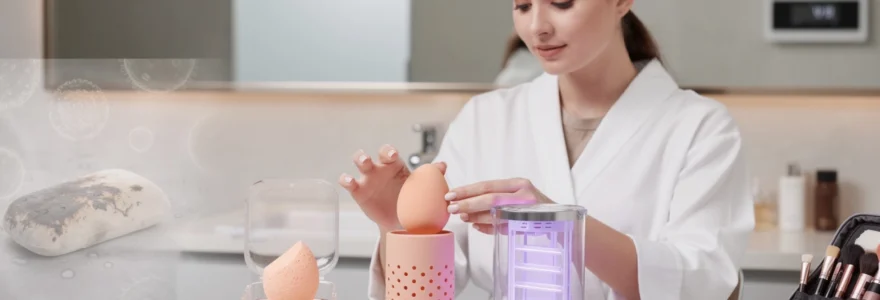
Beauty sponges have revolutionised makeup application, transforming how professionals and enthusiasts achieve flawless, airbrushed finishes. However, the hidden dangers lurking within improperly stored sponges pose significant risks to both skin health and makeup performance. Recent studies indicate that contaminated makeup tools contribute to over 60% of preventable skin infections in cosmetic users, making proper storage not just a matter of tool longevity but genuine health concern.
The investment in quality makeup sponges becomes worthless without adequate storage solutions. Professional makeup artists report that properly stored sponges maintain their shape and performance for up to three times longer than those stored incorrectly. Understanding the science behind sponge contamination and implementing professional-grade storage systems transforms your beauty routine from potentially hazardous to hygienically exemplary.
Understanding beauty sponge contamination and hygiene requirements
The microscopic world within beauty sponges reveals a complex ecosystem where bacteria, fungi, and other pathogens can flourish under specific conditions. Understanding these contamination patterns enables you to make informed decisions about storage methods and hygiene protocols that protect both your investment and your skin.
Bacterial growth patterns in damp makeup tools
Moisture retention in makeup sponges creates an ideal breeding ground for bacterial colonies, with studies showing that bacterial populations can multiply by 10,000-fold within 24 hours under optimal conditions. The porous structure of beauty blenders, designed to absorb and distribute makeup products, inadvertently provides countless microscopic niches where moisture accumulates and bacteria establish colonies.
Research conducted by dermatological laboratories demonstrates that damp sponges stored at room temperature experience rapid bacterial colonisation, with gram-positive bacteria establishing dominance within the first 6-8 hours. The cellular structure of synthetic sponge materials, whilst excellent for makeup application, contains interconnected chambers that trap moisture and organic residues from cosmetic products, creating nutrient-rich environments for microbial growth.
Staphylococcus and streptococcus risk factors in beauty blenders
Staphylococcus epidermidis and Staphylococcus aureus represent the most concerning bacterial threats in contaminated makeup sponges, with the latter being responsible for serious skin infections including cellulitis and abscess formation. These opportunistic pathogens naturally occur on human skin but become problematic when concentrated in warm, moist environments like improperly stored sponges.
Clinical studies indicate that Streptococcus pyogenes can survive in damp beauty tools for up to 72 hours, maintaining infectious potential throughout this period. The risk escalates significantly when sponges are shared between users or stored in enclosed, humid environments such as sealed makeup bags or bathroom cabinets where ventilation is limited.
FDA guidelines for cosmetic tool sanitation
The Food and Drug Administration has established comprehensive guidelines for cosmetic tool sanitation, emphasising the importance of proper drying and storage protocols. These regulations, primarily designed for professional makeup artists, provide valuable insights for consumer use and highlight the serious health implications of inadequate tool hygiene.
FDA recommendations specify that all makeup tools must be thoroughly cleaned after each use and stored in environments that prevent bacterial proliferation. The guidelines mandate complete moisture removal before storage and recommend antimicrobial storage solutions for high-risk environments. Professional makeup artists working under FDA oversight must demonstrate compliance with these sanitation protocols, providing a benchmark for consumer practices.
Dermatological impact of improperly stored makeup sponges
Dermatologists report increasing incidents of contact dermatitis, bacterial folliculitis, and fungal infections directly attributed to contaminated makeup tools. The intimate contact between beauty sponges and facial skin creates direct pathways for pathogen transmission, particularly concerning for individuals with compromised skin barriers or pre-existing dermatological conditions.
Long-term use of contaminated sponges can disrupt the skin’s natural microbiome, leading to persistent inflammation and increased susceptibility to secondary infections. Research published in dermatological journals indicates that regular use of properly
sanitised sponges is associated with lower rates of acne flare-ups and irritant dermatitis compared with sponges stored damp in closed containers. When you store your beauty sponge properly with a makeup sponge holder that allows ventilation and drainage, you effectively break the moisture cycle that bacteria rely on to thrive. For clients with rosacea, eczema, or post-procedure skin, dermatologists often treat hygienic sponge storage as part of the overall treatment plan, not merely a cosmetic preference. In this context, a well-designed makeup sponge holder functions like medical-grade storage for a tool that comes into direct, repeated contact with your skin.
Makeup sponge holder design features and material analysis
Once you understand how quickly contamination can occur, the design of your makeup sponge holder becomes more than an aesthetic choice. Every element, from the housing material to the ventilation system, affects how efficiently your sponge dries and how resistant it is to microbial growth. High-quality holders are engineered to balance protection, airflow, and durability, ensuring that your beauty blender or cosmetic sponge remains clean between uses.
When selecting a makeup sponge holder, you should consider it the “home environment” of your sponge. Just as poor housing conditions contribute to human illness, poorly designed storage can encourage bacterial and fungal growth despite regular washing. Modern holders now integrate features such as antimicrobial silicone, perforated shells, and even UV-C sterilisation modules to meet professional hygiene standards. Analysing these materials and design choices helps you choose a system that truly defends your blend rather than simply transporting it.
Antimicrobial silicone vs traditional plastic housing materials
Silicone has become the gold standard material for many modern beauty sponge cases, especially those marketed as hygienic or travel-ready. Unlike rigid plastic, silicone is flexible, impact-resistant, and easy to clean with standard brush soaps or gentle detergents. More importantly, medical-grade or antimicrobial-treated silicones exhibit lower bacterial adhesion, meaning microbes are less likely to anchor themselves to the case surface and form persistent biofilms.
Traditional plastics, such as ABS or standard polycarbonate, offer structural rigidity but can develop micro-scratches over time. These abrasions trap cosmetic residue and moisture, providing pockets where bacteria can hide even after superficial cleaning. In contrast, high-quality silicone cases—like many “defend your blend” style holders—retain a smooth, non-porous surface that releases product buildup more easily during washing. For consumers with sensitive or acne-prone skin, investing in antimicrobial silicone rather than basic plastic can significantly reduce the microbial load in their daily routine.
Another key advantage of silicone makeup sponge holders is their thermal stability. They tolerate temperature variations—from warm water cleaning to fluctuating room conditions—without warping or cracking. This is particularly important if you occasionally sanitise your holder with hotter water or disinfectant sprays. While no material can make up for poor cleaning habits, silicone housing gives you a more forgiving, low-maintenance foundation for hygienic storage.
Ventilation port configuration for optimal air circulation
Ventilation is the single most critical design feature in any makeup sponge holder. Without adequate airflow, even the best-cleaned sponge can remain damp for hours, extending the window in which bacteria can multiply. Thoughtful port configuration—strategic holes, slits, or mesh sections—allows air to circulate freely around the entire surface area of the sponge, promoting even drying. Imagine hanging clothes in an airy space versus cramming them in a sealed bag; the same principle applies to your beauty blender.
Premium sponge holders often combine top, side, and base vents to create a chimney-like effect where warm air can rise and escape, pulling in fresh air through lower openings. This passive airflow reduces drying time and minimises condensation inside the case. When you store your beauty sponge properly with a makeup sponge holder that includes multi-directional vents, you reduce “wet spots” that can become localized bacterial hotspots. Users in humid climates will particularly notice how a well-ventilated case keeps sponges fresher between uses.
Port size and placement also affect how much environmental dust or handbag debris can enter the case. The best designs strike a balance between airflow and protection, using narrow slots or patterned perforations large enough to allow air movement but small enough to block larger contaminants. This ensures that while your sponge dries efficiently, it is not exposed to unnecessary external dirt or fabric fibres.
Drainage system integration in beauty blender holders
While ventilation addresses air movement, drainage systems manage liquid removal—an often overlooked but crucial factor. After washing, a beauty sponge can hold surprising amounts of residual water, which will pool at the base of a solid container. Integrated drainage channels, perforated bases, or raised inner platforms prevent the sponge from sitting in this stagnant liquid. Think of it like a dish rack: plates that sit directly in water never truly dry, and the same is true for cosmetic sponges.
High-performing makeup sponge holders often include ribbed or domed interiors that lift the sponge away from the bottom surface. Any excess moisture can then drip down and evaporate through base vents or drainage holes. This separation breaks the contact between your sponge and standing water, significantly reducing the risk of mold colonisation. For users who wash their sponges daily, such drainage features turn the holder into an effective drying dock as well as a protective case.
Some professional-grade designs also pair drainage with removable trays that can be rinsed independently. This makes it easier to clean away soap residue, foundation runoff, and skincare product traces that accumulate over time. By regularly clearing the drainage system, you prevent residue buildup that could otherwise feed bacterial growth, even if the sponge itself is kept relatively clean.
UV-C sterilisation chambers in premium sponge storage units
At the high end of the market, certain makeup sponge holders now integrate UV-C sterilisation technology. UV-C light, in wavelengths typically between 200–280 nm, has been shown to disrupt bacterial and viral DNA, rendering many microorganisms non-viable. In practice, UV-C-equipped cases function as mini sanitising chambers, offering an additional layer of decontamination beyond standard washing and drying. This technology is increasingly adopted by professional makeup artists working under strict hygiene protocols.
These premium units are often designed with reflective inner surfaces and timed cycles to ensure light reaches as much of the sponge surface as possible. While shadows and the porous nature of sponges mean UV-C cannot guarantee 100% sterilisation, it significantly reduces overall microbial load when combined with proper cleaning. For users dealing with recurrent skin infections or working on multiple clients, this layered defence approach can be invaluable.
However, UV-C systems also come with responsibilities. You must ensure that the sponge is not saturated with water—excess moisture both blocks light and encourages residual microbial growth. In addition, UV-C should never be viewed as a substitute for soap-and-water cleansing; rather, it is an adjunct technology designed to complement traditional hygiene practices. When used correctly, a UV-C-equipped makeup sponge holder can help bridge the gap between everyday consumer routines and clinical-level sanitation.
Professional storage solutions: real techniques and beautyblender cases
Industry-leading brands such as Real Techniques and Beautyblender have invested heavily in developing makeup sponge holders that address real-world hygiene issues. Their cases do more than simply protect sponges from being crushed in a purse; they combine ventilation, structure, and portability in compact, user-friendly designs. When you compare generic plastic containers to these purpose-built holders, the difference in airflow, drying efficiency, and durability becomes immediately apparent.
Real Techniques offers sponge cases and stands with open frameworks and perforated shells that prioritise breathability. These designs allow you to store your beauty sponge properly with a makeup sponge holder that functions almost like a miniature drying rack, ideal for countertops or vanity spaces. Beautyblender, on the other hand, has developed signature cases that echo the brand’s iconic teardrop shape, integrating lattice-style vents and snap closures. Both approaches are engineered to prevent the sponge from rolling around loose in a bag while still allowing air to circulate freely.
Professional makeup artists often rely on multiple branded cases to keep different sponges separated by function—one for foundation, another for colour products, and a third for skincare application. This separation limits cross-contamination between formulas and skin types, an essential practice when working on several clients in succession. For home users, adopting a similar system can dramatically improve hygiene, especially if you share products with family members or roommates.
Price is another factor to consider. While branded holders from Real Techniques and Beautyblender cost more than generic alternatives, their long-term value lies in extended sponge life and reduced skin irritation. Just as you might invest in a higher-quality brush to avoid bristle shedding, choosing a professionally engineered case protects both your tools and your complexion. In many cases, the cost of one premium holder is less than replacing a single beauty sponge prematurely due to mold or structural breakdown.
Drying methodology and temperature control techniques
Proper drying technique is the cornerstone of hygienic beauty sponge care. Even the most advanced storage solutions cannot compensate for a sponge that is left thoroughly saturated after washing. To store your beauty sponge properly with a makeup sponge holder, you must first ensure that excess moisture has been removed through mechanical and environmental means. In practice, this means thinking about the entire drying journey—from the moment you rinse your sponge to the moment it enters its case.
After cleansing with a gentle soap, you should squeeze your sponge repeatedly under running water until it runs clear, then press it firmly in a clean towel to remove as much liquid as possible. This step is analogous to spin-drying laundry before hanging it up; the less water that remains, the faster and more evenly it can evaporate. Placing a dripping-wet sponge directly into any holder, no matter how well ventilated, dramatically extends drying time and heightens the risk of microbial growth.
Ambient temperature and humidity also play substantial roles. Sponges dry more efficiently in moderate warmth (around typical room temperature) with low to medium humidity levels. Extremely hot environments, such as placing your holder near a radiator or in direct sunlight, can warp both the sponge and its case over time. Excessive heat degrades the polymers that give the sponge its bounce, leading to cracks, reduced elasticity, and uneven application.
On the other hand, excessively cool or humid settings—like a constantly steamy bathroom—slow evaporation and keep internal pores damp for prolonged periods. A good rule of thumb is to dry your sponge in a room where you would be comfortable air-drying delicate clothing. If your climate is consistently humid, consider using a small fan or dehumidifier near your vanity to aid airflow. Once the sponge feels only slightly cool to the touch and no longer releases moisture when gently squeezed, it is ready to be placed into its makeup sponge holder.
Portable storage systems for travel and professional use
Travel and on-location work introduce additional hygiene challenges, as makeup tools are exposed to unfamiliar environments, fluctuating temperatures, and cramped storage spaces. In these scenarios, a dedicated portable makeup sponge holder becomes essential rather than optional. The goal is to protect the sponge from physical damage and external contaminants while still allowing enough ventilation for residual moisture to dissipate.
Silicone-based travel cases with flexible lids and integrated vents are particularly well-suited for this purpose. Many models are designed to accommodate multiple sponges at once—sometimes up to three—making them ideal for makeup artists who carry various textures and shapes. By keeping each sponge separated within its own compartment or section, you avoid cross-contamination between products and skin types. Have you ever opened your makeup bag to find foundation smeared across every surface? A good holder prevents exactly this scenario.
For frequent flyers, pressure-resistant designs that can withstand cabin baggage compression are crucial. Rigid or semi-rigid cases prevent sponges from being crushed, which can permanently deform their structure and compromise application precision. Ventilation slits or perforated caps ensure that any moisture left after a hurried hotel-room wash can still evaporate during transit. This balance between hardness and breathability is what distinguishes a true travel-ready sponge holder from a simple plastic pot.
Professional kits often go one step further by integrating sponge holders into larger organisational systems. Some rolling cases and ZÜCA-style setups include dedicated mesh pockets or clip-in silicone capsules specifically intended for drying and storing sponges between gigs. This modular approach allows artists to remove, clean, and replace individual holders without disassembling the entire kit. For home users who travel occasionally, adopting a scaled-down version of this system ensures consistent hygiene whether you are at your vanity or halfway around the world.
Maintenance protocols and cleaning schedules for sponge holders
Even the best-designed makeup sponge holder can become a contamination risk if it is not cleaned regularly. Residual foundation, skincare product, and skin oils inevitably transfer from your sponge to the inner surfaces of the case. Over time, this creates a thin biofilm that can harbour bacteria, much like soap scum in a shower. To store your beauty sponge properly with a makeup sponge holder, you must treat the holder itself as a hygiene-critical tool, not just a passive container.
As a general guideline, you should clean your sponge holder at least once a week if you use your sponge daily, and more often during hot or humid seasons. The process typically involves disassembling the case, rinsing it under warm water, and washing all surfaces with a mild antibacterial soap or brush cleanser. Silicone holders can usually withstand slightly hotter water and more vigorous scrubbing, whereas rigid plastic may require a gentler touch to avoid scratching. Always ensure the holder is completely dry before reassembling and placing your sponge back inside.
For users with acne-prone or medically sensitive skin, a stricter protocol may be beneficial. This can include wiping down the interior with 70% isopropyl alcohol after washing, allowing it to air-dry fully before use. Just as dentists sterilise their instruments between patients, you can think of your sponge holder as a semi-medical device that needs regular disinfection. Do you notice persistent breakouts on the same side of your face where you use your sponge most? Sometimes, refreshing your holder hygiene routine is the missing step.
Finally, monitor your holder for signs of wear and tear. Cracks, warped vents, or permanently stained surfaces can all compromise its ability to protect and ventilate your sponge. When structural damage appears, it may be time to replace the case, even if the sponge itself is still in good condition. By aligning your sponge replacement schedule (typically every 3–6 months) with an occasional holder check-up, you create a closed hygiene loop that keeps both tools functioning at their best—and your skin clearer and calmer as a result.