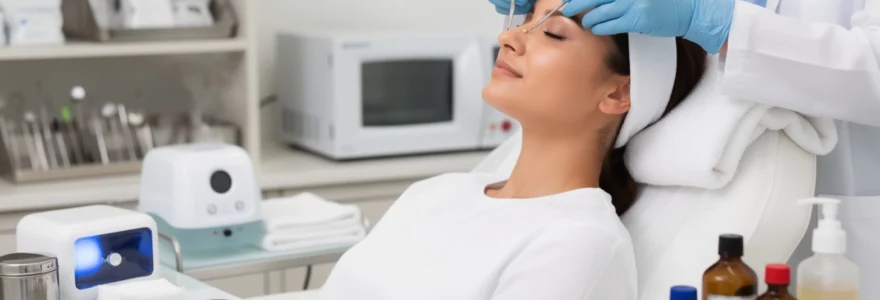
The frustration of persistent blackheads and stubborn comedones has driven countless individuals to explore extraction methods beyond traditional cleansing routines. While professional aestheticians have long relied on specialised tools to clear blocked pores, the proliferation of affordable extraction instruments has made at-home procedures increasingly accessible. However, this democratisation of dermatological tools comes with considerable risks. According to recent dermatological surveys, approximately 67% of individuals who attempt self-extraction experience some form of adverse reaction, ranging from temporary inflammation to permanent scarring. The question isn’t whether extraction tools can be effective—they certainly can be when used properly—but rather how to employ them safely without compromising your skin’s integrity. Understanding the medical-grade techniques, sterilisation protocols, and proper application methods transforms these implements from potentially dangerous instruments into valuable skincare allies.
Understanding comedone extractor tools and their dermatological applications
Comedone extractors represent a specialised category of dermatological instruments designed specifically for mechanical removal of sebaceous plugs from hair follicles. These tools operate on a fundamentally different principle than manual squeezing, distributing pressure more evenly across the tissue surrounding the comedone rather than concentrating force at two specific points. The medical community has utilised these instruments for decades, with their design refined through extensive clinical application to minimise tissue trauma whilst maximising extraction efficacy.
The physiological basis for extraction relates directly to the formation mechanism of comedones themselves. When sebaceous glands produce excess sebum, this oily substance combines with dead keratinocytes and environmental debris within the pilosebaceous unit. In open comedones (blackheads), oxidation of melanin and lipids creates the characteristic dark appearance, whilst closed comedones (whiteheads) remain covered by a thin layer of epithelial tissue. Professional extraction addresses the mechanical component of comedone removal, complementing chemical exfoliation methods that work primarily through keratolytic action.
Differentiating between Lancet-Style and loop extractors
The two primary categories of extraction instruments serve distinctly different purposes within dermatological practice. Loop extractors, also called comedone spoons, feature circular or oval openings at one or both ends, typically ranging from 1mm to 4mm in diameter. These tools work through circumferential pressure application, creating an even distribution of force around the comedone perimeter. The mechanism resembles a miniature cookie cutter, isolating the blocked follicle whilst minimising pressure on surrounding tissue.
Lancet-style extractors incorporate a sharp, pointed tip designed to puncture the epithelial layer covering closed comedones before extraction. These instruments require considerably more skill and carry substantially higher risks when used improperly. The lancet creates a micro-incision, effectively converting a closed comedone into an accessible open comedone. However, the infection risk associated with breaking the skin barrier makes these tools particularly unsuitable for home use without proper medical training.
Surgical-grade stainless steel versus coated metal compositions
Material composition significantly impacts both the effectiveness and safety profile of extraction tools. Surgical-grade stainless steel, specifically 316L stainless steel, represents the gold standard for medical instruments due to its corrosion resistance, durability, and ability to withstand repeated sterilisation cycles. This chromium-nickel alloy contains molybdenum, which enhances resistance to chloride corrosion—particularly important given the saline nature of perspiration and the chlorine-based disinfectants commonly used in sterilisation protocols.
Some manufacturers offer extractors with titanium nitride coatings, which provide a harder surface and distinctive gold colouration. Whilst these coatings can reduce friction during extraction, they may chip or flake with repeated autoclaving, potentially contaminating the treatment site. Chrome-plated tools, though aesthetically appealing and economically priced, present concerns regarding chromium leaching and coating degradation over time. The biocompatibility of the material becomes paramount when considering that even microscopic particles could potentially embed in compromised tissue during extraction procedures.
FDA regulations and medical device classifications for extraction tools
Within the United States regulatory framework, comedone extractors fall under the Food and Drug
and Drug Administration’s (FDA) medical device classification system. Most simple loop-style comedone extractors are considered Class I medical devices, which are subject to general controls but typically exempt from premarket notification (510(k)) requirements. This means they must adhere to standards for manufacturing quality, labelling, and safety, but they do not undergo the same rigorous pre-approval process as higher-risk devices. More complex systems that combine extraction with suction, heat, or light-based therapy may fall into higher-risk categories and therefore require more extensive regulatory scrutiny. For consumers, this underscores the importance of purchasing tools from reputable brands that comply with FDA and international standards rather than unbranded devices of uncertain origin.
Outside the U.S., similar regulatory frameworks exist under the European Union Medical Device Regulation (EU MDR) and comparable authorities in other regions. In all jurisdictions, devices marketed with medical claims—such as treating acne vulgaris or preventing infection—must substantiate those claims through appropriate testing. When you choose an extractor that is properly classified and regulated, you are not just paying for a piece of metal; you are paying for documented standards in manufacturing cleanliness, material safety, and performance reliability. This reduces the risk of adverse reactions and makes safe blackhead extraction at home more achievable.
Contraindications for mechanical comedone extraction
Despite their apparent simplicity, blackhead extractor tools are not suitable for every skin type or condition. Mechanical extraction is generally contraindicated in individuals with active cystic acne, widespread inflammatory papules, or nodules, as the added pressure can rupture follicles deeper in the dermis and exacerbate inflammation. Similarly, people with compromised skin barriers—such as those with eczema, psoriasis, or severe rosacea—are at higher risk of tearing, infection, and prolonged redness following even gentle manipulation. If your skin is already struggling to contain inflammation, adding mechanical trauma can be the tipping point that leads to scarring.
Anticoagulant medication use, uncontrolled diabetes, and known bleeding disorders also warrant extreme caution or complete avoidance of at-home comedone extraction. In these cases, even minor trauma from a loop extractor could result in prolonged bleeding or impaired wound healing. Recent cosmetic procedures, including chemical peels, microneedling, or laser resurfacing, further increase vulnerability; the epidermis is already in a reparative state, and additional pressure may disrupt this process. When in doubt, it is safer to postpone extraction or consult a dermatologist rather than risk converting a cosmetic concern into a medical complication.
Pre-extraction skin preparation and sterilisation protocols
Safe use of a blackhead extractor tool begins long before the loop touches your skin. Pre-extraction protocols aim to soften the contents of the pore, reduce surface bacteria, and create the most favourable conditions for controlled, low-trauma extraction. Think of this stage as “setting the stage” for success: when the skin is properly prepared, comedones often glide out with minimal force, whereas unprepared skin resists pressure and is more prone to bruising or tearing. You are not just preparing the skin, you are also preparing the tool itself through appropriate disinfection and handling. Neglecting either component dramatically increases the risk of infection and post-inflammatory hyperpigmentation.
From a dermatological perspective, pre-treatment steps mimic what you might experience in a professional facial, albeit on a smaller scale. Thorough cleansing, controlled exposure to warmth, and structured sterilisation form the cornerstone of this process. While it may be tempting to skip directly to the “popping” phase, doing so effectively turns a medical-grade technique into little more than unsanitised squeezing. For anyone serious about safe blackhead extraction at home, mastering pre-extraction preparation is non-negotiable.
Steam therapy and thermal pore dilation techniques
Steam therapy is widely used in professional settings to promote mild vasodilation and soften keratin plugs, making blackheads more responsive to mechanical extraction. Contrary to popular belief, pores do not literally “open” and “close” like doors; instead, heat increases skin pliability and reduces the viscosity of sebum, similar to how warming honey makes it easier to pour. A warm shower, a facial steamer, or even a bowl of hot water with a towel tented over the head can all provide sufficient gentle steam. The key is consistency and safety—aim for 5–10 minutes of warm (not scalding) exposure, keeping the heat at a level you could comfortably tolerate on delicate areas such as the eyelids.
For individuals with very sensitive or rosacea-prone skin, prolonged or intense steam can trigger flushing and discomfort. In these cases, short intervals of warm compresses using a soft washcloth may be preferable to continuous steam exposure. You should also avoid combining steam with strong exfoliants or retinoids on the same day, as this can excessively weaken the barrier and prime the skin for irritation. When performed correctly, thermal pore dilation can be the difference between effortless extraction and repeated, damaging attempts on a stubborn comedone.
Alcohol-based versus quaternary ammonium disinfection methods
Proper tool disinfection is as essential as technique when you are using any blackhead extractor at home. Alcohol-based disinfectants, typically isopropyl alcohol in the 70–90% range, work by denaturing microbial proteins and disrupting cell membranes, offering rapid broad-spectrum action against bacteria and many viruses. They evaporate quickly, making them convenient for consumer use, but this rapid evaporation can also compromise contact time if the surface is not thoroughly saturated. For best results, you should wipe the extractor clean of visible debris first, then soak or thoroughly swab with alcohol and allow it to air dry completely before use. This creates a practical and effective baseline level of hygiene for most home users.
Quaternary ammonium compounds (often referred to as “quats”) function differently, disrupting the cell membranes of microorganisms and providing a residual antimicrobial effect on surfaces. They are widely used in clinical and spa settings for disinfecting instruments and work surfaces but typically require specific concentrations and contact times to achieve full efficacy. While some home users may be tempted to rely on multi-surface household wipes containing quats, these products are not always formulated or tested for direct contact with medical instruments or skin. If you choose a quat-based disinfectant for your extractor, ensure it is approved for instrument disinfection, follow the manufacturer’s instructions carefully, and rinse thoroughly with sterile or boiled-and-cooled water to minimise chemical residue on the skin.
Autoclaving and UV sterilisation for reusable extractors
In professional dermatology and aesthetic clinics, autoclaving remains the gold standard for sterilising reusable metal extraction tools. Autoclaves use pressurised steam at high temperatures—typically 121–134°C—to eliminate bacteria, viruses, and spores, providing a level of sterility that far exceeds routine surface disinfection. Surgical-grade stainless steel extractors are specifically designed to withstand repeated autoclave cycles without corrosion or structural compromise. This is one of the key reasons why 316L stainless steel is preferred for clinical-grade blackhead extractors: it ensures long-term performance under rigorous sterilisation conditions. For home users who also work in clinical environments, autoclaving their personal tools in conjunction with professional instruments can be an excellent safety measure.
UV sterilisation devices, increasingly marketed for at-home use, utilise ultraviolet-C (UV-C) light to disrupt microbial DNA and RNA. While UV can significantly reduce microbial load on smooth surfaces, its effectiveness is highly dependent on line-of-sight exposure, distance, wavelength, and exposure time. Any residual organic material—such as dried sebum or skin cells—can shield microbes from UV light, resulting in incomplete disinfection. Consequently, UV cabinets and boxes should be considered an adjunct to, rather than a replacement for, thorough manual cleaning and chemical disinfection. If you rely on UV sterilisation for your blackhead extractor, you should still pre-clean the tool meticulously and adhere to manufacturer-recommended exposure times to maximise efficacy.
Assessing comedone maturity through visual and tactile examination
Before placing a loop over any lesion, you need to determine whether it is an appropriate candidate for extraction. Mature open comedones typically present as clearly defined dark plugs at the skin surface that feel firm but slightly raised when you run a fingertip over them. They do not display surrounding redness, throbbing, or tenderness—signs that would suggest an inflammatory papule or early pustule instead. In contrast, immature lesions often lie deeper beneath the skin, feel sore to the touch, or appear as milky bumps without a visible central plug. Attempting to extract these prematurely is akin to pulling on a weed whose roots are still firmly anchored—you are more likely to tear the soil than remove the plant.
Tactile feedback is just as important as visual cues. Gently stretching the skin between two fingers can help you evaluate how close the blockage is to the surface; if the bump flattens or disappears almost entirely with light tension, the plug is probably shallow and more accessible. If it remains prominent and painful, it is better to step back and treat the area with topical keratolytics, such as salicylic acid, rather than forcing a mechanical solution. A simple rule of thumb is this: if a comedone does not release after one or two very gentle attempts with proper technique, it is not ready, and persisting will only increase your risk of bruising and scarring.
Proper extraction technique and pressure distribution
Once preparation is complete and a comedone has been deemed suitable for removal, the focus shifts to how you actually use the blackhead extractor tool on your skin. Effective technique revolves around three key principles: correct positioning, controlled pressure, and a willingness to stop when resistance is excessive. Many at-home complications arise not because users own the wrong tool, but because they apply it at the wrong angle or with far too much force. The goal is to guide the plug out along the natural path of the follicle, not to drive it deeper or rupture the surrounding tissue. When done properly, extraction should feel like a firm, brief pressure—uncomfortable but not sharply painful.
Think of the loop extractor as a lever: when placed correctly, a modest amount of pressure translates into an efficient lifting motion that expels the blockage. When misaligned, that same pressure can create downward shearing forces that damage the epidermis. By paying attention to the angle of approach, the way your fingers brace the skin, and the speed with which you increase pressure, you dramatically reduce your risk of creating indentations, broken capillaries, or post-inflammatory marks. Technique is not about aggression; it is about precision.
Angle of approach and perpendicular positioning on sebaceous filaments
For safe blackhead extraction, the loop of the comedone extractor should be positioned as close to perpendicular to the skin surface as possible, with the centre of the loop directly over the comedone. This perpendicular alignment ensures that the pressure you apply is evenly distributed around the follicular opening, encouraging the plug to move along the follicle’s axis. If the tool is tilted excessively, pressure becomes uneven, with one side of the loop digging into healthy tissue while the other side exerts minimal force. Over time, this can result in small crescent-shaped indentations or micro-tears adjacent to the pore.
It is also important to distinguish between true blackheads and normal sebaceous filaments—fine, thread-like structures that often appear on the nose and chin. Sebaceous filaments are part of the skin’s natural oil-transport system and are not necessarily pathological. When you place the extractor over a sebaceous filament and press lightly, it may express a thin, pale strand of sebum rather than a firm plug. Aggressively extracting these filaments can enlarge pore appearance over time and disrupt the skin barrier. As a general rule, reserve your blackhead extractor tool for clearly defined, dark-tipped comedones, and rely on gentle exfoliation and oil-control products to manage widespread sebaceous filaments.
Applying controlled downward force without epidermal tearing
How much pressure is too much when using a comedone extractor? A practical guideline is that the skin under the loop should blanch slightly (turn pale) but not immediately turn red, purple, or feel sharply painful. Begin with minimal force, gradually increasing over one to two seconds while observing how the skin responds. If the plug is ready, you will typically see it emerge in a cohesive column or “worm-like” strand with only modest effort. Pushing harder and faster does not make extraction safer or more effective; instead, it amplifies the risk of epidermal tearing and broken blood vessels.
To improve pressure distribution, use your non-dominant hand to gently stretch and stabilise the skin around the target area. This creates a flatter surface for the loop and reduces the tendency for the tool to slip or drag. If you feel the loop cutting into the skin or see linear indentations forming, ease off immediately. Remember that the extractor is a precision instrument, not a force multiplier. Your aim is to coax the blockage out, not to excavate it at any cost.
Managing whitehead versus blackhead extraction differences
Although both whiteheads and blackheads fall under the umbrella of comedones, they behave quite differently under mechanical pressure. Blackheads, being open comedones, have a direct path to the surface and generally respond well to loop extraction once softened and prepared. Whiteheads, or closed comedones, are covered by a thin layer of epidermis that traps the plug beneath the surface. Attempting to extract a whitehead with a loop alone often leads to excessive pressure, skin tearing, or conversion into an inflamed pustule. In clinical practice, lancets or sterile needles are sometimes used to create a controlled opening, but this should not be attempted at home due to the elevated infection and scarring risks.
For at-home care, the safest approach is to reserve mechanical extraction primarily for well-formed blackheads and rely on topical treatments to gradually resolve most whiteheads. Ingredients such as salicylic acid, azelaic acid, and adapalene help loosen the keratin cap and normalise shedding within the follicle, allowing some closed comedones to resolve without manual intervention. If a whitehead remains persistently raised, tender, or cosmetically distressing, it is far safer to seek professional extraction than to experiment with needles or sharp tools on your own. In this case, knowing when not to use a blackhead extractor tool is just as important as knowing how to use it correctly.
Recognising when to abort extraction to prevent scarring
One of the most overlooked skills in safe blackhead extraction is the ability to stop. If a comedone does not respond after one or two gentle, well-positioned attempts with the loop, continuing to press harder usually means you are no longer working with the pore but against the skin. Warning signs include increasing pain, diffuse redness extending beyond the immediate area, or pinpoint bleeding under the surface. These signals indicate that you are shifting from controlled pressure to tissue trauma, which dramatically increases the likelihood of scarring and post-inflammatory hyperpigmentation.
A helpful mental guideline is the “two-try rule”: if a blackhead does not budge after two carefully executed attempts, walk away and treat it with chemical exfoliants or consult a professional. Remember that scarring is far more difficult and expensive to treat than the original blackhead. By respecting your skin’s limits and prioritising long-term texture over short-term satisfaction, you preserve both the health and appearance of your complexion.
Post-extraction wound care and inflammation management
Once a comedone has been successfully removed, the treatment site essentially becomes a micro-wound that requires careful aftercare. Even when the skin surface appears intact, the follicular walls may have experienced microscopic disruption during the extraction process. Without appropriate post-extraction care, bacteria, friction, and inappropriate products can transform a cleanly extracted pore into a lingering blemish or pigmented mark. The objective in this phase is to calm inflammation, minimise microbial overgrowth, and support the skin’s barrier as it recovers.
Think of post-extraction care as the “cool-down” after an intense workout: neglecting it can leave you stiff, sore, and more prone to injury the next time. By contrast, a brief but deliberate sequence of antiseptic cleansing, soothing actives, and barrier-friendly hydration sets your skin up for faster, more complete healing. This is where ingredient choice becomes critical; harsh actives that normally benefit acne-prone skin can be counterproductive immediately after manipulation.
Topical antiseptics: chlorhexidine versus povidone-iodine application
Topical antiseptics play a pivotal role in reducing the risk of bacterial contamination following blackhead extraction. Chlorhexidine, commonly used in concentrations of 0.05–0.2% for skin preparation, offers broad-spectrum antimicrobial action with relatively low irritation potential when properly formulated. It binds to skin proteins, providing a degree of residual activity that can help keep the extraction site clean for several hours. For at-home use, a diluted chlorhexidine solution applied with a cotton swab around (not into) the treated area is usually sufficient. You should avoid over-saturating the skin or using full-strength surgical scrubs, which may be excessively drying or irritating on the face.
Povidone-iodine, another widely used antiseptic, works by slowly releasing free iodine, which rapidly kills bacteria, fungi, and many viruses. It is particularly effective but can be more staining and slightly more irritating, especially on very sensitive skin. Individuals with iodine allergy or thyroid disorders are generally advised to avoid it. For most home users, alcohol-free antiseptic toners or chlorhexidine-based solutions offer a good balance of safety and efficacy. Whichever option you choose, the goal is a light, targeted application immediately after extraction, followed by gentle rinsing or dilution if any burning or significant dryness occurs.
Using niacinamide and centella asiatica for barrier repair
After initial antiseptic care, incorporating barrier-supportive ingredients can significantly improve recovery and reduce visible redness. Niacinamide (vitamin B3) is one of the most versatile options: it helps strengthen the skin barrier by increasing ceramide synthesis, modulates inflammation, and may even reduce sebum production over time. Using a serum or lightweight moisturiser containing 2–5% niacinamide in the days after extraction can help the treated area settle more quickly and decrease the likelihood of lingering marks. Studies have shown that niacinamide can improve overall skin texture and tone, making it an excellent companion to periodic, well-executed extractions.
Centella asiatica (also known as cica or gotu kola) is another powerful ally for post-extraction care. Rich in compounds such as asiaticoside and madecassoside, Centella has been shown to promote collagen synthesis and accelerate wound healing while reducing redness and irritation. Think of it as a “first aid” botanical for stressed skin. Applying a Centella-infused gel or cream as a final step at night can provide a soothing, cushion-like layer that supports repair without clogging pores. When combined, niacinamide and Centella form a synergistic duo: one reinforces the barrier and regulates inflammation, while the other calms and encourages healthy regeneration.
Avoiding occlusive products during the healing phase
In the immediate aftermath of blackhead extraction, it may be tempting to apply thick balms or heavy creams in the hope of protecting the area. However, highly occlusive products—those rich in petrolatum, mineral oil, or certain waxes—can trap heat and bacteria, potentially re-blocking the pore or provoking new breakouts. While these ingredients have a valuable role in treating severely dry or compromised skin, they are generally not ideal directly over freshly extracted comedones on acne-prone areas. Instead, opt for lightweight, non-comedogenic moisturisers that provide hydration and barrier support without forming an impermeable film.
You should also avoid immediately applying strong exfoliating acids, retinoids, or high-percentage benzoyl peroxide to the treated area for at least 24 hours. These actives can exacerbate irritation and prolong redness when layered onto skin that has just undergone mechanical stress. During this brief healing window, simplicity is your friend: gentle cleansing, targeted antiseptic care, and calming, barrier-supportive ingredients are all you need. Once the skin looks and feels completely settled, you can gradually reintroduce your usual active routine to help prevent future congestion.
Recognising and treating extraction-related complications
Even with meticulous technique and preparation, using a blackhead extractor tool carries inherent risks. Being able to recognise early signs of complications allows you to intervene promptly and reduce long-term consequences. The most common issues following at-home extraction include post-inflammatory hyperpigmentation, broken capillaries, and infection-related eruptions such as bacterial folliculitis. Understanding how and why these problems develop can help you both treat current flare-ups and refine your approach to avoid repeating the same mistakes.
It is helpful to think of complications as feedback rather than failure. If you consistently notice dark marks, persistent redness, or clusters of new bumps after extraction, your skin is telling you that something in your process—pressure, frequency, hygiene, or aftercare—is not working. By adjusting these variables and incorporating targeted treatments, you can often restore balance and continue to benefit from well-timed, careful extractions when needed.
Managing post-inflammatory hyperpigmentation in fitzpatrick skin types IV–VI
For individuals with deeper skin tones (Fitzpatrick types IV–VI), the most significant risk associated with aggressive blackhead extraction is post-inflammatory hyperpigmentation (PIH). Even minor trauma, such as overzealous pressure from a loop extractor, can trigger melanocytes to produce excess pigment as part of the healing response. The result is a flat, brown or greyish mark that can outlast the original blemish by months. Because PIH can be more persistent and prominent on darker skin, prevention is especially critical: gentle technique, limited attempts per comedone, and diligent sun protection all play crucial roles.
When PIH does occur, combination strategies work best. Topical ingredients such as azelaic acid, niacinamide, and tranexamic acid can help downregulate excess pigment production and gradually fade existing marks. Gentle retinoids, introduced slowly, accelerate cell turnover and support even distribution of melanin. Daily use of a broad-spectrum sunscreen with at least SPF 30 is non-negotiable, as UV exposure can darken and prolong hyperpigmented spots. While it may be tempting to pursue more extraction in an attempt to “clear” the area, the priority should shift towards calming the skin and restoring an even tone before considering further mechanical manipulation.
Addressing broken capillaries and petechiae formation
Broken capillaries and petechiae (tiny pinpoint red or purple spots) are often signs that too much pressure has been applied during extraction, particularly on delicate areas such as the sides of the nose or under the eyes. These small blood vessels sit close to the surface and can rupture when compressed between the loop and underlying structures. Once damaged, capillaries may become permanently visible as fine red lines or diffuse flushing, which can be cosmetically bothersome and difficult to conceal. Petechiae typically resolve over days to weeks, but recurrent trauma increases the chance of lasting changes.
Initial management focuses on reducing inflammation and supporting vascular recovery. Cool compresses applied intermittently in the hours following trauma can help minimise swelling and discomfort. Avoid hot water, vigorous massage, or strong exfoliants on the affected area until it has fully settled. For persistent broken capillaries, professional treatments such as pulsed dye laser or intense pulsed light (IPL) may be necessary to selectively target and collapse the dilated vessels. From a preventive standpoint, reducing extraction frequency, using smaller loops on delicate regions, and moderating pressure can significantly lower the risk of vascular injury.
Treating bacterial folliculitis from contaminated tools
Bacterial folliculitis—an infection of the hair follicle—can manifest as clusters of small, red, often itchy or tender bumps that resemble acne. When it appears shortly after using a blackhead extractor tool, contaminated instruments or inadequate skin preparation are the usual culprits. In effect, bacteria have been introduced into freshly manipulated follicles, turning what should have been a clean extraction site into an inflamed lesion. Unlike typical comedones, these bumps may develop tiny pustules and spread beyond the original extraction area, particularly in oily or occluded zones such as the beard region, hairline, or back.
Mild cases of folliculitis may respond to improved hygiene, gentle cleansing with an antibacterial wash, and temporary cessation of all extraction attempts. Over-the-counter products containing benzoyl peroxide or chlorhexidine can help reduce bacterial load when used carefully and for limited durations. However, more extensive or persistent outbreaks warrant professional evaluation, as prescription topical or oral antibiotics may be required. If you suspect folliculitis after using a blackhead extractor, the immediate priority is to stop all mechanical manipulation, thoroughly disinfect or replace your tools, and seek guidance from a dermatologist rather than attempting to “fix” the issue with more extractions.
Professional versus at-home extraction safety standards
When we watch satisfying extraction videos online, it is easy to forget the layers of training, sterilisation, and clinical judgment that underpin those procedures. In a professional setting, aestheticians and dermatologists adhere to strict hygiene protocols, including single-use disposables where appropriate, autoclaved instruments, and medical-grade antiseptics. They also possess the expertise to distinguish between a simple blackhead, an inflamed cyst, or a vascular lesion that should never be manipulated. This context allows them to apply more advanced techniques—such as lancet use or high-frequency devices—with a safety margin that is simply not available in most home bathrooms.
At-home extraction, by contrast, operates with far fewer safeguards. Lighting is often suboptimal, tools may be inadequately disinfected, and emotional factors—like the urge to keep squeezing “just one more”—can override good judgment. That does not mean you should never use a blackhead extractor tool on your own; rather, it highlights the importance of adopting professional-grade habits to the extent possible. Limiting extractions to clearly defined, non-inflamed blackheads, maintaining rigorous tool hygiene, and spacing sessions several weeks apart can all help you approach professional standards within the practical constraints of home care.
Ultimately, the decision to extract at home versus seeking professional treatment depends on your skin type, medical history, and tolerance for risk. If you are prone to scarring, hyperpigmentation, or recurrent infections—or if you have extensive or severe acne—partnering with a dermatologist or licensed aesthetician is usually the safest path. For occasional, isolated blackheads on otherwise resilient skin, a cautious, well-informed approach to at-home extraction can be both effective and empowering. By respecting the principles outlined above, you can transform a potentially harmful habit into a controlled, skin-friendly technique that supports, rather than sabotages, your long-term complexion goals.