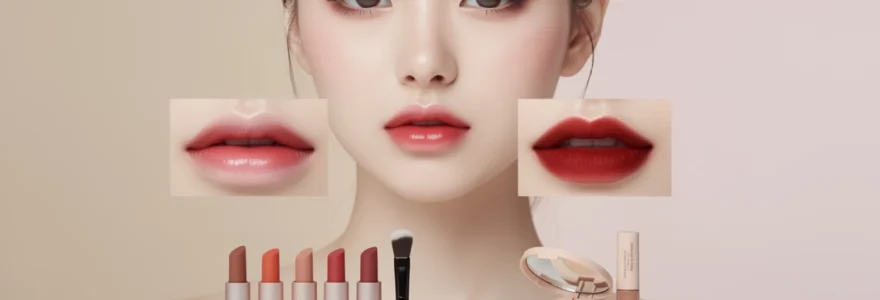
The pursuit of the perfect pout has taken a decidedly softer turn. In an era where precision and sharp definition once ruled beauty routines, the blurred lip trend emerges as a refreshing counterpoint—celebrating imperfection, romance, and that coveted just-kissed aesthetic. This technique, which originated in the K-beauty sphere and has since captivated Western makeup enthusiasts, transforms traditional lipstick application into something infinitely more forgiving and flattering. The beauty lies not in crisp edges or uniform coverage, but in the artful diffusion of pigment that mimics the natural flush your lips gain after biting into summer berries or stealing a passionate kiss.
What makes this trend particularly compelling is its accessibility. Unlike intricate contouring techniques or elaborate eye looks that demand steady hands and considerable practice, the blurred lip actively benefits from a more relaxed approach. The intentional softness creates an illusion of fuller, plumper lips without overlining or resorting to cosmetic enhancement. For makeup artists and beauty enthusiasts alike, mastering this technique opens doors to versatile looks that transition seamlessly from casual daytime elegance to sophisticated evening allure. The blurred lip represents more than just a fleeting trend—it signals a broader shift toward embracing natural beauty enhanced rather than obscured by makeup.
Understanding the gradient lip technique and its K-Beauty origins
The blurred lip technique finds its roots deeply embedded in Korean beauty culture, where the concept of “innocent” or “youthful” makeup has long been celebrated. This aesthetic philosophy prioritises softness, freshness, and an appearance that suggests effortless beauty rather than obvious makeup application. The gradient lip emerged as a cornerstone of this approach, initially gaining traction through K-pop idols and Korean drama actresses whose makeup looks sparked international fascination. The technique deliberately softens the transition between lip colour and natural skin tone, creating a watercolour effect that appears as though pigment has been gently pressed into the centre of the lips and allowed to naturally diffuse outward.
The juicy glass lip effect: blurring versus traditional lip lining
Traditional Western lip application has historically emphasised definition—sharp lip liner carefully tracing the vermillion border, followed by lipstick applied with precision to fill every millimetre. The blurred lip technique challenges this convention entirely. Rather than creating boundaries, it dissolves them. The “glass lip” phenomenon that dominated social media feeds for several years featured high-shine, glossy finishes with sharp definition. The blurred lip, conversely, leans toward matte or semi-matte textures with deliberately softened edges. This creates what makeup artists refer to as a soft-focus effect, where the lips appear naturally flushed rather than painted.
The psychological impact of this difference shouldn’t be underestimated. Sharp lines create visual structure and drama, whilst blurred edges generate approachability and romance. Research in visual perception suggests that soft boundaries are processed more quickly by the human brain and are associated with warmth and accessibility. When you blur your lip line, you’re not simply following a beauty trend—you’re leveraging perceptual psychology to create a more inviting, youthful appearance. The technique works particularly well for those concerned about asymmetrical lips, as the diffused application naturally draws attention away from precise shape towards overall colour and texture.
How korean idol makeup artists pioneered the Soft-Focus lip
Korean makeup artists serving the entertainment industry developed the blurred lip technique out of practical necessity. Stage lighting and high-definition cameras can make traditional matte lipstick appear harsh or overly defined. The gradient lip technique addressed this challenge by creating dimension and natural movement that photographed beautifully under various lighting conditions. Celebrity makeup artists like Pony (Park Hye-min) and renowned professionals working with entertainment companies popularised specific application methods that balanced pigment intensity with wearability.
These pioneers recognised that lips appear most attractive when they suggest vitality and health. The concentrated pigment at the centre of the lip—where natural colour tends to be most intense—creates an anchoring point, whilst the diffused edges integrate seamlessly with the surrounding skin. This technique became synonymous with the “chok chok” aesthetic, a Korean term describing dewy, healthy skin that appears to glow from within. The blurred lip complements this
aesthetic perfectly, ensuring the entire face reads as soft, hydrated, and subtly flushed rather than overdone. As this look migrated beyond Korea, Western artists adapted it to suit a broader range of skin tones and personal styles, blending the original gradient lip with bolder colour stories and editorial techniques. Today’s blurred lip is essentially the evolution of that early K-beauty innovation, merging the innocence of the original trend with a modern, fashion-forward sensibility.
Differentiating ombré, gradient, and blurred lip application methods
Although the terms ombré, gradient, and blurred lip are often used interchangeably, they describe subtly different approaches. A classic ombré lip usually involves a noticeable shift from one distinct colour to another, often moving from dark at the outer corners to light in the centre (or vice versa). This can be high contrast and editorial, making a statement rather than mimicking a natural stain. The gradient lip, by contrast, focuses on a single hue or closely related shades, concentrating depth in the middle of the lips and allowing it to fade softly towards the edges.
The blurred lip can be seen as the most wearable, everyday evolution of these techniques. It prioritises diffusion over visible contrast, with edges that are so softly blended they seem to melt into the surrounding skin. Think of ombré as a bold colour block painting, gradient as a smooth sunset sky, and blurred lips as watercolour gently bleeding into paper. In practice, you might combine elements of each: a gentle gradient in the centre, ombré depth created with layered tones, and a blurred border that keeps everything looking effortless rather than overworked.
Why the diffused lip edge creates a youthful plumping illusion
The magic of the blurred lip lies in its ability to visually plump the mouth without fillers or heavy overlining. When you soften the lip edge, you remove the hard boundary that tells the eye exactly where the lip stops and the skin begins. This visual ambiguity tricks the brain into reading the area as slightly fuller, similar to the way a soft-focus lens smooths and rounds features. Because there is no stark contrast line, the lips appear to gently “spill” into the surrounding skin, suggesting natural volume.
From a technical standpoint, harsh lines create a clear contour that can sometimes emphasise fine lines or dryness around the mouth. A diffused lip edge, especially paired with a hydrating formula, reflects light more evenly and disguises texture. This is why the blurred lip trend is particularly flattering for mature lips or anyone concerned about lip lines. By mimicking the way lips look after being lightly stained—rather than perfectly painted—you recapture the fullness and softness often associated with youth.
Essential products and tools for achieving seamless lip diffusion
To master the blurred lip trend effortlessly, the products you choose matter just as much as your technique. The right textures will practically blend themselves, while the wrong formulas can cling to dry patches or create patchy colour. You don’t need an overflowing makeup bag, but a small, well-curated kit will help you recreate everything from a subtle everyday blurred lip to a more dramatic berry gradient. Think of these essentials as your toolkit for sculpting with softness instead of sharp lines.
Matte versus cream lipstick formulations for blendable finishes
When it comes to blurred lip makeup, finish is key. Traditional matte bullet lipsticks offer strong pigment and longevity, making them ideal for creating a stain-like base that will last through coffee breaks and long days. However, ultra-dry matte formulas can be unforgiving if your lips are textured or prone to dehydration. Look instead for soft matte or velvet matte formulas that contain conditioning ingredients, so you still get that diffused, non-glossy look without flaking or tightness.
Cream lipsticks and balmy tints, on the other hand, give you more slip and blendability, which is perfect for beginners or for more subtle, everyday blurred lips. They glide across the lips and sheer out beautifully with just your fingertips. The trade-off is that very creamy formulas may migrate more easily, making a light set with powder or a minimal use of liner helpful. Many beauty lovers find a hybrid approach works best: apply a cream formula to create the initial gradient, then add a touch of soft matte colour in the centre to intensify the “just-bitten” effect.
Lip stains and cushion tints: charlotte tilbury pillow talk push up lashes and peripera ink velvet
Lip stains and cushion tints are often the heroes of a long-wearing blurred lip, especially if you want that “I woke up like this” flush to last all day. Korean tints like Peripera Ink Velvet are famous for their cloud-like texture and intense yet blendable pigment. Applied sparingly to the centre of the lips and then pressed outwards with a fingertip, they create that signature lightweight stain that refuses to budge. Cushion-style applicators also make it easy to dab and diffuse without harsh lines, ideal if you’re aiming for an authentic K-beauty gradient lip.
Many Western brands have followed suit with their own takes on soft-focus stains and balm-tint hybrids. While products such as Charlotte Tilbury’s Pillow Talk franchise are best known in the lash and eye category, the same brand philosophy—soft, flattering, your-lips-but-better colour—translates beautifully to blurred lip looks when you choose their lip tints or balmy lipsticks in muted rose tones. The overarching rule? Choose a formula that sets down to a comfortable, semi-matte or satin finish and can be layered without becoming cakey; this allows you to build your blurred lip look in sheer washes rather than in one heavy swipe.
Precision blending brushes: wayne goss lip brush 04 and MAC 316
Although one of the appeals of the blurred lip trend is how easily it can be done with fingers alone, a good lip brush gives you the control and finesse of a professional makeup artist. Tools like the Wayne Goss Lip Brush 04 or the classic MAC 316 are designed with tapered, firm bristles that can both place and blur colour. Use the very tip of the brush to sketch pigment into the centre of the lips or along the inner rim, then turn the brush on its side and use short, tapping motions to feather the product outward.
Why bother with a brush when the look is meant to be imperfect? Think of it like using a high-quality paintbrush for a watercolour wash: the strokes still look soft and organic, but you maintain control over where the pigment diffuses. A brush is especially helpful if you have smaller lips, an asymmetrical lip line, or if you’re working with highly pigmented formulas that can easily stain outside the borders. Synthetic bristles tend to work best with modern lip creams and tints, while natural bristles can give a beautiful “smoky” effect with traditional bullets.
Setting powders and translucent barriers for long-wearing blur
Because blurred lips rely on softness rather than rigid structure, keeping the colour in place can feel challenging—especially around the edges. This is where translucent powder and invisible barriers come into play. A finely milled setting powder lightly pressed over the lips with a puff or fingertip helps lock in the pigment, mattify shine, and extend wear. It essentially turns any creamy lipstick into a soft-focus stain without sacrificing comfort. Just remember to use the lightest touch; too much powder can make the lips look chalky.
For extra insurance against feathering, especially if you have fine lines around the mouth, you can create a subtle barrier with a clear or skin-toned lip liner. Gently trace just inside your natural lip line, then blur the pencil outward into the skin before applying any colour. This creates a slightly waxy or silicone-based border that helps prevent migration while still allowing you to blend the lipstick across it. Paired with a touch of powder along the outer rim, this technique gives you a blurred lip that looks lived-in yet refuses to smudge throughout the day.
Step-by-step application protocol for the diffused lip border
Achieving a perfectly imperfect blurred lip becomes much easier when you follow a structured application protocol. Think of this as your roadmap: you can adapt, skip, or repeat steps depending on the finish and intensity you’re after, but the general order will help you avoid patchiness and over-application. From prepping the lip canvas to finessing the final feathered edge, each stage contributes to that seamless, gradient effect that defines the trend.
Prepping lip canvas: exfoliation and hydrating primer application
A blurred lip is only as smooth as the surface underneath, so preparation is non-negotiable. Start by gently exfoliating your lips with a dedicated lip scrub or a soft toothbrush and a tiny amount of balm. This removes flakes that can catch pigment and disrupt the gradient. You don’t want aggressive scrubbing—think of it as polishing rather than sanding. Once the lips are smooth, apply a thin layer of hydrating balm or a lightweight lip primer and allow it to absorb for a few minutes.
If you tend to reach for very matte or stain formulas, this step is especially important to avoid that cracked, dry appearance that undermines the soft-focus effect. Blot away any excess moisture with a tissue so your products adhere properly, leaving just a comfortable, conditioned base. A well-prepped lip not only feels better but also allows colour to glide and blend seamlessly, which is the foundation of a convincing blurred lip look.
The centre-out patting method for controlled pigment placement
Most traditional lip applications start by outlining the lips and then filling them in, but the blurred lip trend flips that logic. Instead, begin at the very centre of your mouth—the area that would naturally hold the most colour. Dab a small amount of product there using the bullet, a doe-foot applicator, or your fingertip. Resist the temptation to swipe; concentrated placement is what lets you control the intensity. Then, gently press your lips together to transfer some of the pigment to the upper and lower lip evenly.
From here, use a tapping or patting motion to push the colour outward instead of dragging it. This centre-out patting method diffuses pigment gradually, giving you that soft, smoke-like fade towards the border. If you need more depth, add tiny amounts of product back into the centre and repeat. It’s easier to build up opacity than to take it away, so think of applying colour the way you would season food—start light and add more only where needed.
Feathering techniques with fingertip versus synthetic brush
When it comes to actually blurring the edges, both fingertips and brushes have their strengths. Your ring finger is often the ideal tool: it naturally exerts less pressure, which helps keep blending gentle and controlled. Use it to tap, not rub, along the outer edge of the lips, encouraging the colour to fade into the surrounding skin. This warmth from your skin slightly melts cream and mousse formulas, making them easier to manoeuvre into that hazy finish. It’s quick, intuitive, and perfect for on-the-go touch-ups.
A small synthetic brush offers more precision for those who want to refine the shape or work with bold, high-pigment formulas. Load the brush with the tiniest amount of leftover product from the centre of the lips, then use micro-strokes or a stippling motion along the boundary. Imagine you’re softly erasing the lip line rather than drawing it. Which is better—fingertip or brush? The answer often lies in your goal: fingers for an ultra-natural, “I used nothing” effect; a brush when you need control, symmetry, or a slightly more polished, editorial blur.
Layering transparency: building depth without harsh lines
One of the most common mistakes with blurred lips is applying full opacity in a single layer, which can quickly look blocky or clownish. Instead, think in terms of transparent veils of colour. Apply your first layer very sheer, blend it thoroughly, and then decide where you want more depth. Typically, this will be the very centre of the lips or slightly along the inner rim, where a natural shadow would fall. Add more product to those areas only, then blend again, letting each layer peek through the last like translucent fabric.
This approach allows you to create dimension without visible demarcation lines. If you’re working with stains, you can even alternate between different shades within the same colour family—perhaps a soft rose underneath and a slightly deeper berry right in the middle. Because each layer is thin, they merge together into one seamless gradient. Layering transparency this way gives you control over intensity while keeping the overall effect soft, making it easier to tailor the blurred lip to everything from a barely-there office look to a dramatic date-night pout.
Strategic concealer placement for enhanced gradient definition
Concealer isn’t just for covering blemishes—it’s a powerful tool for sculpting a blurred lip. After you’ve applied and blended your lip colour, take a small, flat brush and tap a minimal amount of creamy concealer around the outer perimeter of the lips. Focus especially on the cupid’s bow, corners, and any areas where the pigment may have migrated. Then, blend the concealer outward into the skin rather than inward towards the lip. This creates a soft halo that subtly amplifies the contrast between the natural skin tone and the diffused lip edge without creating a harsh outline.
You can also use concealer before colour to mute strong natural pigmentation if you want a more dramatic gradient effect, especially for K-beauty inspired looks with very bright centres. Lightly press a sheer layer of concealer over the lips, set it with a touch of translucent powder, and then apply your chosen tint to the middle. The result is a more striking, editorial gradient where the central colour seems to float on a neutralised base—ideal if you love the reverse ombré or high-contrast gradient styles.
Colour theory and undertone matching for natural blur effects
The most technically perfect blurred lip can still feel “off” if the colour fights against your undertones. Understanding basic colour theory helps you choose shades that enhance your natural lip colour rather than overwhelming it. When pigment is softly diffused, small shifts in undertone become more visible, so getting it right is crucial for that believable, just-bitten look. Think of your blurred lip shade as a subtle filter for your face: the right one brightens your overall complexion; the wrong one can make you look sallow or washed out.
Cool-toned berry shades for fair complexions: MLBB selections
If your skin is fair to light with cool or neutral undertones, cool-toned berry and soft raspberry shades are your best allies for a flattering blurred lip. These colours echo the natural flush you might see after exercise or a chilly walk, which is why they look so believable when diffused. Look for descriptions like “rose,” “raspberry,” “berry pink,” or “cool mauve,” and avoid overly warm oranges that can sit on top of the skin rather than melting into it. For an everyday “my lips but better” blurred lip, choose a shade that’s just one or two tones deeper than your natural lip colour.
To keep the effect soft, apply your chosen berry tone only in the centre and blend until the edges look like a whisper of colour rather than a defined lipstick. If you’re worried about looking too bold, start with a tinted balm and gradually graduate to more pigmented formulas as you become comfortable. You’ll notice that cool berries, when blurred, have a romantic, almost vintage quality—perfect for pairing with fresh skin and minimal eye makeup for a modern, effortless look.
Warm coral and terracotta hues for olive and deep skin tones
Olive, tan, and deep complexions come alive with warm corals, terracottas, and brick reds when creating a blurred lip. These tones harmonise with the golden and olive undertones commonly found in deeper skin, enhancing radiance rather than appearing flat or ashy. Shades labelled “spice,” “brick,” “burnt orange,” or “warm coral” often translate beautifully when diffused around the lip line. On deeper skin, even bold oranges or fiery reds can become incredibly wearable once they’re blurred out, taking on a lived-in stain effect rather than a solid block of colour.
For a subtle daytime blurred lip, choose a warm nude or soft terracotta close to your natural lip tone and focus the intensity in the centre. For evening, you can deepen the centre with a richer brick or berry shade, blending the edges so the transition is seamless. The key is to let warmth dominate: cool-toned pastels or blue-based pinks can sometimes look chalky when diffused on warm or deep skin, but earthy, sunset-inspired shades always feel cohesive and flattering.
Monochromatic makeup harmony: coordinating blush and lip tints
One of the easiest ways to make a blurred lip feel intentional and polished is to coordinate it with your blush. Monochromatic makeup—where your lip, cheek, and sometimes eye colours live in the same colour family—creates harmony without much effort. If you’re wearing a cool berry blurred lip, choose a soft berry or rose blush in a cream formula and tap it onto the apples of your cheeks. For warm terracotta or coral lips, reach for a bronzy-peach or burnt apricot blush that echoes the warmth without competing.
This coordination doesn’t have to be exact; think of it like matching undertones rather than matching shades. You can even use the same lip tint on both lips and cheeks for a truly cohesive, minimalist routine—just sheer it out more on the cheeks. When your blush and blurred lip are aligned, the overall impression is that of a natural, unified flush, which amplifies the trend’s effortless, “I woke up like this” aesthetic. It’s a simple trick that instantly makes your blurred lip look more modern and editorial.
Advanced techniques for customising the blurred lip aesthetic
Once you’ve mastered the basics, you can start customising the blurred lip to suit different moods, occasions, and personal styles. The beauty of this trend is its flexibility: the same core principles of soft edges and diffused pigment can be reimagined into bolder, more artistic looks. Whether you gravitate toward subtle sophistication or high-fashion drama, these advanced techniques allow you to push the blurred lip beyond the everyday while keeping its signature softness intact.
Reverse ombré: darker centre with diffused outer edges
The reverse ombré lip takes the classic gradient concept and intensifies it, placing the deepest colour at the very centre and allowing it to fade into a much lighter or even nearly bare outer edge. This technique mirrors the way your lips might look after sipping a dark berry drink—most pigment clinging to the middle while the edges remain soft. To achieve it, start by neutralising the entire lip with a light layer of concealer or a nude lip base, then apply your chosen deep shade only to the inner third of the lips.
Press your lips together gently to spread a hint of that colour outward, then use a clean fingertip or brush to blur the transition without dragging too much pigment to the edges. The goal is a visible yet soft contrast, not a hard line between the dark centre and light perimeter. This reverse ombré works especially well with burgundies, wines, and rich plums, turning traditionally “intimidating” shades into something wearable and chic. Paired with luminous skin and minimal eye makeup, it feels modern and editorial without requiring advanced artistry skills.
Glossy topcoats and light-reflecting particles for dimensional blur
Although many blurred lip tutorials focus on matte finishes, adding gloss strategically can create dimension and an almost glass-like depth. The key is placement: instead of coating the entire lip, apply a clear or lightly tinted gloss only to the centre of the lips after you’ve perfected your blur. This concentrated shine catches the light and makes the lips look fuller, while the mattified outer edges maintain that soft-focus diffusion. Think of it as adding a highlight to the highest point of a cheekbone—the rest of the structure remains softly contoured.
Products with micro–light-reflecting particles (rather than chunky glitter) can enhance this effect even more. A barely-there shimmer centred on the lower lip creates a juicy, cushiony appearance that still feels sophisticated. Just be mindful of using too much gloss if you’re prone to feathering; in that case, consider layering a very thin, almost balm-like gloss or an oil-gloss hybrid. This way, you preserve the integrity of your gradient lip while introducing just enough radiance to catch the eye.
Asymmetrical blurring for editorial and runway-inspired looks
For those who love experimenting with runway trends, asymmetrical blurring offers a more avant-garde take on the blurred lip. Instead of aiming for perfect symmetry, you intentionally allow one side, corner, or area of the lip to appear more diffused than the rest. For example, you might keep the cupid’s bow sharper while heavily softening one outer corner, or blur the lower lip more dramatically than the top. This subtle imbalance adds a sense of movement and spontaneity, similar to a deliberately smudged eyeliner in a grunge-inspired look.
To try this, first create a classic blurred lip as your base. Then, choose where you want the asymmetry to appear and use a clean fingertip or brush to gently “erase” and diffuse the pigment slightly farther than usual. The result should still feel intentional rather than messy—think high-fashion nonchalance rather than accidental smudge. This approach is ideal for photoshoots, nights out, or any time you want your makeup to feel a bit more editorial while still grounded in the softness of the blurred lip trend.
Troubleshooting common mistakes and longevity solutions
Even with the most forgiving trends, there are a few pitfalls that can keep your blurred lip from looking its best. Patchy colour, bleeding, or overly faded pigment can all undermine the polished-yet-effortless effect you’re aiming for. The good news? Most issues stem from a handful of easily fixed habits—too much product, insufficient prep, or skipping key setting steps. By understanding how to troubleshoot these problems, you can enjoy soft, diffused lips that stay flattering from morning coffee to evening plans.
Preventing feathering and migration beyond the vermillion border
Because blurred lips intentionally soften the edges, it’s easy for that softness to tip into unwanted feathering, especially around fine lines. To prevent migration beyond the vermillion border, start by ensuring the skin around your mouth is well-prepped but not oily. A tiny amount of pore-smoothing primer or a dab of translucent powder around the lip line can create a grippy surface that helps keep pigment in place. Next, consider using an invisible or skin-toned lip liner right along—or just inside—your natural lip border, blending it gently outward.
This nearly undetectable barrier acts like a tiny fence, stopping creams and tints from travelling while still allowing you to blur colour across it. If you’re using very fluid stains, apply them sparingly and let each layer dry fully before pressing or blending. And remember: less is more at the edges. Concentrate pigment in the centre and let only a veil reach the border; this reduces the risk of build-up and keeps the blurred edge controlled rather than messy.
Touch-up strategies for maintaining the gradient throughout the day
Even the best long-wear formulas will fade with eating, drinking, and talking, but blurred lips are uniquely forgiving when it comes to touch-ups. Instead of needing a mirror and a steady hand, you can often revive the look with a single product and your fingertip. If your main goal is to maintain the gradient, carry your original lip tint or lipstick and, after blotting away any patchy residue, tap a small amount back into the centre of the lips. Press them together to redistribute colour, then lightly feather the edges if necessary.
Another effective strategy is to keep a tinted balm in a similar shade to your original colour. As the day goes on and the stain remains mostly in the centre, you can use the balm to rehydrate and slightly refresh the tint, preserving that soft-focus effect without reapplying a full layer of pigment. Ask yourself: does the gradient truly need rebuilding, or do the lips simply need moisture? Often, addressing hydration alone is enough to make the blurred lip look intentional again, rather than worn-off.
Adapting the blurred lip for different lip shapes and volumes
One of the strengths of the blurred lip trend is its adaptability to different lip shapes and sizes. If you have thinner lips and want more fullness, focus on following the natural volume line of your lips rather than the exact pigment border. Allow the soft blur to extend ever so slightly beyond that line, especially at the centre of the upper and lower lips, to create the illusion of extra volume without obvious overlining. Avoid heavy colour at the corners, which can visually narrow the mouth; keep the deepest pigment in the middle instead.
For fuller lips, the challenge is often balance. You might choose to keep the outermost edges more diffused and slightly lighter to prevent the lips from dominating the entire face. Muted, MLBB shades with gentle gradients work beautifully here, paired with defined brows or softly smoked eyes to distribute focus. If your lips are asymmetrical, use the blur to your advantage: concentrate colour on the more balanced areas, and gently soften any sharp discrepancies with strategic blending. In all cases, the goal is the same—to enhance your natural lip shape with soft, flattering diffusion that feels modern, wearable, and uniquely yours.