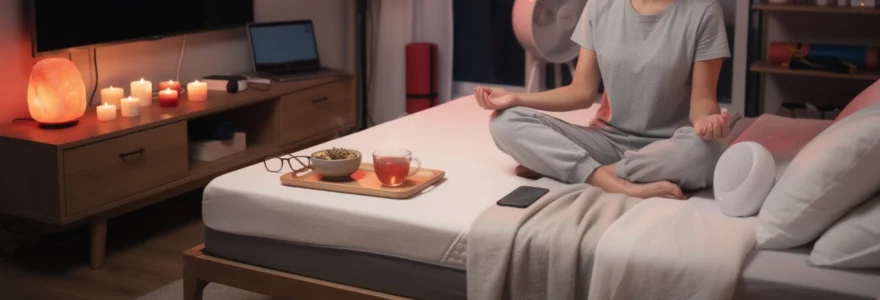
Modern life’s relentless pace often leaves us struggling to transition from the day’s demands to restorative sleep. The quality of your evening routine directly influences your body’s ability to regenerate, affecting everything from cognitive performance to immune function. A well-structured evening routine serves as a bridge between the stress of daily activities and the profound restoration that occurs during sleep.
Scientific research consistently demonstrates that individuals who follow structured evening routines experience 23% better sleep quality and report feeling more refreshed upon waking. The key lies in understanding how your body’s natural systems respond to specific environmental and behavioural cues, allowing you to optimise each element for maximum regenerative benefit.
Creating an effective evening routine requires more than simply avoiding screens before bed. It involves a comprehensive approach that addresses light exposure, nervous system regulation, environmental factors, and nutritional timing. When these elements work in harmony, they create the ideal conditions for your body’s natural recovery processes to function optimally.
Circadian rhythm optimisation through strategic light management
Your circadian rhythm operates as an internal clock that regulates sleep-wake cycles, hormone production, and cellular repair processes. Light exposure serves as the primary environmental cue that synchronises this biological timekeeper. Understanding how to manipulate light strategically throughout your evening can dramatically improve your body’s preparation for regenerative sleep phases.
The suprachiasmatic nucleus in your brain responds to light signals received through specialised retinal cells called intrinsically photosensitive retinal ganglion cells. These cells are particularly sensitive to blue light wavelengths, which can suppress melatonin production for up to two hours after exposure. Strategic light management involves gradually reducing light intensity and shifting towards warmer colour temperatures as evening progresses.
Blue light filtering protocols using Amber-Tinted glasses
Blue light filtering represents one of the most practical interventions you can implement immediately. Research conducted at the University of Toronto found that participants wearing amber-tinted glasses for three hours before bedtime experienced a 58% improvement in sleep quality compared to those using clear lenses. These specialised glasses block wavelengths between 400-490 nanometres, effectively preventing blue light from reaching your photoreceptors.
The optimal timing for blue light filtering begins approximately three hours before your intended sleep time. High-quality amber glasses should block at least 99% of blue light whilst maintaining visual clarity for evening activities. Some advanced models incorporate side panels to prevent peripheral light exposure, maximising their effectiveness.
Melanopsin response regulation via dim red light therapy
Red light therapy has emerged as a powerful tool for circadian rhythm regulation. Wavelengths between 630-700 nanometres have minimal impact on melanopsin, the photopigment responsible for circadian regulation. Installing red LED strips or using red light therapy devices during evening hours can maintain visibility whilst preserving your body’s natural melatonin production.
NASA research into astronaut sleep patterns revealed that red light exposure in the evening enhanced sleep quality by 14% and reduced sleep latency by an average of 9 minutes. You can implement this by replacing standard evening lighting with red-tinted bulbs or using dedicated red light therapy panels for 15-20 minutes during your wind-down routine.
Digital screen time cessation windows before sleep onset
The timing of your digital device cessation significantly impacts sleep architecture. Studies show that stopping screen use two hours before bed allows cortisol levels to decrease naturally whilst permitting melatonin to rise unimpeded. However, many people find this timeframe challenging to maintain consistently.
A more practical approach involves implementing graduated cessation windows. Begin by avoiding stimulating content such as social media or work emails three hours before bed, then eliminate all screen use two hours prior to sleep, and finally ensure complete digital silence one hour before sleep onset. This graduated approach makes the transition more manageable whilst still preserving circadian function.
Natural candlelight and salt lamp implementation strategies
Natural lighting sources provide the gentlest transition to darkness whilst maintaining adequate illumination for evening activities. Beeswax candles emit warm light around 2000K colour temperature, closely mimicking the
warm spectrum of firelight without the disruptive blue wavelengths common in LEDs and screens.
For safety and practicality, you can combine a few strategically placed candles with one or two Himalayan salt lamps. Salt lamps typically emit light around 2200K–2500K, which is still sufficiently warm to minimise melatonin suppression while providing stable illumination. Position them in areas where you spend most of your evening, such as the living room and bedroom, and begin using them as your primary light sources at least 60–90 minutes before bed.
If open flame is not ideal for your household, consider LED candles with a genuine warm-white spectrum (below 2400K) rather than bright, cool-toned alternatives. Think of this as recreating a pre-electricity environment: enough light to read a physical book, journal, or stretch, but not so much that your brain interprets it as daytime.
Parasympathetic nervous system activation techniques
Once light exposure is addressed, the next pillar of an effective evening routine is nervous system regulation. During the day, most of us operate predominantly in sympathetic mode—the “fight or flight” branch of the autonomic nervous system. To access deep, regenerative sleep, we need to shift deliberately towards the parasympathetic branch, often described as “rest and digest”.
Parasympathetic activation reduces heart rate, lowers blood pressure, improves digestion, and prepares the brain for slow-wave and REM sleep. The techniques below act like a manual dimmer switch for your stress response, helping you downshift from high alert to a state of calm readiness for bed.
Vagus nerve stimulation through controlled breathing patterns
The vagus nerve is the primary communication pathway of the parasympathetic nervous system. Stimulating it through specific breathing patterns is one of the fastest ways to reduce physiological arousal. Slow, diaphragmatic breathing increases vagal tone, which in turn supports lower heart rate and improved heart rate variability (HRV)—both markers of readiness for sleep and recovery.
A simple protocol involves inhaling through your nose for four seconds, allowing your abdomen to expand, then exhaling gently through pursed lips for six seconds. This extended exhale is key: it activates the vagus nerve and signals safety to your nervous system. Repeat this pattern for five to ten minutes during your evening routine, ideally while seated or lying comfortably in a low-light environment.
If you find it difficult to maintain a counting rhythm at first, you can synchronise your breath with soft background music or a metronome set to a slow tempo. Over time, your body will begin to associate this controlled breathing with winding down, making the transition from work mode to rest mode feel almost automatic.
Progressive muscle relaxation using jacobson’s method
Progressive muscle relaxation (PMR), originally developed by Dr. Edmund Jacobson in the 1920s, systematically releases muscular tension that accumulates throughout the day. Many people carry unconscious tightness in their jaw, shoulders, or lower back, which can maintain low-level sympathetic activation even when you think you are “relaxed”.
Jacobson’s method involves tensing a specific muscle group for 5–8 seconds, then releasing it for 15–20 seconds while paying close attention to the contrast between tension and relaxation. You typically move from the feet upwards: toes, calves, thighs, abdomen, hands, arms, shoulders, neck, and face. This full-body sequence can be completed in 10–15 minutes before bed.
Think of PMR as a physical version of clearing your browser cache: you are deliberately flushing residual tension from each muscle group so your nervous system can reset. Studies show that practising PMR regularly can shorten sleep onset latency and reduce nighttime awakenings, especially in individuals with high stress loads or mild anxiety.
Heart rate variability enhancement via 4-7-8 breathing protocol
The 4-7-8 breathing protocol, popularised by Dr. Andrew Weil, is a specific pattern designed to enhance HRV and induce rapid relaxation. Unlike simple slow breathing, it introduces a held breath phase that deepens the parasympathetic response and promotes a stronger sense of calm.
The sequence is straightforward: inhale quietly through your nose for a count of four, hold your breath for a count of seven, then exhale audibly through your mouth for a count of eight. Complete four cycles initially, and over time progress to eight cycles as your comfort increases. Because the exhalation is twice as long as the inhalation, this pattern powerfully reinforces the “brake” of your nervous system.
You can integrate 4-7-8 breathing as a bridge between activities in your evening routine. For example, perform four cycles after shutting down your computer, four cycles after brushing your teeth, and four cycles once you are in bed. This staggered approach creates multiple micro-signals to your brain that the day is done and regeneration is about to begin.
Mindfulness-based stress reduction (MBSR) evening applications
Mindfulness-based stress reduction (MBSR) brings awareness to present-moment experience without judgement. In the context of a relaxing evening routine, MBSR helps you disengage from rumination about the day and anticipatory anxiety about tomorrow—two of the most common barriers to falling asleep easily.
An accessible evening application is a 10–15 minute mindful check-in. Sit or lie comfortably, close your eyes, and simply observe sensations: the contact of your body with the chair or mattress, the rhythm of your breath, ambient sounds in the room. When thoughts arise—which they will—you acknowledge them (e.g. “planning”, “worrying”) and gently refocus on sensation.
Another powerful MBSR tool is mindful journaling. Rather than a long narrative, you can write three short entries: one thing you are grateful for, one thing you are letting go of from the day, and one thing you will handle tomorrow. This simple structure gives your mind psychological closure, much like shutting down open apps on your phone before charging it overnight.
Thermoregulation and sleep environment engineering
Thermoregulation—the body’s ability to maintain an optimal internal temperature—is tightly linked to sleep quality. In the hours before natural sleep onset, your core temperature begins to drop by roughly 0.5–1.0°C. Supporting this decline through intelligent environmental design can make it far easier to fall asleep and stay asleep.
Think of your bedroom as a passive thermostat for your circadian rhythm. By controlling ambient temperature, bedding materials, humidity, and soundscape, you create a customised microclimate that signals “regeneration zone” every time you enter it in the evening.
Core body temperature reduction through room climate control
Research suggests that most adults sleep best in a bedroom temperature between 16–19°C (60–67°F). Temperatures above this range can increase wakefulness and reduce deep sleep, while excessively cold environments may trigger micro-arousals as your body works to stay warm.
If you have access to a thermostat, aim to start cooling your bedroom 60–90 minutes before your target bedtime. This aligns with your natural circadian-driven temperature decline. For those without central climate control, strategies such as closing blinds before sunset to block heat gain, using a quiet fan to promote air circulation, or placing a bowl of ice in front of a fan for a DIY cooling effect can still be effective.
Counterintuitively, taking a warm bath or shower 60–90 minutes before bed can also support core temperature reduction. The warm water causes peripheral blood vessels to dilate, and as you step out, heat is released from your core through your skin—similar to opening a valve on a radiator. This post-bath cooling effect has been shown to shorten sleep onset and deepen early-night sleep stages.
Cooling mattress technologies and memory foam selection
Your mattress plays a more significant role in thermoregulation than most people realise. Traditional memory foam tends to retain heat, which can raise skin temperature and disrupt deep sleep, particularly for hot sleepers or individuals in warmer climates. Modern cooling mattress technologies aim to counteract this by improving airflow and thermal conductivity.
If you are selecting a new mattress for better regeneration, look for features such as open-cell foam structures, gel-infused layers, or phase-change materials designed to draw heat away from the body. Hybrid mattresses that combine pocketed coils with breathable foam layers often provide superior airflow compared to solid foam designs.
For those not ready to replace a mattress, a cooling topper can be an effective interim solution. Breathable natural materials like latex, wool, and cotton help wick moisture and facilitate heat dissipation. Avoid plastic-backed mattress protectors in your evening routine, as they can trap heat and counteract your other cooling efforts.
Humidity level optimisation for respiratory function
Humidity is an often overlooked component of sleep environment engineering. Air that is too dry can irritate nasal passages and throat, increasing snoring and micro-awakenings. Excessively humid air, on the other hand, can feel heavy, promote mould growth, and worsen respiratory issues.
The ideal bedroom relative humidity for most people lies between 40–60%. A simple hygrometer can help you monitor this parameter. In dry climates or during winter heating, a cool-mist humidifier set to maintain around 45–50% humidity can improve comfort and reduce overnight dehydration. Conversely, in very humid climates, a dehumidifier can keep levels from creeping above 60%, which supports easier breathing and better thermoregulation.
If you wake with a dry mouth or congested nose despite managing humidity, consider simple tweaks like nasal saline rinses as part of your evening routine, or elevating the head of your bed slightly to assist airway patency. These minor adjustments can compound over time, improving oxygenation and night-time recovery.
White noise machine frequency calibration for deep sleep
Auditory disturbances—traffic, neighbours, internal household noise—are a common cause of fragmented sleep. White noise machines work by generating a consistent soundscape that masks sudden changes in volume or frequency, preventing your brain from constantly scanning for potential threats.
Not all noise is created equal, however. White noise contains equal energy across frequencies and can sometimes sound harsh. Many people prefer pink noise (more energy in lower frequencies, similar to rainfall) or brown noise (even deeper, like distant thunder), which the brain often interprets as more soothing. Choosing the right sound profile is akin to choosing the right mattress firmness: it is highly individual but crucial for comfort.
When calibrating a white noise machine, start with a volume just high enough to mask intermittent environmental sounds but not so loud that it becomes a stimulus in its own right. Place the device several feet away from your head, ideally closer to the source of external noise (such as a window). Once you find a frequency and volume that feels neutral, keep it consistent each night; this predictability helps your brain associate that auditory backdrop with deep, uninterrupted sleep.
Nutritional chronotherapy for enhanced recovery
Nutritional chronotherapy focuses on aligning what and when you eat with your circadian biology. The goal in your evening routine is twofold: avoid digestive and metabolic disturbances that impair sleep, and strategically incorporate foods and nutrients that support melatonin production, muscle repair, and overnight regeneration.
As a general rule, aim to finish your main evening meal 3–4 hours before bedtime. Large, late meals increase core temperature and divert blood flow to the digestive tract, which can delay sleep onset and reduce slow-wave sleep. If you need a small snack closer to bed, choose easily digestible options that support, rather than compete with, your body’s recovery processes.
Beneficial evening snack options include a small bowl of tart cherries (a natural source of melatonin), a kiwi fruit, or a combination of complex carbohydrates and protein such as oatcakes with a thin layer of almond butter. These foods provide tryptophan and slow-release carbohydrates that assist the production of serotonin and melatonin without causing blood sugar spikes.
Caffeine should ideally be phased out at least 6–8 hours before your target bedtime, as its half-life can keep stimulating your nervous system well into the night. Alcohol, while initially sedating, fragments sleep architecture and suppresses REM, reducing the restorative value of your night. For truly regenerative evenings, reserve alcohol for earlier in the day or special occasions, and be mindful of how even moderate intake affects your sleep metrics.
Digital detoxification and cognitive load reduction
In addition to managing blue light exposure, it is essential to consider the cognitive impact of digital content on your evening routine. Your brain has a finite capacity for decision-making and information processing each day. Late-night exposure to emotionally charged news, work emails, or social media conflicts keeps cognitive load high and delays the mental “shutdown” necessary for quality sleep.
One effective strategy is to establish a firm digital sunset—a specific time after which you no longer engage with email, social platforms, or stimulating media. This might be 90 minutes before bed to begin with, gradually extending to two hours as your routine stabilises. During this window, replace digital inputs with analogue activities: reading a physical book, journaling, low-key conversation, or creative hobbies.
To support your digital detox, use built-in tools such as app timers, “Do Not Disturb” modes, and grayscale display settings. Think of these as scaffolding while you build new habits. You might also create a physical “charging station” outside your bedroom where all devices live overnight. This simple environmental tweak removes the temptation for one last scroll and reinforces your bedroom’s identity as a regeneration zone rather than a secondary office.
Cognitively, a powerful way to reduce mental clutter is a five-minute brain dump. Write down any tasks, ideas, or worries that might otherwise cycle in your mind once you lie down. You do not need to solve them in that moment; the act of capturing them is enough to reassure your brain that nothing important will be forgotten, freeing up bandwidth for rest.
Physical recovery protocols and muscle regeneration
Finally, a truly relaxing evening routine supports not only mental restoration but also physical recovery. Whether you engage in structured exercise or simply accumulate muscular tension from prolonged sitting, targeted protocols can enhance muscle repair, reduce soreness, and improve readiness for the next day.
Gentle mobility work is an excellent starting point. Spend 10–15 minutes performing low-intensity movements that take your joints through their full range of motion: hip circles, shoulder rolls, cat–cow stretches for the spine, and ankle rotations. This type of deliberate movement acts like lubrication for your joints and helps disperse metabolic by-products that build up during the day.
For more focused muscle regeneration, you can incorporate light myofascial release using a soft foam roller or massage ball. Emphasise major muscle groups that tend to tighten—calves, quadriceps, glutes, upper back—and apply moderate pressure for 30–60 seconds per area. The aim is comfort, not pain; you are signalling your body to release tension, not triggering a stress response.
Complement these physical techniques with a short stretching sequence, holding each stretch for 20–30 seconds without bouncing. Prioritise the hip flexors, hamstrings, chest, and neck, as these areas often become shortened by desk work. Performed in a dimly lit space, this combination of mobility, myofascial release, and stretching becomes both a physical and psychological cue that the active part of your day has concluded.
If you engage in intense training earlier in the day, consider adding a protein-rich, easily digestible snack 60–90 minutes after your workout and well before bedtime to support muscle protein synthesis. Pair this with adequate hydration earlier in the evening, then taper fluid intake in the last hour before bed to minimise night-time bathroom trips. Over time, these small, intentional actions compound, transforming your evening routine into a powerful engine for whole-body regeneration.