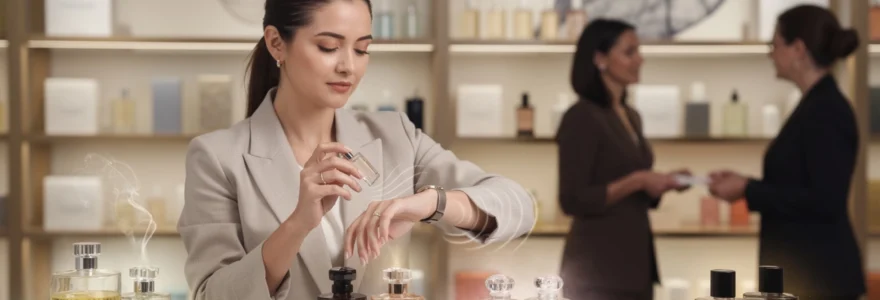
Finding the perfect signature scent is far more complex than simply choosing something that smells pleasant. Your fragrance becomes an invisible extension of your personality, creating lasting impressions and triggering emotional responses in both yourself and others. The right perfume can boost confidence, evoke cherished memories, and communicate aspects of your character before you even speak a word.
The modern fragrance industry offers thousands of options, from mainstream commercial releases to artisanal niche creations. This overwhelming choice can make selecting a personal scent feel daunting. However, understanding the science behind fragrance composition, your unique skin chemistry, and psychological preferences can transform this challenge into an exciting journey of self-discovery.
Professional perfumers and fragrance consultants emphasise that authentic scent selection requires patience, experimentation, and honest self-reflection. Your signature fragrance should feel as natural and comfortable as your favourite piece of clothing, seamlessly integrating with your lifestyle whilst enhancing your individual presence.
Understanding fragrance families and olfactory classifications
The fragrance wheel serves as the fundamental framework for categorising scents, dividing perfumes into distinct families based on their dominant characteristics and olfactory profiles. Mastering these classifications enables you to identify patterns in your preferences and navigate the vast perfume landscape with greater confidence and precision.
Fresh citrus notes: bergamot, lemon, and grapefruit profiles
Citrus fragrances typically feature in the top notes of compositions, providing immediate impact and brightness. Bergamot offers a sophisticated Earl Grey tea-like quality with subtle floral undertones, making it particularly appealing to individuals who appreciate refined complexity. This Mediterranean citrus creates an impression of elegance and approachability.
Lemon notes provide crisp, clean energy that appeals to organised, detail-oriented personalities. The sharp, zesty character of lemon can enhance feelings of alertness and optimism, making it ideal for those who lead active, structured lifestyles. Grapefruit brings a slightly bitter, energising quality that suggests confidence and boldness.
Woody base notes: sandalwood, cedar, and vetiver characteristics
Woody notes form the foundation of many sophisticated fragrances, providing stability and depth to compositions. Sandalwood offers creamy, warm comfort that appeals to individuals seeking tranquillity and balance. This precious ingredient creates a meditative quality that resonates with thoughtful, introspective personalities.
Cedar provides structural strength with its pencil shavings-like character, suggesting reliability and traditional values. Vetiver contributes an earthy, slightly smoky quality that appeals to those who appreciate authenticity and natural simplicity. These woody elements create lasting impressions that develop beautifully on warm skin.
Floral heart notes: rose, jasmine, and peony compositions
Floral notes dominate the heart of many classic perfumes, expressing femininity, romance, and emotional depth. Rose varieties range from fresh garden roses to deep, velvety Turkish roses, each appealing to different aspects of romantic personalities. Bulgarian rose offers honeyed sweetness, whilst Damascus rose provides spicy complexity.
Jasmine creates intoxicating, sensual impressions that attract confident, expressive individuals. Its heady, narcotic quality suggests passion and creativity. Peony brings soft, dewy freshness that appeals to gentle, nurturing personalities who prefer subtlety over boldness in their fragrance expression.
Oriental spice accords: vanilla, amber, and patchouli blends
Oriental fragrances combine sweet, spicy, and resinous elements to create exotic, mysterious impressions. Vanilla provides gourmand comfort that appeals to individuals who appreciate warmth and indulgence. High-quality vanilla beans offer complex facets ranging from creamy sweetness to smoky, leathery undertones.
Amber creates golden, honeyed warmth that suggests luxury and sophistication. This fossilised resin accord appeals to individuals who appreciate tradition and timeless elegance. Patchouli
Patchouli introduces an earthy, slightly camphorous depth that grounds sweeter notes and adds intrigue. It often appeals to wearers with a bohemian streak or those who enjoy challenging, unconventional compositions. When vanilla, amber, and patchouli are blended thoughtfully, the result is a sensual, enveloping trail that suits bold, charismatic personalities who want their signature scent to leave a memorable, almost tactile presence in the air.
Skin chemistry analysis and ph compatibility testing
Even the most beautifully crafted perfume will smell different from person to person, and this is largely due to skin chemistry. Factors such as your skin’s natural oil production, pH level, and body temperature influence how fragrance molecules evaporate and evolve. Understanding this interaction is essential if you want a signature scent that consistently smells “right” on you rather than only in the bottle or on a blotter card.
Professional perfumers often recommend treating fragrance selection as a small experiment in pH compatibility testing. By wearing a potential signature perfume over several hours and in different conditions, you can observe whether it becomes too sharp, too sweet, or disappears quickly. Paying attention to these nuances allows you to rule out scents that fight your skin and focus on those that harmonise with your natural chemistry.
Sebaceous gland activity impact on fragrance longevity
Sebaceous glands produce sebum, the natural oil that coats your skin, and this oil is a key factor in fragrance longevity. On oilier skin, perfume molecules have more substance to cling to, often resulting in enhanced projection and longer wear. Dry skin, by contrast, can cause fragrances to evaporate more quickly, leading to a scent that seems to “fade” within hours.
If you notice that most perfumes disappear rapidly on your skin, you may have lower sebaceous activity or naturally dry skin. In this case, you can improve fragrance performance by moisturising with an unscented or matching-scent lotion before applying your perfume. You might also gravitate towards richer concentrations such as eau de parfum or extrait, which contain a higher percentage of aromatic oils and therefore last longer, particularly when anchored on well-hydrated skin.
Body temperature variations and scent projection dynamics
Your body temperature acts like a built-in diffuser, warming the fragrance and helping volatile molecules lift off the skin. People who naturally run warm – or who live in hot climates – often experience stronger scent projection and faster development of top and heart notes. Cooler body temperatures, on the other hand, can slow the evaporation curve, keeping a fragrance closer to the skin and drawing out its development over time.
To manage scent projection dynamics, you can adjust where and how much you apply. If you are concerned about your perfume filling a room, focus on lower pulse points such as the inner elbows or the back of the knees, where the temperature is slightly lower. Conversely, if you want more presence, apply to warmer areas like the neck and wrists, or lightly mist your clothing, which tends to hold onto perfume molecules and release them more gradually throughout the day.
Hormonal fluctuations affecting perfume performance
Hormonal changes – whether due to menstrual cycles, pregnancy, stress, or age-related shifts – can subtly alter your skin chemistry and perception of scent. Many people report that a fragrance they loved one month feels cloying or flat the next, only to become appealing again later. This is not your imagination; hormones can influence both sebum composition and the way your brain interprets olfactory information.
When choosing a signature scent that truly reflects your personality, it is wise to test it across several weeks if possible. Notice whether you still enjoy the fragrance during different phases of your cycle or in periods of high stress. If a perfume remains consistently comforting and flattering despite these hormonal shifts, it is more likely to be a reliable long-term match rather than a short-lived crush.
Seasonal skin changes and fragrance adaptation requirements
Seasonal changes affect not only the air temperature and humidity but also your skin’s condition. In winter, central heating and cold winds can dehydrate the skin, reducing sebum levels and making fragrances evaporate faster or smell sharper. In summer, increased perspiration and oil production can amplify certain notes, sometimes pushing a delicate scent into overpowering territory.
This is why many fragrance enthusiasts build a small seasonal wardrobe rather than relying on a single bottle all year round. You might find that your signature scent has “siblings” – a more translucent, citrus-forward variation for hot weather and a richer, amber-based interpretation for colder months. By paying attention to how your skin behaves in different seasons, you can adapt your perfume usage without losing the core olfactory identity that feels authentically you.
Personality-based scent profiling through Myers-Briggs assessment
Beyond chemistry, your psychological profile plays a crucial role in defining which fragrances feel like a natural extension of your identity. Personality frameworks such as the Myers-Briggs Type Indicator (MBTI) can provide a useful lens for understanding your preferences. While not a rigid rulebook, MBTI-inspired profiling can help you narrow down scent styles that resonate with how you process the world and interact with others.
Using personality-based scent profiling, you can move beyond generic labels like “feminine” or “masculine” and instead ask: does this fragrance align with my energy, my decision-making style, and the way I like to be perceived? For instance, an analytical Introvert may feel overwhelmed by a loud, diffusive perfume, whereas an expressive Extrovert might feel underwhelmed by a whisper-soft skin scent. Mapping your type to olfactory preferences makes the search for a signature scent more targeted and meaningful.
Extroverted personalities and bold sillage preferences
Extroverted types (E in MBTI terminology) often draw energy from social interaction and are comfortable occupying space, both physically and energetically. It is therefore unsurprising that many extroverts gravitate towards fragrances with strong sillage – the scent trail left behind as you move. Bold orientals, smoky woods, and statement-making florals often appeal to ENFJ, ENFP, or ESFP personalities who love to make an impression.
If you identify as extroverted, you may enjoy perfumes with pronounced projection and a distinctive signature, such as spicy amber blends, fruity chypres, or rich white florals like tuberose and jasmine. These compositions act like an olfactory spotlight, announcing your presence in a room. The key is to balance drama with refinement: a well-structured, high-quality fragrance will command attention without overwhelming the people around you.
Introverted types gravitating towards intimate skin scents
Introverted personalities (I in MBTI) typically prefer deeper, more focused interactions and may be sensitive to sensory overload. When it comes to fragrance, many introverts favour close-to-the-skin compositions that reveal themselves only within a small personal radius. Soft musks, sheer woods, and subtle tea or linen accords often resonate with INFJ, INFP, or ISTJ types who treat perfume as a private pleasure rather than a public statement.
If you see yourself in this description, you might lean towards “second skin” fragrances – scents that feel like a natural aura rather than a separate layer. These intimate perfumes are ideal for environments where you want to feel composed and comforted without broadcasting your presence. Think of gentle iris, airy musk, or minimalist citrus-wood blends that support your inner world instead of competing with it.
Sensing individuals preferring linear fragrance compositions
Sensing types (S in MBTI) tend to focus on concrete details and present reality, often appreciating clarity, simplicity, and reliability. In fragrance terms, this can translate into a preference for more linear compositions – scents that smell relatively consistent from top to drydown rather than shifting dramatically over time. Clean colognes, straightforward florals, and crisp citrus-woody blends often appeal to ISTJ, ISFJ, or ESTJ individuals.
Linear fragrances can be especially satisfying if you dislike surprises and want your perfume to smell the same in the evening as it did in the morning. When testing potential signature scents, pay attention to how much the perfume transforms. If you appreciate predictability, you may prefer structures where the main theme remains stable, with only subtle nuances evolving on your skin.
Intuitive personalities drawn to complex multi-layered accords
Intuitive types (N in MBTI) often enjoy abstraction, symbolism, and hidden layers of meaning. This orientation naturally inclines many of them towards complex, multi-layered fragrances that unfold like a story. ENFP, ENTP, INFJ, and INTJ personalities, for example, may be captivated by niche perfumes with unexpected note combinations, evolving accords, and a pronounced sense of narrative.
If you recognise yourself as an Intuitive, you might be drawn to scents that surprise you throughout the day – compositions where sparkling top notes give way to a mysterious heart and a deep, nuanced base. Think smoky incense with bright citrus accents, or floral bouquets wrapped in leather and resin. These fragrances reward close attention, offering new facets each time you wear them and aligning beautifully with a personality that thrives on discovery and depth.
Professional fragrance testing methodologies at boutiques
Visiting a specialised perfume boutique is one of the most effective ways to refine your search for a signature scent that reflects your personality. Unlike crowded department stores, dedicated fragrance spaces are designed to minimise olfactory noise and provide structured testing experiences. Trained consultants can guide you through methodical evaluations, helping you distinguish between initial attraction and long-term compatibility.
Professional testing typically begins with blotter strips to narrow down a broad selection without overwhelming your nose. Once a few promising candidates emerge, you transfer the experiment to the skin, applying different scents to separate pulse points. You are then encouraged to leave the boutique, live with the perfumes for several hours, and observe how they interact with your skin chemistry and daily activities. This process transforms fragrance shopping from an impulsive purchase into a considered, evidence-based decision.
Fragrance experts often suggest limiting yourself to testing no more than three perfumes on skin at once to avoid olfactory fatigue and muddled impressions.
During these sessions, do not hesitate to describe how you want your signature scent to make you feel – confident, grounded, playful, mysterious. Consultants can translate these emotional cues into specific note families and concentrations. Many boutiques also offer discovery sets or sample kits, allowing you to continue your evaluation at home under different conditions. Over time, this structured approach helps you build a clear picture of the olfactory profile that truly aligns with who you are.
Niche perfumer recommendations: le labo, diptyque, and byredo collections
Once you understand your fragrance preferences and personality profile, exploring niche houses can be an excellent way to find a distinctive signature scent. Brands such as Le Labo, Diptyque, and Byredo specialise in characterful compositions that often feel more personal and less ubiquitous than mainstream releases. Their perfumes tend to emphasise storytelling, high-quality ingredients, and unconventional pairings, making them ideal for wearers seeking an olfactory identity rather than a trend-driven accessory.
Le Labo is renowned for its minimalist aesthetic and focus on single-note concepts interpreted in complex ways. If you enjoy woody, musky, or smoky profiles, you may be drawn to creations that feature sandalwood, vetiver, or labdanum as the star. These fragrances often suit introspective, design-conscious personalities who appreciate subtle luxury and artisanal craftsmanship. Because Le Labo offers in-store compounding and custom labelling, the experience of purchasing your perfume can feel almost ritualistic – an appealing detail for those who see their signature scent as part of a personal narrative.
Diptyque, with its roots in Parisian artistry, offers a wide palette ranging from sparkling citrus to opulent florals and resinous woods. If your personality blends sophistication with creativity, you might resonate with their scents inspired by travel, literature, and nostalgic landscapes. Many Diptyque perfumes have an airy, poetic quality that makes them versatile for daily wear whilst still feeling special. Their compositions are particularly suitable if you want a signature scent that is refined yet approachable, capable of moving seamlessly from office to evening.
Byredo has built a strong reputation for modern, conceptual fragrances that often blur gender boundaries and olfactory expectations. If you are drawn to complex, multi-layered accords and enjoy perfumes that spark conversation, Byredo’s offerings can be an excellent fit. Their blends of smoky, fruity, and woody elements often appeal to intuitive, avant-garde personalities who use scent as a form of self-expression. When sampling from these niche houses, take your time; treat each perfume as a story and ask yourself whether that story feels aligned with your own.
Seasonal fragrance wardrobe curation and storage techniques
Even if you ultimately gravitate towards one core signature scent, curating a small seasonal wardrobe allows you to adapt to climate, mood, and occasion without betraying your olfactory identity. Think of this as building a capsule fragrance collection: a few carefully chosen perfumes that cover different temperature ranges and social contexts while still reflecting your personality. For example, you might keep a fresh citrus-woody blend for summer, a cosy amber-vanilla for winter, and a versatile floral-musk for transitional seasons.
When selecting seasonal variations, look for shared DNA – recurring notes or accords that tie the wardrobe together. This way, people still recognise “you” even when the exact perfume changes. Perhaps bergamot and vetiver appear across all your choices, or a soft musk base underpins both your daytime and evening scents. By consciously curating this continuity, you ensure that your fragrance wardrobe behaves like different outfits built around the same personal style rather than a random assortment of bottles.
Proper storage is critical if you want your perfumes to remain true to their original character over time. Fragrance molecules are sensitive to light, heat, and oxygen; prolonged exposure can lead to oxidation, colour changes, and altered smell. To preserve your signature scent, keep bottles in a cool, dark place away from direct sunlight and fluctuating temperatures. A closed cupboard or drawer is ideal, and if you own particularly precious niche perfumes, you may even store them in their original boxes for extra protection.
Avoid keeping perfumes in the bathroom, where humidity and heat from showers can accelerate degradation. Ensure caps are tightly closed after each use to minimise air exposure, and resist the temptation to shake bottles, which introduces bubbles and oxygen into the liquid. When treated with care, most well-formulated fragrances can maintain their integrity for several years, allowing your chosen signature scent – and its seasonal companions – to accompany you faithfully through different chapters of your life.