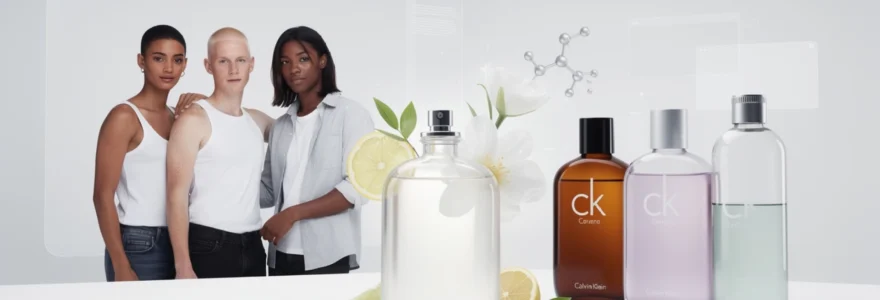
Calvin Klein’s revolutionary approach to fragrance has fundamentally transformed how we perceive and experience minimalist perfumery. Since the brand’s first foray into the olfactory realm in the early 1980s, Calvin Klein has consistently challenged conventional fragrance paradigms, replacing ornate complexity with crystalline simplicity. This transformation represents more than mere aesthetic preference; it embodies a philosophical shift towards transparency, inclusivity, and authentic self-expression through scent. The brand’s minimalist fragrance philosophy has not only redefined luxury perfumery but has also democratised sophisticated scent experiences, making them accessible to a broader demographic while maintaining unwavering quality standards.
Calvin klein’s olfactory DNA: deconstructing the brand’s minimalist fragrance philosophy
The foundation of Calvin Klein’s fragrance philosophy rests upon the principle of reductive luxury—the belief that true sophistication emerges from subtraction rather than addition. This approach mirrors the brand’s fashion heritage, where clean lines and architectural silhouettes have consistently defined American minimalism. Calvin Klein fragrances embody this ethos through carefully curated compositions that eliminate superfluous elements, focusing instead on the essential oils and accords that create maximum impact with minimal complexity. The brand’s olfactory DNA is characterised by transparency, modernity, and an almost mathematical precision in balancing simplicity with sophistication.
This minimalist approach extends beyond mere scent composition to encompass every aspect of the fragrance experience. From the initial conceptualisation through to the final consumer interaction, Calvin Klein maintains a consistent philosophy of purposeful restraint. The brand’s perfumers are tasked with creating fragrances that feel effortless yet intentional, familiar yet innovative. This balance requires exceptional technical skill and a deep understanding of how contemporary consumers engage with fragrance in their daily lives.
Clean architecture theory in CK one’s revolutionary unisex formulation
The introduction of CK One in 1994 marked a pivotal moment in fragrance history, establishing what industry experts now term “clean architecture theory” in perfume composition. This groundbreaking unisex fragrance dismantled traditional gender boundaries through its crystalline citrus-musk structure, creating a template that countless brands have since attempted to replicate. The clean architecture approach prioritises molecular transparency, allowing each ingredient to occupy its designated space without overwhelming the overall composition. CK One’s success demonstrated that consumers were ready for fragrances that reflected their increasingly fluid lifestyle choices.
Transparent glass bottle design language across calvin klein’s fragrance portfolio
Calvin Klein’s commitment to minimalism extends to the visual presentation of its fragrances through consistent use of transparent glass bottle design language. This aesthetic choice reinforces the brand’s philosophy of honesty and clarity, literally allowing consumers to see through to the fragrance within. The geometric simplicity of Calvin Klein bottles eliminates decorative distractions, focusing attention on the quality and colour of the liquid contents. This design approach has become so synonymous with the brand that the bottle silhouette alone is instantly recognisable across global markets.
Reductive scent compositions: from obsession to euphoria’s molecular simplicity
The evolution from Obsession’s complex oriental structure to Euphoria’s molecular simplicity illustrates Calvin Klein’s mastery of reductive composition techniques. While Obsession employed traditional perfumery methods with multiple aromatic layers, Euphoria demonstrated how modern fragrance technology could achieve greater impact through fewer, more precisely selected ingredients. This progression reflects broader industry trends towards molecular perfumery, where synthetic ingredients are chosen not to mimic natural materials but to create entirely new olfactory experiences that feel both familiar and futuristic.
White space marketing strategy in calvin klein fragrance campaign aesthetics
Calvin Klein’s fragrance marketing campaigns consistently employ white space as a strategic element, creating visual breathing room that mirrors the brand’s olfactory philosophy. This negative space utilisation allows key visual elements to achieve maximum impact without competing for attention. The brand’s iconic black-and-white photography, often featuring stark backgrounds and minimal styling, creates an immediate association between visual and olfactory minimalism. This
carefully engineered restraint ensures that every campaign feels timeless rather than trend-driven, amplifying the sense of modern minimalism that defines Calvin Klein perfume. By stripping away clutter—both visual and conceptual—the brand invites consumers to project their own identity onto the imagery, much like a translucent fragrance adapts to the warmth of individual skin chemistry. This white space strategy also enhances brand recall: a few key elements, such as a bare backdrop, a simple logo, and an intimate portrait, are enough for the viewer to immediately recognise a Calvin Klein fragrance narrative.
Pioneering gender-neutral fragrance territories: CK one’s market disruption analysis
When CK One arrived on the market, it did more than introduce a new scent; it rewrote the rules of how perfume could be categorised, marketed, and worn. In a landscape dominated by rigidly gendered launches, Calvin Klein offered a fragrance that spoke to shared experiences rather than binary identities. The brand leveraged its minimalist DNA to position CK One as a universal, everyday “second skin” rather than a hyper-feminine or hyper-masculine statement. This move aligned perfectly with the rise of casual dressing, streetwear, and a growing aversion to prescriptive style codes in the 1990s.
From a market perspective, CK One functioned as a case study in disruptive innovation. Instead of segmenting the audience, Calvin Klein expanded the potential consumer base by designing a fragrance that could live in the middle of a shared bathroom shelf. The bottle, the campaign, and the scent itself all reinforced this inclusive positioning. As a result, CK One not only generated extraordinary sales in its launch years but also established new expectations for what a modern, minimalist fragrance could represent in terms of identity, community, and self-expression.
Alberto morillas’ masterstroke: deconstructing CK one’s hedione-heavy composition
At the heart of CK One’s success lies Alberto Morillas’ masterful use of hedione, a jasmine-derived molecule famed for its airy, radiant qualities. Rather than building a dense floral heart, Morillas used hedione as a structural pillar, creating a luminous space within the composition that felt both clean and alive. This hedione-heavy architecture allowed CK One to project subtly yet persistently, giving the impression of freshly washed skin and sunlit fabric rather than a traditional “perfume cloud.” In technical terms, this was minimalism as engineering: fewer dominant notes, more attention to diffusion and texture.
The rest of the formula supports this central radiance with surgical precision. Bright bergamot, lemon, and mandarin provide a sparkling, almost photorealistic citrus opening, while a green tea accord introduces calm, almost meditative clarity. A soft musk and light woody base ensure versatility, making the scent equally comfortable in an office, at a club, or on a beach. For many wearers, CK One became their first encounter with what we might call everyday luxury—a scent simple enough for daily use yet sophisticated enough to feel considered. This balance of ease and refinement remains a benchmark for minimalist unisex fragrances today.
Unisex fragrance category creation and consumer behaviour transformation
Before CK One, unisex fragrances largely occupied a niche, often conceptual space. Calvin Klein took that concept and translated it into a mass-market phenomenon, normalising the idea that a bottle of perfume does not need a gender label to be desirable. Retail environments began to adapt: placement shifted from strictly “for him” and “for her” counters to more fluid merchandising, and consumers grew more comfortable sampling scents outside their traditional aisles. The psychological barrier around gender in fragrance, while not completely dismantled, was significantly lowered.
This transformation in consumer behaviour had long-term consequences. Younger shoppers, especially, began to see fragrance as another tool for personal expression rather than as a prescribed accessory. You could borrow a partner’s perfume, share a bottle with a sibling, or buy a scent simply because it smelled good on you, not because it matched your gender identity. Over time, this shift paved the way for today’s explosion of gender-neutral and gender-fluid perfumes across both designer and niche categories, many of which still owe a conceptual debt to CK One’s minimalist, inclusive blueprint.
Citrus-musk accord innovation in 1990s fragrance landscape
In the early 1990s, the dominant olfactory codes were still rooted in powerhouse orientals, opulent florals, and assertive fougères. Against this backdrop, CK One’s citrus-musk accord felt almost shockingly modern. Think of it as the olfactory equivalent of a white T-shirt and jeans in a room full of sequined gowns: understated yet immediately captivating. The crisp top notes of citrus and green elements created an almost tonic freshness, while a finely tuned blend of soft musks in the base gave the fragrance its signature “skin-close” intimacy.
This accord did more than just smell clean; it introduced a new way of conceptualising cleanliness itself. Rather than soapy or aldehydic, CK One’s cleanliness was transparent and barely-there, suggesting air, light, and skin rather than detergent or powder. Competitors soon followed, and the citrus-musk axis became a defining feature of late-90s and early-2000s perfumery. Yet CK One retained an iconic status because of how it integrated this accord with coherent visual branding and cultural messaging around freedom, minimalism, and youth culture.
Generation X cultural positioning through olfactory minimalism
CK One’s rise coincided with the coming-of-age of Generation X, a cohort often characterised by scepticism towards authority, brand hype, and overt luxury. Calvin Klein understood this mood and crafted a fragrance that felt like an antidote to the excess of the 1980s. The scent’s minimalism mirrored the stripped-back aesthetics of 90s fashion, music videos, and editorial photography. It was casual but curated, effortless yet intentional—qualities that resonated deeply with a generation exploring identity outside established norms.
The multicultural, androgynous cast featured in CK One campaigns further cemented this cultural positioning. These were not unattainable couture fantasies; they were believable peers, captured in candid-like black-and-white imagery, sharing headphones, lounging on rooftops, or moving through urban spaces. You did not simply buy a perfume; you aligned yourself with a community that valued authenticity and quiet rebellion. In this sense, Calvin Klein redefined modern minimalism not only as an aesthetic choice but as a cultural stance, with fragrance acting as a discreet yet powerful symbol of belonging.
Technical composition strategies in calvin klein’s signature scent architecture
Behind the apparent simplicity of Calvin Klein perfumes lies a sophisticated set of technical strategies designed to maximise impact while minimising clutter. One recurring approach is the use of short, focused note pyramids built around a few high-impact molecules, rather than dense lists of ingredients. This allows perfumers to control diffusion and longevity with greater precision, ensuring that the scent feels seamless rather than segmented into obvious top, heart, and base transitions. To the wearer, this reads as effortlessness; to the perfumer, it is the result of complex, data-informed formulation work.
Another key technique is the calibration of musks, ambers, and abstract woods to create “smooth edges” in the composition. Instead of sharp contrasts between sweet and dry, or floral and resinous, Calvin Klein perfumes often employ soft gradients, like a carefully blended gradient in graphic design. This is especially evident in fragrances such as Eternity or Euphoria, where clean musks and modern woody-amber molecules create a polished, almost satin-like texture on skin. For consumers, the result is a stable, versatile signature scent that transitions easily from day to night without feeling overpowering or dated.
Calvin Klein also leverages modularity in scent architecture. Many of its compositions are built so they can be layered intuitively with other fragrances, body products, or even laundry detergents without clashing. This aligns with minimalist lifestyle ideals: instead of owning a vast wardrobe of perfumes, you can curate a small, coherent “fragrance capsule” that works across contexts. For brands looking to navigate the minimalist fragrance space, studying Calvin Klein’s technical strategies is akin to dissecting a refined architectural blueprint—every line, angle, and material has a clear purpose.
Monochromatic visual identity integration with olfactory branding elements
Calvin Klein’s visual identity—dominated by monochrome palettes, sans-serif typography, and clean layouts—acts as an extension of its olfactory minimalism. The stark black-and-white imagery, often punctuated only by the subtle tint of the perfume juice, mirrors the stripped-down compositions of the scents themselves. This synergy is not accidental; it is a deliberate form of multisensory branding, where sight and smell deliver a unified message of clarity, purity, and restraint. When you hold a Calvin Klein bottle, the tactile experience of cool glass and minimal labelling reinforces the idea that nothing unnecessary has been added.
This monochromatic approach also serves a practical strategic function in a crowded retail environment. On shelves saturated with ornate bottles and colourful boxes, Calvin Klein’s understated packaging acts almost like a pause in the visual noise—a moment of white noise where the consumer can reset their senses. The consistent use of grayscale photography and simple, lowercase logotypes contributes to powerful brand recognition. Even before a consumer reads the name, the combination of visual cues hints at what they can expect olfactorily: a modern, clean, and wearable fragrance experience.
Contemporary fragrance innovations: CK everyone and post-modern minimalism
As consumer values shifted towards sustainability, wellness, and ethical transparency, Calvin Klein extended its minimalist legacy into a new era with CK Everyone. This fragrance can be viewed as the brand’s answer to a crucial question: how does modern minimalism evolve in a world increasingly defined by environmental awareness and digital connectivity? Rather than relying solely on the established CK One template, CK Everyone integrates clean formulas, eco-conscious materials, and updated communication strategies to speak to a new generation of fragrance wearers. In doing so, it reframes minimalism not just as an aesthetic, but as a responsible, future-facing ethos.
Post-modern minimalism in this context means preserving the core principles of clarity, inclusivity, and “second skin” wearability while layering on new dimensions: ingredient transparency, reduced environmental impact, and honest storytelling. CK Everyone remains light, fresh, and genderless, but its narrative now includes recycled materials, vegan certification, and digitally-native campaigns. For consumers who care about both style and substance, this evolution demonstrates how a heritage brand can stay relevant without abandoning its fundamental identity.
Harry fremont’s contemporary approach to sustainable fragrance formulation
Perfumer Harry Fremont approached CK Everyone with a clear brief: create a fragrance that feels recognisably “CK” while aligning with contemporary expectations around sustainability and safety. This required a meticulous review of raw materials, sourcing practices, and regulatory frameworks. Fremont blended naturally derived ingredients—such as organic orange essential oil—with modern synthetic molecules chosen for their stability, lower allergenic potential, and reduced environmental footprint. The result is a composition that smells airy and optimistic, yet has been engineered to meet stricter internal and external standards.
From a technical standpoint, this sustainable formulation strategy is akin to redesigning a classic building with energy-efficient systems while preserving its original lines. CK Everyone’s structure remains straightforward and minimalist, but the “plumbing and wiring” behind the scenes have been significantly upgraded. For consumers, the benefit is twofold: they enjoy a clean, versatile scent and gain the reassurance that it has been created with greater attention to sustainability and responsible ingredient selection. This approach reflects a broader industry trend in which modern minimalism now encompasses both sensory restraint and ethical refinement.
Vegan certification standards in modern calvin klein fragrance development
Vegan certification in perfumery goes beyond simply excluding obvious animal-derived ingredients like musk, ambergris, or civet. It requires a comprehensive audit of the entire supply chain, from solvents and fixatives to ancillary materials used in production. With CK Everyone, Calvin Klein committed to meeting globally recognised vegan and cruelty-free standards, signalling a shift in how mainstream designer brands define luxury. In this new paradigm, a “minimalist perfume” is not only streamlined in scent profile but also in ethical footprint.
For consumers, particularly younger demographics, vegan certification acts as a trust signal in an otherwise opaque category. You may not know every molecule listed on an ingredient label, but clear third-party verification offers reassurance that the fragrance aligns with your values. This transparency dovetails with Calvin Klein’s longstanding emphasis on honesty and clarity in design. By integrating vegan standards into its perfume development process, the brand extends its minimalist philosophy from the bottle and the scent into the invisible systems that bring the fragrance to market.
Digital-first marketing integration with minimalist fragrance positioning
In an era dominated by social media, streaming content, and e-commerce, Calvin Klein has adapted its minimalist fragrance storytelling to digital-first environments. The brand’s campaigns for scents like CK Everyone are often designed with mobile screens in mind: vertical video formats, tight crops, and succinct copy that mirror the concise nature of the fragrances themselves. Instead of elaborate, cinematic narratives, we often see short, looping visuals that highlight body movement, skin contact, and small, intimate gestures. This restraint allows users to project their own stories into the content, echoing the “your skin but better” philosophy that underpins many Calvin Klein perfumes.
At the same time, data-driven personalisation tools—such as AI-powered recommendation engines and curated online journeys—enable Calvin Klein to maintain a sense of curated minimalism even in complex digital ecosystems. Rather than overwhelming shoppers with endless product grids, the brand can surface a small, relevant selection of fragrances that fit their preferences and lifestyles. For you as a consumer, this creates a browsing experience that feels as streamlined as the brand’s visual identity: fewer distractions, more clarity, and a clearer path to finding a modern, minimalist scent that resonates.
Recyclable packaging solutions in CK everyone’s environmental strategy
Packaging is one of the most tangible arenas where minimalist design and sustainability intersect. With CK Everyone, Calvin Klein implemented recyclable glass, reduced-plastic components, and simpler outer cartons to minimise waste. The bottle’s clean silhouette and lightly tinted juice remain consistent with the brand’s aesthetic language, but details such as a reusable elastic logo band and clear recyclability cues on the box speak to changing consumer expectations. This is minimalism not just in form, but in material use: fewer components, less excess, more circularity.
From a strategic standpoint, these recyclable solutions help the brand stay ahead of tightening regulations and increasing scrutiny over single-use materials. They also align with a broader cultural shift where luxury is no longer synonymous with heavy caps, multiple layers of packaging, or ornate embellishments. Instead, many consumers now equate sophistication with intelligent, responsible design. By integrating environmental considerations into every stage of product development—without sacrificing its signature visual and olfactory codes—Calvin Klein demonstrates how modern minimalism can evolve into a holistic sustainability framework.
Market impact assessment: calvin klein’s influence on global minimalist fragrance trends
Evaluating Calvin Klein’s long-term impact on the fragrance market reveals a consistent pattern: concepts first tested under the CK banner often become mainstream norms within a decade. The success of CK One accelerated the rise of unisex and gender-neutral fragrances; the clean architecture of scents like Eternity and Euphoria advanced consumer appetite for transparent compositions over heavy, baroque blends. Today, many leading designer and niche houses champion “skin scents,” “clean musk” accords, and stripped-back bottle designs—territories Calvin Klein has been exploring since the 1980s and 1990s.
From a commercial viewpoint, Calvin Klein has also demonstrated that minimalist perfumes can deliver both artistic integrity and robust financial performance. Timeless, seasonless compositions tend to enjoy longer shelf lives and stronger brand equity than aggressively trend-driven launches. For retailers and distributors, Calvin Klein fragrances provide reliable anchor SKUs in the “modern clean” category, against which other brands are often compared. For consumers, they offer an accessible entry point into well-crafted perfumery—proof that you do not need an overflowing fragrance wardrobe to express nuanced, contemporary style.
Perhaps the most significant legacy, however, is attitudinal. Calvin Klein helped reframe perfume from a rarefied, occasional luxury into an everyday extension of personal identity—much like a perfectly cut white shirt or a pair of well-loved jeans. In doing so, the brand redefined modern minimalism in perfumery as a living, evolving language: one that values clarity over clutter, authenticity over spectacle, and the quiet power of a scent that enhances who you are, rather than masking it.