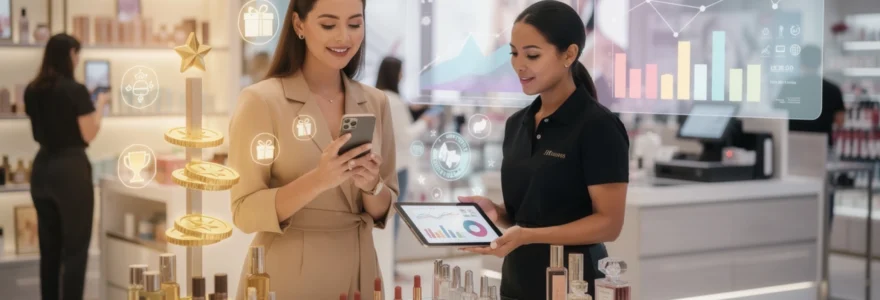
The beauty industry has transformed loyalty programmes into sophisticated ecosystems that drive customer retention and increase spending through carefully engineered bonus structures. These programmes have evolved far beyond simple point accumulation, incorporating advanced gamification mechanics, data-driven personalisation, and multi-tiered reward systems that can increase customer lifetime value by up to 67%. Modern beauty loyalty schemes utilise complex algorithms to trigger bonuses at optimal moments, creating emotional connections that convert casual shoppers into brand advocates.
Understanding how these bonus mechanisms function requires examining the intricate balance between psychology and technology. Beauty retailers leverage purchase behaviour patterns, seasonal trends, and individual customer preferences to deliver targeted incentives that feel both personalised and valuable. The most successful programmes generate over 80% of their revenue from loyalty members, demonstrating the profound impact of well-designed bonus structures on business performance.
Point-based reward systems and tier structures in beauty retail
Point-based loyalty systems form the backbone of beauty industry bonus programmes, utilising sophisticated mathematical frameworks to encourage repeat purchases and higher spending. These systems typically operate on conversion rates ranging from 1:1 to 10:1 points per pound spent, with premium beauty retailers often offering enhanced earning rates for specific product categories. The psychological appeal of accumulating points creates a gamified shopping experience that transforms routine purchases into rewarding achievements.
Tier structures amplify the effectiveness of point-based systems by creating aspirational goals and exclusive benefits. Most beauty loyalty programmes feature three to five tiers, each offering progressively valuable bonuses and privileges. Research indicates that customers in higher tiers spend 23% more annually compared to base-level members, primarily driven by exclusive access to limited-edition products and enhanced point multipliers during promotional periods.
Sephora beauty insider programme point accumulation mechanics
Sephora’s Beauty Insider programme exemplifies sophisticated point accumulation through its three-tier structure: Insider, VIB, and Rouge. Members earn one point per pound spent at the base level, with higher tiers receiving bonus point multipliers during specific promotional windows. The programme generates excitement through flash bonus events where members can earn double or triple points, creating urgency and driving immediate purchase decisions.
The beauty retailer employs dynamic bonus triggers based on individual spending patterns and product preferences. Members approaching tier thresholds receive targeted bonus point offers designed to encourage the additional spending required for advancement. This personalised approach to bonus distribution has resulted in a 40% increase in cross-category purchases among programme participants.
Ulta beauty ultamate rewards tier progression framework
Ulta Beauty’s Ultamate Rewards programme operates on a calendar-year spending model with clear tier thresholds: Platinum status at £350 and Diamond at £875 annually. The programme offers compelling bonus structures including points that never expire for Platinum members and enhanced earning rates for Diamond tier participants. Seasonal bonus multipliers create additional earning opportunities, with beauty enthusiasts able to accumulate points at accelerated rates during key shopping periods.
The tier progression framework incorporates strategic bonus point categories that encourage exploration of different product segments. Members receive enhanced earning rates on skincare during winter months and makeup during festival seasons, aligning bonus incentives with natural shopping patterns. This category-specific approach has increased average basket size by 31% among active programme participants.
Space NK n.dulge points conversion algorithms
Space NK’s N.dulge programme employs sophisticated conversion algorithms that adjust point values based on redemption choices and member behaviour. The system offers flexible redemption options where 2,500 points typically convert to £50 in beauty credit, but bonus conversion rates apply to specific luxury brands during promotional periods. This dynamic pricing model encourages members to time their redemptions strategically.
The programme’s algorithm considers purchase frequency, brand loyalty, and seasonal trends to offer personalised bonus conversion rates. Long-term members with consistent purchasing patterns receive surprise bonus multipliers that can increase point values by up to 25%, creating unexpected delight and reinforcing programme engagement.
Boots advantage card digital integration technology
Boots Advantage Card leverages advanced digital integration to deliver real-time bonus opportunities through mobile app notifications and personalised offers. The system processes over
10 million Advantage Card transactions per week, allowing Boots to fine-tune bonus structures such as personalised double-points events, category-specific boosters, and app-only offers. When a customer regularly purchases skincare and vitamins, for example, the engine will surface targeted bonus deals on serums or supplements at precisely the moment they are most likely to repurchase. This level of digital integration has helped Boots shift a significant share of loyalty engagement from plastic cards to mobile, increasing redemption rates and strengthening the link between in-store and online behaviour.
The platform’s architecture connects EPOS systems, the Boots app, and email CRM so that loyalty bonuses can be triggered in real time at the till or within a push notification. Members can see upcoming bonus events, track point balances, and load digital coupons directly to their card, removing friction from the redemption process. By making loyalty bonuses visible and effortless to use, Boots has turned its Advantage Card into a central pillar of its customer experience rather than a passive add-on.
Gamification mechanics and customer engagement strategies
Beyond points and tiers, many beauty retailers now deploy gamification mechanics to deepen engagement and increase the perceived value of loyalty bonuses. Rather than simply rewarding spend, these programmes create mini-games, streaks, and achievement milestones that tap into our natural desire for progress. When executed well, gamified loyalty schemes can lift active member participation by 30–50% and significantly increase the frequency with which customers interact with a brand’s app or website.
Gamification in beauty loyalty programmes typically revolves around time-limited challenges, bonus multipliers, and interactive experiences such as virtual spin-to-win wheels or advent-style reward calendars. These mechanisms transform loyalty from a static ledger into a dynamic experience, encouraging members to check in often, discover new products, and share their progress with friends.
Birthday month bonus multipliers and personalised offers
Birthday-driven loyalty bonuses are one of the most effective engagement tools in the beauty industry. Many programmes extend the celebration beyond the actual day, offering birthday month bonus multipliers that allow customers to earn double or triple points on all purchases during their personal celebration window. This approach turns a single touchpoint into a full-month opportunity to deepen the relationship and drive incremental sales.
Advanced beauty loyalty schemes layer personalisation on top of these generic birthday perks. Using historical purchase data, brands tailor birthday offers around a customer’s preferred categories—for example, a free mini fragrance for perfume lovers or a deluxe skincare sample for serum enthusiasts. Some retailers even segment by lifecycle stage, giving new members a low-threshold birthday treat to encourage a second purchase, while long-standing VIPs receive higher-value rewards that reflect their contribution to the brand.
Technically, these bonuses are orchestrated through rules engines that trigger offers when a profile’s stored birth date falls within a defined range. The system applies relevant multipliers to all eligible transactions and can suppress standard discounts to protect margins. When combined with personalised email or in-app messaging, birthday month events can increase average order value by up to 20% compared to non-celebration periods.
Challenge-based earning systems and seasonal campaigns
Challenge-based earning systems add an extra layer of motivation by setting clear goals and timeframes for customers to earn additional loyalty bonuses. Beauty brands may launch a “3 visits in 30 days” challenge, reward members for trying three new skincare SKUs, or incentivise participation in educational content series such as masterclasses or tutorials. Completing these challenges typically unlocks bonus points, exclusive samples, or early access to new launches.
Seasonal campaigns provide a natural backdrop for such mechanics. During key beauty retail moments—Black Friday, Lunar New Year, or summer festival season—loyalty programmes often introduce limited-time quests, such as collecting digital “tokens” with each purchase that can later be exchanged for curated gift sets. Because these campaigns have clear start and end dates, they create urgency and FOMO, nudging customers to engage before rewards expire.
From a systems perspective, challenge completion is usually tracked through event-based data: every qualifying purchase, review, or content interaction sends a signal to the loyalty engine, which tallies progress in real time. Members can then monitor their status in the brand’s app or web account, much like tracking levels in a game, which makes the path to earning loyalty bonuses tangible and transparent.
Social sharing incentives and referral programme architecture
Loyalty bonuses are increasingly tied to social actions, reflecting the importance of peer influence in beauty purchasing decisions. Many brands now reward members not only for buying, but also for posting user-generated content, tagging the brand on Instagram or TikTok, or leaving reviews with before-and-after photos. These actions may earn fixed point amounts, entry into prize draws, or access to exclusive online events with makeup artists and dermatologists.
Referral programmes sit at the heart of this social layer. A typical architecture involves dual-sided incentives, where both the referrer and the referred friend receive a bonus—often a money-off voucher or a substantial points grant—when the friend makes their first qualifying purchase. To minimise friction, referral links are encoded with unique identifiers, allowing the system to attribute new sign-ups and transactions automatically without requiring manual codes at checkout.
Because referral-driven customers frequently show higher lifetime value than those acquired through paid media, many beauty brands design more generous bonuses for this channel. Loyalty platforms therefore prioritise accurate fraud detection, monitoring for suspicious patterns such as self-referrals or unusually high referral volumes. Done right, social sharing incentives and referral bonuses can transform passionate customers into powerful acquisition engines while keeping programme economics sustainable.
Mobile app push notification triggering mechanisms
Mobile apps have become the primary interface for many beauty loyalty programmes, and push notifications are the crucial delivery mechanism for time-sensitive bonuses. Behind the scenes, event-streaming architectures listen for triggers such as cart abandonment, lapsed activity, or proximity to a physical store. When conditions are met, the system dispatches personalised push messages—often paired with limited-time loyalty bonuses—to re-engage the member.
For example, if a customer browses high-end skincare but leaves without purchasing, the app might send a notification within 24 hours offering bonus points on that specific brand if they complete the purchase within a short window. Similarly, geo-fenced triggers can detect when a member is near a store and surface in-store-only points events or gift-with-purchase offers, encouraging footfall and connecting digital behaviour with offline sales.
To avoid notification fatigue, sophisticated programmes apply frequency capping and machine-learning models that predict the optimal time of day and message type for each user. Over time, these models learn whether a member is more responsive to points multipliers, free samples, or exclusive content, and adjust the mix of loyalty bonuses accordingly. The result is a mobile engagement strategy that feels helpful rather than intrusive, while consistently nudging customers back into the purchasing cycle.
Data analytics and customer lifetime value optimisation
Underpinning all of these loyalty bonuses is a robust layer of data analytics focused on maximising customer lifetime value (CLV). Because beauty products lend themselves to high-frequency, replenishment-driven purchasing, even small improvements in retention or average order value can compound into substantial long-term gains. Leading retailers therefore treat their loyalty data as a strategic asset, feeding it into advanced models that guide bonus design, timing, and targeting.
Analytics teams in beauty companies monitor the full customer journey—from first discovery through to loyal advocacy—using a blend of transactional, behavioural, and demographic data. Loyalty bonuses are then calibrated not only to reward existing habits, but also to subtly shift behaviour in profitable directions, such as encouraging cross-category exploration or upselling from entry-level to premium product lines.
Purchase behaviour pattern analysis and predictive modelling
At the most basic level, beauty retailers analyse purchase behaviour patterns to understand how often customers buy, which categories they favour, and how sensitive they are to promotions. More mature programmes move beyond descriptive analytics into predictive modelling, using machine-learning algorithms to forecast when an individual is likely to repurchase a favourite cleanser or mascara. These models often rely on features such as time since last purchase, basket composition, and response to past offers.
Once a likely repurchase window is identified, the loyalty system can automatically generate targeted bonuses, such as a small points boost or free mini to accompany the replenishment order. Think of it as a “smart reminder” that combines convenience with added value. For high-value customers, models may also predict the potential uplift from more aggressive incentives—like tier fast-tracks or limited-time multipliers—ensuring the brand invests loyalty budget where it will generate the strongest return.
Predictive analytics also help identify early signals of disengagement, such as lengthening purchase cycles or declining basket size. When these warning signs appear, loyalty programmes can intervene with tailored bonuses or content designed to re-ignite interest before the customer slips away entirely.
Customer segmentation algorithms for targeted bonus distribution
Segmentation is crucial for making loyalty bonuses feel personalised while keeping programme costs under control. Rather than treating all members equally, beauty brands typically group their customers into behavioural segments such as “skincare loyalists”, “trend-driven makeup explorers”, or “value-focused multi-brand shoppers”. Each segment receives a different mix of incentives, messaging, and content, aligned to what motivates them most.
Algorithmically, this can range from simple RFM (recency, frequency, monetary) scoring to more complex clustering techniques that consider channel preferences, review behaviour, and even engagement with educational content. For instance, a segment of customers who frequently watch how-to videos may be highly receptive to bonuses tied to masterclasses or pro-artist consultations, whereas discount-sensitive shoppers respond better to straightforward points boosters.
By aligning bonus distribution with segment value and elasticity, brands can avoid over-subsidising low-potential customers while still nurturing emerging segments with strong growth potential. The result is a loyalty ecosystem in which every bonus has a clear strategic purpose, whether that is increasing visit frequency, encouraging higher spend, or prompting trial of adjacent categories.
Churn prevention strategies through loyalty intervention
In a category as competitive as beauty, preventing churn is just as important as acquiring new customers. Loyalty programmes play a central role here by acting as an early warning and response system. When analytics indicate that a previously regular shopper has not purchased within their typical replenishment cycle, an automated “win-back” journey can be triggered, often anchored around a compelling loyalty bonus.
These interventions might include a limited-time points multiplier, an exclusive sample from a new launch, or even a personalised note from a store associate for top-tier members. The key is to balance generosity with profitability while making the customer feel noticed rather than targeted by an algorithm. Some brands also build “save offers” into their cancellation flows for subscription-based beauty services, using loyalty credits or tier benefits to encourage customers to pause rather than quit.
Over time, churn models become more accurate as they ingest outcomes from past interventions—learning, for example, that a particular segment is more likely to return after a modest bonus combined with educational content than after a large discount alone. This feedback loop allows loyalty managers to refine both the timing and nature of bonuses, ensuring that retention spend is directed where it has the greatest impact.
Cross-category purchase incentivisation techniques
One of the most powerful uses of loyalty bonuses in beauty is to encourage cross-category exploration. A customer who only buys fragrance represents untapped potential in skincare or colour cosmetics; similarly, a skincare-only shopper might be open to haircare if prompted correctly. To unlock this value, brands design targeted incentives that reward members for stepping outside their usual comfort zones.
Common techniques include bonus points for adding a new category to the basket, bundle offers that pair hero products with trial-size items, or temporary multipliers on under-penetrated ranges. For example, a retailer might offer “200 extra points when you buy any haircare product with your usual cleanser,” effectively lowering the perceived risk of experimentation. Over time, successful cross-category nudges can significantly increase share-of-wallet and reduce vulnerability to competitors that specialise in a single niche.
From an analytics standpoint, these campaigns are carefully monitored to ensure that added bonuses translate into sustained behaviour rather than one-off spikes. If customers continue to purchase in the new category even after incentives taper off, the programme has succeeded in reshaping habits—not just chasing short-term volume.
Premium beauty brand loyalty programme differentiation
Premium and luxury beauty brands face a unique challenge: they must offer attractive loyalty bonuses without eroding their high-end positioning. Rather than competing on sheer points generosity, these brands differentiate through experiential rewards, white-glove service, and exclusivity. The loyalty proposition becomes less about discounts and more about access—to expert advice, limited collections, and prestige experiences that cannot be easily replicated.
For instance, luxury skincare houses may invite top-tier members to private consultations with dermatologists or facialists, where products are prescribed as part of a bespoke regimen. Fragrance brands might offer personal engraving, atelier visits, or early access to artisanal blends. Points in these ecosystems function less like a currency and more like a status score, unlocking invitations and privileges as members climb the tiers.
To maintain brand equity, premium programmes often place tighter controls on monetary bonuses, capping the percentage of a purchase that can be covered by points or restricting redemptions on hero products. They may also emphasise charitable or sustainability-linked rewards—such as planting trees, supporting women’s education, or funding recycling initiatives—aligning loyalty with values rather than pure price incentives. The net effect is a loyalty model that reinforces luxury credentials while still providing tangible reasons for customers to stay within the brand’s universe.
Technology infrastructure behind beauty loyalty platforms
Delivering all of these sophisticated loyalty bonuses at scale requires a robust technology stack that connects e-commerce, in-store POS, CRM, and marketing automation systems. Most large beauty retailers now rely on dedicated loyalty platforms—either custom-built or provided by specialist vendors—that act as the central brain for points calculation, bonus triggering, and tier management. These platforms expose APIs that allow mobile apps, websites, and store devices to query balances and apply rewards in real time.
Underneath, event-driven architectures capture every relevant customer action: purchases, returns, reviews, referrals, and even content engagement. These events flow into data warehouses or customer data platforms (CDPs), where they are unified into a single customer profile and made available for analytics. Rules engines and machine-learning services sit on top of this data, constantly evaluating whether a given trigger condition has been met—for example, “customer has not purchased skincare in 90 days” or “basket contains at least one new brand.” When the condition evaluates to true, the system issues the appropriate bonus or message.
Security and privacy considerations are also central, particularly as loyalty platforms increasingly rely on zero-party data such as skin type, tone, and personal preferences. Compliance with regulations like GDPR and CCPA requires transparent consent management, data minimisation, and robust encryption. At the same time, customers expect seamless experiences across channels, meaning loyalty identifiers (such as digital card numbers or phone numbers) must be consistently recognised whether a purchase happens online, in-app, or at a physical counter.
ROI measurement and performance metrics in beauty loyalty schemes
To justify ongoing investment, beauty brands must rigorously measure the return on investment (ROI) of their loyalty bonuses and wider programme infrastructure. This goes far beyond counting the number of members enrolled. Instead, brands compare the behaviour of loyalty members against non-members across a range of metrics: average order value, purchase frequency, retention rate, and cross-category penetration. In many mature beauty programmes, loyalty members account for 60–80% of revenue and exhibit 20–40% higher CLV than comparable non-members.
On a more granular level, each bonus mechanic—birthday offers, points multipliers, referral rewards—is evaluated through controlled testing. A/B experiments or holdout groups reveal whether a particular incentive truly drives incremental behaviour or simply rewards purchases that would have happened anyway. By attributing incremental margin against the cost of rewards, marketers can calculate a precise ROI for each initiative and reallocate budget towards the most effective levers.
Key performance indicators typically include redemption rate (what percentage of issued bonuses are used), breakage (unused rewards that ultimately expire), and lift in conversion or basket size during promotional periods. Programmes also track engagement metrics such as app opens, email click-throughs, and participation in gamified challenges, since these often correlate with long-term loyalty. When all of these data points are combined, brands gain a clear picture of how well their loyalty bonuses are working—not just to drive short-term sales, but to build enduring relationships in an increasingly crowded beauty market.