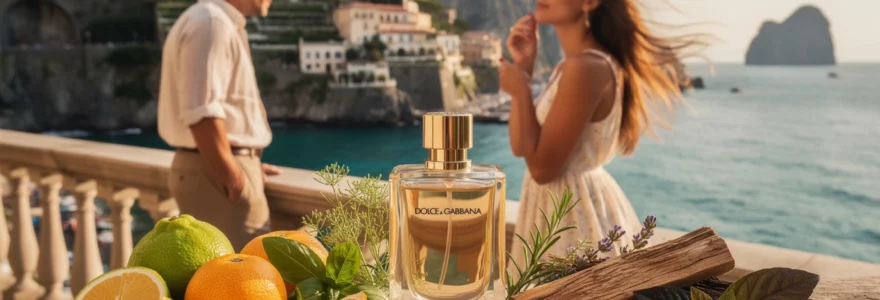
The Mediterranean coast has long served as a muse for luxury perfumers, yet few houses capture its essence as authentically as Dolce & Gabbana. Through meticulous attention to botanical sourcing and innovative extraction techniques, the Italian fashion house transforms sun-drenched landscapes into olfactory masterpieces. Their fragrances don’t simply reference Mediterranean ingredients; they embody the region’s sensual sophistication through carefully orchestrated molecular compositions that evoke warm sea breezes, citrus groves, and ancient stone terraces.
This mastery stems from the founders’ deep connection to their Sicilian heritage, where Domenico Dolce’s roots run particularly deep. The brand’s approach to Mediterranean perfumery transcends conventional citrus-marine combinations, instead crafting complex narratives that speak to cultural memory and emotional resonance. Each fragrance becomes a sensory passport to Italy’s most evocative locations, from the volcanic soils of Mount Etna to the azure waters surrounding Capri.
Mediterranean terroir influence on dolce & gabbana fragrance composition
The concept of terroir, traditionally associated with wine production, plays a crucial role in Dolce & Gabbana’s approach to fragrance creation. The Mediterranean basin’s unique combination of volcanic soil, maritime climate, and intense sunlight creates ideal conditions for producing aromatic compounds of exceptional quality and complexity. This geographic advantage allows the house to source ingredients that possess distinctive olfactory fingerprints impossible to replicate elsewhere.
Mediterranean terroir influences extend beyond simple ingredient quality to encompass the entire sensory ecosystem of the region. The interplay between sea salt carried on coastal winds, the mineral-rich volcanic earth, and the concentrated essential oils found in sun-stressed plants creates a natural perfumery palette that Dolce & Gabbana’s master perfumers have learned to harness with remarkable precision.
Sicilian bergamot and calabrian mandarin as top note foundations
Sicilian bergamot represents the crown jewel of Mediterranean citrus cultivation, offering a complexity that mass-produced alternatives cannot match. The fruit’s essential oil contains over 350 distinct aromatic compounds, creating a multifaceted opening that evolves continuously on the skin. Dolce & Gabbana sources bergamot exclusively from the Reggio Calabria region, where traditional cultivation methods preserve the fruit’s delicate balance of bitter and sweet elements.
Calabrian mandarin provides a softer, more rounded citrus profile that complements bergamot’s intensity. The mandarin’s natural linalyl acetate content creates an immediate sense of Mediterranean warmth, while its subtle green undertones reference the olive groves that characterise the region’s agricultural landscape. This careful pairing establishes the foundation for the house’s signature Mediterranean sensuality.
Wild fennel and mediterranean herbs in heart note construction
Wild fennel, harvesting along Sicily’s coastal cliffs, introduces an aromatic complexity that distinguishes Dolce & Gabbana fragrances from conventional herb-based compositions. The plant’s natural anethole content provides a subtle liquorice-like sweetness that bridges citrus top notes with deeper base accords. This indigenous ingredient captures the untamed spirit of Mediterranean scrubland, where aromatic plants develop concentrated essential oils as protection against harsh sun and salt air.
Mediterranean herbs such as rosemary, thyme, and sage contribute additional layers of authenticity to heart note compositions. These ingredients undergo careful steam distillation at low temperatures to preserve their volatile aromatic compounds. The resulting essential oils retain the herbs’ natural complexity, including subtle floral undertones that emerge only under Mediterranean growing conditions.
Cedarwood atlas and patchouli base note architecture
Atlas cedarwood, sourced from Morocco’s Atlas Mountains, provides the structural backbone for many Mediterranean-inspired base accords. This particular cedar variety offers a drier, more mineral character than its Lebanese or Himalayan counterparts, creating perfect synergy with Mediterranean coastal environments. The wood’s natural resistance to maritime humidity makes it an ideal metaphor for the enduring strength of Mediterranean cultures.
Indonesian patchouli undergoes extensive aging processes that reduce its earth
iness while elevating its natural cocoa and camphor facets. In Dolce & Gabbana compositions, this aged patchouli is dosed with restraint, lending a velvety depth that feels more like warm sun-baked earth than damp forest floor. Together, Atlas cedarwood and refined patchouli create a base note architecture that anchors the more volatile citrus and herbal notes, ensuring that Mediterranean sensuality lingers on the skin long after the initial spray.
Sea salt accord development techniques
While you will not find literal seawater in a Dolce & Gabbana bottle, you will often sense its presence through sophisticated sea salt accords. These accords are built using a combination of mineral, ozonic, and musky molecules that recreate the impression of skin kissed by salt spray. Modern aromachemicals such as calone, ambergris-type notes, and certain ionones are blended in micro-doses to avoid the harsh, metallic edge that can plague lesser marine fragrances.
To keep the sea salt impression firmly rooted in the Mediterranean rather than an abstract “aquatic” territory, perfumers layer these marine notes over citrus, aromatic herbs, and dry woods. The contrast between sparkling Sicilian lemon and a saline accord, for example, instantly evokes cliffside terraces above the Tyrrhenian Sea. Texturally, these accords are calibrated to feel almost tactile, mimicking the fine crystalline layer you might find on your skin after a day on the beach—subtle, slightly mineral, and undeniably sensual.
Olfactory storytelling through italian cultural heritage
Dolce & Gabbana’s Mediterranean sensuality is not only botanical; it is cultural. The brand uses fragrance as a vehicle to translate Italian stories—cinematic streetscapes, religious festivals, family gatherings—into olfactory form. Each perfume becomes a narrative chapter, referencing specific locales, historical symbols, and emotional archetypes familiar to Italian life. In this way, a Dolce & Gabbana scent is less a generic “holiday in a bottle” and more a curated montage of Italian memories and myths.
This storytelling dimension explains why so many of the house’s perfumes are named after places, characters, or archetypes—The One, Light Blue, K, the Velvet collection. Rather than relying solely on marketing copy, the formulas themselves encode references through carefully chosen accords. As you explore the range, you find that specific Italian regions—Taormina, the Amalfi Coast, Capri—recur not only in visuals but in recurring combinations of notes that act like an olfactory language.
Taormina landscape references in the one gentleman fragrance
The One Gentleman offers a refined interpretation of Sicilian masculinity, drawing explicit inspiration from Taormina’s dramatic landscape. Perched on cliffs overlooking the Ionian Sea, Taormina balances rugged volcanic rock with manicured gardens and Belle Époque architecture. The fragrance mirrors this tension between wild nature and tailored elegance through its structure: crisp pepper and grapefruit at the top, aromatic lavender in the heart, and a sophisticated blend of patchouli and vanilla in the base.
The aromatic lavender accord echoes the herbal cushions that grow among Taormina’s stone stairways, while the subtle sweetness of vanilla hints at the town’s patisserie culture and evening passeggiata. Pepper and cardamom add a discreet spice that recalls the heat radiating off lava stone streets at dusk. Worn on the skin, The One Gentleman feels like linen tailoring warmed by the Sicilian sun—polished yet undeniably sensual, an homage to the cultivated charm of this iconic hillside town.
Sicilian folk traditions encoded in velvet collection
The high-end Velvet collection functions almost like an olfactory encyclopedia of Sicilian folklore. Each fragrance in this range is built around a specific cultural motif: baroque churches, citrus orchards, aristocratic villas, religious feasts. For instance, compositions featuring orange blossom and incense nod to processions where flower garlands mingle with the smoky aroma of church resins. Others lean into fig, almond, and heliotrope to conjure homemade sweets and marzipan sold in local markets.
These scents often employ richer concentrations and classical materials—iris butter, benzoin, high-quality resins—to mirror the tactile luxury of velvet robes, gilded altarpieces, and embroidered textiles. The result is a set of fragrances that smell less like modern minimalism and more like layered frescoes. For perfume lovers, wearing a Velvet scent can feel like stepping into a Sicilian palazzo during a festival: candle wax, polished wood, pastry, and orange trees all intertwined in a deeply emotional and sensorial experience.
Amalfi coast inspiration in light blue pour homme
Light Blue Pour Homme distils the Amalfi Coast’s cliffside allure into an accessible, everyday expression of Mediterranean sensuality. The composition opens with a burst of Sicilian mandarin, juniper, and grapefruit that captures the sensation of cutting into a chilled citrus fruit on a sunlit terrace. Juniper, with its piney, gin-like sparkle, evokes the cypress and stone pines that line Amalfi’s winding roads, adding a bracing, aromatic lift to the citrus top notes.
As the fragrance moves into its heart, rosemary and subtle rosewood create a herbal-woody accord reminiscent of shaded pergolas and weathered boat decks. The base of musk, incense, and oakmoss anchors the composition in a gently smoky, mineral territory, calling to mind the rocky shoreline and sun-warmed stones at water’s edge. This contrast between bright, salty air and deeper, resinous undertones is what makes Light Blue Pour Homme feel both invigorating and sensually grounded—much like a late-afternoon swim followed by an evening Negroni on the Amalfi promenade.
Capri island essence capture in dolce & gabbana K
Dolce & Gabbana K channels Capri’s regal yet relaxed spirit through a modern woody-aromatic profile. The fragrance opens with blood orange, Sicilian lemon, and juniper berry, an accord that suggests both the zesty freshness of island citrus and the slightly bitter edge of an aperitivo enjoyed on a panoramic terrace. The crown-shaped cap and rich blue tones of the bottle are visual cues, but the real Capri reference lies in the way these notes evoke sun, stone, and sea in equal measure.
In the heart, clary sage, geranium, and pimento essence contribute herbal brightness and a subtle, almost sunburnt spiciness—like the warmth radiating from tanned skin after a day on Capri’s beaches. The base weaves together vetiver, cedarwood, and patchouli to recreate the dry, woody facets of sun-bleached driftwood and coastal vegetation. The overall effect is effortlessly noble: K does not shout royalty, but rather embodies the quiet authority of someone who moves with ease through both village piazzas and yacht decks, capturing Capri’s unique blend of casual charm and understated grandeur.
Sensual molecular structure analysis in mediterranean fragrances
Behind the romance of Mediterranean storytelling lies a precise molecular strategy. Dolce & Gabbana perfumers leverage specific classes of molecules—citrus aldehydes, musks, lactones, and amber derivatives—to create the perception of warmth, skin, and light. Think of the composition as architectural engineering: volatile top notes provide immediate freshness, while heavier, more lipophilic molecules nestle into the skin, releasing over hours and generating that intimate, close-to-the-body sensuality.
For example, musks and modern amber molecules (such as ambroxan-type materials) play a central role in Light Blue’s lingering trail. These compounds are almost invisible in the opening but form a soft, radiant halo as the fragrance settles, similar to how late-afternoon sun appears softer yet more golden. Lactonic notes, which recall creamy fruits or warm skin, are often used in microdoses alongside citrus to prevent the composition from feeling too sharp or cologne-like. This balance of sparkle and softness is key to Mediterranean sensuality: you feel clean and refreshed, yet there is an underlying warmth that invites closeness.
Interestingly, advances in extraction and synthesis over the last two decades have allowed Dolce & Gabbana to refine these molecular structures even further. Using fractionated citrus oils and CO2-extracted botanicals, perfumers can select only the most desirable facets—removing photo-sensitising components and bitter off-notes. The result is a cleaner, more luminous citrus that maintains its integrity longer on the skin. When combined with next-generation musks that are both biodegradable and more skin-like in character, the brand can craft Mediterranean perfumes that feel more natural yet perform with the power and longevity expected of modern luxury fragrances.
Artisanal extraction methods for italian botanical ingredients
Capturing Mediterranean sensuality also depends on how ingredients are extracted, not just where they are grown. Dolce & Gabbana partners with distillers and growers who use a mix of traditional and cutting-edge techniques to preserve the full aromatic profile of Italian botanicals. For citrus, this often means cold-pressing the peels followed by careful rectification, ensuring that the bright top notes remain juicy without veering into harshness. In some cases, perfumers turn to CO2 extraction, which uses pressurised carbon dioxide to pull out aromatic molecules at low temperatures, yielding essences that smell astonishingly close to the fresh fruit or blossom.
Herbal ingredients such as rosemary, sage, and thyme typically undergo steam distillation, but at lower pressures and temperatures than industrial norms. This slower, more artisanal process reduces thermal degradation, protecting delicate floral and honeyed nuances that might otherwise be lost. For flowers like orange blossom and jasmine—central to many Dolce & Gabbana compositions—solvent extraction or enfleurage-style techniques may be used to obtain waxy concretes and ultra-rich absolutes. These materials provide a creamy, almost tactile quality that standard essential oils cannot replicate, amplifying the sensual dimension of the perfumes.
The house also shows increasing interest in sustainability and traceability, aligning with broader industry trends. According to recent reports from major fragrance suppliers, demand for responsibly sourced naturals has grown by more than 30% in the past five years. By favouring small Italian cooperatives and long-term contracts with growers, Dolce & Gabbana helps preserve traditional agricultural practices while ensuring consistent olfactory quality. For the perfume wearer, this translates into scents that not only smell authentically Mediterranean but are also rooted in real landscapes and local expertise.
Comparative olfactory profiles: dolce & gabbana versus acqua di parma mediterranean collections
When discussing Mediterranean sensuality in perfumery, Acqua di Parma inevitably enters the conversation. Both houses celebrate Italian landscapes, yet they interpret them through distinct olfactory lenses. Acqua di Parma’s Blu Mediterraneo line often leans toward airy, cologne-style compositions with a strong focus on sparkling citrus and light woods. Dolce & Gabbana, by contrast, tends to weave in more pronounced sensuality—using richer musks, amber notes, and gourmand touches to create a more intimate, skin-like aura.
We can think of the difference as two cinematic genres: Acqua di Parma resembles a sunlit travel documentary, crisp and panoramic, while Dolce & Gabbana feels closer to a romantic drama shot in golden hour, full of close-ups and texture. Light Blue, for instance, uses an apple note and a creamy cedar-musk base to add dimension beyond simple citrus freshness, whereas many Blu Mediterraneo fragrances maintain a cooler, more detached elegance. For consumers, this means that if you are seeking a refined yet almost minimalist portrait of the Mediterranean, Acqua di Parma may appeal, while Dolce & Gabbana will resonate if you prioritise warmth, sensuality, and emotional storytelling.
From a technical standpoint, Dolce & Gabbana frequently employs slightly sweeter or more gourmand elements—vanilla in The One, fruity nuances in Light Blue, or warm spices in K—to heighten the perception of intimacy. Acqua di Parma tends to stay closer to classic Italian barbershop and cologne traditions, highlighting neroli, bergamot, and airy florals. Neither approach is “better”; they simply cater to different expressions of Mediterranean identity. Understanding this distinction can help you curate a fragrance wardrobe where both houses coexist: Acqua di Parma for crisp daytime refinement, Dolce & Gabbana for evenings, dates, or any moment when you want the Mediterranean to feel a little more sultry.
Consumer perception studies on mediterranean sensuality marketing
Beyond formula and raw materials, how do we know that Mediterranean cues actually register as sensual for consumers? Market research and neuroscience offer useful insights. Over the last decade, several industry studies have used fMRI scans and biometric tracking to observe how people respond to citrus-marine combinations versus other olfactory families. These findings consistently show increased activity in brain regions linked to mood, memory, and reward when subjects smell fresh, sunlit accords—particularly when paired with warm musky bases. Dolce & Gabbana’s marketing taps into this interplay, combining visual storytelling of Italian coastlines with formulas designed to trigger both arousal and relaxation.
Neurological response to citrus-marine fragrance combinations
Neuroscientific research suggests that citrus notes such as lemon, bergamot, and orange can reduce perceived stress levels and increase alertness, while certain marine and ozonic molecules evoke a sensation of openness and freedom. When these are layered over skin-like musks and soft woods, the brain registers a comforting yet energising signal. In a 2023 industry white paper on olfactory wellness, participants exposed to citrus-marine-musk accords reported feeling both “refreshed” and “attractive” more frequently than with purely gourmand or heavy oriental scents.
This dual effect is central to Dolce & Gabbana’s Mediterranean sensuality. The top notes wake you up—like stepping out of a cool shower on a hot day—while the base notes create a subtle, lingering intimacy. You might not consciously dissect the pyramid, but your nervous system recognises the contrast between brightness and warmth. It’s similar to enjoying a sea breeze while sitting on warm stone: your body relaxes, yet your senses are fully engaged, a state psychologists often link to heightened receptivity and social confidence.
Cultural association mapping between scent and italian lifestyle
On the cultural side, consumer perception studies often use word association tests and mood boards to understand how people link scent profiles with lifestyles. When respondents are shown imagery of Italian coasts, family lunches, or evening strolls through piazzas, they overwhelmingly select descriptors like “warm,” “romantic,” “relaxed,” and “sensual.” Interestingly, these same adjectives frequently appear in blind tests when participants smell Dolce & Gabbana’s Mediterranean-inspired perfumes, even without seeing the brand name or bottle.
This alignment between imagery and olfactory experience is no accident. By consistently communicating themes of sun, sea, food, and family across campaigns, the brand has strengthened the mental bridge between its scents and the Italian lifestyle. For you as a wearer, this means that putting on a Dolce & Gabbana perfume often triggers not just a smell but an entire narrative: alfresco dinners, stone alleyways, linen shirts, and late-night conversations. Such multidimensional associations make the fragrances feel more immersive and, consequently, more sensual.
Gender-specific sensuality triggers in mediterranean perfumery
While the line between “masculine” and “feminine” fragrances is increasingly blurred, consumer data still reveals some gendered patterns in how Mediterranean sensuality is perceived. In general, many women report finding citrus-fruit and white-floral combinations—like those in Dolce or Light Blue—both uplifting and subtly seductive, especially when balanced by creamy woods or soft musks. Men, on the other hand, often gravitate toward aromatic herbs, spices, and dry woods, as seen in Pour Homme, Intenso, or K, which project a sense of confidence and understated strength.
Dolce & Gabbana leverages these tendencies without falling into cliché. Women’s Mediterranean scents may incorporate gourmand or fruity nuances to suggest playful sensuality, while men’s compositions use tobacco, vetiver, or incense to signal depth and maturity. Yet, many of the brand’s fragrances share a unisex core of citrus, herbs, and woods, allowing individuals to cross traditional lines based on personal taste. Ultimately, the most powerful trigger of sensuality is authenticity: when a perfume aligns with how you see yourself—or how you wish to feel in a given moment—it becomes more than a pleasant smell. It becomes a wearable extension of your own Mediterranean story.