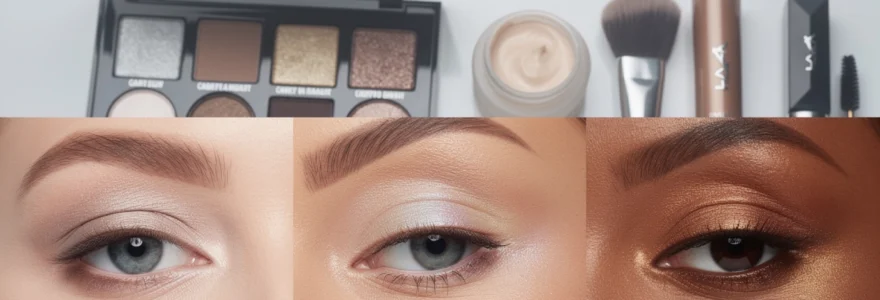
The shimmer-laden eyelids that dominated red carpets and music videos throughout the late 1990s and early 2000s have returned with unexpected sophistication. Frosted eyeshadow, once synonymous with Christina Aguilera’s bold aesthetic and Paris Hilton’s party-ready looks, is experiencing a renaissance that transcends nostalgia. This revival isn’t simply about recreating the Y2K aesthetic verbatim—it represents an evolution in how we approach metallic and pearlescent finishes in contemporary makeup artistry. The question isn’t whether frosted shadow deserves a place in your makeup collection, but rather how you can integrate this polarising trend into a modern beauty repertoire that feels refined rather than dated.
Today’s frosted eyeshadow movement draws inspiration from runway presentations at Chanel and Charlotte Tilbury campaigns featuring Kate Moss, yet the application techniques and product formulations have transformed dramatically. Where previous generations applied frost liberally across the entire lid and browbone, creating that signature flat, powdery finish, current iterations focus on strategic placement, texture variation, and sophisticated colour selection. The evolution reflects broader shifts in makeup philosophy—from heavy coverage to skin-focused artistry, from uniform application to dimensional techniques that enhance rather than mask.
Understanding the frosted eyeshadow renaissance: from Y2K to modern makeup artistry
The frosted eyeshadow trend reached its zenith around the year 2000, coinciding with the millennium’s technological optimism and futuristic fashion sensibilities. During this era, makeup enthusiasts applied thick layers of icy, metallic pigment from lash line to browbone, often in cool pastel shades of blue, silver, and pale pink. The aesthetic perfectly complemented low-rise jeans, butterfly clips, and the ubiquitous glossy lips that defined the period. However, by the mid-2000s, this maximalist approach to shimmer fell decisively out of favour as beauty trends shifted towards warmer, more natural-looking makeup.
What distinguishes the current frosted eyeshadow resurgence from its predecessor is the emphasis on restraint and intentionality. Celebrity makeup artists working with contemporary icons like Dua Lipa, Megan Thee Stallion, and Hailey Bieber have reimagined frost as an accent rather than the entire eyeshadow story. This shift reflects a broader maturation in makeup application philosophy—understanding that impact doesn’t require saturation, and that negative space can enhance rather than diminish visual interest. The modern interpretation focuses on creating light-catching moments that complement the eye’s natural architecture rather than obscuring it beneath a uniform metallic veil.
Industry professionals point to several cultural factors driving this revival. The Euphoria television series normalised experimental, statement-making eye makeup for a new generation, whilst social media platforms like Instagram and TikTok democratised access to professional techniques previously confined to editorial shoots. Additionally, the cyclical nature of fashion inevitably brings past trends back into focus, though rarely without adaptation. What we’re witnessing isn’t merely Y2K nostalgia—it’s a sophisticated reinterpretation that acknowledges the original trend’s appeal whilst correcting its aesthetic excesses.
Texture selection and formulation: choosing between pressed pearls, liquid metallics, and Cream-to-Powder finishes
The formulation landscape for frosted eyeshadow has evolved dramatically since the early 2000s, when chunky glitter particles and obvious shimmer dominated the market. Contemporary frost finishes incorporate advanced technology that creates dimensional shine without the telltale signs that made vintage iterations appear dated. Understanding these textural distinctions enables you to select products that deliver modern sophistication rather than nostalgic pastiche.
Micronised shimmer particles versus traditional frost formulations
Traditional frosted eyeshadows relied on relatively large shimmer particles that created obvious sparkle but often emphasised lid texture and settled into fine lines. Modern formulations utilise micronised pearls and finely milled pigments that catch light without appearing chunky or glittery. These advanced particles create what industry professionals describe as a “wet” or “foiled” finish
that looks luminous and refined on the eye. Think of the shift as moving from visible sequins to ultra-fine satin—light still bounces beautifully, but the surface appears smoother and more flattering on real skin. This is particularly important if you have textured or mature lids, where older frost formulas could look harsh or chalky. When comparing products, watch how they catch light on the back of your hand: modern frosted eyeshadow should gleam and glide, not sit on top of the skin in obvious specks. If the finish feels thin, smooth and almost glossy, you’re looking at an updated frost that will read as chic rather than costume-like.
Another advantage of micronised shimmer particles is their versatility in intensity. Traditional frosts often went from “barely there” to “tin man” in a single swipe, making subtle looks difficult to achieve. Finely milled formulas, by contrast, allow you to build coverage slowly, from a sheer wash to a bold metallic eye. This buildability is key when you want to experiment with frosted eyeshadow for daytime makeup without committing to a full editorial lid. By layering thin veils of product, you control both the sparkle level and the shape, ensuring the frost enhances your eyes instead of dominating your entire look.
Pat McGrath labs mothership palettes and contemporary frosted technology
Few brands have redefined modern shimmer and frost quite like Pat McGrath Labs. The Mothership palettes are often cited by professional artists as the gold standard for high-impact metallics that still look editorial and expensive. Within these palettes, the “special shades” use sophisticated combinations of mica, binder technology, and gel-powder hybrids to deliver intense payoff with minimal fallout. When you press these frost shadows onto the lid, they almost melt into the skin, creating that coveted molten-metal effect that photographs beautifully under both natural and artificial light.
What sets Pat McGrath’s frosted formulas apart is the balance between reflectivity and depth. Older frosted eyeshadow tended to be high-shine but flat, whereas these modern textures incorporate multi-dimensional micro-shimmer that shifts subtly as you move. This depth prevents the eye from looking one-note and helps the frost read as luxurious rather than dated. If you’re hesitant about revisiting frosted eyeshadow, starting with a Pat McGrath Mothership palette allows you to experiment with champagne, bronze, and opalescent tones that feel runway-ready yet wearable. Use a damp flat brush or fingertip for maximum payoff, then blend the edges with a clean, soft brush to keep the look diffused.
Urban decay moondust range: buildable intensity for controlled application
Urban Decay’s Moondust range is another example of how far frost and sparkle technology have progressed. While these shadows are known for their high-shine finish, the actual particles are ultra-fine, suspended in a lightweight base that adheres well to the skin. Instead of the gritty feel you might associate with early-2000s glitter, Moondust shades deliver a refined twinkle that can be dialled up or down. Applied dry, you get a soft veil of shimmer suitable for everyday looks; used damp or layered over a cream base, they transform into full-impact frosted eyeshadow ideal for nights out or special occasions.
For those worried about fallout—a common complaint with older frosted formulas—Moondust’s adhesion and buildability are major advantages. You can pat a small amount onto the centre of the lid for a halo effect or concentrate it near the inner corner for a brighter, more open gaze. Because the pigment is dispersed evenly in the base, it’s easier to control exactly where the frost lands, avoiding the dreaded “sparkle all over the face” situation. If you’re new to frosted eyeshadow and want a flexible product that can create both subtle and dramatic looks, Moondust shadows are a smart, modern choice.
Silicone-based primers for enhanced frost adhesion and longevity
The most sophisticated frosted eyeshadow will still fall short without the right prep, and this is where silicone-based primers become essential. These primers create a smooth, slightly tacky canvas that grips shimmer and frost particles, dramatically improving both adhesion and wear time. Think of them as double-sided tape for your eyeshadow: they lock metallic and pearlescent finishes in place while blurring fine lines and uneven texture. This is particularly important if your eyelids are oily, hooded, or prone to creasing, since metallic formulas tend to move more than mattes.
Silicone-heavy primers also help modern frost finishes look more skin-like. By filling in microscopic texture and creating a uniform surface, they prevent shimmer from clustering in certain areas or catching on dry patches. To maximise the effect, apply a thin layer of primer, allow it to set for 20–30 seconds, then follow with a neutral matte shadow or a light dusting of translucent powder through the crease. This “grip plus set” strategy gives frosted eyeshadow something to hold onto while still allowing you to blend edges seamlessly. If you’ve ever found frost migrating into fine lines by midday, upgrading your primer is one of the most impactful changes you can make.
Strategic placement techniques: lid-to-brow bone mapping for dimensional impact
One of the biggest shifts between Y2K frosted eyeshadow and today’s chic versions is placement. Instead of sweeping a single metallic shade from lash line to brow bone, modern artists map the eye area into distinct zones—inner corner, mobile lid, crease, outer V, brow bone, and lower lash line. Each zone serves a different purpose in terms of structure and light reflection. By deciding exactly where frost will sit (and where it won’t), you create dimension and lift, rather than a flat sheet of shine that can overwhelm the eye. Think of it as contouring for the eye socket, with frost acting as the highlighter.
This strategic mapping is particularly useful if you’re working with hooded or deep-set eyes, where blanket shimmer can make the area look heavier. Concentrating frosted eyeshadow on the parts of the lid that naturally catch the light—usually the centre and inner third—gives the illusion of more lid space and a rounder, brighter eye. Meanwhile, keeping the crease and outer corner predominantly matte preserves depth and structure. If you’ve ever wondered why frosted looks in magazine editorials seem polished while at-home recreations can feel chaotic, placement is often the missing link.
Inner corner highlighting with charlotte tilbury eyes to mesmerise shades
Inner corner highlighting is one of the easiest ways to dip your toe back into frosted eyeshadow without committing to an all-over metallic lid. Creamy, long-wearing formulas like Charlotte Tilbury’s Eyes to Mesmerise shades are particularly well-suited to this technique because they offer a soft, reflective glow that blends seamlessly into the skin. Shades such as Champagne, Star Gold, or Oyster Pearl can be tapped into the tear-duct area with a small pencil brush or your fingertip to instantly brighten the eyes. This placement mimics the natural way light hits the inner eye, making you look more awake even on minimal makeup days.
To keep this frosted highlight modern rather than theatrical, focus on precision. You want the highest concentration of product right at the inner corner and along the first third of the upper and lower lash lines, feathering it gently into your existing shadow. Pairing this with a softly defined matte crease and a curled lash creates a polished, “expensive” eye look that works for both office and evening. If you wear glasses, this inner-corner frost can also help your eyes stand out behind frames, especially when paired with a neutral satin shade across the lid.
Centre-lid focus application: the halo eye method for frosted drama
For a more dramatic yet still chic take on frosted eyeshadow, the halo eye method places the brightest frost shade at the centre of the lid. This technique involves applying deeper matte or satin tones to the inner and outer thirds of the eye, then pressing a lighter frosted or metallic shade directly onto the centre. The result is a rounded, spotlight effect that makes the eyes appear larger and more dimensional, almost as if a ring light is permanently focused on your gaze. When executed with modern frost formulas, the halo eye reads as runway-inspired rather than overtly nostalgic.
To create a wearable frosted halo eye, start with a mid-tone matte in the crease to lay down structure. Add a slightly deeper shade to both the inner and outer corners, blending carefully so there are no harsh lines. Then, using your fingertip or a flat synthetic brush, press a frosted shadow—champagne, soft gold, or even a cool silver—right at the centre of the mobile lid. You can gently blend the edges where the frost meets the deeper tones, but keep the brightest point concentrated in the middle. This centre-lid frost application pairs beautifully with a thin black liner and lots of mascara, ensuring the look stays balanced and intentional.
Gradient blending: transitioning frost into matte crease shades
The secret to making frosted eyeshadow look sophisticated lies in how you transition it into surrounding matte tones. A harsh edge between metallic and matte can make the eye look segmented, whereas a soft gradient creates that seamless, editorial finish we associate with professional artistry. The key is to treat your frosted shade as the highlight point of a gradient, not the entire story. Start by applying your matte crease colour first, blending it slightly onto the upper part of the mobile lid so there’s a “bridge” for the frost to blend into.
When you introduce the frosted shadow, apply it slightly below where you want the final edge to sit, then use a clean, fluffy brush to nudge the shimmer upward into the matte. This diffuses the frost and allows the two textures to mingle, creating a soft-focus transition instead of a stark line. If you notice the shimmer migrating too far into the crease, you can go back with a tiny amount of your matte shade and gently buff over the edge. This push-pull approach—adding frost, then reintroducing matte—helps you maintain control over placement and ensures the metallic finish enhances, rather than overtakes, your eye shape.
Lower lash line frost accents using damp brush techniques
Adding a hint of frost along the lower lash line is a subtle way to echo shimmer on the lid and tie the whole look together. However, because this area is closer to fine lines and natural creasing, precision and formula control are crucial. Using a slightly damp, small detail brush allows you to place frosted eyeshadow exactly where you want it, intensifying the pigment while minimising fallout. Simply spritz your brush with a setting spray, dip into your chosen metallic shade, and press the colour right against the lower lashes from the outer third inward, stopping before the very inner corner to avoid closing off the eye.
This technique is especially effective with champagne, taupe, or soft bronze frosts, which add dimension without looking overly dramatic. Think of it as a soft reflector panel under the eye, catching just enough light to make the whites of your eyes appear brighter. If you’re concerned about emphasising texture or fine lines, keep the frosted band thin and blend the edges with a clean, dry brush. Pair with a touch of matte shadow or concealer just beneath the shimmer to create a crisp boundary and prevent the look from becoming muddy.
Colour theory and undertone matching: champagne, silver, and opalescent shade selection
Choosing the right frosted eyeshadow shade for your undertone is just as important as mastering placement and texture. The wrong frost can make your skin look ashy, sallow, or overly stark, whereas the right tone will harmonise with your colouring and enhance your features. In colour theory terms, frosted and metallic finishes amplify both hue and temperature—so a mismatch is more obvious than with matte shades. That’s why a champagne frost that looks ethereal on one person can pull too yellow or too icy on another.
To keep frosted eyeshadow chic, start by identifying whether your undertone is predominantly cool, warm, or neutral. Cool undertones typically suit silvers, icy taupes, and pink-champagnes, while warm undertones glow in golds, bronzes, and peachy metallics. Neutral undertones can usually wear both, but still benefit from subtle tweaks—opalescent shades with both pink and gold reflects, for example, tend to be universally flattering. When in doubt, test frosted shades on the back of your hand in natural light and notice whether they seem to brighten your skin or fight against it.
Cool-toned frosts: stila kitten and MAC nylon for fair to medium complexions
For fair to medium complexions with cool or neutral undertones, classic shades like Stila Kitten and MAC Nylon have become cult favourites for a reason. These cool-toned frosts strike a careful balance between brightness and softness, offering enough reflectivity to open up the eye without veering into stark white territory. Stila Kitten, a soft, pink-champagne with a pearl finish, works beautifully as an all-over lid colour or inner-corner pop, especially when paired with muted taupe or dusty rose in the crease. MAC Nylon, meanwhile, leans more toward a pale, yellowed-ivory frost that’s particularly striking on very fair skin or as a high-voltage inner-corner highlight on medium tones.
When using these classic cool frosts in a modern context, the key is restraint. Rather than sweeping them all the way to the brow bone—as was common in the Y2K era—keep the highest intensity on the mobile lid and inner corner. Blend the edges into a soft, cool matte transition shade, such as a grey-taupe or muted mauve, to ground the look. If you’re worried about looking washed out, adding a touch of soft brown liner at the lash line and plenty of mascara will help anchor the shimmer and bring definition back to the eye.
Warm metallic frosts: bronze and copper tones for deeper skin tones
On medium-deep to deep complexions, warm metallic frosts in bronze, copper, and rich gold can look incredibly luxe and flattering. These shades echo the natural warmth in the skin, creating a lit-from-within effect that feels more like molten metal than chalky shimmer. Bronze frosts, in particular, are a powerful choice for everyday glam: they’re deep enough to add definition while still catching light in a sophisticated way. Copper tones, with their red and orange undertones, look especially striking on deeper skin with golden or olive undertones, enhancing brown and hazel eyes in particular.
To keep these warm frosts chic, pair them with equally warm matte support shades. A chocolate brown or terracotta crease colour will stop the metallic from looking disconnected, while a matte cream or caramel on the brow bone keeps the overall look polished. If you have very deep skin, consider using metallic copper or antique gold as your “neutral” lid colour and reserving the brightest, most reflective golds for the centre of the lid or inner corner. This approach preserves dimension and ensures your frosted eyeshadow looks intentionally sculpted rather than uniformly shiny.
Duochrome and shift pigments: NARS Dual-Intensity formulas
For those ready to push frosted eyeshadow into more experimental territory, duochrome and shift pigments offer a futuristic yet surprisingly wearable option. NARS Dual-Intensity formulas, for example, use finely milled mica and reflective particles that change colour depending on the angle and lighting. A single shade might flash from rose-gold to copper or from icy lilac to silver, adding depth and intrigue without piling on multiple products. When sheered out dry, these shadows create a translucent veil of colour; applied wet, they transform into high-impact, almost foiled frost.
The advantage of duochrome frost is that it can do the work of several shades at once, simplifying your routine while still delivering a complex, editorial finish. To keep things chic, anchor these shifting metallics with neutral mattes—think soft browns, taupes, or muted plums—so the overall look remains balanced. If you’re hesitant about bold colour shifts, start by using a duochrome only on the centre of the lid or as a liner, letting the rest of the eye remain relatively understated. This creates a subtle “Easter egg” effect that catches the light and reveals itself only as you move.
Editorial and runway-inspired looks: deconstructing pat McGrath and isamaya ffrench frost applications
Runway and editorial makeup often push frosted eyeshadow to its most creative extremes, but there are still plenty of lessons we can apply to everyday looks. Pat McGrath, frequently dubbed the “Mother” of modern makeup artistry, is renowned for her use of metallic and pearlescent textures to sculpt and exaggerate eye shapes on the catwalks of brands like Versace and Prada. Rather than treating frost as a single wash of colour, she layers multiple finishes—satin, shimmer, metallic, and glitter—strategically to create dimension under harsh runway lighting. This stacking of textures is a powerful trick for making frosted eyeshadow look complex and intentional rather than one-dimensional.
Isamaya Ffrench, known for her boundary-pushing, almost sculptural beauty looks, often uses frosted and metallic finishes in unexpected placements: extending past the traditional eye area, onto the temples, or even up toward the brow in graphic shapes. While you might not replicate these avant-garde placements day-to-day, they offer inspiration for softening the boundaries of where frosted shadow “should” go. For instance, gently diffusing a metallic shade slightly past the outer corner in a winged shape can give a subtle editorial twist to an otherwise classic look, echoing these runway techniques in a more approachable way.
If you’re keen to experiment with editorial-inspired frost but still want practicality, borrow the concept of “spotlight” placement from these artists. Concentrate your highest-shine frosts on the centre of the lid, inner corner, and just under the highest point of the brow arch—then keep the rest of the face relatively pared back with dewy skin and neutral lips. This allows your eyes to be the focal point without overwhelming the overall makeup. Remember, even on the runway, the most striking frosted looks succeed because they’re balanced against negative space and clean, considered skin work.
Avoiding common pitfalls: combating creasing, fallout, and excessive shine on mature eyelids
For all their beauty, frosted and metallic formulas can be unforgiving if not applied with care, especially on textured or mature eyelids. Common complaints include creasing, shimmer migrating onto the cheeks, and finishes that exaggerate fine lines. The good news is that these issues are often technique-related rather than inevitable. With the right prep, placement, and finishing steps, frosted eyeshadow can look flattering at any age—and last throughout the day or night without constant touch-ups.
Think of working with frost like styling fine, delicate fabric: handle it gently, use the right underpinnings, and secure everything in place. That means choosing formulas with strong adhesion, applying in thin layers rather than thick swipes, and selectively mattifying areas where you don’t want extra shine. If you’ve sworn off frosted eyeshadow because of bad experiences in the past, revisiting the trend with these updated strategies can be surprisingly transformative.
Setting spray application: urban decay all nighter for frost lock-down
One of the most effective tools for preventing frosted eyeshadow fallout and creasing is a good setting spray, and Urban Decay’s All Nighter remains a favourite among professionals. This alcohol-based formula helps lock makeup in place for up to 16 hours, reducing the risk of shimmer migrating onto your under-eye area or cheeks. For maximum impact with frost, you can use All Nighter in two ways: as a finishing mist over your completed eye look, and as a dampening agent for your brush when applying metallic shades. Spritzing your brush before picking up product intensifies the pigment and helps it adhere more firmly to the lid.
To avoid disturbing your work, hold the setting spray at arm’s length and mist in an “X” and “T” formation over your face, keeping your eyes lightly closed. If you’re prone to creasing, it can also help to gently tap over your lid with a clean fingertip a few minutes after application, just to ensure there are no product gatherings before the spray fully sets. Think of All Nighter as the hairspray of your frosted eyeshadow look: a light veil is all you need to secure the style without making it crunchy or stiff.
Eyelid priming protocol: addressing texture and oil control
Successful frosted eyeshadow starts with an effective priming protocol, particularly if your lids are oily or textured. Begin by ensuring the area is clean and dry; any residual eye cream should be fully absorbed to avoid breaking down your primer. Next, apply a small amount of a dedicated eye primer—preferably one with a silicone base for smoothing or a mattifying component for oil control—across the lid up to the brow bone. Allow it to set for a few seconds, then lightly press a skin-toned matte shadow or translucent powder over the crease and brow area, leaving the centre of the lid slightly tacky to better grip your frost.
If your main concern is texture or crepiness, avoid heavy, thick layers of product on the lid. Instead, rely on thin, strategically placed applications of cream or liquid metallic formulas, which tend to move more harmoniously with the skin than dry, powdery frost. You may also find it helpful to keep the most reflective shades closer to the lash line and centre of the lid, where movement creases less, and use soft satin or matte finishes on the upper lid and brow bone. This contrast preserves the brightening effect of frost while minimising attention to areas with more visible texture.
Buffing harsh edges: transition shade integration for seamless finishes
Even the most beautiful frosted eyeshadow can look dated if the edges are harsh or poorly blended. The solution lies in thoughtful transition-shade integration—a step many people skip when working with shimmer. After applying your chosen frost to the lid or inner corner, take a clean, fluffy blending brush and a soft matte shadow that sits between your skin tone and the frosted shade in depth. Gently buff this transition colour into the crease and slightly over the edge of the metallic, using small circular or windshield-wiper motions to diffuse any visible lines.
Think of this process as adding a gradient filter to your frosted eyeshadow. By softening the edges and connecting the shimmer to the surrounding skin, you create a more cohesive, professionally finished look. If you accidentally pull the matte too far over the metallic and dull the shine, you can always go back with a fingertip and tap a tiny amount of frost back onto the centre of the lid. This push-and-pull approach ensures you maintain both impact and refinement, allowing frosted finishes to feel sophisticated, current, and entirely intentional.