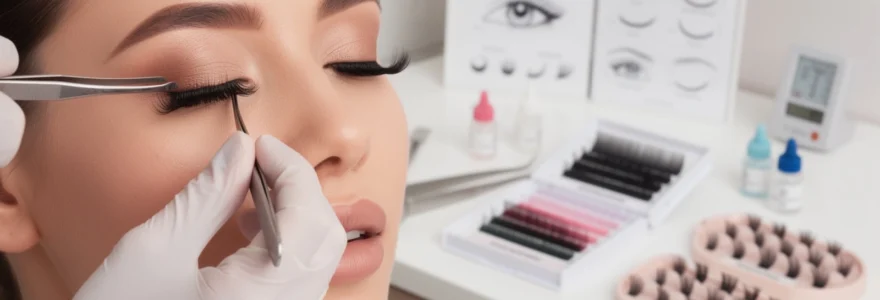
The beauty industry has witnessed a remarkable transformation in recent years, with eyelash extensions emerging as one of the most sought-after treatments for achieving dramatic, long-lasting results. What was once considered a luxury reserved for celebrities and special occasions has now become an accessible beauty solution for anyone seeking to enhance their natural features. The appeal lies not only in the immediate visual impact but also in the convenience of waking up with perfectly defined lashes every single day.
Modern eyelash extension techniques have evolved far beyond simple application methods, incorporating sophisticated approaches that cater to diverse aesthetic preferences and eye shapes. From subtle enhancement to mega volume transformations, the versatility of contemporary lash artistry allows for unprecedented customisation. The question isn’t whether eyelash extensions can create an intense look, but rather which specific technique and styling approach will best achieve your desired outcome whilst maintaining the health of your natural lashes.
Eyelash extension application techniques for maximum volume and length
Professional lash application has revolutionised the beauty landscape through the development of multiple specialised techniques, each designed to achieve specific aesthetic outcomes. The evolution from basic strip lashes to individually applied extensions represents a quantum leap in both artistry and technical precision. Today’s lash technicians employ sophisticated methods that can transform sparse, short natural lashes into voluminous, length-enhanced masterpieces that rival any mascara or false lash application.
The foundation of exceptional lash extension results lies in understanding the intricate relationship between natural lash health, desired aesthetic outcome, and appropriate application methodology. Professional technicians must assess numerous factors including natural lash density, individual lash strength, eye shape, and lifestyle considerations before selecting the optimal technique. This comprehensive evaluation ensures not only stunning visual results but also long-term lash health and optimal retention rates.
Classic individual lash technique with 0.15mm diameter extensions
The classic individual lash technique represents the cornerstone of professional eyelash extension application, utilising a precise one-to-one ratio methodology where each synthetic extension adheres to a single natural lash. This foundational approach employs extensions typically measuring 0.15mm in diameter, creating a refined enhancement that amplifies natural beauty without overwhelming the eye. The technique requires meticulous isolation skills and steady precision, as each natural lash must be completely separated before extension placement to prevent inadvertent bonding between adjacent lashes.
Classic applications excel in creating definition and length whilst maintaining a naturally sophisticated appearance that suits professional environments and everyday wear. The 0.15mm diameter provides sufficient presence to darken and define the lash line without creating excessive weight that could compromise natural lash health. Retention rates for classic applications typically range from four to six weeks, with optimal results achieved when natural lashes possess adequate strength and density to support individual extensions effectively.
Russian volume method using 2D-6D fan creation
The Russian volume technique revolutionised the lash extension industry by introducing the concept of handcrafted fans, where multiple ultra-fine extensions create voluminous clusters applied to individual natural lashes. This advanced methodology typically employs 0.05mm to 0.07mm diameter extensions arranged in fans containing two to six individual lashes, hence the terminology 2D to 6D volume. The technique demands exceptional skill in fan creation, requiring precise angles and seamless bases to ensure comfortable wear and optimal aesthetic impact.
Volume applications address the limitations faced by clients with sparse or fine natural lashes, providing density and fullness that classic techniques cannot achieve. The ultra-fine nature of volume extensions ensures that despite increased lash count per natural lash, the overall weight remains manageable for natural lash health. Professional technicians must master the delicate balance between dramatic impact and sustainable application, considering factors such as natural lash strength, desired longevity, and maintenance commitment when determining appropriate fan density.
Hybrid application combining classic and volume techniques
Hybrid applications represent the artful fusion of classic and volume techniques, creating textured, multidimensional lash sets that offer versatility and visual interest. This approach typically incorporates a strategic blend of individual classic extensions and volume fans, often following a ratio of approximately 70% volume to 30% classic applications. The technique allows for customised density placement,
enabling the lash artist to emphasise specific zones such as the outer corners or the central lash line. For clients seeking an intense look that still reads soft and wearable, hybrid lash extensions often provide the ideal balance. They add enough depth and dimension to stand out in photos and low lighting, while remaining appropriate for office environments and daily wear. This technique is particularly effective for clients with uneven lash density, as volume fans can discreetly fill gaps while classic lashes maintain a clean, defined framework.
From a technical standpoint, hybrid eyelash extensions require strong mapping skills and an understanding of how light and shadow interact along the lash line. By alternating classic and volume placements, the technician can create subtle peaks and valleys that mimic the natural irregularity of real lashes, only more polished. For those who are unsure whether to commit to full Russian volume or stay with classic sets, a hybrid application often becomes the “gateway style” to more dramatic lash artistry, delivering both impact and versatility in a single set.
Mega volume installation with 10D-16D ultra-fine 0.03mm lashes
Mega volume eyelash extensions represent the pinnacle of intensity, designed for clients who desire maximum fullness, depth, and drama. This advanced technique utilises 0.03mm (and occasionally 0.02mm) diameter extensions, crafted into fans ranging from 10D to 16D per natural lash. Despite the seemingly high lash count, the ultra-fine diameter ensures that total weight remains within safe parameters when applied correctly. The result is a dense, velvety lash line that often eliminates the need for eyeliner or mascara altogether, delivering an unmistakeably bold, high-impact finish.
The installation of mega volume extensions demands exceptional technical control, particularly in fan creation, base wrapping, and weight management. Each fan must be symmetrical, tightly bonded, and perfectly isolated to avoid “stickies” and to preserve the integrity of the natural lashes. Because mega volume sets place more fibres per lash, technicians must be even more conservative with length selection and scrupulous in assessing natural lash strength. For clients appearing frequently on camera, attending events, or simply preferring a permanently “red-carpet ready” appearance, mega volume can be the ideal solution for an intense look—provided they are willing to commit to regular maintenance and aftercare.
Professional adhesive selection and bonding chemistry analysis
No matter how skilled the application technique, the longevity and safety of eyelash extensions depend heavily on adhesive selection and understanding the underlying bonding chemistry. Professional lash adhesives are almost universally based on cyanoacrylate, a fast-curing monomer that polymerises in the presence of moisture to form a strong, flexible bond. However, not all cyanoacrylate formulations behave the same way. Viscosity, curing speed, vapour output, and sensitivity profile can vary significantly, making adhesive choice a critical decision for every lash artist seeking optimal retention and client comfort.
Choosing the wrong adhesive for your working conditions is a little like driving a performance car on the wrong tyres: the engine (your technique) might be excellent, but traction (your bond) will suffer. Professional lash technicians therefore evaluate salon temperature, relative humidity, client sensitivity, and their own isolation speed before selecting a product. By aligning adhesive chemistry with real-world conditions, we can maximise retention, minimise irritation, and ensure that even high-density volume and mega volume sets remain secure for the full lash growth cycle.
Cyanoacrylate-based adhesives for different humidity levels
Cyanoacrylate cures when it encounters moisture in the air and on the natural lash, which means relative humidity is a critical variable in eyelash extension bonding. In low-humidity environments (typically below 35%), standard adhesives may cure too slowly, causing extensions to slide, twist, or develop weak bonds before the polymer chain fully forms. Conversely, in high humidity (above 65%), curing can occur too rapidly, resulting in “shock polymerisation” where the adhesive becomes brittle and prone to premature shedding. To counter this, manufacturers now offer humidity-specific formulas designed to stabilise curing behaviour.
In practice, this means that lash artists working in drier climates often select adhesives labelled for “low humidity,” which contain modifiers to encourage faster polymerisation. Those in more humid regions may choose “high humidity” formulas that slow down the reaction slightly, giving the technician time to attach and align the extension correctly before the bond sets. Many professionals also use digital hygrometers and thermometers at their station, allowing them to adjust glue choice, dot replacement frequency, and even room conditions to ensure consistent bonding for both classic lashes and high-density volume work.
Fast-drying formulations for experienced technicians
As a lash artist’s speed and confidence increase, fast-drying adhesives can significantly enhance efficiency and retention. These formulations often have a curing time of 0.5–1 second, enabling rapid placement without the extension shifting or leaning before the bond sets. For complex techniques such as Russian volume and mega volume, where fans must maintain perfect symmetry, fast-drying glue helps prevent fans from closing or collapsing on contact with the natural lash. The result is a cleaner top line, improved symmetry, and reduced overall application time.
However, fast-drying adhesives are generally not recommended for beginners or for environments where humidity fluctuates significantly. If your isolation speed does not match the glue’s curing speed, you may experience increased “stickies” or poor attachment angles, both of which compromise lash health and aesthetics. Think of fast-drying adhesives as high-performance tools: exceptionally effective in the right hands and conditions, but unforgiving if technique or environment is not well controlled. For many artists, transitioning to faster adhesives is done gradually, starting with a 1–2 second formula before moving to sub-second curing times.
Sensitive eye adhesives with reduced formaldehyde content
While professional eyelash extension adhesives are overwhelmingly safe when used correctly, some clients experience sensitivity to fumes or specific stabilising agents within the formula. One commonly cited concern is the presence of formaldehyde, which can form in trace amounts as cyanoacrylate degrades over time. Although reputable manufacturers keep these levels extremely low and within cosmetic safety guidelines, clients with reactive eyes or a history of allergies may still benefit from specialised “sensitive” adhesives with modified chemistry and reduced potential irritants.
Sensitive formulas typically cure more slowly and may provide slightly shorter retention compared to standard professional glues, but they offer a valuable option for clients who would otherwise be unable to wear lash extensions. Pre-appointment patch testing is strongly recommended in such cases, ideally 48 hours before a full set is applied. As a technician, it is crucial to explain the trade-off clearly: you may sacrifice a little bond longevity in exchange for greater comfort and safety. When managed correctly, sensitive adhesives can still deliver impressive wear times, particularly when paired with meticulous aftercare and conservative styling that reduces mechanical stress on the natural lashes.
Temperature and humidity impact on adhesive performance
Temperature and humidity function together as a kind of “climate control panel” for lash adhesive performance. Higher temperatures speed up molecular movement, often accelerating curing, while higher humidity introduces more moisture to trigger polymerisation. When both are elevated, adhesive can set almost instantly, leaving no margin for repositioning and increasing the risk of brittle, flaky bonds. On the other hand, cool, dry rooms can lengthen curing time so much that extensions drift out of alignment or pick up microscopic dust before the bond hardens, undermining retention.
To manage these variables, many salons now invest in environmental control tools such as humidifiers, dehumidifiers, and air conditioning units, as well as adhesive accessories like jade stones, glue rings, or temperature-stable palettes. A practical analogy is baking: even with the right ingredients, cakes can fail if the oven temperature is off. Similarly, adhesive formulas are designed for optimal performance within a specific range—typically around 20–24°C and 40–60% relative humidity. By keeping the “lash oven” within these parameters, we ensure that each bond cures consistently strong, supporting the weight of intense styles like hybrid, Russian volume, and mega volume sets.
Curl pattern classification and eye shape compatibility assessment
The curl pattern of eyelash extensions has a profound influence on the perceived intensity of the final look. While diameter and length contribute to volume and reach, curl dictates how far the lashes lift from the eye and how light interacts with the lash line. Professional lash artists work with a standardised curl classification—typically J, B, C, CC, D, and L/LD—each offering a different degree of curvature. Selecting the right curl is less about following trends and more about harmonising with the client’s natural lash direction, lid structure, and eye shape.
For instance, clients with naturally straight or downward-pointing lashes may require stronger curls like C or D to truly open the eye, whereas those with naturally uplifted lashes can achieve an intense look even with softer B curls. Eye shape also plays a key role: almond eyes are highly versatile and can support most curl types, while hooded or deep-set eyes often benefit from more upright curls that peek above the fold. When curl is chosen thoughtfully, eyelash extensions can visually lift the outer corners, balance asymmetry, and even soften strong facial features without the need for surgical intervention.
Mapping curl patterns across the lash line allows further customisation. A popular strategy for a seductive, intense gaze is to combine slightly softer curls in the inner corner with stronger curls through the mid to outer sections, mimicking the effect of a winged eyeliner. For clients with protruding or very round eyes, a mix of B and C curls can add length and definition without making the eyes appear overly wide or startled. Ultimately, curl selection is a collaborative process: you share your lifestyle, preferences, and any concerns, and your technician translates that information into a tailored curl map that maximises both comfort and impact.
Retention factors and maintenance protocol requirements
One of the most frequent questions clients ask is, “How long will my eyelash extensions last?” Retention is influenced by a combination of biological, technical, and behavioural factors. On the biological side, each natural lash follows a growth cycle—typically 6 to 8 weeks—after which it sheds, taking its attached extension with it. On the technical side, adhesive quality, correct isolation, and appropriate weight selection all contribute to how long the bond can withstand daily movement. Behaviourally, how you sleep, cleanse, and handle your lashes can significantly shorten or extend their lifespan.
Most well-applied classic sets maintain an attractive appearance for around 4–6 weeks, with recommended infills every 2–3 weeks. Volume and mega volume sets may appear visually fuller for longer because the multiple fibres per lash help disguise individual shed lashes, but they still require regular maintenance to preserve symmetry and density. Industry surveys indicate that clients who follow aftercare instructions closely—avoiding oils near the lash line, cleansing with lash-safe products, and brushing gently when dry—can see retention improvements of up to 30% compared to those with lax routines. In other words, achieving an intense look is only step one; preserving it is where daily habits matter.
Think of eyelash extensions as a tailored garment: expert construction is essential, but proper care is what keeps it looking impeccable over time.
An effective maintenance protocol begins within the first 24–48 hours after application, when the adhesive is still completing its curing process. During this period, you should avoid steam rooms, saunas, swimming pools, and heavy perspiration wherever possible, as excessive moisture and heat can compromise bond integrity. Once fully cured, extensions benefit from daily cleansing with an oil-free lash shampoo to remove sebum, makeup residue, and environmental pollutants that can weaken the adhesive. Gentle, upward brushing with a clean spoolie helps keep fans open and prevents tangling, particularly in dense volume and mega volume designs.
Scheduling regular infill appointments is equally important. Most technicians recommend returning every 2–3 weeks, by which time approximately 30–50% of extensions may have shed naturally or grown out beyond their ideal position. Infill sessions typically involve removing twisted or outgrown lashes, replacing lost fibres, and rebalancing the overall design to maintain symmetry. Skipping infills for too long can result in uneven, patchy lash lines that no longer deliver the intense, polished look you initially invested in. For clients who live active lifestyles or frequently expose their lashes to water and heat, slightly shorter infill intervals may be necessary to preserve peak fullness.
Contraindications and risk assessment for extension candidacy
While eyelash extensions are safe and well tolerated for the majority of clients when applied correctly, they are not suitable for everyone. A thorough consultation and risk assessment should always precede application, particularly where there is a history of eye sensitivity, skin conditions, or medical treatments involving the periocular area. Key contraindications include active eye infections (such as conjunctivitis or blepharitis), recent ocular surgery (including LASIK), uncontrolled allergies, and certain dermatological conditions affecting the lids, like severe eczema or psoriasis.
In addition, clients undergoing chemotherapy or radiotherapy, or those with significant lash loss from conditions such as alopecia, may not have a stable enough lash base to safely support extensions. In such cases, alternatives like strip lashes, magnetic lashes, or a medically approved lash growth serum might be more appropriate until natural lash health improves. A responsible lash artist will always prioritise your eye health over aesthetics, even if that means recommending a delay or alternative treatment. If you ever feel rushed through a consultation or your concerns are dismissed, that is a clear signal to seek a second opinion.
Allergic reactions, though relatively rare, must also be considered as part of candidacy assessment. Patch testing with the chosen adhesive 24–48 hours before a full set can help identify sensitivity in clients with reactive skin or a history of cosmetic allergies. Symptoms such as redness, itching, swelling, or burning should never be ignored; if they occur, the extensions and adhesive must be removed promptly, and medical advice may be necessary. It is worth noting that sensitivity can develop over time, even in long-term extension wearers, so maintaining an open dialogue with your technician about any changes in comfort is essential.
Finally, lifestyle factors play a subtle but important role in determining whether eyelash extensions are the ideal solution for an intense look. If you frequently rub your eyes due to hay fever, sleep face-down, or engage in contact sports, you may experience shorter retention and a higher risk of mechanical damage to both extensions and natural lashes. In such scenarios, your technician may recommend shorter lengths, lighter curls, or less dense styles (for example, hybrid instead of mega volume) to reduce stress on the lash line. By taking a holistic view of your eye health, daily habits, and aesthetic goals, we can determine whether eyelash extensions are the right choice for you—and, if so, design a customised plan that maximises both intensity and safety.